Full Mouth Reconstruction in Thailand Your guide to cost, top dentists & hospitals
Rebuilding an entire smile is complex work. Thailand makes it financially possible without lowering the bar.
What Is Full Mouth Reconstruction?
Also known as: Full Mouth Rehab · Full-Mouth Rehabilitation
Full mouth reconstruction is a coordinated dental treatment plan that rebuilds every tooth across both jaws by combining several restorations into one sequence. It uses crowns for damaged teeth, bridges or implants for missing ones, root canals to save borderline teeth, and gum treatment where the foundation needs work first. Done well it also corrects an uneven or collapsed bite, and the finished restorations usually last five to 15 years2.
Facing this much work at once can feel overwhelming, and that is normal. The scale varies from person to person, so some plans involve twenty or more crowns while others mix a few implants with crowns. Your dental team maps the whole mouth with CT scans and a bite analysis first, then plans the order around your teeth and what you want to change.
Most of it happens in stages, and that is deliberate. Sequencing protects the result and lets you trial the new bite in temporary restorations before anything is permanent. A consultation with your treatment plan in hand shows exactly what your own case would involve.
It can address a range of concerns, including:
Am I a Good Candidate for Full Mouth Reconstruction?
Most people with widespread damage or missing teeth qualify; what matters is stabilising health issues first and committing to a phased plan.
Restorations only last on stable foundations, so periodontal disease is dealt with before anything is rebuilt.
Active gum disease stabilised: Periodontitis must be brought under control before crowns, bridges or implants are committed to.
Foundations mapped properly: Full-mouth X-rays, CT scans and bite analysis assess bone, gum and tooth condition before the plan is finalised.
Borderline teeth judged honestly: Each tooth is assessed individually; some are saved with root canals, others are better replaced.
Surgical phases place demands on healing that general health and smoking directly affect.
Reasonable general health: Fit enough for staged outpatient procedures under local anaesthesia, with sedation available for longer surgical sessions.
Smoking stopped before surgery: Smokers are asked to stop at least four weeks before any implant or graft work, because healing is significantly impaired.
Infections treated before travelling: Acute problems are resolved at home so the plan starts from a clean baseline.
Medication and medical history reviewed: Intravenous bisphosphonates, previous jaw or head-and-neck radiotherapy, and poorly controlled diabetes all affect implant healing, so they are checked before any surgical phase and can rule implants out.
Rebuilding a mouth often means changing the bite, which has to be done carefully.
TMJ issues assessed first: Severe jaw dysfunction or unmanaged bite problems are stabilised before the bite height is raised.
A night guard plan for grinders: Heavy bruxism without protection puts twenty-plus new restorations at risk.
Provisionals as a live trial: The new bite position is tested in temporary restorations, with adjustments made before the final crowns are fabricated.
This is a sequenced plan rather than a single procedure, and it asks for follow-through.
A 10-14 day initial trip: Plus a return visit after 3-6 months if implants are involved; bone integration cannot be rushed.
Maintenance after the rebuild: Consistent daily care and regular check-ups protect restorations built to last five to 15 years.
Patience with staging: Be wary of any plan promising a full implant case in one go; the staging exists to protect the result.
Who is not suitable for full mouth reconstruction?
- Active periodontal disease until stabilised
- Smokers not ready to stop at least four weeks before implant or graft surgery
- Severe TMJ dysfunction until assessed and stabilised
- Heavy bruxism without a night guard plan
- Acute infections not yet treated at home
- Intravenous bisphosphonate or other anti-resorptive medication, because of the risk of medication-related osteonecrosis of the jaw
- Previous radiotherapy to the jaw or head and neck, which raises osteoradionecrosis risk and rules out implants without a hyperbaric oxygen protocol
Pricing
How Much Will Full Mouth Reconstruction Cost in Thailand?
What full mouth reconstruction costs at accredited hospitals in Thailand, and what your final quote depends on.
Get your exact price
Tell us what you're considering and we'll send a personalised quote from accredited clinics within 24 hours.
Get my free quoteTypical prices in Thailand
Typical ranges based on recent hospital quotes. Your exact price depends on the hospital and how complex your case is, and is confirmed at your teleconsultation.
Full Mouth Reconstruction
A coordinated plan rebuilds every tooth across both jaws by combining crowns, bridges, implants and gum treatment into one staged sequence.
| Crown-based reconstruction Individual crowns on your own teeth to rebuild the bite and the look | $5,000 to $6,500 ฿170,000 to ฿221,000 |
| Implant-supported reconstruction Implants placed to carry bridgework where teeth are missing | $6,500 to $8,500 ฿221,000 to ฿289,000 |
| Combined implant and crown reconstruction Implants, crowns and bridges together when the whole mouth needs rebuilding | $8,500 to $10,000 ฿289,000 to ฿340,000 |
Get your exact price
Tell us what you're considering and we'll send a personalised quote from accredited clinics within 24 hours.
Clinics Trusted for Full Mouth Reconstruction
From internationally accredited flagships to dedicated specialist clinics, these are the kinds of facilities where international patients have this procedure.
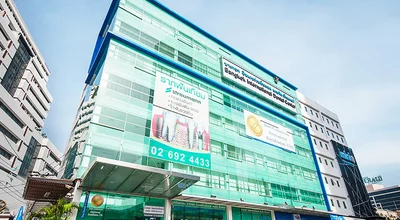
Bangkok International Dental Center
Thailand's first JCI-accredited dental center with more than 70 specialist dentists
View hospital profile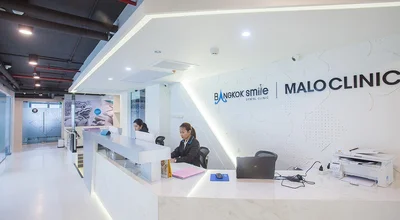
Bangkok Smile Dental Clinic
Multi-branch dental group founded in 2003 and the official Thai partner of the Malo All-on-4 network
View hospital profile
Thantakit International Dental Center
Thailand's longest established dental center, operating in Bangkok since 1945 with more than 40 dentists
View hospital profile
Get a Free Dental Quote in Minutes
Tell us what you need and we'll match you with the right specialist and return real clinic quotes.
- Itemised clinic quotes with no hidden fees
- Matched to a dentist experienced in your specific treatment
- Completely free, even if you decide not to go ahead


Rated 5 stars by our patients
The complete guide to Full Mouth Reconstruction in Thailand
Everything below is for readers who want the full detail: costs broken down, types and techniques, recovery, risks and safety, and planning your trip.
Full Mouth Reconstruction Dentists & Clinics in Thailand
The quality of a full mouth reconstruction depends on the team behind it. Here is what separates a good clinic from a great one.
Leading Dental Clinics in Bangkok
Our partner clinics are multi-chair, multi-specialist centres with in-house labs, CT scanners, and digital planning suites. They handle full-mouth cases weekly and have refined their workflows to manage the complexity of twenty-plus restorations efficiently. These are not single-dentist practices; they are purpose-built for cases of this scale.
Experienced Reconstruction Specialists
The lead dentist on your case is typically a prosthodontist, the dental speciality focused on complex restorations. They coordinate with implantologists, endodontists, and periodontists to ensure each treatment phase fits together correctly. High case volume and team collaboration produce consistent outcomes.
What to Look for in a Clinic
Ask whether the clinic has all relevant specialists in-house or whether they refer externally. Review before-and-after photos of full-mouth cases, paying attention to consistency across all teeth. Check that digital planning with CT imaging is included as standard. A clinic that presents a detailed, phased treatment plan before you commit is one that takes planning seriously.
Understanding Your Results
Full mouth reconstruction results are transformative. Here is what a realistic outcome looks like.
Typical Full Mouth Reconstruction Results
A completed reconstruction restores every tooth to proper shape, colour, and function. The smile is even, proportional, and natural-looking. Chewing function returns fully; patients who had been limited to soft foods often describe a substantial improvement in daily quality of life. The bite is balanced, jaw discomfort resolves, and confidence returns.
What Results Can You Expect?
Results emerge in stages. Crown-and-bridge work delivers immediate visual improvement. Implant-supported restorations follow once integration is complete. The final result, a complete, functional, aesthetic smile, is typically fully realised within six to twelve months. Your dental team uses clinical photography at each stage to track progress and ensure everything is meeting the plan.
Full Mouth Reconstruction Cost in Thailand
Average Cost of Full Mouth Reconstruction
Full mouth reconstruction in Thailand typically costs between $5,000 and $10,000, depending on the number and type of restorations needed. A crown-only reconstruction sits at the lower end. Cases involving implants, bone grafting, or full-arch prostheses sit higher. Every case is individually quoted after a thorough diagnostic assessment.
Cost Breakdown
The total cost covers all consultations and diagnostic imaging, each individual procedure (crowns, bridges, implants, root canals, extractions), laboratory fabrication of all restorations, provisional restorations during treatment, and follow-up appointments. Each component is itemised so you understand exactly where the money goes.
What Affects the Price?
The number and type of restorations are the biggest variables. Twenty crowns costs more than ten. Adding implants increases the total significantly because each implant involves surgery, the fixture itself, the abutment, and the crown. Bone grafting, sinus lifts, and root canal treatment add further. Material choice also matters; zirconia costs more than PFM.
Thailand vs International Price Comparison
Full mouth reconstruction in Thailand costs 60–80% less than equivalent treatment in the US ($15,000–$30,000), Australia (A$14,000–A$27,500), and UK (£12,500–£25,000). For a case involving twenty crowns and four implants, the savings can exceed $20,000. The materials and clinical standards are equivalent; the difference is in operating costs.
Alternatives to Full Mouth Reconstruction
A full or partial denture is the main non-surgical alternative. It restores a complete-looking smile and a good deal of chewing function without implants or extensive crown work, comes at a much lower cost, and can be made relatively quickly. For someone who cannot face surgical phases, or wants to rebuild appearance on a tight budget, a well-made denture is a legitimate choice rather than a poor compromise.
The trade-offs are real, though. Dentures sit on the gums rather than being fixed to the jaw, so they can move when you eat or speak, cover the palate, and never feel quite like your own teeth. They do nothing to stop the bone loss that follows missing teeth, so the fit loosens over the years and they need relining or remaking. They also will not correct a collapsed bite or save salvageable natural teeth the way a coordinated rebuild does, and many people find them limiting day to day.
Full mouth reconstruction is the route when you want a fixed, lasting result that restores both function and the bite properly. By combining crowns on the teeth worth saving with implants where teeth are missing, it stays in place, preserves jawbone around the implants, and rebuilds the mouth to the correct height rather than masking the problem. That is what the rest of this page covers.
Types of Full Mouth Reconstruction
No two reconstruction plans are alike. The combination of treatments depends on what each tooth needs, the condition of the bone and gums, and how the bite fits together.
Crown and Bridge Rehabilitation
For patients with most teeth present but severely damaged, a full set of crowns and bridges restores every tooth to its proper shape, strength, and appearance. Zirconia or e.max crowns are used across both arches, correcting bite alignment and distributing forces evenly. Completable in a single trip.
- Restores severely worn, broken, or decayed teeth across the full mouth
- Corrects bite alignment and evens out chewing forces
- Can be completed in two to three weeks with sequenced appointments
- Best for: patients with teeth present but extensively compromised
Implant-Based Reconstruction
When multiple teeth are missing, implants provide the permanent foundation for crowns, bridges, or full-arch prostheses. All-on-4 or All-on-6 techniques allow a full arch of teeth on as few as four implants per jaw, reducing both cost and surgical complexity.
- Fixed, permanent replacement for patients with extensive tooth loss
- Preserves jawbone and prevents further bone deterioration
- Full-arch solutions reduce the number of implants needed per jaw
- Best for: patients missing most or all teeth in one or both jaws
Combined Approach
Most full mouth reconstructions involve a mix: crowns where teeth are salvageable, implants where they are not, root canals to save borderline teeth, and gum treatment where the foundation needs work. This approach maximises results while managing cost and treatment time realistically.
- Each tooth assessed individually for the most appropriate restoration
- Phased treatment plan manages complexity efficiently across visits
- Multidisciplinary team covers prosthodontics, implantology, endodontics, and periodontics
- Best for: complex cases with a mixture of missing, damaged, and treatable teeth
Full Mouth Reconstruction Techniques
The technical quality of a reconstruction depends on planning precision and the materials used at each stage. Here is what the process involves.
Digital Treatment Planning
Full-mouth X-rays, cone-beam CT scans, and digital bite analysis create a complete picture of your dental anatomy before any treatment starts. Software maps out the ideal tooth positions, implant angles, and bite contacts. Custom surgical guides ensure implants go exactly where planned.
- Three-dimensional imaging reveals bone density, nerve positions, and sinus proximity
- Digital smile design previews the final result before treatment begins
- Surgical guides transfer the digital plan to the operating field with millimetre precision
- Best for: every full-mouth case. Planning is where accuracy begins
Zirconia and All-Ceramic Restorations
Modern full-mouth reconstructions predominantly use zirconia and lithium disilicate ceramics. Zirconia handles the back-tooth forces, e.max delivers the front-tooth aesthetics. Both are milled digitally for consistent fit across dozens of units.
- Zirconia provides exceptional strength for posterior teeth and long-span bridges
- e.max delivers lifelike translucency for the smile zone
- Digital milling ensures each crown fits precisely across twenty-plus restorations
- Best for: patients wanting the strongest, most aesthetic metal-free results
Provisional Restorations and Phased Delivery
Complex cases use provisional (temporary) restorations to test the new bite position before committing to final crowns. This trial phase lets you eat and function with the proposed design, and allows adjustments before the permanent work is fabricated.
- Trial restorations confirm comfort, function, and aesthetics before final fabrication
- Bite adjustments are made on provisionals so the final set needs minimal modification
- Phased delivery manages treatment complexity across appointments efficiently
- Best for: cases involving bite height changes, TMJ considerations, or extensive aesthetic goals
Occlusal Rehabilitation (Restoring Bite Height)
Years of wear, grinding, or tooth loss often collapse the bite, shortening the face and overloading the jaw joints. Occlusal rehabilitation rebuilds the teeth to their correct vertical height, re-establishing an even bite across both arches. The new height is set on diagnostic models, trialled in provisional restorations, then locked into the final crowns once it proves comfortable.
- Restores collapsed or worn-down bite height to take strain off the jaw joints
- Distributes chewing forces evenly so no single tooth or restoration is overloaded
- Any vertical-height change is trialled in provisionals before final crowns are made
- Best for: heavily worn, collapsed, or uneven bites that need rebuilding to the correct height
Full Mouth Reconstruction Recovery Timeline
Days 1–3
Soreness, swelling, and mild discomfort are typical, particularly after surgical procedures like implant placement or extractions. Prescribed medication keeps pain managed. Eat soft foods and rest as directed by your dental team.
Week 1
Swelling subsides and initial healing progresses. Follow-up appointments let your team monitor healing, adjust provisional restorations, and proceed with the next treatment phase. Continue with soft foods.
Weeks 2–3
Permanent crowns, bridges, and other final restorations are fitted as the plan progresses. Bite is checked and adjusted at each stage. Most non-surgical discomfort has resolved completely by this point.
Months 1–6
If implants are part of the plan, osseointegration takes three to six months1. Final implant-supported restorations are placed once integration is confirmed on imaging. Function, comfort, and appearance improve throughout. Regular check-ups track progress.
When Can You Fly After Full Mouth Reconstruction?
It depends on which procedures are involved. If the plan includes only crowns and bridges, you can typically fly home within seven to ten days. If implants, extractions, or bone grafting are part of the treatment, plan for at least ten to fourteen days before flying so your surgical team can confirm healing is on track at a follow-up appointment.
When Can You Eat and Drink Normally?
Eating progresses in stages. You will start with soft foods during the first week while your mouth adjusts to provisional restorations and any surgical sites heal. As permanent restorations are fitted and bite adjustments are made, you can gradually reintroduce firmer foods. Full, unrestricted eating typically resumes once all final restorations are in place.
When Will You See Final Results?
Non-implant restorations like crowns and bridges show their final result as soon as they are cemented. If implants are part of the plan, osseointegration takes three to six months before permanent implant-supported restorations can be placed. The full transformation is visible once all stages are complete; most patients see a dramatic improvement even with provisional restorations early in the process.
Anaesthesia & Sedation
Full mouth reconstruction is carried out under local anaesthetic, so you stay awake and aware throughout while the area being worked on is fully numbed. Because the treatment is spread across several appointments rather than one long operation, only the part of the mouth being treated that day is numbed, and you walk in and out of each visit without a general anaesthetic or a hospital stay.
The longer surgical sessions, such as implant placement or extractions, can feel like a lot to sit through, so sedation is available for those who find dental treatment stressful or who simply prefer to be more relaxed. Your dentist talks this through with you beforehand and decides what suits each stage; the routine crown-preparation and fitting visits are usually comfortable with local anaesthetic alone. If you are sedated for a session, arrange not to drive for the rest of that day and to have someone accompany you back to your accommodation.
You feel pressure and movement during treatment but no pain, and the numbness wears off over the hours afterward. Discomfort once it does is generally mild, more noticeable after the surgical phases than the crown work, and well controlled with the medication your dentist prescribes. Your medical history and any medications are reviewed before treatment begins so the anaesthetic plan is right for you.
Risks and Safety of Full Mouth Reconstruction
Full mouth reconstruction involves multiple procedures, each with its own risk profile. Managed by an experienced team with proper planning, serious complications are uncommon.
- Temporary soreness and swelling after surgical phases
- Tooth sensitivity as restorations settle and the bite adapts
- Implant failure to integrate, though implants are usually successful4
- Peri-implantitis, a chronic infection around an implant that causes bone loss if it is not maintained
- Inferior alveolar nerve irritation or numbness of the lip and chin with lower-jaw implants, usually temporary but occasionally lasting
- Sinus membrane perforation or sinusitis with upper-jaw implants and sinus lifts
- Muscle ache, headache, or jaw-joint flare while you adapt to a raised bite height during the provisional phase
- Bite adjustment needed as multiple restorations interact
- Surgical site infection (rare with proper aftercare)
- Need for minor restoration adjustments during the settling period
Every risk specific to your case is discussed after a comprehensive diagnostic assessment. The phased approach means problems are caught and addressed between stages rather than compounding.
Is Full Mouth Reconstruction Safe in Thailand?
Yes. Our partner clinics are staffed by multidisciplinary dental teams with prosthodontists, implantologists, endodontists, and periodontists working together. They use 3D imaging, digital planning, and guided surgery protocols that match international best practice. The clinics maintain rigorous infection-control standards and handle complex reconstruction cases routinely.
How to Reduce Your Risk
Choose a clinic with a multidisciplinary team rather than a single generalist attempting everything. Ensure 3D imaging and digital planning are part of the diagnostic phase. Ask for a phased treatment plan that sequences procedures logically rather than rushing everything into the shortest timeframe possible. And verify that provisional restorations are used to test the bite before final crowns are made. Once implants are placed, daily cleaning around them and regular check-ups are what keep peri-implantitis and late bone loss at bay.
When Is a Return Trip Needed?
If your reconstruction includes implants, a return trip is typically needed after three to six months for the final implant-supported restorations. Crown-and-bridge-only cases can often be completed in a single trip of ten to fourteen days. Your treatment plan will state clearly whether a second trip is required and what happens at each stage.
Planning Your Trip to Thailand for Full Mouth Reconstruction
Full mouth reconstruction requires the longest stay of any dental procedure. Here is how to plan for a case of this scale.
How Long to Stay in Thailand
Plan for ten to fourteen days for the initial treatment phase. This covers comprehensive diagnostics, treatment planning, extractions, root canals, implant placement (if applicable), and fitting of crowns and bridges. If implants are included, a return trip after three to six months is typically needed for final implant-supported restorations. Crown-and-bridge-only cases can often be completed in a single trip.
What Is Included in a Dental Trip
Your care coordinator manages every aspect: scheduling across specialists, clinic transfers, treatment plan communication, and follow-up. The comprehensive quote covers all consultations, imaging, procedures, lab work, provisional restorations, and follow-up appointments. Flights and accommodation are separate, but your coordinator helps with nearby hotel recommendations and logistics.
Recovery in Bangkok
The intensity of recovery depends on what procedures are involved. Crown-and-bridge phases have minimal downtime; you can sightsee between appointments. Surgical phases (implants, extractions, bone grafts) require a few days of rest and soft food. Most patients find the second week much easier than the first. Having accommodation close to the clinic makes follow-up visits convenient.
Related Procedures
Other procedures that address similar goals or conditions, in case one of them is a closer fit for you.
Planning your treatment in Thailand
Independent guides to help you weigh the decision, before you commit to anything.
Common Questions About Full Mouth Reconstruction
Everything you need to know before your treatment

Medical References
- Implant-Supported Dentures Process, Benefits & Care (Cleveland Clinic)
- Dental Crowns What Are They, Types, Procedure & Care (Cleveland Clinic)
- Dental Implants Permanent, Lifelike Tooth Replacements (Cleveland Clinic)
- Dental Implant (Healthdirect Australia)
- Oral Health Problems and Diabetes (Cleveland Clinic)
Keep researching with AI
Open this guide in your AI assistant to dig deeper and ask the questions it didn't answer.
Opens in a new tab with this guide already loaded.
Medical disclaimer: This information is for educational purposes only and does not replace professional dental advice. Individual results, recovery times, and suitability vary. Always consult a qualified dentist before making decisions about treatment.
Ready to Get Started?
Speak with our care coordinators for a free, no-obligation consultation and personalised treatment plan for your full mouth reconstruction.
Speak to Our Team