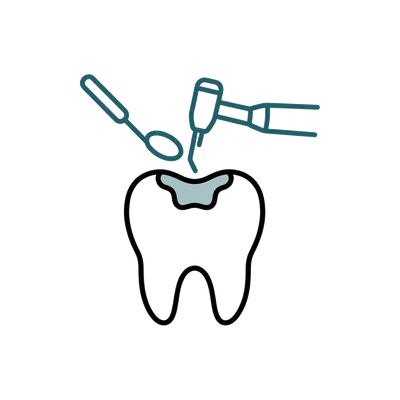
Inlays and Onlays in Thailand Your guide to cost, top dentists & hospitals
Saving more of your natural tooth is always the better option. Inlays and onlays make that possible.
What Are Inlays and Onlays?
Also known as: Dental Fillings · Indirect Restoration
Inlays and onlays are custom-made indirect restorations that repair a damaged back tooth by bonding a solid, precisely fitted piece into it. An inlay sits within the cusps, the raised points on the biting surface; an onlay reaches further to cover one or more of them. Both are crafted in a lab from porcelain, composite, or gold, then cemented in with adhesive resin. Because they are set fully before they go in, they do not shrink the way a large direct filling can, and porcelain usually lasts 10 to 15 years.
They sit between a simple filling and a full crown. When a cavity is too big for an ordinary filling but the tooth is still mostly sound, this lets you keep more of your own tooth rather than grinding it down.1 Your dentist weighs how much healthy tooth remains and picks the option that protects it best.
For most people the result looks and works like the tooth was never damaged, with the porcelain matched to your enamel. Your dentist confirms whether an inlay, onlay, or crown is right after seeing the tooth and an X-ray.
It can address a range of concerns, including:
Am I a Good Candidate for Inlays and Onlays?
These restorations occupy a specific middle ground, so dentists check the damage is too big for a filling but short of crown territory.
The size and position of the cavity decide between a filling, an inlay, an onlay or a crown.
More than a filling can handle: Large cavities or failing amalgam where a direct filling would shrink, crack and wear out early.
Enough wall thickness left: If too little sound tooth remains, a full crown is genuinely the safer option.
Margins above the gum line: Damage extending below the gum can compromise the bonding margin these restorations depend on.
Bonded restorations need a clean, healthy field to last.
Active decay treated first: Any remaining decay or pulp involvement is dealt with before the cavity is restored.
Healthy gums around the tooth: Inflamed tissue works against the precise, dry bonding these restorations rely on.
Back teeth by design: Inlays and onlays restore molars and premolars, including replacing visible metal fillings with tooth-coloured ceramic.
Ceramic is strong but brittle under point loads, so bite habits shape the plan.
Grinding managed: A heavy grinding habit without a night guard can fracture ceramic onlays.
Sensible chewing habits: Ice-chewing and similar habits stress any restoration; avoiding them protects a 10 to 15 year porcelain lifespan (longer with gold).
Material matched to force: Porcelain for aesthetics and longevity, composite for affordability, gold where maximum durability matters more than appearance.
Who is not suitable for inlays and onlays?
- Front teeth (incisors and canines), which inlays and onlays are not designed to restore
- Damage extending below the gum line
- Too little remaining wall thickness, where a crown is the safer option
- Active decay or pulp involvement until treated
- Heavy grinding without a night guard
Pricing
How Much Will Inlays and Onlays Cost in Thailand?
What inlays and onlays costs at accredited hospitals in Thailand, and what your final quote depends on.
Get your exact price
Tell us what you're considering and we'll send a personalised quote from accredited clinics within 24 hours.
Get my free quoteTypical prices in Thailand
Typical ranges based on recent hospital quotes. Your exact price depends on the hospital and how complex your case is, and is confirmed at your teleconsultation.
Inlays and Onlays
Every price here is for one tooth, so if you are replacing old fillings across several teeth you multiply by the number being treated.
| Porcelain (e.max) inlay or onlay, per tooth The usual choice, matching the colour of the tooth closely | $280 to $370 ฿9,520 to ฿12,580 |
| Composite inlay or onlay, per tooth A lower-cost option that still looks like a natural tooth | $200 to $280 ฿6,800 to ฿9,520 |
| Gold inlay or onlay, per tooth Lasts the longest, though the colour makes it a back-tooth choice | $300 to $400 ฿10,200 to ฿13,600 |
Get your exact price
Tell us what you're considering and we'll send a personalised quote from accredited clinics within 24 hours.
Clinics Trusted for Inlays and Onlays
From internationally accredited flagships to dedicated specialist clinics, these are the kinds of facilities where international patients have this procedure.

Bangkok International Dental Center
Thailand's first JCI-accredited dental center with more than 70 specialist dentists
View hospital profile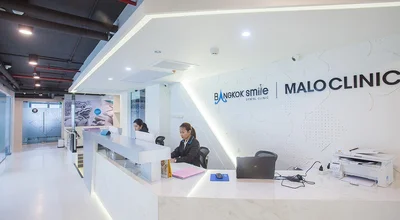
Bangkok Smile Dental Clinic
Multi-branch dental group founded in 2003 and the official Thai partner of the Malo All-on-4 network
View hospital profile
Thantakit International Dental Center
Thailand's longest established dental center, operating in Bangkok since 1945 with more than 40 dentists
View hospital profile
Get a Free Dental Quote in Minutes
Tell us what you need and we'll match you with the right specialist and return real clinic quotes.
- Itemised clinic quotes with no hidden fees
- Matched to a dentist experienced in your specific treatment
- Completely free, even if you decide not to go ahead


Rated 5 stars by our patients
The complete guide to Inlays and Onlays in Thailand
Everything below is for readers who want the full detail: costs broken down, types and techniques, recovery, risks and safety, and planning your trip.
Inlay and Onlay Dentists & Clinics in Thailand
Precision is everything in inlay and onlay work. The dentist's preparation and the lab's fabrication must both be accurate to within fractions of a millimetre.
Leading Dental Clinics in Bangkok
Our partner clinics operate with in-house digital labs, CAD/CAM milling, and dedicated ceramic technicians. They handle high volumes of conservative restorative work and are set up to produce inlays and onlays with consistently tight margins and accurate colour matching.
Experienced Restorative Dentists
Our partner dentists hold accredited qualifications and many have advanced training in conservative and adhesive dentistry. The emphasis on tooth preservation, using an inlay rather than defaulting to a crown, reflects a clinical philosophy that aligns with current best practice globally.
What to Look for in a Dentist
Ask about bonding protocols, specifically whether rubber dam is used during cementation. Review before-and-after photos of inlay and onlay cases. Check whether the clinic uses digital scanning or conventional impressions. A dentist who recommends the most conservative restoration that addresses the problem, rather than over-treating with a full crown, is usually the one you want.
Understanding Your Results
Inlay and onlay results are immediate after bonding. Here is what a realistic outcome looks like.
Typical Inlay and Onlay Results
A well-crafted porcelain inlay or onlay is virtually impossible to distinguish from the surrounding tooth. The ceramic matches the enamel in colour, translucency, and surface sheen. From a functional standpoint, the tooth regains its original contour and bite contact. Old metal fillings are replaced with continuous, tooth-coloured restorations that look like they were never damaged.
What Results Can You Expect?
The result is visible as soon as the restoration is bonded; there is no healing wait. The tooth looks and feels whole again. Ceramic restorations maintain their colour indefinitely, unlike composite fillings that can stain or yellow over time. Longevity depends on oral hygiene, the material selected, and avoiding habits like ice-chewing that place excessive stress on teeth.
Inlay and Onlay Cost in Thailand
Average Cost of Inlays and Onlays
A single porcelain inlay or onlay in Thailand typically costs between $200 and $400. Composite restorations sit at the lower end, ceramic in the middle, and gold at the top. If you are replacing old amalgam fillings across several teeth, the total cost in Thailand is often less than a single restoration at home.
Cost Breakdown
The total cost covers the dentist's fee for preparation and bonding, the laboratory fee for fabricating the restoration, digital scanning or impressions, and follow-up. The lab fee is the largest component, reflecting the material quality and the technician's skill in crafting a restoration that fits precisely.
What Affects the Price?
Material is the main variable. Composite costs less, porcelain costs more, and gold is at the premium end. The size of the restoration also matters; an onlay covering multiple cusps uses more material and lab time than a small inlay. The number of restorations affects the overall quote, with per-unit costs often dropping when multiple teeth are treated in the same trip.
Thailand vs International Price Comparison
Inlays and onlays in Thailand cost 60–70% less than equivalent restorations in the US ($600–$1,200), Australia (A$550–A$1,100), and UK (£500–£1,000). The savings are driven by lower operating costs in Thailand, not by differences in material or clinical quality. Our partner clinics use the same ceramics and bonding systems as leading international practices.
Inlay or Onlay vs a Standard Filling
The simpler alternative is a standard direct filling, placed in a single visit. The dentist packs composite or amalgam straight into the cavity and cures it on the spot, with no lab stage and no second appointment. For a small to moderate cavity that is the right call, it is quick, inexpensive, and preserves the tooth.
The limits show up as the cavity grows. A large direct filling shrinks slightly as it sets, which strains the bond and leaves it more prone to cracking, leakage, and wear, so it tends not to last as long once it is spanning a wide area or replacing a cusp. Pushed beyond what it can reliably hold, a big filling becomes a repeating cycle of repairs rather than a durable fix, and at the other end of the scale a heavily broken tooth needs a full crown, which means grinding the tooth right down.
Inlays and onlays sit in that middle ground. When a cavity is too big for a dependable filling but the tooth is still mostly sound, a lab-made restoration is set fully before it goes in, so it does not shrink, bonds precisely, and spreads chewing force evenly, which is why porcelain typically lasts 10 to 15 years and gold longer. That is the lasting route this page covers, and your dentist confirms after an X-ray whether a filling, an inlay, an onlay, or a crown is genuinely right for the tooth.
Types of Inlays and Onlays
The choice between inlay and onlay depends on how much tooth is damaged. The choice of material depends on where the tooth sits and how much force it takes.
Porcelain (Ceramic) Inlays and Onlays
Made from dental-grade lithium disilicate or leucite-reinforced ceramic. These restorations offer the closest match to natural enamel in colour, translucency, and surface texture. They are stain-resistant and hold their appearance over many years.
- Virtually indistinguishable from natural tooth enamel
- Highly biocompatible and completely metal-free4
- Resistant to staining from coffee, tea, and red wine
- Best for: any back tooth where aesthetics and longevity both matter
Composite Resin Inlays and Onlays
Lab-fabricated from tooth-coloured composite resin. Slightly more flexible than porcelain, which means less stress on the opposing tooth during chewing. Easier to repair if damaged and gentler on the bite contact. The trade-off is shorter lifespan compared to ceramic.
- Good colour matching with a natural tooth appearance
- More affordable than porcelain restorations
- Easier to adjust and repair chairside if needed
- Best for: patients wanting a cost-effective tooth-coloured restoration
Gold Inlays and Onlays
Cast from a gold alloy, these restorations have the longest clinical track record of any indirect filling material. Gold wears at a similar rate to natural enamel, meaning it does not damage opposing teeth. Aesthetics are the only downside; you trade appearance for maximum durability.
- Outstanding longevity, averaging around 18 to 20 years and sometimes far longer4
- Gentle on opposing teeth due to similar wear characteristics to enamel
- Precise marginal seal and excellent biocompatibility
- Best for: patients who prioritise function and durability over cosmetic appearance
Inlay and Onlay Techniques
The fabrication method determines how well the restoration fits the tooth. Digital workflows produce measurably tighter margins than traditional techniques, and Thailand's top clinics have adopted them fully.
Digital Impression and CAD/CAM Fabrication
An intraoral scanner captures the prepared tooth digitally. The restoration is designed on screen and milled from a ceramic block or sent to a lab for pressing. This eliminates distortion from impression materials and produces margins accurate to within microns.
- No putty impressions: faster, more comfortable, and more accurate
- Digital design allows precise control over contour and contact points
- Milled or pressed from premium ceramic blocks for consistent density
- Best for: all inlay and onlay cases. The standard workflow at our partner clinics
Chairside Milling (Same-Day)
For straightforward cases, the inlay or onlay can be milled chairside during a single appointment. The dentist scans, designs, and mills the restoration in about an hour. Useful when time is limited, though lab-finished restorations offer more aesthetic refinement.
- Completed in a single visit, no temporary filling or second appointment
- Milled from e.max or similar high-quality ceramic blocks
- Good for single-tooth restorations where convenience is a priority
- Best for: patients with limited time who need one or two restorations
Traditional Lab Fabrication
A physical impression is sent to a dental laboratory where a technician hand-crafts the restoration. This route allows hand-staining and glazing for superior colour matching on visible teeth. Takes three to five working days but produces the most refined result.
- Hand-finished by a skilled ceramist for maximum aesthetic detail
- Allows custom staining, glazing, and characterisation
- Three to five working days between preparation and bonding
- Best for: visible premolars where aesthetic refinement is the priority
Adhesive (Bonded) Cementation
For ceramic and composite restorations, the dentist relies on adhesive bonding rather than a mechanical lock to hold the piece in place. The tooth is etched, a bonding agent applied, and the restoration set with resin cement, ideally under rubber dam isolation so the bonding surface stays dry. The bond itself reinforces the remaining tooth, which is why minimal, enamel-preserving preparations are used rather than the deeper retentive shapes a gold restoration needs.
- Etch-and-bond technique fuses the restoration to the tooth structure
- Allows conservative, enamel-preserving preparation with no undercuts
- Rubber dam isolation keeps the field dry for maximum bond strength
- Best for: porcelain and composite inlays and onlays, where the bond carries the load
Conventional (Retentive) Preparation
Gold inlays and onlays are held mainly by the shape of the cavity rather than an adhesive bond, so the tooth is prepared with gently tapered walls that grip the casting. The fit relies on a precise marginal seal and the restoration is set with traditional cement. It removes a little more tooth than an adhesive prep, but suits gold's exceptional longevity and gentle wear on opposing teeth.
- Retention comes from the cavity shape, not an adhesive bond
- Precise marginal seal cemented with conventional luting cement
- Removes slightly more tooth than a bonded ceramic preparation
- Best for: gold restorations where durability and a proven marginal fit matter most
Inlay and Onlay Recovery Timeline
Day 1
Some sensitivity around the restored tooth is typical once the restoration is bonded. Local anaesthesia wears off within a few hours. Stick to soft foods and chew on the opposite side for comfort.
Days 2–3
Any lingering sensitivity settles. You are eating normally by now, having avoided only extremely hard foods during the first 24 hours while the bond reached full strength. Brush and floss as usual, paying attention to the restoration margins where food can collect.
Days 4–7
The restoration should feel like part of your own tooth. At your follow-up, the fit, bite alignment, and surrounding gum health are all checked. Any minor adjustments are made before you travel home.
Weeks 2–4
The tooth and surrounding tissue have settled fully. The bonded restoration functions without restriction. Regular brushing, flossing, and dental check-ups will maximise its lifespan.
When Can You Fly After Inlays or Onlays?
You can fly home the same day the restoration is bonded. Inlays and onlays are non-surgical, so there are no wound-healing or cabin-pressure concerns. Most patients stay five to seven days to allow for lab fabrication and the fitting appointment, then fly home with the restoration complete.
When Can You Eat and Drink Normally?
You can eat normally within a few hours of the inlay or onlay being bonded. Mild sensitivity to temperature may last a day or two, which is typical as the tooth adjusts. Avoid extremely hard foods for the first 24 hours while the bonding agent reaches full strength.
When Will You See Final Results?
Results are immediate. Once the inlay or onlay is bonded and polished, the restoration looks and functions like a natural part of the tooth. There is no swelling or healing period; what you see in the chair is the finished result.
Will It Hurt?
Inlay and onlay work is done under local anaesthetic. The dentist numbs the tooth and the area around it, so you stay fully awake but feel nothing while the tooth is prepared and the restoration is bonded. You will sense pressure and movement, but no pain. The whole appointment is comfortable enough that most patients are surprised how routine it feels.
If you tend to feel anxious in the chair, the clinic can usually add sedation to keep you relaxed while staying awake and responsive. That is decided with you beforehand, based on how you feel about dental treatment rather than the procedure itself, since the work is minor and quick. For most people the local anaesthetic alone is all that is needed.
There is no general anaesthetic and no recovery from sedation to plan around. Numbness wears off within a few hours of leaving the chair, and any sensitivity to hot or cold over the following day or two is mild and settles on its own. Over-the-counter pain relief is more than enough if you want it, and you can fly home the same day the restoration is bonded.
Risks and Safety of Inlays and Onlays
Inlays and onlays are well-established indirect restorations with an excellent safety profile. Complications are rare when the procedure is performed by an experienced dentist with quality materials and proper bonding protocols.
- Temporary sensitivity to hot and cold after bonding (usually settles within a week or two)2
- Minor post-bonding discomfort as the bite settles (adjustable chairside)
- Restoration loosening if bonding protocol is compromised (rebonding is straightforward)
- Ceramic chipping under extreme force (rare with modern materials)
Whether an inlay, onlay, or full crown is the right treatment is determined before preparation begins, using X-rays and clinical assessment. Choosing the most conservative option that still delivers a reliable, lasting result is always the goal.
Are Inlays and Onlays Safe in Thailand?
Yes. Inlay and onlay placement is routine conservative dentistry. Our partner clinics in Thailand use the same ceramics, bonding agents, and digital scanning systems as top practices internationally. The dentists are qualified and experienced, and the infection-control protocols are rigorous.
How to Reduce Your Risk
Ensure the clinic uses digital scanning for impressions; the accuracy is measurably better than putty, which matters for restoration fit. Ask about the bonding protocol, specifically whether rubber dam isolation is used during cementation. Rubber dam keeps the bonding surface dry and dramatically improves bond strength and longevity.
When Is Replacement Needed?
Porcelain inlays and onlays typically last 10–15 years, and gold can exceed 20. Replacement is needed when there is decay at the margin, the restoration chips or fractures, or the bond fails and the restoration loosens. Regular check-ups catch these problems early. If an inlay or onlay does fail, it can usually be replaced without further weakening the tooth.
Planning Your Trip to Thailand for Inlays and Onlays
Most inlay and onlay cases take five to seven days. Here is how to plan your trip and what to expect.
How Long to Stay in Thailand
Plan for five to seven days. Day one covers consultation, X-rays, and tooth preparation. The lab fabricates your restorations over three to five days, during which a temporary filling protects the tooth. The second appointment bonds the permanent restoration and checks the fit. If you have multiple teeth, they are all prepared on the same day.
What Is Included in a Dental Trip
Your care coordinator schedules appointments, arranges clinic transfers, and handles communication. The treatment quote covers consultation, digital scans, tooth preparation, temporary filling, lab fabrication, bonding, and follow-up. Flights and accommodation are separate, but your coordinator can recommend convenient hotels near the clinic.
Recovery in Bangkok
Inlay and onlay work requires no downtime. You can explore Bangkok between appointments and eat normally once the temporary filling is placed. The only restriction is avoiding hard or sticky foods on the treated side until the permanent restoration is bonded. Many patients combine inlay work with other treatments during the same trip.
Related Procedures
Other procedures that address similar goals or conditions, in case one of them is a closer fit for you.
Planning your treatment in Thailand
Independent guides to help you weigh the decision, before you commit to anything.
Common Questions About Inlays and Onlays
Everything you need to know before your treatment

Medical References
Keep researching with AI
Open this guide in your AI assistant to dig deeper and ask the questions it didn't answer.
Opens in a new tab with this guide already loaded.
Medical disclaimer: This information is for educational purposes only and does not replace professional dental advice. Individual results, recovery times, and suitability vary. Always consult a qualified dentist before making decisions about treatment.
Ready to Get Started?
Speak with our care coordinators for a free, no-obligation consultation and personalised quote for your inlay or onlay restoration.
Speak to Our Team