Mini Dental Implants in Thailand Your guide to cost, top dentists & hospitals
Smaller implant, simpler procedure, and a lower denture that finally stays where it belongs.
What Is a Mini Dental Implant?
Also known as: Mini Implants · Small-Diameter Implant
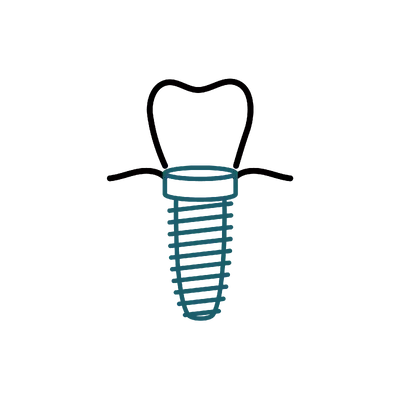
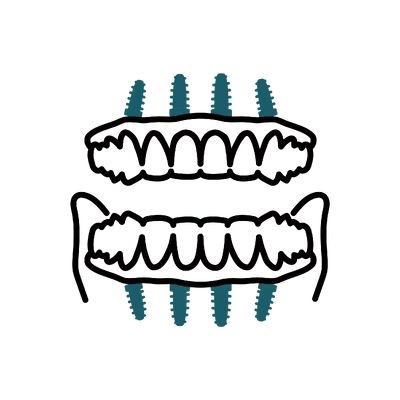
Mini dental implants are slim titanium posts that anchor a loose denture or a small tooth by threading directly into the jawbone. At roughly 1.8 to 3.0mm, they are about half the width of conventional implants, so they fit into narrow bone that would otherwise need grafting1,2. They are placed with a twist-in technique through a small opening in the gum, with no incision, flap, or stitches, and your existing denture can usually be fitted with snap housings the same day.
A denture that rocks or lifts at the wrong moment wears people down quietly, and this is one of the gentlest ways to settle it. Placement is quick and done under local anaesthetic, so it suits you if you feel anxious about surgery. Your dentist plans the number and position around your own bone and current denture.
Mini implants do one job well, steadying dentures and replacing small teeth in tight spaces. They are not a substitute for standard implants under molars or a bridge. Whether they suit you depends on your bone and bite, which your dentist confirms from a scan at consultation.
It can address a range of concerns, including:
Am I a Good Candidate for Mini Dental Implants?
Mini implants suit denture wearers wanting stability with minimal surgery, and narrow-ridge patients unsuited to standard implants.
Mini implants occupy a specific niche, and honest dentists are clear about what sits inside it.
Denture stabilisation: Four to six minis securing a loose lower denture is the core, evidence-backed use, usually with same-day conversion of your existing denture.
Small teeth in tight spaces: A missing lower incisor or upper lateral incisor where a standard implant is too wide.
Not for molars or bridges: If you need a fixed solution for back teeth or a multi-unit bridge, standard implants are the right tool, not minis.
The narrow 1.8-3.0 mm diameter is the whole point, and it suits some bone better than others.
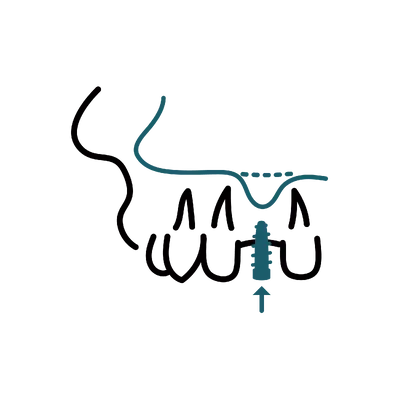
Narrow ridges welcome: Minis place where conventional implants would need grafting first, which is one of the main reasons patients choose them.
Bone density matters: Very dense Type I or unusually soft Type IV bone makes stable retention harder to achieve, and your scan flags this.
Grafting almost never needed: Avoiding grafts saves time, cost, and additional surgery for most candidates.
Slim posts carry less load than standard implants, so your chewing pattern is screened before placement.
Heavy forces are the limit: Strong clenching or bruxism can overload narrow-diameter posts and, rarely, fracture them.
Night guard for grinders: If you grind, discuss a guard with your dentist as part of the plan.
Loading matched to design: Minis perform well within their intended retention role; expecting them to behave like standard implants under molar-level forces is how they fail.
The procedure is the gentlest in implant dentistry, but gum health around the implant heads still gates candidacy.
Periodontal disease treated first: Active gum disease compromises the tissue the implant heads emerge through.
Diabetes and smoking managed: Uncontrolled diabetes and heavy smoking both raise the risk of peri-implant infection and bone loss, so they are addressed before placement.
Suits anxious and older patients: No incisions, no sutures, and 1-3 day recovery make this a realistic option where bigger surgery is unappealing.
Who is not suitable for mini dental implants?
- Replacing molars or supporting a fixed bridge
- Heavy clenching or bruxism that could overload the narrow posts
- Very dense or unusually soft bone at the planned site
- Active periodontal disease until treated
- Uncontrolled diabetes or smoking not yet addressed
Pricing
How Much Will Mini Dental Implants Cost in Thailand?
What mini dental implants costs at accredited hospitals in Thailand, and what your final quote depends on.
Get your exact price
Tell us what you're considering and we'll send a personalised quote from accredited hospitals within 24 hours.
Get my free quoteTypical prices in Thailand
Typical ranges based on recent hospital quotes. Your exact price depends on the hospital and how complex your case is, and is confirmed at your teleconsultation.
Mini Dental Implants
Mini implants are priced by the post, so what you pay depends on how many go in, and an upper denture needs more of them than a lower one.
| Single mini implant, per implant Covers the implant, its placement and follow-up during your stay | $800 to $1,600 ฿27,200 to ฿54,400 |
| Lower denture stabilisation, 4 implants Four posts to stop a lower denture shifting, denture converted | $3,200 to $5,500 ฿108,800 to ฿187,000 |
| Lower denture stabilisation, 6 implants Six posts for the firmest hold on a lower denture | $4,800 to $8,000 ฿163,200 to ฿272,000 |
| Upper denture stabilisation, 6 or more implants The softer upper jaw needs more posts to hold securely | $5,500 to $9,000 ฿187,000 to ฿306,000 |
Get your exact price
Tell us what you're considering and we'll send a personalised quote from accredited hospitals within 24 hours.
Clinics Trusted for Mini Dental Implants
From internationally accredited flagships to dedicated specialist clinics, these are the kinds of facilities where international patients have this procedure.

Thantakit International Dental Center
Thailand's longest established dental center, operating in Bangkok since 1945 with more than 40 dentists
View hospital profile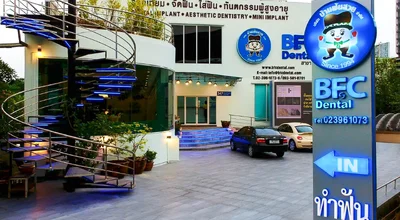
BFC Dental
Implant-focused Bangkok dental clinic founded in 1994, placing more than 4,600 implants a year
View hospital profile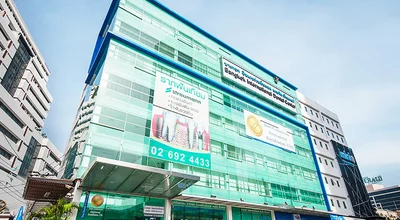
Bangkok International Dental Center
Thailand's first JCI-accredited dental center with more than 70 specialist dentists
View hospital profile
Get a Free Dental Quote in Minutes
Tell us what you need and we'll match you with the right specialist and return real clinic quotes.
- Itemised clinic quotes with no hidden fees
- Matched to a dentist experienced in your specific treatment
- Completely free, even if you decide not to go ahead


Rated 5 stars by our patients
The complete guide to Mini Dental Implants in Thailand
Everything below is for readers who want the full detail: costs broken down, types and techniques, recovery, risks and safety, and planning your trip.
Mini Implant Dentists & Clinics in Thailand
Mini implant placement is technically straightforward, but clinical judgment about patient selection and implant positioning matters. Here is what our partners offer.
Leading Clinics in Bangkok
Our partner clinics offer mini implant treatment as part of their broader implant services. They have on-site imaging, chairside denture modification capability, and experienced dentists who understand when mini implants are the right choice and when standard implants would serve the patient better.
Experienced Mini Implant Dentists
The dentists we work with have placed hundreds of mini implants and understand the clinical nuances, bone density assessment, angulation in narrow ridges, and when to recommend a different approach altogether. They will not push mini implants when a standard implant or overdenture solution would produce a better long-term result.
Honest Clinical Guidance
The most important thing a dentist can do with mini implants is tell you whether they are right for your situation. Mini implants are excellent for denture stabilisation and selected small-tooth replacements. They are not a universal substitute for standard implants. A good dentist will explain the limitations clearly and recommend the best treatment, not just the cheapest or fastest.
Understanding Your Results
The biggest change with mini implants is functional, how the denture performs day to day. Here is what to expect.
Typical Mini Implant Results
The denture clicks into place and remains stable during eating, speaking, and laughing. Patients uniformly describe this as a major quality-of-life improvement. Foods that were off-limits with a loose denture, corn on the cob, crusty bread, apples, become manageable again. The psychological shift from worrying about denture movement to forgetting about it entirely is significant.
What Results Can You Expect?
Expect immediate improvement in denture retention from the day your denture is converted. Stability increases further over the first few months as the implants integrate. The denture itself looks the same, the change is entirely in how securely it sits. Over time, the implants also help slow jawbone resorption, which means the denture fit holds up better year over year than a conventional denture would.
Mini Dental Implant Cost in Thailand
Average Cost of Mini Dental Implants
Mini dental implants in Thailand typically cost $800–$9,000 per implant, including placement. A full lower denture stabilisation treatment with four to six implants and denture conversion runs $3,200–$8,000 total. This is a fraction of the equivalent treatment at home and one of the most affordable implant options available anywhere.
Cost Breakdown
The price covers the mini implant post, placement fee, denture modification or crown, local anaesthesia, and all follow-up appointments during your stay. If a new denture is needed instead of converting your existing one, that adds to the total. The overall cost is significantly lower than standard implant treatment because the hardware is smaller and the procedure is faster.
What Affects the Price?
The number of implants is the primary variable. Four implants for a lower denture costs less than six. Upper jaw stabilisation requiring six or more implants costs more. Whether your existing denture is converted or a new one fabricated affects the total. Single-tooth mini implant crowns are priced individually and vary based on the crown material.
Thailand vs International Price Comparison
Mini implants cost $2,400–$4,800 per implant in the US, A$2,250–A$4,400 in Australia, and £2,000–£4,000 in the UK. Thailand's $800–$1,600 per implant represents a saving of 50–70%. For a four-implant lower denture stabilisation, you could save $5,000–$10,000 compared to having the same treatment at home.
Alternatives to Mini Dental Implants
The simplest alternative is the one you may already have: a conventional denture held in place with adhesive. It is non-surgical, low-cost, and replaces the teeth, but it does nothing to stop the underlying problem of a denture that rocks or lifts. Adhesive needs reapplying through the day, it can fail at the wrong moment, and over the years the jaw ridge keeps shrinking, so the fit tends to loosen rather than improve. For some people that trade-off is fine; for many it is exactly what wears them down.
At the other end sit standard-diameter implants, often two to four supporting a snap-on overdenture or a fixed bridge. They are wider and stronger, so they handle heavier bite forces and are the right choice under molars or for a fixed solution. The trade-off is that they need enough bone width, frequently a graft if the ridge is narrow, a more involved surgical placement with stitches, and a longer, costlier course of treatment. They are the more robust answer, not the gentler one.
Mini implants sit deliberately between the two. They give a loose denture real, immediate retention with a flapless, single-visit procedure that fits narrow bone without grafting, which is why they suit denture wearers who want stability without bigger surgery. Where you need to replace molars, support a fixed bridge, or carry heavy chewing loads, standard implants are the better route, and your dentist confirms which fits your bone and bite from a scan at consultation.
Types of Mini Dental Implant Treatment
Mini implants have two main applications, denture stabilisation and individual small-tooth replacement. The right one depends on what you need fixed.
Lower Denture Stabilisation
Four to six mini implants are placed along the lower jaw ridge. The existing denture is modified with snap-fit housings that click onto the implant heads. Immediate retention, the denture stops moving from the moment you clip it on3.
- The most common mini implant application with strong published evidence
- Existing denture can usually be converted on the same day
- Flapless placement means virtually no post-operative downtime
- Best for: lower denture wearers frustrated by instability and adhesive dependence
Upper Denture Stabilisation
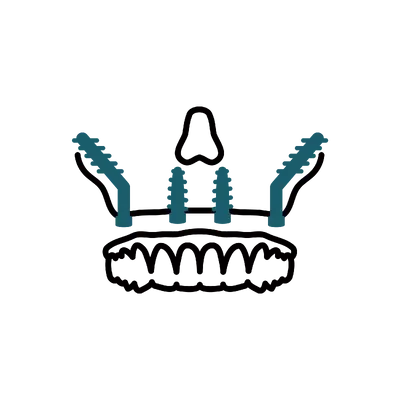
Six or more mini implants stabilise an upper denture, potentially allowing removal of some palate coverage. The upper jaw requires more implants because the bone is softer and the prosthesis is larger. Immediate retention is still possible in most cases.
- Improved stability and potential palateless design
- More implants needed than the lower jaw due to softer bone density
- Reduced gagging and improved taste sensation with palate removal
- Best for: upper denture wearers who struggle with palate coverage or loose fit
Small Tooth Replacement
A single mini implant supports a small crown to replace a missing lower incisor, upper lateral incisor, or other small tooth in a narrow space. The slim diameter fits where a conventional implant would be too wide for the available bone.
- Ideal for narrow anatomical spaces between existing teeth
- Same-day placement and loading possible when conditions allow
- Preserves neighbouring teeth without any preparation or grinding
- Best for: missing small teeth in tight spaces where conventional implants are too wide
Mini Dental Implant Techniques
Mini implant placement is one of the simplest procedures in implant dentistry. The techniques are standardised and the learning curve for experienced dentists is short.
Flapless Twist-In Placement
The implant is threaded directly through a small pilot hole in the gum and bone, no incision, no flap, no sutures. The narrow diameter means less bone is removed during placement. This is the standard approach for all mini implant cases.
- No cutting, no stitches, the gum heals around the implant naturally
- Less post-operative swelling than any other implant procedure
- Chair time of 30–60 minutes for four to six implants
- Best for: all mini implant cases, this is the default technique
Guided Placement
A surgical template is used to position each mini implant accurately in narrow ridges where precision matters. Guided placement is useful when the bone ridge is very narrow and there is little margin for error in angulation.
- Computer-planned positioning for each implant
- Reduces the risk of perforating thin bone walls
- Adds a small cost for the template fabrication
- Best for: very narrow ridges where freehand angulation is too risky
Denture Conversion Technique
After implant placement, your existing denture is relined chairside with snap housings. The dentist marks the implant positions on the denture, drills corresponding holes, and fits the attachment housings with cold-cure acrylic. The converted denture is functional immediately.
- Completed in the same appointment as implant placement
- Uses your existing denture, no waiting for a new one
- Housings can be replaced or adjusted easily as needed
- Best for: patients whose current denture is structurally sound
Mini Dental Implant Recovery Timeline
Day 1
Mild tenderness at the implant sites, less than most patients expect. Over-the-counter pain medication is usually sufficient. You can eat soft foods immediately. Your converted denture is functional from the moment you leave the clinic.
Days 2–3
Any residual soreness fades quickly. You can eat a wider variety of foods and resume normal daily activities. Swelling is minimal to none. The improved denture stability is noticeable from the first meal.
Week 1
Gum tissue around the mini implants has healed. A follow-up appointment confirms everything is settling well. You are cleared for travel. Normal oral hygiene resumes, brush gently around the implant heads and use the mouthwash provided.
Months 1–3
The mini implants continue to integrate with the jawbone and retention strengthens over time. If a permanent small-tooth crown is being placed, it is fitted once integration is confirmed. The snap-fit retention is fine-tuned if needed; the nylon inserts inside the attachment housings are a routine wear item replaced roughly every 6 to 12 months, so they are not due yet at this stage.
When Can You Fly After Mini Implant Placement?
Most patients can fly home five to seven days after mini implant placement. Recovery is faster than any other implant procedure, there are no incisions to heal and swelling is minimal. A follow-up appointment on day three to five confirms everything is settling before you travel.
When Can You Return to Work and Exercise?
Most patients feel fine the next day. Desk work can resume immediately. Light exercise is fine from day two. Because placement is done under local anaesthetic rather than sedation, you can usually drive yourself away the same day; if you opt for light sedation, arrange a lift home that day and skip driving until it has fully worn off. The flapless technique means there is no surgical wound healing, just mild gum tenderness that resolves within days. This is the lowest-downtime implant procedure available.
When Will You See Final Results?
You see results immediately, the moment your converted denture clips onto the implants. Retention improves further over weeks as the implants integrate. The attachment housings may need minor adjustments during follow-up to optimise the snap-fit. Long-term, the result is a denture that performs reliably meal after meal without adhesive.
Anaesthesia for Mini Dental Implants
Mini implants are placed under local anaesthetic, the same kind used for a filling, so you stay fully awake throughout and feel no pain.1,2 Your dentist numbs the gum and bone at the placement sites, and because the posts thread in through a small opening without any cutting or stitches, only a small area needs numbing. There is no need for a hospital, a general anaesthetic, or anything to recover from afterwards.
If the thought of dental work makes you anxious, that is common with denture wearers, and it is worth raising at your consultation. Many of our partner clinics can add light sedation, such as an oral sedative or inhaled relief, to keep you calm and relaxed while you stay awake and able to respond. Whether that is offered, and which option suits you, depends on the clinic and your medical history, which your dentist reviews beforehand.
You feel pressure and movement as each implant is threaded in, but no sharp pain while the area is numb. Once the anaesthetic wears off, most people notice only mild tenderness at the sites, less than after a routine extraction, and over-the-counter pain relief is usually all that is needed. The flapless technique is a big part of why this is one of the gentlest procedures in implant dentistry.
Risks and Safety of Mini Dental Implants
Mini implants carry lower surgical risk than standard implants because the procedure is less invasive. The main limitations relate to their smaller diameter and the types of loads they can support.
- Nerve proximity symptoms in the lower jaw (rare)
- Peri-implant gum inflammation if oral hygiene is neglected
- Gum recession that exposes the smooth post below the ball head, a mini-implant-specific issue that can develop over years
- Perforation of a thin bone wall during freehand placement in a very narrow ridge (guided placement reduces this risk)
Mini implants are not designed for the same loading demands as standard implants. They work best in their intended applications, denture retention and small-tooth replacement. Choosing the right treatment for the right indication is how risks are kept low.
Are Mini Dental Implants Safe in Thailand?
Yes. Mini implants are FDA-cleared and have been used worldwide for over 15 years. The procedure is simple, fast, and performed under local anaesthesia with minimal tissue trauma. Our partner clinics use established mini implant systems with published clinical data supporting their safety and longevity.
How to Reduce Risks
Maintain good oral hygiene around the implant heads, a soft brush and antimicrobial mouthwash are all you need. Replace worn attachment inserts promptly to maintain proper retention and avoid overloading individual implants. If you grind your teeth, discuss a night guard with your dentist. And keep up regular dental check-ups at home.
How Long Do Mini Implants Last?
Published survival data are encouraging. The largest retrospective study, tracking 5,640 mini implants, reported about 92% survival over an average follow-up of roughly three and a half years, and a 2017 systematic review found a similar figure. Most published follow-up runs to around five to seven years rather than decades, so we describe longevity in those terms rather than promising a fixed lifespan. How long yours last depends on bone quality, bite forces, and oral hygiene. The denture attachment housings need their nylon inserts replaced every 6–12 months, a five-minute procedure. The denture itself may need relining every few years as the jaw ridge changes shape.
Planning Your Trip to Thailand for Mini Dental Implants
Mini implants require less time in Thailand than any other implant procedure. Here is how to plan a short, efficient trip.
How Long to Stay in Thailand
Five to seven days is sufficient for most mini implant cases. Day one covers consultation and imaging. Placement and denture conversion happen on day two or three. The remaining days allow for a follow-up and adjustment before flying home. No second visit is needed in most cases, the treatment is completed in a single trip.
What's Included in a Dental Trip
Your coordinator books all appointments and arranges transfers. The treatment quote covers mini implants, denture conversion, imaging, anaesthesia, and follow-up visits. Flights and accommodation are separate. The short trip duration means less time away from home and lower travel costs than any other implant treatment.
Bringing Your Denture
Bring your current denture to Thailand. Your dentist will assess whether it can be converted to clip onto the mini implants, and in most cases, it can. If conversion is not viable, a new denture is fabricated during your stay. Having your existing denture available speeds up the process and reduces cost.
Related Procedures
Other procedures that address similar goals or conditions, in case one of them is a closer fit for you.
Planning your treatment in Thailand
Independent guides to help you weigh the decision, before you commit to anything.
Common Questions About Mini Dental Implants
Everything you need to know before your treatment

Medical References
Keep researching with AI
Open this guide in your AI assistant to dig deeper and ask the questions it didn't answer.
Opens in a new tab with this guide already loaded.
Medical disclaimer: This information is for educational purposes only and does not replace professional dental advice. Individual results, recovery times, and suitability vary. Always consult a qualified dentist before making decisions about treatment.
Ready to Get Started?
Speak with our care coordinators for a free, no-obligation consultation and personalised quote.
Speak to Our Team