Full Mouth Implant Reconstruction in Thailand Your guide to cost, top dentists & hospitals
Every tooth, both arches, rebuilt from the foundation up. This is the most comprehensive solution dentistry offers.
What Is Full Mouth Implant Reconstruction?
Also known as: Full Mouth Implants · Full-Mouth Implant Rehabilitation
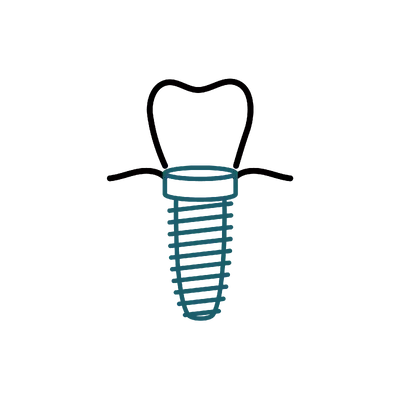
Full mouth implant reconstruction is dental treatment that rebuilds every tooth in both jaws by anchoring a complete fixed set of upper and lower teeth onto a few titanium implants. Rather than replacing teeth one by one, the new teeth fuse to the jawbone through osseointegration, where bone grows around each implant and holds it firmly1,2. Each arch is planned separately using protocols like All-on-4, All-on-6, or zygomatic implants, depending on the bone available, and a well-made set usually lasts 15 to 20 years or more.
If your teeth have failed for years and patch repairs keep letting you down, this rebuilds the whole mouth from the foundation up. Your dental team studies a 3D scan of each jaw, so the upper and lower may be treated differently. You leave the first visit with fixed temporary teeth, never without a smile while everything heals.
This is the most extensive treatment in dentistry, and how well it goes depends on your bone, your general health, and careful planning. A consultation and scan confirm whether you are suited to it and which approach each jaw needs.
It can address a range of concerns, including:
Am I a Good Candidate for Full Mouth Implant Reconstruction?
This is for extensive tooth loss or failure across both arches, in patients fit for longer surgery and committed to two visits.
Full mouth reconstruction is the right scale of treatment only when the problem genuinely spans both arches.
Most or all teeth failing: Missing, failing, or chronically infected teeth across upper and lower jaws, beyond what piecemeal repair can fix.
Function lost: Severe deterioration that prevents normal eating and speaking is the clearest indication.
Each arch assessed separately: Bone quality differs between jaws, so the lower might suit All-on-4 while the upper needs All-on-6 or zygomatic implants. The CT scan settles the strategy per arch.
This is a 4-8 hour procedure under general anaesthesia or deep sedation, so medical fitness is screened more thoroughly than for any other dental treatment.
Adequate general health: You need to safely tolerate a long single-session procedure, sometimes with an overnight stay for monitoring.
Cardiac and respiratory review: Significant heart or lung conditions raise the risk of a long anaesthetic and need clearance, or a staged plan instead.
GP clearance for anaesthesia: Medical sign-off from your home doctor is required before a general anaesthetic.
Placing eight or more implants simultaneously means every site has to be ready at once.
Infection stabilised first: Widespread periodontal disease, abscesses, or oral infection must be treated before reconstruction begins.
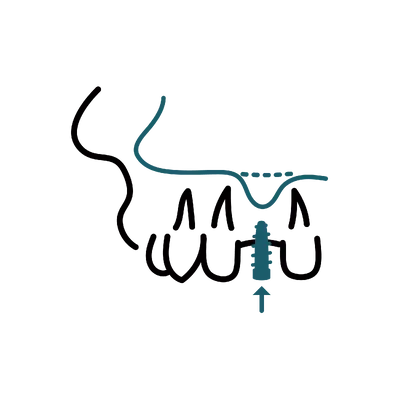
Bone mapped per arch: 3D imaging determines whether each arch can take implants directly or needs grafting or sinus lifts as a staged preparatory phase.
Healing risks compounded: Heavy smoking, uncontrolled diabetes, or recent IV bisphosphonates put many implants and grafts at risk simultaneously, so these are addressed before surgery, not after.
The patients who do well treat this as a six-to-eight-month project, not a single trip.
Two visits minimum: 10-14 days for surgery and temporaries, then 5-7 days at four to six months for the permanent prostheses. Staged cases can run nine to twelve months.
Strict soft-food phase: The temporaries are functional but not built for hard foods during integration.
Night guard for grinders: Heavy bruxism can fracture a full-arch prosthesis on both jaws, so committing to a protective guard is part of candidacy.
Who is not suitable for full mouth implant reconstruction?
- Cardiac or respiratory conditions not yet cleared for a long anaesthetic
- Widespread untreated gum disease, abscesses, or oral infection
- Heavy bruxism without commitment to a protective night guard
- Recent IV bisphosphonate treatment
- Previous head and neck radiotherapy until assessed for osteonecrosis risk
- Anticoagulant therapy or a bleeding or clotting disorder until reviewed and managed for surgery
- Smoking that will not be stopped at least four weeks before surgery
- Uncontrolled diabetes until levels are stable
Pricing
How Much Will Full Mouth Implant Reconstruction Cost in Thailand?
What full mouth implant reconstruction costs at accredited hospitals in Thailand, and what your final quote depends on.
Get your exact price
Tell us what you're considering and we'll send a personalised quote from accredited hospitals within 24 hours.
Get my free quoteTypical prices in Thailand
Typical ranges based on recent hospital quotes. Your exact price depends on the hospital and how complex your case is, and is confirmed at your teleconsultation.
Full Mouth Implant Reconstruction
How much bone is left in each jaw is what decides your approach, and your CT scan settles it before anything is booked.
| All-on-4, both arches, surgical phase Eight implants in total with temporary teeth fitted on both jaws the same day | $15,000 to $24,000 ฿510,000 to ฿816,000 |
| Mixed protocol with zygomatic implants, both arches For an upper jaw with too little bone, anchored into the cheekbone instead | $20,000 to $35,000 ฿680,000 to ฿1,190,000 |
| Staged reconstruction with grafting, both arches Bone grafting or sinus lifts first, with the implants placed once healed | $18,000 to $35,000 ฿612,000 to ฿1,190,000 |
The second phase, quoted separately
| Final permanent teeth, both arches Quoted separately from the surgery and priced by the material you choose | $5,000 to $14,000 ฿170,000 to ฿476,000 |
Get your exact price
Tell us what you're considering and we'll send a personalised quote from accredited hospitals within 24 hours.
Clinics Trusted for Full Mouth Implant Reconstruction
From internationally accredited flagships to dedicated specialist clinics, these are the kinds of facilities where international patients have this procedure.
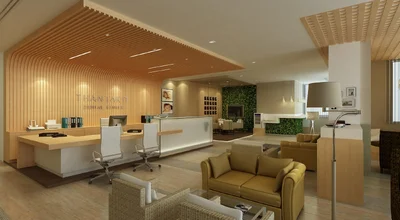
Thantakit International Dental Center
Thailand's longest established dental center, operating in Bangkok since 1945 with more than 40 dentists
View hospital profile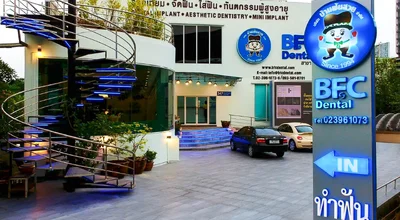
BFC Dental
Implant-focused Bangkok dental clinic founded in 1994, placing more than 4,600 implants a year
View hospital profile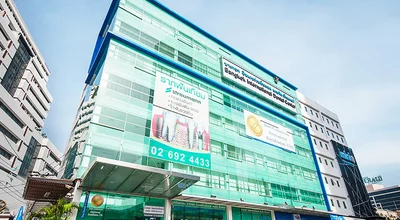
Bangkok International Dental Center
Thailand's first JCI-accredited dental center with more than 70 specialist dentists
View hospital profile
Get a Free Dental Quote in Minutes
Tell us what you need and we'll match you with the right specialist and return real clinic quotes.
- Itemised clinic quotes with no hidden fees
- Matched to a dentist experienced in your specific treatment
- Completely free, even if you decide not to go ahead


Rated 5 stars by our patients
The complete guide to Full Mouth Implant Reconstruction in Thailand
Everything below is for readers who want the full detail: costs broken down, types and techniques, recovery, risks and safety, and planning your trip.
Full Mouth Reconstruction Teams & Clinics in Thailand
Full mouth reconstruction is a team effort. The quality of the result depends on how well the surgeon, prosthodontist, and lab work together.
Leading Clinics in Bangkok
Our partners for full-mouth cases are the most comprehensively equipped clinics in Thailand, on-site CT and panoramic imaging, CAD/CAM milling, in-house ceramic and acrylic laboratories, dedicated implant operatories, and general anaesthesia capability. Everything needed for a complex dual-arch case is under one roof.
Multidisciplinary Dental Teams
Full mouth reconstruction requires coordination between an implant surgeon, a prosthodontist who designs the final teeth, and dental technicians who fabricate them. At our partner clinics, these specialists work together daily, not as separate providers communicating by referral letter. This in-house collaboration produces tighter results and faster turnaround.
Evaluating a Full-Mouth Provider
Ask to see before-and-after photos of completed dual-arch cases, not just single-arch work. Check whether the clinic has an in-house lab or outsources prosthetic fabrication. Confirm they use digital smile design for full-mouth cases. And ask how many full-mouth reconstructions the team completes per month, this is not a procedure where occasional experience is good enough.
Understanding Your Results
Full mouth reconstruction produces the most dramatic before-and-after transformation in all of dentistry. Here is what the process looks like.
Typical Full Mouth Reconstruction Results
Patients go from severely deteriorated teeth, or no teeth at all, to a complete set of fixed, natural-looking teeth in both arches. The change extends beyond the mouth. Facial support improves as the prostheses fill out the lip and cheek profile. Speech clarity returns. The ability to eat a normal diet restores a basic quality of life that many patients had lost years earlier.
What Results Can You Expect?
The temporary teeth give you an immediate functional and aesthetic result on surgery day. The permanent prostheses, fitted at four to six months, are the definitive outcome. They are designed using digital tools, precision-milled, and shade-matched to look natural. The result is a fixed set of teeth that restores close to natural bite strength, supports the lip and cheek profile, and is built to last 15 to 20 years or more with routine maintenance.
Full Mouth Reconstruction Cost in Thailand
Average Cost of Full Mouth Reconstruction
Full mouth implant reconstruction in Thailand typically costs between $15,000 and $35,000 for both arches. This includes the surgical phase, all implants, extractions, temporary prostheses, imaging, and anaesthesia. The final permanent prostheses are quoted separately based on the material you choose, typically adding $5,000–$14,000 for both arches.
Cost Breakdown
The surgical quote covers the implant team's fees, all implant posts and abutments for both arches, extractions of remaining teeth, temporary prostheses for both jaws, 3D CT scanning, digital planning, anaesthesia, overnight monitoring, and all in-Thailand follow-up appointments. The permanent prostheses are priced separately because material choice (zirconia, porcelain, or acrylic) significantly affects cost.
What Affects the Price?
The implant strategy for each arch drives the surgical cost. All-on-4 is less expensive than All-on-6. Zygomatic implants add significant cost due to the specialised hardware and surgical complexity. The prosthetic material is the other major variable, monolithic zirconia costs two to three times more than acrylic-on-titanium. Cases requiring staged bone grafting or sinus lifts add preparatory procedure costs.
Thailand vs International Price Comparison
Full mouth implant reconstruction costs $45,000–$90,000 in the US, A$42,000–A$82,500 in Australia, and £37,500–£75,000 in the UK. Thailand's $15,000–$30,000 for the surgical phase represents a saving of 50–70%. On a complete dual-arch treatment, even after prostheses, flights, and accommodation are added, the net saving versus the US typically starts around $20,000 and rises well beyond $40,000 on higher-complexity cases.
Full Mouth Implants vs Dentures
The non-surgical route for full tooth loss is removable dentures, a full upper and lower set that rests on the gums and is taken out for cleaning. Modern dentures look far better than older ones and cost a fraction of implant reconstruction, so they are a reasonable starting point, especially if surgery or a long anaesthetic is not advisable for you. A conventional fixed bridge is only an option when enough healthy teeth remain to anchor it, which is rarely the case once most of the mouth has failed.
The trade-offs are real, though. Dentures sit on the gum rather than in the bone, so they can slip, click, or rub, limit what you can comfortably chew, and need relining as the underlying bone shrinks year on year. That bone loss is the bigger issue: without implants to stimulate it, the jaw keeps resorbing, which over time changes the lower face and makes each new denture harder to fit. They are removable and lifelong-maintenance by nature, not a permanent rebuild.
Full mouth implant reconstruction is the route when you want fixed teeth that stay put, restore close to natural bite strength, and preserve the jawbone instead of losing it. Because the prostheses anchor into the bone through osseointegration, they do not move when you eat or speak and a well-made set lasts 15 to 20 years or more. If you have lived with failing teeth or unstable dentures and want a lasting, complete result rather than something you take in and out, that is what the rest of this page covers.
Types of Full Mouth Reconstruction
No two full mouth cases are the same. The implant strategy for each arch is determined by bone volume, anatomy, and clinical priorities. Here are the main approaches.
Dual-Arch All-on-4
Both arches are restored using the All-on-4 protocol, four implants per arch, eight total. Same-day temporary teeth are placed for both jaws. This is the most common approach when bone volume is reasonable in both arches and cost efficiency is a priority.
- Eight implants support a complete set of upper and lower teeth
- Same-day temporaries for both arches from a single surgical session
- Permanent prostheses fitted at a second visit after four to six months
- Best for: patients with adequate bone who want the most efficient full-mouth solution
Mixed Protocol (Different Approach Per Arch)
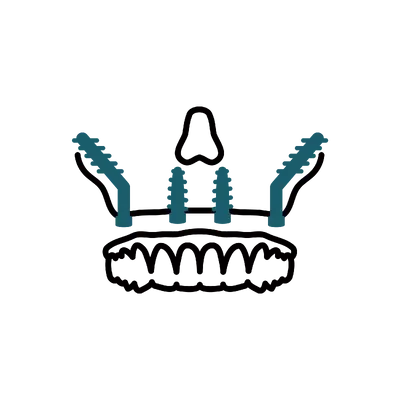
Each arch receives the treatment best suited to its bone condition. The lower jaw, where bone is typically stronger, might get All-on-4. The upper jaw might need All-on-6 or zygomatic implants because of softer bone or greater resorption. This is common and clinically sound.
- Optimises the implant strategy for each arch independently
- Upper jaw challenges are addressed with zygomatic implants when needed
- The lower jaw often requires a simpler protocol than the upper
- Best for: patients where bone conditions differ significantly between upper and lower jaws
Staged Reconstruction
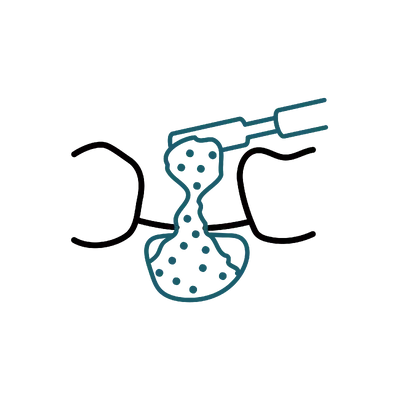
Treatment is divided into phases when preparatory work is needed first, bone grafting, sinus lifts, or periodontal treatment. One arch may be treated before the other, or grafting may precede implant placement by several months. This adds visits but ensures every stage has the best possible foundation.
- Methodical approach where each stage heals before the next begins
- Accommodates patients who need grafting, sinus lifts, or gum treatment first
- Total treatment timeline may be nine to twelve months across two to three visits
- Best for: complex cases requiring preparatory procedures before implants can be placed
Full Mouth Reconstruction Techniques
Full mouth reconstruction draws on the full range of implant techniques. The skill is in combining them into a cohesive plan based on each patient's anatomy and goals.
Digital Smile Design
Before any surgery, your new teeth are designed digitally. Using photographs, CT scans, and software, the dental team creates a virtual model of your final result, tooth shape, size, alignment, and how they relate to your facial proportions. This design guides the surgical plan and the lab work.
- Visualise your final result before treatment begins
- Ensures the prosthetic design drives the surgical implant positioning
- Allows adjustments to tooth shape and alignment before committing
- Best for: all full-mouth cases, digital design is the standard planning tool
Full-Arch Prosthetic Options
The permanent prosthesis for each arch is typically monolithic zirconia, layered porcelain on a milled titanium framework, or high-impact acrylic on titanium. Zirconia dominates the premium end for its strength and natural appearance. Material choice affects durability, aesthetics, weight, and cost.
- Monolithic zirconia: strongest, most stain-resistant, most natural-looking
- Layered porcelain on titanium: good aesthetics, slightly lower cost
- Acrylic on titanium: lightest, most affordable, easier to repair
- Best for: zirconia for maximum longevity; acrylic for patients prioritising cost
Immediate Function Protocol
Temporary prostheses are attached to the implants on surgery day for both arches. These are functional, you eat soft foods and speak normally from day one. The temporaries are refined during your stay and serve as the prototype for the final prostheses, which are fitted months later.
- Both arches receive functional temporary teeth on surgery day
- The temporaries serve as a trial run for the permanent prosthesis design
- No period without teeth during the entire treatment process
- Best for: all full-mouth reconstruction patients, immediate function is the standard approach
Computer-Guided Implant Surgery
A surgical guide is printed from your CT scan and digital plan, so each implant goes in at the exact angle and depth mapped beforehand. Placing eight or more implants across both arches at once is precisely where this matters most, as it keeps every implant clear of the nerves and sinuses and positioned to support the planned teeth. In suitable cases it allows a flapless approach, with the implants placed through the gum rather than opening it, which means less swelling and faster early healing.
- Implants placed to a CT-derived plan rather than freehand
- Keeps every implant clear of the nerve canal and sinus floor
- A flapless approach, where suitable, reduces swelling and speeds healing
- Best for: full-arch cases where accurate placement of many implants matters most
Full Mouth Reconstruction Recovery Timeline
Days 1–5
Substantial swelling across both jaws is a normal response to full-mouth surgery. Pain medication, antibiotics, anti-inflammatory drugs, and antiseptic mouthwash are prescribed. Eat only liquids and very soft foods.1 Rest extensively with your head elevated. Ice packs should be applied regularly to both sides. Do not drive for at least 24 to 48 hours after general anaesthesia, and not at all while taking strong opioid-based painkillers. Some patients stay overnight for monitoring.
Days 6–14
Swelling reduces markedly. Bruising around the jaw and neck fades. Soft cooked foods can be reintroduced. Follow-up appointments check healing, adjust the temporary prostheses, and prepare you for travel home. Most patients are cleared to fly by day 10–14.
Weeks 3–8
Continued healing and adaptation to your new teeth. Your diet expands progressively but hard and crunchy foods remain off-limits. The implants are integrating with your jawbone. Follow the oral hygiene protocol your dental team provided, protecting your investment during this phase matters.
Months 4–6
Integration is confirmed with imaging. You return for a second visit of five to seven days. Impressions, bite registration, and try-ins lead to the fabrication and fitting of your final permanent prostheses for both arches. These are the teeth you will live with for the next 15–20 years.
When Can You Fly After Full Mouth Reconstruction?
Most patients fly home 10–14 days after surgery. Full-mouth cases involve more surgical sites and more swelling than single-arch procedures, so the recovery before travel is longer. Your dental team will confirm you are fit to fly at your final follow-up appointment. Mild residual swelling during the flight is normal and subsides within a day or two of arriving home.
When Can You Return to Work and Exercise?
Plan for 10–14 days before returning to work. The first week is focused on rest and managing swelling. By the second week, most patients feel well enough for desk work and light activity. Do not drive for 24 to 48 hours after the general anaesthetic, and avoid driving entirely while you are taking strong opioid-based painkillers, as they slow reaction time. Gym workouts should wait three to four weeks. Contact sports need a minimum six-week pause. The recovery is more intensive than single-arch treatment, give it the time it needs.
When Will You See Final Results?
Temporary teeth provide immediate function and a significant aesthetic improvement from day one. The permanent prostheses, fitted at four to six months, are the finished result. These are designed with precision and crafted from premium materials for long-term durability. The smile you see after the permanent fitting is the one you live with for the next 15–20 years.
Anaesthesia for Full Mouth Reconstruction
Full mouth reconstruction is a long surgical session that often runs four to eight hours and places eight or more implants across both jaws, so it is done under general anaesthesia or deep sedation rather than simple numbing injections. Under general anaesthesia you are fully asleep and aware of nothing; under deep sedation you are in a deeply relaxed, sleep-like state and feel no pain. Either way a consultant anaesthetist stays with you for the whole operation and monitors you continuously, which is standard at the accredited clinics we work with.
The choice between general anaesthesia and deep sedation is made by your surgeon and anaesthetist together, based on the length and complexity of your case, your medical history, and your own preference. Because of the scale of the work, some patients stay overnight for monitoring so any swelling or discomfort can be managed closely in the first hours after surgery.
If you are having a general anaesthetic you will need medical clearance from your GP beforehand, and your team reviews your cardiac and respiratory health, medications, and blood work before clearing you. You feel nothing during the procedure itself. Afterwards, swelling and soreness across both jaws are heaviest in the first five days and are well controlled with the painkillers, antibiotics, and anti-inflammatories your dental team prescribes; most patients find it more manageable than they expected once those first days pass.
Risks and Safety of Full Mouth Reconstruction
Full mouth reconstruction is the most extensive implant treatment available. It involves more surgical time, a longer recovery, and more components than single-arch procedures. The risks are real but well managed by experienced teams.
- Significant facial swelling and bruising (resolves over 10–14 days)
- Infection at one or more implant sites (managed with antibiotics)
- Temporary numbness of the lip, chin, or cheek from nerve proximity1
- Individual implant failure during integration (manageable without losing the prosthesis)
- Peri-implantitis, inflammation and bone loss around an implant, the leading cause of late implant loss and managed with hygiene and follow-up
- Abutment or prosthesis screw loosening, a mechanical issue with full-arch prostheses, retightened or re-torqued chairside
- Fracture of a temporary prosthesis during the healing period
- Sinusitis, oro-antral communication, or cheek and infraorbital numbness specific to zygomatic implants in the upper jaw1
- Bite adjustment needed as swelling resolves and tissues adapt
- Need for additional procedures if bone quality differs from pre-operative imaging
The complexity of full mouth reconstruction means pre-operative planning is more thorough than any other dental procedure. 3D imaging, medical review, and detailed treatment sequencing are all completed before surgery. The teams that handle these cases are the most experienced at the clinics we work with.
Is Full Mouth Reconstruction Safe in Thailand?
Yes. The techniques used, All-on-4, All-on-6, zygomatic implants, are all internationally standardised. Our partner clinics have multidisciplinary teams that handle complex full-mouth cases routinely. JCI accreditation, on-site imaging, general anaesthesia capability, and in-house laboratories are all prerequisites for the clinics we refer to.
How to Reduce Risks
Complete all recommended pre-operative tests and share your full medical history with the dental team. Stop smoking at least four weeks before surgery. Follow the dietary protocol strictly, the temporary prostheses are functional but not designed for hard foods. Attend every follow-up appointment in Thailand and arrange a check-up with your home dentist after you return.
Managing Complications
If a single implant fails during integration, the prosthesis is designed to function on the remaining implants while a replacement is placed. Temporary prosthesis fractures are repaired chairside. Bite adjustments are made during follow-up appointments. Your coordinator remains your point of contact for any post-treatment concerns and can arrange remote consultations with the dental team if needed.
Planning Your Trip to Thailand for Full Mouth Reconstruction
Full mouth reconstruction is the most involved dental trip you will take. Two visits, careful planning, and a dedicated coordinator to manage every detail.
How Long to Stay in Thailand
First visit: 10–14 days for consultation, imaging, surgery, recovery, and follow-up. Second visit: five to seven days for impressions, try-ins, and fitting of the permanent prostheses. The gap between visits is four to six months. Staged cases with grafting may require an additional preparatory visit.
What's Included in a Treatment Trip
Your coordinator manages the entire treatment timeline, scheduling both visits, arranging transfers, coordinating with the dental team, and tracking your healing milestones between visits. The treatment quote is fully itemised. Flights and accommodation are separate, but your coordinator provides recommendations for recovery-friendly hotels near the clinic.
Preparing for the Trip
Have a CT scan or panoramic X-ray taken at home before travelling. This is reviewed by the dental team in advance so the treatment plan is drafted before you arrive. Bring a complete list of medications and your medical history. If you are having general anaesthesia, you will need medical clearance from your GP. The more prepared you are before arrival, the more efficiently the first days of your trip proceed.
Related Procedures
Other procedures that address similar goals or conditions, in case one of them is a closer fit for you.
Planning your treatment in Thailand
Independent guides to help you weigh the decision, before you commit to anything.
Common Questions About Full Mouth Implant Reconstruction
Everything you need to know before your treatment

Medical References
Keep researching with AI
Open this guide in your AI assistant to dig deeper and ask the questions it didn't answer.
Opens in a new tab with this guide already loaded.
Medical disclaimer: This information is for educational purposes only and does not replace professional dental advice. Individual results, recovery times, and suitability vary. Always consult a qualified dentist before making decisions about treatment.
Ready to Get Started?
Speak with our care coordinators for a free, no-obligation consultation and personalised quote.
Speak to Our Team