All-on-4 Dental Implants in Thailand Your guide to cost, top dentists & hospitals
Four implants, one fixed arch, and a smile that stays put. That is what All-on-4 delivers in a single day.
What Are All-on-4 Dental Implants?
Also known as: All on 4 Implants · Full-Arch Fixed Implant Prosthesis
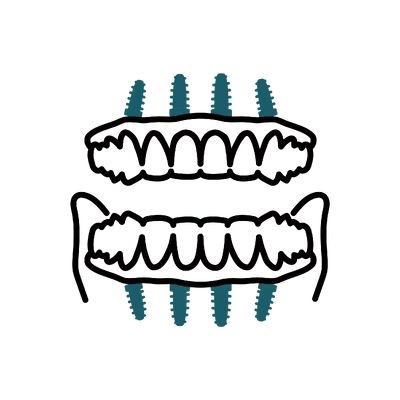
All-on-4 is a dental implant treatment that replaces a full arch of teeth by anchoring a fixed bridge to just four implants. Two sit upright at the front and two are angled at up to 45 degrees at the back, gripping the strongest available bone and often avoiding bone grafting. A temporary bridge is fitted the same day, so you leave with a complete set of teeth in one visit, and the implants themselves can last for life1.
If you have worn dentures or lived with a mouth of failing teeth, fixed teeth in a day can sound too good to be true. It is a long-established protocol with decades of evidence behind it, and your dentist plans every implant angle around a CT scan of your jaw. You stay awake but sedated, and most people find recovery gentler than feared.
The same-day teeth are temporary while the implants fuse to the bone, and your permanent bridge is fitted at four to six months on a second visit. The scan shows whether standard All-on-4 suits you or whether you need a variation, so a consultation is the honest starting point.
It can address a range of concerns, including:
Am I a Good Candidate for All-on-4 Dental Implants?
All-on-4 suits patients losing or missing a full arch who want fixed same-day teeth without separate bone grafting.
All-on-4 was designed for moderate bone loss, which makes the bone assessment different from single implants.
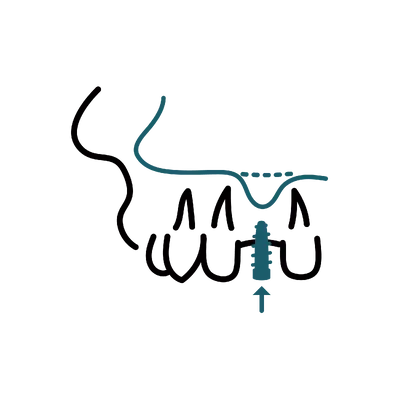
Built for compromised bone: The two rear implants tilt at up to 45 degrees to grip the strongest available bone, often avoiding grafting entirely.
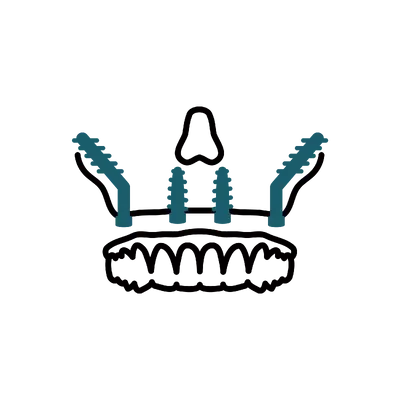
Severe upper loss has an answer: Where standard angled implants will not hold, zygomatic implants anchored in the cheekbone keep same-day teeth possible.
The CT scan decides: Very few patients are truly ineligible, but the scan determines whether conventional All-on-4 or a zygomatic variation fits your jaw.
Dentists look for the situations where a fixed full arch genuinely beats further repair work.
A whole arch failing: Multiple failing or heavily damaged teeth that need a definitive solution rather than another round of patchwork.
Loose dentures: Wearers who want a fixed alternative they never remove, with no adhesive and no movement when eating or speaking.
Beyond tooth-by-tooth treatment: Moderate bone loss that makes individual implants for every tooth impractical points directly at the full-arch protocol.
The screening focuses on the factors that threaten eight hours of healing across four implant sites.
Gum disease treated first: Active infection across the arch must be resolved before placement.
Smoking and diabetes managed: Smoking raises failure risk and should stop before surgery and through healing. Well-controlled diabetes is fine; uncontrolled levels mean stabilising first.
Grinding declared: Heavy night clenching can damage the prosthesis, so a night guard is part of the deal for bruxers. All of these shape the plan rather than ruling you out.
Same-day teeth are real, but the finished result arrives in stages.
Temporaries first: You leave surgery with a functional fixed bridge, then eat soft foods while the implants integrate.
Permanent bridge at 4-6 months: A second 3-5 day visit fits the final prosthesis, after which normal eating, including steak and apples, returns.
Maintenance is real: The implants can last a lifetime, but the bridge typically lasts 15-20 years in zirconia or 10-15 in acrylic, and individual implant failure (2-3% of cases) is managed without losing the arch.
Who is not suitable for all-on-4 dental implants?
- Active gum disease or unresolved infection across the arch
- Uncontrolled diabetes until levels are stabilised
- Smokers unwilling to stop around surgery and healing
- Night grinding without willingness to wear a night guard
- Severe upper jaw bone loss not yet assessed for zygomatic implants
- Current or recent antiresorptive medication (bisphosphonates) until MRONJ risk is assessed
- Under-18s whose jaw is still growing, until skeletal maturity
Pricing
How Much Will All-on-4 Dental Implants Cost in Thailand?
What all-on-4 dental implants costs at accredited hospitals in Thailand, and what your final quote depends on.
Get your exact price
Tell us what you're considering and we'll send a personalised quote from accredited hospitals within 24 hours.
Get my free quoteTypical prices in Thailand
Typical ranges based on recent hospital quotes. Your exact price depends on the hospital and how complex your case is, and is confirmed at your teleconsultation.
All-on-4 Dental Implants
All-on-4 is priced by the arch, so treating both your upper and lower teeth costs about twice a single-arch figure.
| Single-arch All-on-4 Four implants and a same-day temporary set of teeth for one jaw | $7,000 to $14,000 ฿238,000 to ฿476,000 |
| All-on-4 with zygomatic implants, per arch For an upper jaw with too little bone to hold standard implants | $12,000 to $20,000 ฿408,000 to ฿680,000 |
| Dual-arch All-on-4 Both jaws treated in one trip, eight implants in total | $14,000 to $28,000 ฿476,000 to ฿952,000 |
Added to the above where needed
| Final permanent prosthesis, per arch Fitted on a second visit, priced by the material you choose | $2,500 to $6,000 ฿85,000 to ฿204,000 |
Get your exact price
Tell us what you're considering and we'll send a personalised quote from accredited hospitals within 24 hours.
Clinics Trusted for All-on-4 Dental Implants
From internationally accredited flagships to dedicated specialist clinics, these are the kinds of facilities where international patients have this procedure.

Thantakit International Dental Center
Thailand's longest established dental center, operating in Bangkok since 1945 with more than 40 dentists
View hospital profile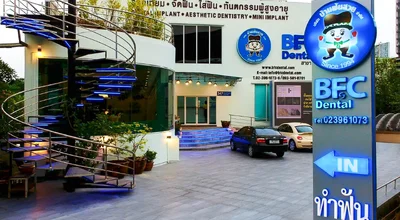
BFC Dental
Implant-focused Bangkok dental clinic founded in 1994, placing more than 4,600 implants a year
View hospital profile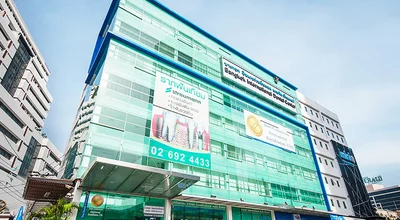
Bangkok International Dental Center
Thailand's first JCI-accredited dental center with more than 70 specialist dentists
View hospital profile
Get a Free Dental Quote in Minutes
Tell us what you need and we'll match you with the right specialist and return real clinic quotes.
- Itemised clinic quotes with no hidden fees
- Matched to a dentist experienced in your specific treatment
- Completely free, even if you decide not to go ahead


Rated 5 stars by our patients
The complete guide to All-on-4 Dental Implants in Thailand
Everything below is for readers who want the full detail: costs broken down, types and techniques, recovery, risks and safety, and planning your trip.
All-on-4 Dentists & Clinics in Thailand
All-on-4 is a specialist procedure. Not every implant dentist is set up to deliver it well. Here is what separates the clinics we work with from the rest.
Leading Clinics in Bangkok
Our partner clinics have dedicated implant suites, on-site CT scanners, CAD/CAM milling units, and in-house dental laboratories that can fabricate temporary prostheses while you wait. This is not treatment being outsourced across multiple providers, the implant team, the lab, and the follow-up are all under one roof. Our All-on-4 partners include leading dental centres and JCI-accredited international hospitals in Bangkok.
Experienced All-on-4 Dentists
The dentists we partner with have specific training in the All-on-4 protocol, not just general implant placement. Many have completed advanced fellowships in Seoul, Berlin, or Lisbon. High case volume is the differentiator, a dentist who performs full-arch cases weekly develops a level of speed and confidence that is difficult to replicate with occasional cases.
What to Look for in an All-on-4 Provider
Check that the clinic has an on-site lab, outsourcing the prosthetic work adds delays and communication errors. Ask how many full-arch cases the dentist performs monthly. Verify they use a recognised implant system with published long-term data. And confirm the quote clearly separates the surgical phase from the prosthetic phase, so there are no surprises when the permanent teeth are fitted.
Understanding Your Results
All-on-4 delivers one of the most dramatic transformations in dentistry. Here is what a realistic outcome looks like at each stage.
Typical All-on-4 Results
The change is immediate and visible. Patients leave surgery day with a full set of teeth where hours earlier they had failing stumps, gaps, or dentures. The temporary prosthesis is functional and aesthetic, not a placeholder. Once the permanent prosthesis is fitted months later, the teeth look natural, feel stable, and withstand normal eating forces including steak, apples, and bread.
What Results Can You Expect?
Expect a complete smile that functions like natural teeth. Chewing power is restored to near-normal levels. Speech clarity improves immediately for patients who struggled with denture movement. The permanent zirconia prosthesis is stain-resistant and does not discolour like acrylic. Facial support also improves, the prosthesis fills out the lip and cheek profile in a way that dentures often do not.
All-on-4 Cost in Thailand
Average Cost of All-on-4
All-on-4 in Thailand costs between $7,000 and $28,000 per arch, depending on the implant system, prosthetic material, and clinic. A dual-arch treatment (upper and lower) typically ranges from $14,000 to $28,000 total. These prices include the implants, same-day temporary prosthesis, extractions, CT scan, and all in-Thailand follow-ups. The final permanent prosthesis is quoted separately.
Cost Breakdown
The quote covers four implant posts per arch, the surgical fee, extractions of remaining teeth, local anaesthesia with sedation, a 3D CT scan, digital planning, and the temporary same-day prosthesis. The permanent prosthesis, fitted on a second visit, is priced separately because material choice (zirconia, porcelain, or acrylic) significantly affects the cost. This two-part structure lets you choose the material that fits your budget and priorities.
What Affects the Price?
The biggest price variables are the implant brand, the prosthetic material, and whether zygomatic implants are needed. Nobel Biocare implants cost more than Korean systems but carry more published data. Zirconia prostheses cost more than acrylic. Zygomatic cases add complexity and cost. Clinic location also plays a role, top Bangkok centres charge more than regional clinics, reflecting their equipment and staffing.
Thailand vs International Price Comparison
All-on-4 costs $21,000–$42,000 per arch in the US, A$19,600–A$38,500 in Australia, and £17,500–£35,000 in the UK. Thailand's $7,000–$14,000 per arch represents a saving of 50–70%. Even including flights and a two-week hotel stay, the total is typically half what you would pay at home. The savings on a dual-arch case can easily exceed $30,000.
All-on-4 vs Dentures
The main alternative to All-on-4 is a conventional removable denture, full or partial, which sits on the gum and can be taken out at night. It is far cheaper, needs no surgery, and can be made fairly quickly, so it is the obvious first option for replacing a whole arch of teeth without an operation.
The trade-offs are real, though. A denture rests on the gum rather than being anchored in bone, so it can move or rub when you eat and speak, usually needs adhesive, and has to come out for cleaning. Because nothing replaces the tooth root, the jawbone underneath keeps shrinking over the years, which is why dentures need relining or remaking2 and why the lower face can lose support over time. Implant-retained overdentures, which clip onto two implants and are still removable, improve the stability but keep the night-time removal and ongoing maintenance.
All-on-4 is the route when you want teeth that stay fixed in the mouth. Four implants anchor the bridge into bone, so it does not move, comes out only for a dentist, preserves the jawbone, and restores close to natural chewing force. If you are tired of a denture that shifts, or want a lasting, full-arch result rather than something you take out each night, the rest of this page covers how the fixed approach works.
Types of All-on-4 Treatment
All-on-4 is a protocol, not a single procedure. The right variation depends on your bone volume, how many arches you need, and whether you need zygomatic support.
Single-Arch All-on-4
One arch is treated, either upper or lower. Four implants support a full fixed prosthesis, with temporary teeth placed the same day. This is the most common starting point for patients with one arch of failing teeth.
- Full arch of fixed teeth from just four implants
- Same-day temporaries let you eat and speak immediately
- Permanent prosthesis fitted after four to six months on a second visit
- Best for: patients with one arch of failing or missing teeth and adequate bone
Dual-Arch All-on-4
Both upper and lower arches are treated in the same session or across two consecutive days. Eight implants total support two full prostheses. This is common for patients whose teeth have deteriorated across the entire mouth.
- Complete mouth transformation in a single treatment episode
- Coordinated treatment means one recovery period instead of two
- Significant cost savings compared to treating each arch separately
- Best for: patients with widespread tooth loss or failure in both jaws
All-on-4 with Zygomatic Implants
When the upper jaw has severe bone loss, one or both posterior implants are replaced with longer zygomatic implants that anchor into the cheekbone. This avoids bone grafting entirely and still allows same-day teeth.
- Eliminates the need for bone grafting in the upper jaw
- Same-day fixed teeth remain possible even with severe bone loss
- Requires a specialist with zygomatic implant training
- Best for: upper arch cases where bone loss rules out conventional posterior implants
All-on-6 (More Implants per Arch)
Some cases use six implants per arch rather than four, which is where you may see it called All-on-6 or All-on-X. The extra two implants spread the load more widely and can give a stronger foundation, particularly in the upper jaw where bone is softer. It needs adequate bone to place the additional implants, so your CT scan determines whether it is worthwhile for you.
- Two extra implants spread chewing forces across more anchor points
- Often preferred in the softer bone of the upper jaw
- Needs enough bone volume to place all six, confirmed on your scan
- Best for: patients with sufficient bone who want extra support, often in the upper arch
All-on-4 Techniques
The surgical approach and prosthetic options vary based on bone anatomy, the material you choose, and whether teeth need extracting on surgery day.
Guided vs Freehand Placement
Guided surgery uses a 3D-printed template from your CT scan to place each implant at a pre-planned angle and depth. Freehand relies on the surgeon's skill and intra-operative judgment. Guided is more precise and reduces chair time. Freehand is sometimes necessary when anatomy does not allow template use.
- Guided surgery reduces surgical error and shortens the procedure
- Pre-fabricated temporaries can be ready before surgery day with guided planning
- Freehand may be needed for complex anatomy or when adjustments are required mid-surgery
- Best for: guided is preferred for most cases; freehand for anatomically complex situations
Immediate vs Delayed Prosthetic Loading
Immediate loading means you get temporary teeth on surgery day, the standard All-on-4 approach. Delayed loading means waiting weeks or months before attaching the prosthesis. Delayed loading is rare with All-on-4 but may be used when implant stability at placement is borderline.
- Immediate loading is the standard protocol and works in the vast majority of cases
- Delayed loading is a fallback when primary stability is insufficient
- The temporary prosthesis is adjusted during healing and replaced with the final version later
- Best for: immediate is the norm; delayed only when stability metrics do not meet threshold
Prosthetic Material Options
The final prosthesis is typically monolithic zirconia, porcelain on a titanium framework, or high-impact acrylic on a titanium bar. Zirconia is the strongest and most natural-looking. Acrylic is lighter and easier to repair. Material choice affects durability, aesthetics, and price.
- Zirconia: maximum strength, stain resistance, and lifelike appearance
- Porcelain-on-titanium: good aesthetics with proven long-term performance
- Acrylic-on-titanium: lightweight, repairable, and the most affordable option
- Best for: zirconia for premium durability; acrylic for budget-conscious patients
All-on-4 Recovery Timeline
Days 1–3
Facial swelling peaks around day two, concentrated along the jaw. Prescribed painkillers, antibiotics, and anti-inflammatory medication manage symptoms. Eat liquids and very soft foods only, smoothies, yoghurt, soup. Keep your head elevated when resting and apply ice packs regularly.
Days 4–7
Swelling recedes and jaw soreness becomes manageable. You can start eating soft cooked foods like scrambled eggs, pasta, and fish. A follow-up appointment checks healing, adjusts the temporary prosthesis if needed, and confirms you are fit to travel home.
Weeks 2–8
Gradual return to a wider diet, though hard and crunchy foods should still be avoided. The implants are integrating with your jawbone beneath the temporary prosthesis. Oral hygiene around the prosthesis matters, use the brushes and rinse your dentist provides.
Months 4–6
Osseointegration is confirmed. You return for a second visit of three to five days for impressions, bite registration, and fitting of the final permanent prosthesis. This is crafted from your chosen material, zirconia, porcelain, or acrylic, and is designed to last 15–20 years or more.
When Can You Fly After All-on-4?
Most patients fly home 7–10 days after surgery, following a final follow-up appointment where the temporary prosthesis is checked and adjusted. Cabin pressure does not affect the implants. Some swelling may still be visible but should not cause discomfort during the flight. Your dentist will clear you for travel based on how your healing is progressing.
When Can You Return to Work and Exercise?
Desk-based work can resume after about a week, once the initial swelling and soreness have passed. Light walking is encouraged from day two. Avoid gym workouts for two to three weeks to prevent swelling flare-ups. Contact sports should wait at least six weeks, and a protective mouthguard is recommended once you return.
When Will You See Final Results?
The temporary teeth give you an immediate result, functional and presentable from day one. The final result comes when the permanent prosthesis is fitted at four to six months, once the implants have fully integrated. At that point, the teeth are optimised for strength, fit, and aesthetics. The smile you see after the permanent fitting is the one that stays.
Anaesthesia for All-on-4
All-on-4 in Thailand is done under local anaesthetic, so the jaw is fully numbed and you stay awake, with sedation added to keep you calm and relaxed throughout. You are pain-free and aware of pressure rather than discomfort, and the dental team monitors you the whole time. Despite the scale of the work, placing four implants and fitting same-day teeth, it is far gentler than most people expect going in.
The level of sedation is matched to you. Many patients are comfortable with the standard local-and-sedation approach, while anxious patients or longer dual-arch cases can have deeper sedation so the hours pass easily. Your dentist and the clinic's anaesthesia team decide what suits you based on your medical history, how many arches are being treated, and how nervous you feel about the chair.
Before treatment you have a consultation and CT scan, and your medications and health are reviewed so the right anaesthetic plan is in place. You feel nothing during the surgery itself. The soreness and swelling that follow peak in the first few days and are well controlled with the painkillers, antibiotics, and anti-inflammatories your dentist prescribes.
Risks and Safety of All-on-4
All-on-4 is a well-established protocol backed by over 20 years of published clinical research. Risks are real but uncommon when the procedure is performed by experienced implant teams.
- Facial swelling and bruising around the jaw (resolves within 7–10 days)
- Infection at one or more implant sites (managed with antibiotics)
- Numbness of the lip or chin from nerve proximity (usually resolves; rarely permanent)
- Implant failure before integration (uncommon, replaceable)
- Peri-implantitis, progressive gum and bone inflammation around the posts (the main long-term cause of late implant loss; preventable with hygiene)
- Fracture of the temporary prosthesis during healing
- Sinus complications with upper arch placement (rare)
- Screw loosening in the prosthesis (adjustable at follow-up)
Smoking, uncontrolled diabetes, and teeth grinding are the main modifiable risk factors. All are screened for during your consultation. The best protection against complications is choosing a clinic with dedicated implant experience and proper post-operative protocols.
Is All-on-4 Safe in Thailand?
Yes. The All-on-4 protocol is standardised globally, the same implant systems, angulation principles, and prosthetic workflows are used regardless of country. Our partner clinics are JCI-accredited, with on-site CT scanners and in-house dental laboratories. The dentists performing these procedures do so regularly, which is the most important safety factor.
How to Reduce Risks
Stop smoking before treatment. Get a full medical check-up and share your medication list with your dental team. If you grind your teeth, mention it during consultation, a night guard may be recommended to protect the prosthesis. Follow the soft-food protocol strictly during healing. Attend all follow-up appointments, both in Thailand and with your dentist at home.
What Is Peri-Implantitis?
Peri-implantitis is progressive inflammation of the gum and bone around the implant posts, driven by plaque, and it is the leading long-term cause of late implant loss with All-on-4. It builds slowly and is largely preventable. Clean under the bridge daily with a water flosser or interdental brushes, keep up professional cleans at home, and report any bleeding, swelling, or bad taste around the gum line early, when it is still reversible.
What If an Implant Fails?
Individual implant failure with All-on-4 occurs in roughly 2–3% of cases. If one implant fails, the prosthesis can usually continue to function on the remaining three while a replacement implant is placed. The treatment is designed with this contingency in mind. Your dentist will discuss the specific plan for managing complications during your consultation.
Planning Your Trip to Thailand for All-on-4
All-on-4 is a two-visit treatment. Here is what each trip involves, how long you need, and how the logistics work.
How Long to Stay in Thailand
Plan 7–10 days for the first visit. The first two days cover consultation, CT scanning, and treatment planning. Surgery typically happens on day three or four. The remaining days are for recovery and a follow-up appointment. The second visit, four to six months later, takes three to five days for the permanent prosthesis fitting.
What's Included in a Dental Trip
Your coordinator schedules everything, clinic appointments, transfers, and follow-up visits. The surgical quote covers implants, temporary prosthesis, extractions, anaesthesia, CT scan, and all in-Thailand appointments. Flights and accommodation are arranged separately. Your coordinator can recommend hotels with recovery-friendly amenities near the clinic.
Bangkok for Recovery
Bangkok is the practical choice for All-on-4. Your clinic, follow-up appointments, and emergency support are all within reach. The city has a wide range of accommodation at every price point, excellent soft-food options at every corner, and reliable transport. Recovery is not a beach holiday, you want proximity to your dental team, not distance from them.
Related Procedures
Other procedures that address similar goals or conditions, in case one of them is a closer fit for you.
Planning your treatment in Thailand
Independent guides to help you weigh the decision, before you commit to anything.
Common Questions About All-on-4 Dental Implants
Everything you need to know before your treatment

Medical References
Keep researching with AI
Open this guide in your AI assistant to dig deeper and ask the questions it didn't answer.
Opens in a new tab with this guide already loaded.
Medical disclaimer: This information is for educational purposes only and does not replace professional dental advice. Individual results, recovery times, and suitability vary. Always consult a qualified dentist before making decisions about treatment.
Ready to Get Started?
Speak with our care coordinators for a free, no-obligation consultation and personalised quote.
Speak to Our Team