Retainers in Thailand Your guide to cost, top dentists & hospitals
The most overlooked step in orthodontics is the one that keeps everything in place, and Thailand makes replacement affordable.
What Are Retainers?
Also known as: Dental Retainer · Orthodontic Retainer
A retainer is a custom-made dental appliance that holds your teeth in their corrected positions after braces or aligners by applying gentle, passive support. It works against relapse, the natural drift of teeth back toward where they started, which can begin within days of finishing treatment. There are two main kinds: a fixed bonded retainer, a thin wire glued behind the front teeth that works around the clock, and a removable one such as a clear Essix tray or a Hawley plate, worn at set times. Many orthodontists suggest both together for the steadiest long-term result.
Finishing treatment is a real milestone, and a retainer is how you protect it. Your orthodontist checks your bite, your habits, and whether anything has shifted before recommending the type that suits you. Grinding at night, or new crowns since your last retainer, shapes that choice too.
Retention is honestly a long-term commitment, not a quick phase, usually full-time at first, then nights only. Most people settle in within a day or two, and replacements are quick to make if one cracks or goes missing.
It can address a range of concerns, including:
Am I a Good Candidate for Retainers?
Retainers suit virtually everyone who has had orthodontic treatment; the assessment simply confirms what has changed since your teeth were straightened.
Dentists check how much your teeth have moved and whether your mouth is ready for the retainer type you want.
Finished braces or aligners: Whether treatment ended last week or years ago, in Thailand or elsewhere, retainers can be fitted from a fresh digital scan.
Stable or minimally shifted teeth: A retainer holds position; it does not correct relapse. Significant movement needs a short course of aligners or braces first.
Healthy gums for fixed wires: Active gum disease or heavy calculus is treated before a bonded wire goes in, since fixed retainers increase plaque retention.
Matched to your habits: Heavy night grinding can crack thin Essix trays, so a Hawley or nightguard option may suit better, and crowns or veneers placed since your last retainer call for a new scan.
No metal where you react to it: A known nickel or metal allergy rules out the standard Hawley and fixed wires, which are nickel-containing stainless steel; an all-acrylic Hawley or a metal-free Essix tray is used instead.
Who is not suitable for retainers?
- Significant relapse expecting a retainer alone to realign teeth
- Active gum disease or heavy calculus until treated, where a fixed wire is planned
- Heavy bruxism relying on a thin Essix tray alone
- Retainers made from outdated impressions after new crowns, veneers, or implants
- A standard nickel-containing Hawley or fixed wire where you have a known nickel or metal allergy; an all-acrylic Hawley or metal-free Essix tray is used instead
Pricing
How Much Will Retainers Cost in Thailand?
What retainers costs at accredited hospitals in Thailand, and what your final quote depends on.
Get your exact price
Tell us what you're considering and we'll send a personalised quote from accredited clinics within 24 hours.
Get my free quoteTypical prices in Thailand
Typical ranges based on recent hospital quotes. Your exact price depends on the hospital and how complex your case is, and is confirmed at your teleconsultation.
Retainers
Removable retainers wear out with use, so most people order spare sets and replace them over the years.
| Hawley retainer (per arch) Traditional wire and acrylic, adjustable and hard-wearing | $100 to $130 ฿3,400 to ฿4,420 |
| Clear Essix retainer (per arch) Transparent and discreet, though it wears out and needs replacing | $120 to $150 ฿4,080 to ฿5,100 |
| Fixed bonded retainer (per arch) A thin wire bonded behind the teeth, nothing to remember | $150 to $200 ฿5,100 to ฿6,800 |
Get your exact price
Tell us what you're considering and we'll send a personalised quote from accredited clinics within 24 hours.
Clinics Trusted for Retainers
From internationally accredited flagships to dedicated specialist clinics, these are the kinds of facilities where international patients have this procedure.

Bangkok International Dental Center
Thailand's first JCI-accredited dental center with more than 70 specialist dentists
View hospital profile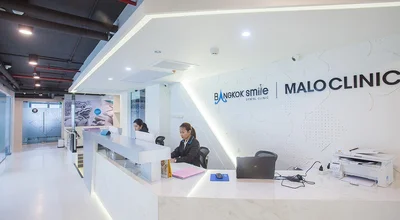
Bangkok Smile Dental Clinic
Multi-branch dental group founded in 2003 and the official Thai partner of the Malo All-on-4 network
View hospital profile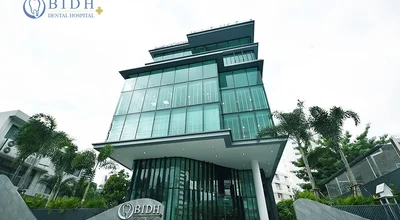
Bangkok International Dental Hospital
Purpose-built dental hospital opened in 2020 with an operating theatre and in-patient recovery rooms
View hospital profile
Get a Free Dental Quote in Minutes
Tell us what you need and we'll match you with the right specialist and return real clinic quotes.
- Itemised clinic quotes with no hidden fees
- Matched to a dentist experienced in your specific treatment
- Completely free, even if you decide not to go ahead


Rated 5 stars by our patients
The complete guide to Retainers in Thailand
Everything below is for readers who want the full detail: costs broken down, types and techniques, recovery, risks and safety, and planning your trip.
Clinics for Retainers in Thailand
Retainer fitting is a routine procedure, but precision still matters. Here is what our partners offer.
Leading Clinics in Bangkok
Our partner clinics use intraoral digital scanners and have on-site or rapid-turnaround lab facilities for retainer fabrication. Many offer same-day Essix retainers and next-day fixed retainer bonding. These are high-volume clinics that fit retainers daily.
Experienced Orthodontists
Retainer fitting is handled by orthodontists who understand the mechanics of retention, not just the fit of the appliance. They assess your bite, check for any shifting, and recommend the most appropriate retainer type based on your treatment history and risk factors.
What to Bring to Your Appointment
Bring any existing retainers (even broken ones), recent dental records, and your orthodontic treatment history if available. If you had braces or aligners elsewhere, details of your treatment help the orthodontist understand your retention needs. Digital records can be emailed in advance to save time.
What Retainers Prevent
Retainers do not create change; they prevent change. Here is what happens with and without proper retention.
With Retainers
Teeth remain in their corrected positions long-term. The straight, aligned result from your orthodontic treatment is preserved. Bone and gum tissue gradually adapt to the new tooth positions, providing increasing stability over time. This is the outcome your orthodontic treatment was designed to deliver.
Without Retainers
Teeth begin drifting within days of finishing active treatment. Lower front teeth are particularly prone to crowding relapse. Over months and years, significant shifting can occur, sometimes undoing a large portion of the correction. The longer you go without retention, the harder and more expensive it becomes to fix.
Retainer Cost in Thailand
Average Cost of Retainers
Retainers in Thailand typically cost $100–$200 per arch, depending on the type. Hawley retainers sit at the lower end, clear Essix retainers in the middle, and fixed bonded retainers at the upper end. These prices are a fraction of what the same retainers cost in Western countries.
Cost Breakdown
The total covers the orthodontist consultation, digital scan or impression, retainer fabrication, fitting, and any adjustments. For fixed retainers, bonding is included. The price per retainer makes ordering spare sets of removable retainers extremely practical; we recommend at least two sets.
Why Order Spares?
Clear Essix retainers crack, warp, and wear out over time. Having a spare set means you are never caught without retention if your primary retainer breaks. At Thailand prices, ordering two or three spare sets costs less than a single retainer at home. Your digital scan data can also be stored for future fabrication.
Thailand vs International Price Comparison
Retainers in Thailand cost 50–70% less than equivalent options in the US ($300–$600), Australia (A$300–A$550), and UK (£250–£500). The materials and fabrication methods are the same. The savings come from lower lab and orthodontist costs.
Types of Retainers Available
Each retainer type has distinct advantages. The best option depends on your treatment history, bite stability, and personal preferences. For most patients, a combination of fixed and removable retainers provides the most reliable protection.
Fixed Bonded Retainers
A thin stainless steel or braided wire bonded to the lingual surface of the front teeth, typically canine to canine.2,1 Provides continuous passive retention without any daily action. The most reliable option for preventing relapse because compliance is not a factor.
- Works around the clock without patient involvement; set and forget
- Invisible from the front, bonded behind the teeth
- Recommended for long-term or permanent wear, especially lower front teeth
- Best for: patients who want guaranteed retention without relying on daily wear habits
Clear Essix Retainers
Vacuum-formed transparent thermoplastic trays that fit over the full arch like a clear aligner. The most popular removable retainer due to near-invisible appearance and comfortable fit. Typically worn full-time initially, then transitioned to nights only.
- Nearly invisible when worn, similar appearance to a clear aligner
- Comfortable, easy to insert and remove, simple to clean
- Typically transitioned to nighttime wear after the first few months
- Best for: patients who want a discreet removable retainer with a comfortable fit
Hawley Retainers
The traditional design with an acrylic plate against the palate and a metal wire wrapping around the front teeth. More durable than Essix retainers, adjustable by an orthodontist, and repairable if damaged. The workhorse retainer that has been used for decades.
- Most durable removable option; lasts years with proper care
- Adjustable if minor tooth correction is needed over time
- Available in various colours and designs
- Best for: patients wanting maximum durability in a removable retainer
Retainer Fitting Process
Retainer fitting is straightforward and fast. Here is what the process involves for each retainer type.
Digital Impression and Fabrication
An intraoral scanner captures a precise 3D model of your teeth in under five minutes. The scan is used to design and fabricate your retainer, either on-site using a vacuum-forming machine for Essix retainers, or via a dental lab for Hawley retainers. Digital impressions are more comfortable and accurate than traditional moulds.
- No messy putty impressions needed; digital scanning takes under 5 minutes
- Higher accuracy produces better-fitting retainers
- Scan data can be stored for future retainer replacements
- Best for: all retainer types. This is the standard impression method
Fixed Retainer Bonding
A thin wire is measured, shaped, and bonded to the lingual surface of your front teeth using composite resin. The process takes 20–30 minutes per arch and involves no drilling or enamel removal. The wire is virtually undetectable from the front.
- No enamel removal or tooth preparation required
- Bonded directly to the back of the teeth with composite
- Immediate retention from the moment of placement
- Best for: patients wanting permanent, maintenance-free retention
Fit Check and Adjustment
Every retainer is checked for fit, bite clearance, and comfort before you leave. Removable retainers are adjusted for pressure distribution. Fixed retainers are checked for bonding integrity. Small modifications are made chairside to ensure a perfect fit.
- Fit verified with bite paper and visual inspection
- Pressure points adjusted to prevent discomfort during wear
- Fixed retainer bonding strength confirmed before discharge
- Best for: quality assurance. This step is part of every retainer fitting
Retainer Adaptation Timeline
Day 1
Removable retainers may feel tight initially, a sign of a good fit. Fixed retainers feel unusual against the tongue. Both settle quickly, and any discomfort is minor and short-lived. Take a clear Essix tray out before hot drinks or hot food; heat warps the thermoplastic and ruins the fit. Remove all retainers to eat, and brush before putting them back in.
Days 2–3
Most patients adjust fully within 48 hours. Removable retainers may affect speech very slightly at first, but this normalises rapidly. For fixed retainers, the tongue stops noticing the wire within a couple of days.
Week 1
Wearing retainers becomes habitual. Removable retainers should be worn full-time during the initial retention phase, removing only for eating and brushing. The transition to nighttime-only wear is guided by your alignment stability.
Long-Term
Removable retainers are typically worn nightly for the first year, then gradually reduced to several nights per week. Fixed retainers stay in place indefinitely. Regular dental check-ups should include retainer assessment and cleaning around fixed wires.
How Long Should You Wear Retainers?
The honest answer is indefinitely, in some form. Most orthodontists recommend full-time removable wear for 3–12 months, then nightly for at least another year, then several nights per week ongoing. Fixed retainers are designed to stay in place permanently.1,2 Retention is not a phase; it is a lifetime commitment to keeping your teeth where your orthodontic treatment put them.
Can Retainers Fix Minor Shifting?
If the shift is recent and minor, a well-fitting retainer can sometimes nudge teeth back or at least hold them where they are. For more significant relapse, new orthodontic treatment is usually needed first. The key is acting quickly; the sooner you address shifting, the easier the correction.
Getting Replacement Retainers From Overseas
If your digital scan data is stored at the clinic, replacement retainers can sometimes be fabricated and shipped to you without a return visit. Contact your care coordinator with your clinic details and they can check whether this is possible. Otherwise, a quick 2–3 day visit covers a new scan and fabrication.
Risks and Considerations
Retainers are among the lowest-risk dental appliances. Complications are uncommon but worth understanding.
- Mild speech changes during the first few days (temporary)
- Plaque buildup around fixed retainer wire (manageable with proper cleaning)
- Fixed retainer wire debonding from one or more teeth
- Removable retainer cracking or warping over time
- Tooth movement if removable retainers are not worn consistently
- Allergic or sensitivity reaction to the acrylic resin of a Hawley plate or the nickel-containing metal alloy of a Hawley or fixed bonded wire (uncommon; switch to an all-acrylic or metal-free appliance)
The main variable in long-term outcomes is retention itself. Teeth tend to drift back toward their pre-treatment position without ongoing retention1,2, and movement increases the longer the gap. Long-term wear, in whatever form suits your routine, is what keeps the result stable.
How Long Do Retainers Last?
Clear Essix retainers typically last 1–3 years before they crack or lose their shape and need replacing. Hawley retainers can last 5–10 years with care. Fixed bonded retainers can last indefinitely, though the bonding may need repair over time. Ordering spare Essix retainers while you are in Thailand is strongly recommended.
What If You Stopped Wearing Retainers?
If the shift is minor, new retainers can often hold teeth in their current position and prevent further movement. If significant relapse has occurred, a short course of aligner treatment or braces may be needed to re-correct alignment before new retainers are fitted. The extent of movement is assessed during your consultation.
Caring for Your Retainers
Clean removable retainers daily with a soft toothbrush and mild soap or retainer cleaning solution. Avoid hot water, which warps thermoplastic.3 Store them in their case when not in use. For fixed retainers, use floss threaders or a water flosser to clean under and around the wire.4 Professional cleaning every 6 months is recommended.
Planning Your Trip to Thailand for Retainers
Retainer fitting is one of the quickest dental procedures you can have done in Thailand. Here is how to plan it.
How Long to Stay in Thailand
Two to three days is sufficient. Day one covers your appointment, digital scan, and impression. Many Essix retainers can be fabricated same-day. Hawley retainers and fixed retainers are typically ready by the next day. A fitting and adjustment appointment completes the process.
Combining with Other Dental Work
Many patients get retainers fitted while having other dental work done in Thailand: veneers, whitening, implants. If you are planning a longer dental trip, retainer fitting can be added to your schedule with minimal extra time. Let your coordinator know so appointments are sequenced efficiently.
What Is Included in Your Appointment
Your care coordinator arranges the appointment and handles logistics. The quote covers the orthodontist consultation, digital scanning, retainer fabrication, fitting, and adjustments. Spare sets are recommended and quoted at a discounted rate. No complex treatment planning is needed; retainer fitting is a straightforward, fast process.
Related Procedures
Other procedures that address similar goals or conditions, in case one of them is a closer fit for you.
Planning your treatment in Thailand
Independent guides to help you weigh the decision, before you commit to anything.
Common Questions About Retainers in Thailand
Everything you need to know before your appointment

Medical References
- What Is a Teeth Retainer? (Cleveland Clinic)
- Orthodontic Retainers Types, Care, and Life After Braces (American Association of Orthodontists)
- Retainer Care 101 Ensuring Long-Term Orthodontic Success (American Association of Orthodontists)
- How to Clean Retainers AAO's Guide to Retainer Care (American Association of Orthodontists)
Keep researching with AI
Open this guide in your AI assistant to dig deeper and ask the questions it didn't answer.
Opens in a new tab with this guide already loaded.
Medical disclaimer: This information is for educational purposes only and does not replace professional dental advice. Individual results, recovery times, and suitability vary. Always consult a qualified dentist before making decisions about treatment.
Ready to Get Started?
Speak with our care coordinators for a free, no-obligation consultation and personalised retainer quote.
Speak to Our Team