Implant-Supported Bridge in Thailand Your guide to cost, top dentists & hospitals
Missing several teeth in a row? An implant bridge fills the gap without touching the healthy teeth beside it.
What Is Implant-Supported Bridge?
Also known as: Implant Bridge · Implant-Fixed Partial Denture
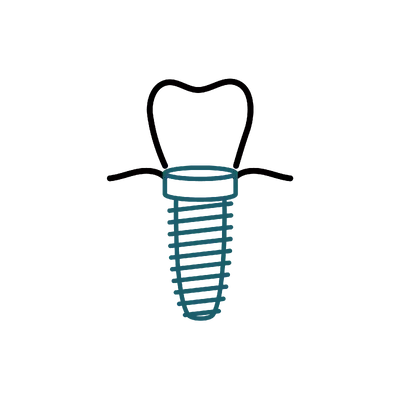
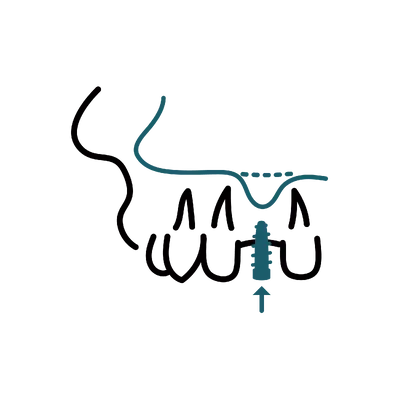
An implant-supported bridge is a fixed run of connected crowns that replaces several missing teeth in a row by anchoring to titanium implants in the jaw rather than to the natural teeth beside the gap. Two implants usually carry a three- or four-unit bridge, with three for longer spans, and the suspended replacement teeth between them, called pontics, fill the rest. Over a few months the implants fuse with the bone through osseointegration1,2, so the bridge stays firmly in place and keeps the jawbone working3,1. With good care the implants themselves can often last a lifetime.3
What reassures most people is what this approach leaves untouched. The healthy teeth either side of the gap are not filed down or crowned, so nothing sound is sacrificed to hold the bridge.
Gaps of roughly three to six teeth tend to suit this method, provided there is enough bone at the implant sites, and grafting can sometimes build that up first. A consultation with a CT scan is the honest way to know whether it fits your case.
It can address a range of concerns, including:
Am I a Good Candidate for Implant-Supported Bridge?
An implant bridge suits patients missing three to six consecutive teeth who want the gap fixed without crowning healthy neighbours.
The shape of the gap, and the condition of the teeth either side, decide whether this is the right restoration.
Three to six teeth in a row: Two implants typically carry a three- or four-unit span; longer spans need three.
Healthy neighbours worth keeping: The case for an implant bridge is strongest when the adjacent teeth are sound, since it spares them the filing a traditional bridge requires.
Already-crowned neighbours change the maths: If those teeth carry large fillings or crowns, a conventional bridge may still be reasonable.
Implants only anchor where bone allows, so the planned implant positions get scrutinised on the CT scan.
Adequate bone at anchor sites: The implants need solid bone at each planned position, even though not every missing tooth gets its own post.
Grafting factored in early: Significant bone loss across the span needs localised grafting or a sinus lift built into the plan, adding $500-$1,000 per site.
Ongoing loss is part of the case: Bone in an unstimulated gap keeps shrinking, which is itself a reason not to delay indefinitely.
A multi-unit bridge concentrates chewing forces on two or three implants, so your bite is part of the assessment.
Bruxism assessed: Heavy grinding or a strong unbalanced bite can overload the span and needs protective measures, typically a night guard.
Implant count matched to load: Longer spans, variable bone quality, and heavier bites push the plan from two implants to three.
Cantilevers used sparingly: Extending the bridge beyond the outermost implant is only appropriate for short spans in low-stress positions.
The same short list of healing risks applies here as to any implant placement.
Infection cleared first: Untreated gum disease or recurring infection in the gap area must be resolved before the anchor implants go in.
Smoking paused: Do not smoke during healing; it is one of the main preventable causes of integration failure.
Medical factors managed: Uncontrolled diabetes and recent IV bisphosphonate therapy both need addressing before surgery, and previous radiotherapy to the jaw usually rules out placement at the irradiated site because of osteoradionecrosis risk. Disclosing these early shapes a safer plan.
Who is not suitable for implant-supported bridge?
- Untreated gum disease or recurring infection in the gap area
- Significant bone loss across the span with no grafting or sinus lift in the plan
- Recent IV bisphosphonate therapy
- Previous radiotherapy to the jaw (risk of osteoradionecrosis)
- Heavy bruxism or a strong unbalanced bite without protective measures
- Active smoking or uncontrolled diabetes not yet addressed
Pricing
How Much Will Implant-Supported Bridge Cost in Thailand?
What implant-supported bridge costs at accredited hospitals in Thailand, and what your final quote depends on.
Get your exact price
Tell us what you're considering and we'll send a personalised quote from accredited hospitals within 24 hours.
Get my free quoteTypical prices in Thailand
Typical ranges based on recent hospital quotes. Your exact price depends on the hospital and how complex your case is, and is confirmed at your teleconsultation.
Implant-Supported Bridge
The cost follows two things, how many implants hold the bridge and how many teeth it replaces, both of which your dentist sets from the CT scan.
| 3-unit bridge on 2 implants Replaces three teeth on two posts, the usual arrangement | $3,500 to $5,000 ฿119,000 to ฿170,000 |
| 4-unit bridge on 2 implants A slightly longer span, still carried by two implants | $4,500 to $6,000 ฿153,000 to ฿204,000 |
| 5 to 6 unit bridge on 3 implants For a wider gap, with the load spread across three implants | $5,500 to $7,000 ฿187,000 to ฿238,000 |
Added to the above where needed
| Bone grafting, per implant site Needed when the jaw lacks the depth to hold an implant | $500 to $1,000 ฿17,000 to ฿34,000 |
Get your exact price
Tell us what you're considering and we'll send a personalised quote from accredited hospitals within 24 hours.
Clinics Trusted for Implant-Supported Bridge
From internationally accredited flagships to dedicated specialist clinics, these are the kinds of facilities where international patients have this procedure.

Thantakit International Dental Center
Thailand's longest established dental center, operating in Bangkok since 1945 with more than 40 dentists
View hospital profile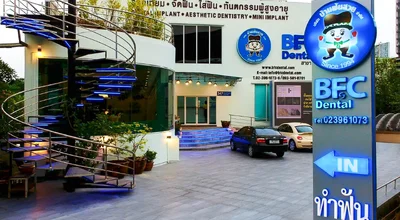
BFC Dental
Implant-focused Bangkok dental clinic founded in 1994, placing more than 4,600 implants a year
View hospital profile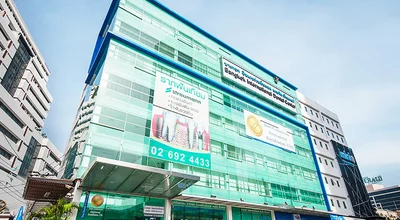
Bangkok International Dental Center
Thailand's first JCI-accredited dental center with more than 70 specialist dentists
View hospital profile
Get a Free Dental Quote in Minutes
Tell us what you need and we'll match you with the right specialist and return real clinic quotes.
- Itemised clinic quotes with no hidden fees
- Matched to a dentist experienced in your specific treatment
- Completely free, even if you decide not to go ahead


Rated 5 stars by our patients
The complete guide to Implant-Supported Bridge in Thailand
Everything below is for readers who want the full detail: costs broken down, types and techniques, recovery, risks and safety, and planning your trip.
Implant Bridge Dentists & Clinics in Thailand
An implant bridge demands precision in both the surgical placement and the prosthetic design. Here is what our partners bring to the table.
Leading Clinics in Bangkok
Our partners operate from clinics with in-house CAD/CAM milling, dedicated implant operatories, and on-site prosthodontists. The bridge is designed, milled, and colour-matched within the same facility. This tight integration between surgeon and lab is what produces bridges that fit precisely and look right from day one.
Experienced Bridge Dentists
The dentists we work with handle implant bridge cases routinely. Many have dual training in implant surgery and prosthodontics, meaning the same clinician who places the implants also designs the bridge. That continuity matters, it reduces handoff errors and ensures the surgical plan accounts for the prosthetic end result.
What to Ask During Consultation
Ask how many implants your case needs and why. Ask about the retention method, screw versus cement, and the rationale. Ask which material they recommend and what the trade-offs are. A good dentist will explain these decisions in terms of your anatomy and long-term prognosis, not just default to the most expensive option.
Understanding Your Results
An implant bridge fills a multi-tooth gap permanently. Here is what a realistic result looks like.
Typical Implant Bridge Results
The bridge is shade-matched and contour-adjusted to blend with your natural teeth. From the outside, there is no visible indication that the teeth are prosthetic. The gum tissue adapts around the pontics to create a natural-looking emergence profile. Functionally, you can chew normally on the bridge from the day the permanent restoration is fitted.
What Results Can You Expect?
A well-made implant bridge restores both appearance and function to a level that is indistinguishable from natural teeth. The adjacent teeth are preserved, the jawbone is maintained, and the restoration is designed to last 15–25 years with proper care. The cosmetic result depends on the precision of the lab work and the skill of the dentist, which is why clinic selection matters.
Implant-Supported Bridge Cost in Thailand
Average Cost of Implant-Supported Bridges
An implant-supported bridge in Thailand typically costs between $3,500 and $7,000, depending on the number of implants, the bridge span, and the material used. A two-implant three-unit zirconia bridge sits in the middle of this range. Longer spans requiring three implants and more pontics cost more.
Cost Breakdown
The quote covers implant posts, abutments, the bridge itself, CT scan, surgical fee, anaesthesia, and all follow-up appointments during your stay. The bridge fabrication, material, milling, colour matching, is included. If bone grafting is needed at one or more implant sites, that is quoted as an additional item.
What Affects the Price?
The number of implants and the number of crowns in the bridge are the primary cost drivers. Material choice matters too, full zirconia costs more than PFM. Guided surgery adds a small premium. Bone grafting, if required, adds $500–$1,000 per site. Location in the mouth affects complexity, anterior bridges require more aesthetic precision.
Thailand vs International Price Comparison
An implant-supported bridge costs $10,500–$21,000 in the US, A$9,800–A$19,300 in Australia, and £8,800–£17,500 in the UK. Thailand's $3,500–$7,000 represents a saving of 50–70%. For multi-unit bridges, the absolute dollar saving is significant enough to cover travel, accommodation, and a comfortable recovery in Bangkok.
Implant Bridge vs Traditional Bridge or Denture
The two less-invasive routes for the same gap are a traditional bridge and a removable partial denture. A traditional bridge fills the space by crowning the healthy teeth on either side and suspending replacement teeth between them, with no surgery and the work usually finished in two or three weeks. A partial denture clips in and out, costs the least, and needs no drilling at all. Both restore the look of the gap quickly.
The trade-offs are real, though. A traditional bridge means filing down two sound teeth to anchor it, and once that enamel is removed it does not grow back, so a problem with either support tooth can put the whole bridge at risk. Neither option places anything in the gap itself, so the jawbone underneath keeps shrinking from lack of stimulation. A partial denture also moves slightly while eating, can feel bulky, and tends to need relining or replacing over the years.
Where the neighbouring teeth are sound and you want a fixed result that lasts, an implant-supported bridge is the route the rest of this page covers. Because it anchors to implants in the jaw rather than to your own teeth, it leaves those healthy neighbours untouched, keeps the bone working, and typically lasts 15 to 25 years rather than the shorter lifespan of a conventional bridge or denture. A traditional bridge can still be the sensible choice when the adjacent teeth already carry large fillings or crowns, which is exactly the kind of judgement a consultation and CT scan settle.
Types of Implant-Supported Bridges
The bridge design depends on how it attaches to the implants, how many implants are used, and the span it needs to cover. Here are the main variations.
Screw-Retained Bridge
The bridge is fastened to the implant abutments with tiny screws, accessed through small holes on the biting surface that are sealed with composite. This design allows the dentist to remove the bridge non-destructively for cleaning or repair.
- Retrievable, can be unscrewed for professional maintenance
- No cement means no risk of excess cement irritating the gums
- Requires favourable implant angulation for screw access
- Best for: cases where implant angles allow direct screw retention
Cement-Retained Bridge
The bridge is cemented onto custom abutments, identical to how a conventional crown seats on a prepared tooth. No screw holes on the chewing surface means superior aesthetics. The trade-off is that removal requires cutting the bridge off.
- Clean biting surface with no screw access holes
- Simpler lab workflow that can reduce overall cost
- Well suited when implant angulation makes screw retention awkward
- Best for: aesthetic-zone bridges or cases where angulation limits screw access
Cantilever Bridge
The bridge extends beyond the outermost implant to replace a tooth at one end without a supporting implant beneath it. Used selectively when bone or anatomy prevents placing an additional implant. The cantilevered tooth bears less load by design.
- Reduces the number of implants needed for a given span
- Carefully engineered to manage the lever forces on the unsupported pontic
- Only appropriate for short cantilevers in low-stress locations
- Best for: situations where anatomy prevents placing an implant at one end of the span
Implant-Supported Bridge Techniques
Beyond the retention method, technique decisions include implant number, material choice, and whether immediate loading is feasible. Here is what our partners work with.
Two-Implant vs Three-Implant Bridge
A three- or four-unit bridge typically needs two implants. Five- or six-unit spans usually need three for adequate support. Over-engineering with too many implants adds cost without benefit. Under-engineering risks overloading the implants that are placed. Getting the number right is a clinical judgment call.
- Two implants support spans of up to four teeth in most situations
- Three implants are needed for longer spans or when bone quality varies across the site
- Implant spacing is planned digitally to optimise force distribution
- Best for: your dentist determines the number based on span length, bone quality, and bite forces
Zirconia vs Porcelain-Fused-to-Metal Bridges
Full-zirconia bridges are the strongest and most stain-resistant option, a single milled piece with no metal substructure. Porcelain-fused-to-metal (PFM) offers good aesthetics at a lower price but is more prone to porcelain chipping over time.
- Zirconia: maximum strength, stain resistance, and longevity
- PFM: proven track record, lower cost, good aesthetics
- Zirconia is now the default choice at most of our partner clinics
- Best for: zirconia for long-term durability; PFM when budget is the primary concern
Immediate Temporary Bridge
In selected cases, a temporary bridge can be attached to the implants on surgery day. This provides immediate aesthetics and function while the implants integrate. The permanent bridge replaces it at three to six months. Not all cases qualify, primary implant stability must be high.
- Eliminates the gap period for patients concerned about appearance
- The temporary is functional but requires a soft-food diet during healing
- Requires excellent bone quality and high insertion torque at placement
- Best for: aesthetic-zone gaps where going months without visible teeth is unacceptable
Computer-Guided (Flapless) Implant Placement
The implant positions are planned digitally on the CT scan and transferred to the mouth with a 3D-printed surgical guide, so the dentist places each implant through a precise, pre-planned channel rather than freehand. Because the guide locates the sites accurately, many cases can be done flapless, placing the implants through a small punch in the gum without lifting it back, which usually means less swelling and faster healing.
- CT-based planning aligns the implants for even load across the span and the prosthetic design
- Flapless access often means less swelling, less bleeding, and quicker recovery
- Adds a small premium for the planning and printed guide
- Best for: multi-implant bridges where accurate angulation and spacing matter, with adequate bone at each site
Implant-Supported Bridge Recovery Timeline
Days 1–3
Localised swelling and soreness at the implant sites. Pain medication and antibiotics are provided. Eat soft foods and avoid chewing on the implant side. Ice packs help manage swelling. If a temporary bridge was placed, avoid biting hard foods with it. Do not drive on the day of surgery if you had IV or oral sedation, arrange a transfer or taxi back to your hotel and let the sedation wear off fully; under local anaesthetic alone most people are fine to travel once numbness fades.
Days 4–7
Swelling subsides and discomfort drops to minimal. The implant sites are inspected at a follow-up. You can begin eating softer foods on the treated side. Travel clearance is given after the follow-up confirms normal healing.
Weeks 2–8
Implants are osseointegrating beneath the gum. Maintain careful oral hygiene around the healing sites and any temporary restoration. Avoid hard or sticky foods that could disturb the implants. Normal activity resumes.
Months 3–6
Integration is confirmed. Your permanent bridge is fabricated, colour-matched, contour-adjusted, and fitted during a second visit of three to five days. The finished bridge blends with your surrounding teeth and functions exactly like natural dentition.
When Can You Fly After Implant Bridge Surgery?
Most patients fly home 7–10 days after implant placement. A follow-up appointment before departure confirms healing is progressing normally. Flying does not affect the implants. If bone grafting was performed alongside placement, your dentist may recommend a couple of extra days before travelling.
When Can You Return to Work and Exercise?
Desk work resumes the day after surgery for most patients. Light activity is fine from day one. Strenuous exercise should wait five to seven days. Avoid contact sports for four to six weeks. The recovery is comparable to a single implant, manageable and short.
When Will You See Final Results?
If a temporary bridge is placed on surgery day, you see an immediate cosmetic improvement. The final result comes when the permanent bridge is fitted after osseointegration, typically three to six months. The permanent bridge is stronger, better fitting, and more precisely colour-matched than the temporary.
Anaesthesia for an Implant-Supported Bridge
Placing an implant-supported bridge is done under local anaesthetic, so you stay fully awake and aware the whole time, but the area around the implant sites is completely numbed before any work begins. You feel pressure and movement, never sharp pain, and your dentist checks the numbness is working before starting. There is no need to be put under for this kind of treatment.
If you feel anxious about the surgery, oral or intravenous sedation can be added on top of the local anaesthetic at most of our partner clinics. That leaves you relaxed and drowsy but still awake and breathing on your own, with the team monitoring you throughout. Whether sedation suits you is decided with your dentist beforehand, based on how you feel about treatment and your medical history.
Before placement you have a consultation with a CT scan, where your dentist reviews your bone, your bite, and any medications you take, and confirms the anaesthetic plan. During the procedure itself you feel nothing at the implant sites. Afterwards there is some soreness and swelling for a few days, more an ache than a sharp pain, and it is well managed with the medication and antibiotics you are given.
Risks and Safety of Implant-Supported Bridges
Implant-supported bridges have success rates comparable to single implants, which are usually successful.1,2 Complications are uncommon but should be understood before treatment.
- Localised swelling and tenderness at implant sites
- Infection around the implant (managed with antibiotics and hygiene)
- Peri-implantitis, chronic inflammation and bone loss around an implant, the most common cause of late failure (preventable with hygiene and check-ups)
- Sinus perforation or oro-antral communication when placing upper-posterior implants (rare, more likely when the maxillary sinus sits close to the planned site)
- Implant failure to integrate (uncommon, replaceable)
- Porcelain chipping or fracture on PFM bridges (repairable)
- Nerve proximity numbness in the lower jaw (rare, usually temporary)1
- Cement-related gum irritation with cement-retained bridges
- Screw loosening requiring retightening (simple maintenance)
Implant bridge failures are most commonly related to overloading during healing or poor oral hygiene around the implants. Both are preventable with proper post-operative care and follow-up.
Are Implant-Supported Bridges Safe in Thailand?
Yes. The procedure is well-established globally and the technique is identical regardless of where it is performed. Our partner clinics use premium implant systems from Nobel Biocare, Straumann, and Osstem, with digital planning and guided placement. JCI accreditation ensures the facility meets international infection-control and safety standards.
How to Reduce Risks
Follow the soft-food protocol during healing, the implants need undisturbed integration time. Keep the area clean with the interdental brushes and mouthwash provided. Do not smoke during healing.3 Attend your follow-up appointments in Thailand and arrange a check-up with your home dentist after you return.
What If a Component Needs Attention Later?
Screw-retained bridges can be removed by any implant dentist for inspection or repair. Porcelain chips on PFM bridges can be repaired intra-orally in many cases. If an implant loses integration, it is replaced and the bridge is modified or remade. Your coordinator can help arrange remote follow-up through our partner clinics or connect you with a local dentist familiar with your implant system.
Planning Your Trip to Thailand for an Implant-Supported Bridge
The treatment requires two visits. Here is how each one works and what to expect logistically.
How Long to Stay in Thailand
First visit: 7–10 days for consultation, imaging, implant placement, and follow-up. Second visit: three to five days for impressions, try-in, and permanent bridge fitting. The gap between visits is three to six months, depending on the healing rate confirmed by imaging.
What's Included in a Dental Trip
Your coordinator schedules all clinic appointments and arranges transfers. The treatment quote covers implants, bridge, CT scan, anaesthesia, and in-Thailand follow-ups. Flights and accommodation are arranged separately. Your coordinator can recommend hotels near the clinic and help with bookings.
Coordinating the Second Visit
The second visit is shorter and less intensive, three to five days for the permanent bridge fitting. Some patients take digital impressions during the first visit so the bridge can be designed remotely, reducing chair time on the second trip. Your coordinator manages the scheduling to minimise the time needed in Thailand.
Related Procedures
Other procedures that address similar goals or conditions, in case one of them is a closer fit for you.
Planning your treatment in Thailand
Independent guides to help you weigh the decision, before you commit to anything.
Common Questions About Implant-Supported Bridges
Everything you need to know before your treatment

Medical References
Keep researching with AI
Open this guide in your AI assistant to dig deeper and ask the questions it didn't answer.
Opens in a new tab with this guide already loaded.
Medical disclaimer: This information is for educational purposes only and does not replace professional dental advice. Individual results, recovery times, and suitability vary. Always consult a qualified dentist before making decisions about treatment.
Ready to Get Started?
Speak with our care coordinators for a free, no-obligation consultation and personalised quote.
Speak to Our Team