Composite Veneers in Thailand Your guide to cost, top dentists & hospitals
A straighter, brighter smile in a single sitting. No lab wait, no second trip, no fuss.
What Is a Composite Veneer?
Also known as: Tooth Bonding Veneers · Direct Composite Veneer
Composite veneers are a cosmetic dental treatment that reshapes the front of a tooth by applying tooth-coloured resin onto its surface and hardening it with a curing light. They cover staining, smooth a chip, close a small gap, or even out an uneven edge in one visit. The dentist sculpts each veneer by hand at the chair, with little or no enamel removed1. Most cases take one to three hours.
Because so little tooth is touched, this is one of the gentler ways to change a smile, which tends to ease the nerves for a first treatment abroad. Your dentist plans the work around your own teeth, not a template. If a veneer chips or stains later, it can usually be repaired rather than redone.
It is fair to expect a meaningful improvement rather than perfection. Composite usually lasts several years1 and picks up stain more readily than porcelain, so very dark teeth or large colour changes sit better in ceramic. Your dentist will say honestly which side of that line your case falls on at consultation.
It can address a range of concerns, including:
Am I a Good Candidate for Composite Veneers?
Composite suits a wide range of patients; the real assessment is whether the material matches your bite, habits and expectations.
Composite is at its best correcting modest, specific problems rather than transforming heavily damaged or very dark teeth.
Mild staining and small chips: Quick, affordable correction of the imperfections that catch your eye, completed in a single sitting.
Minor gaps closed without braces: Resin built up on adjacent teeth closes small spaces proportionally.
A trial run for porcelain: Because little or no enamel is removed, composite lets you preview a new smile shape and upgrade to ceramic later if you choose.
Limits on dark teeth: Very dark underlying teeth are hard to mask, and large colour changes look better in porcelain. Your dentist should say which side of that line you fall on.
Resin chips and stains faster than ceramic, so your bite and daily habits decide how well composite holds up.
Grinding and clenching: Composite chips more readily than porcelain under repeated load, so heavy grinders are assessed carefully and may be steered toward a different material.
Staining habits within reason: Smoking, coffee and red wine stain composite far faster than ceramic. Willingness to limit them, plus polishing every 6-12 months, keeps the result looking fresh.
Healthy teeth underneath: Active decay or untreated gum problems on the teeth being bonded are resolved first.
Composite trades longevity for affordability, speed and reversibility, and you need to be comfortable with that trade.
A 5-7 year lifespan: Shorter than porcelain's 10-15 years, with periodic professional polishing along the way.
Maintenance rather than permanence: Chips and stains are repaired or resurfaced quickly and cheaply, which is one of composite's genuine advantages.
Meaningful improvement, not perfection: Expect a smoother, more even smile, not porcelain-level translucency or stain resistance over time.
Who is not suitable for composite veneers?
- Active decay or untreated gum problems on the teeth being bonded
- Heavy grinding or clenching without a protection plan
- Smoking or heavy staining habits you are not ready to limit during the bond's life
- Expecting porcelain-level durability or stain resistance from composite
- Very dark underlying teeth or a large colour change, which is better suited to porcelain
Pricing
How Much Will Composite Veneers Cost in Thailand?
What composite veneers costs at accredited hospitals in Thailand, and what your final quote depends on.
Get your exact price
Tell us what you're considering and we'll send a personalised quote from accredited clinics within 24 hours.
Get my free quoteTypical prices in Thailand
Typical ranges based on recent hospital quotes. Your exact price depends on the hospital and how complex your case is, and is confirmed at your teleconsultation.
Composite Veneers
These are per-tooth prices, and a full upper set is usually eight to ten teeth.
| Direct freehand composite, per tooth Sculpted straight onto the tooth in a single visit | $150 to $250 ฿5,100 to ฿8,500 |
| Polychromatic layered composite, per tooth Several shades built up for a more natural look | $200 to $300 ฿6,800 to ฿10,200 |
| Indirect lab-fabricated composite, per tooth Made in a lab and bonded on at a second visit | $250 to $350 ฿8,500 to ฿11,900 |
Get your exact price
Tell us what you're considering and we'll send a personalised quote from accredited clinics within 24 hours.
Clinics Trusted for Composite Veneers
From internationally accredited flagships to dedicated specialist clinics, these are the kinds of facilities where international patients have this procedure.

Bangkok International Dental Center
Thailand's first JCI-accredited dental center with more than 70 specialist dentists
View hospital profile
Bangkok Smile Dental Clinic
Multi-branch dental group founded in 2003 and the official Thai partner of the Malo All-on-4 network
View hospital profile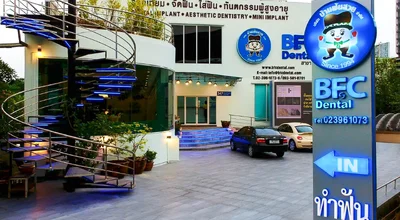
BFC Dental
Implant-focused Bangkok dental clinic founded in 1994, placing more than 4,600 implants a year
View hospital profile
Get a Free Dental Quote in Minutes
Tell us what you need and we'll match you with the right specialist and return real clinic quotes.
- Itemised clinic quotes with no hidden fees
- Matched to a dentist experienced in your specific treatment
- Completely free, even if you decide not to go ahead


Rated 5 stars by our patients
The complete guide to Composite Veneers in Thailand
Everything below is for readers who want the full detail: costs broken down, types and techniques, recovery, risks and safety, and planning your trip.
Composite Veneer Dentists & Clinics in Thailand
Composite veneers are a skill-dependent procedure. The material is only as good as the hand applying it. Here is what to look for when choosing a dentist in Thailand.
Leading Dental Clinics in Bangkok
Our partner clinics handle high volumes of composite bonding work for both local and international patients. They stock multiple composite resin systems in a full range of shades and opacities, which is essential for polychromatic layering. Clinics at this level also have the finishing instruments and polishing systems that make the difference between acceptable and excellent.
Experienced Composite Dentists
Our partner dentists have built their reputations on cosmetic bonding work. Many have trained specifically in direct composite artistry, attending courses and workshops that focus on freehand sculpting, colour matching and surface characterisation. This is not general dentistry; it is a craft that rewards practice and artistic sensibility.
What to Look for in a Composite Dentist
Before-and-after photos of actual composite work are non-negotiable. Look for cases similar to yours in scope and complexity. Pay attention to the surface detail, colour matching and how natural the finished teeth look. A good composite dentist will show you multiple shade options, discuss layering strategy, and set honest expectations about longevity compared to porcelain.
Understanding Your Results
Composite veneer results are visible the moment you leave the chair. Here is what a realistic outcome looks like.
Typical Composite Veneer Results
Composite veneers correct chips, gaps, minor misalignment and surface staining in one appointment. The result is a smoother, more uniform smile that blends with your existing teeth. In skilled hands, composite veneers look convincing, though they will not match the translucency and polish retention of high-end porcelain over time.
What Results Can You Expect?
Expect a meaningful improvement, not perfection. Composite is excellent at fixing specific imperfections and creating a more even smile, but it has limitations. Very dark underlying teeth are harder to mask. Large colour changes look better in porcelain. Your dentist should be direct about what composite can and cannot achieve for your particular case during consultation.
Composite Veneer Cost in Thailand
Average Cost of Composite Veneers
Composite veneers in Thailand typically cost $150–$350 per tooth depending on the technique, the number of teeth and the clinic. A full set of 8–10 upper composite veneers usually comes in at $1,200–$3,500, significantly less than porcelain and a fraction of what the same work costs in Western countries.
Cost Breakdown
The price is simpler than porcelain veneers because there is no lab fabrication fee. You are paying for the dentist's time, the composite material, and the skill required to sculpt a convincing result freehand. Chair time is the biggest cost driver: a full polychromatic layered case takes longer and costs more than simple single-shade bonding.
What Affects the Price?
The number of teeth treated and the complexity of the sculpting are the main variables. A single chipped tooth repaired in 30 minutes costs far less than a 10-tooth polychromatic layered makeover. Indirect composite veneers cost more due to the added lab step. Dentist experience also plays a role, and a specialist in composite artistry may charge a premium.
Thailand vs International Price Comparison
Composite veneers in Thailand cost 60–70% less per tooth than equivalent work in the US ($450–$900), Australia (A$400–A$850), and UK (£400–£750). Because there is no expensive lab fabrication involved, the price difference is almost entirely driven by lower dental chair-time costs in Thailand.
Types of Composite Veneers
Composite veneers are all based on tooth-coloured resin, but the application method varies. The approach your dentist chooses depends on the number of teeth, the complexity of the changes, and how refined a finish you want.
Direct Freehand Composite
The dentist applies and sculpts composite resin directly onto each tooth by hand, layering colours and translucencies to build a natural-looking surface. This is the standard approach, completed entirely chairside in one visit with no lab involvement.
- No laboratory work, finished in a single appointment
- Minimal or zero enamel removal in most cases
- Real-time shade and shape adjustments during placement
- Best for: patients wanting immediate results with the simplest possible process
Indirect Composite Veneers
Composite shells are fabricated outside the mouth on a model of your teeth, either by a technician or via CAD/CAM milling. The finished veneers are bonded at a separate appointment. This adds a lab step but allows finer control over shape and surface.
- Better control over contour and surface finish than freehand work
- Lab-cured composite may offer improved wear resistance
- Requires two appointments but produces a more polished result
- Best for: patients wanting composite-level pricing with closer-to-porcelain refinement
Injection Moulding Technique
A wax-up of the desired result is created first, then a silicone mould is made from that template. Composite resin is injected into the mould while seated over the teeth, producing a precise and predictable outcome across multiple teeth simultaneously.
- Highly predictable shape based on a pre-approved wax-up design
- Faster application when treating six or more teeth at once
- Consistent results across all teeth in the smile zone
- Best for: full-smile composite makeovers where symmetry and consistency matter most
Composite Veneer Techniques
The technique affects how the resin is applied, how refined the surface looks, and how long the appointment takes. Here is what is commonly used in Thai clinics and when each makes sense.
Layered Polychromatic Technique
Multiple shades and opacities of composite are layered to replicate the colour transitions in natural teeth: opaque dentine shades at the base, translucent enamel shades at the surface. More time-consuming but produces the most realistic result in composite.
- Mimics the colour depth and translucency of natural tooth structure
- Requires an experienced hand, as not all dentists can execute this well
- Adds 15–20 minutes per tooth compared to single-shade application
- Best for: patients who want composite but care deeply about a natural finish
Single-Shade Application
A universal composite shade is applied and sculpted in fewer layers. Faster and more straightforward, this approach works well for minor corrections where the goal is to fix a chip, close a gap or smooth an edge rather than completely resurface the tooth.
- Quickest technique at 20–30 minutes per tooth
- Works well for targeted repairs rather than full-coverage veneers
- Lower cost per tooth due to shorter chair time
- Best for: small repairs, edge bonding and single-tooth corrections
Stamp and Template Technique
Pre-formed composite matrices or custom silicone guides are used to shape the resin consistently across multiple teeth. This speeds up application while ensuring uniform contour and proportion across the full smile zone.
- Consistent shape and proportion across all treated teeth
- Reduces chair time for full-arch composite cases
- Combines speed with a level of design control not available freehand
- Best for: six or more teeth where consistent shape matters more than individual customisation
Composite Veneer Recovery Timeline
Immediately After
You can eat and drink straight away. There is no numbness (unless local anaesthetic was used) and no downtime. The composite is fully hardened before you leave the chair. Avoid very hard or crunchy foods for the first 24 hours as a precaution.
Days 1–3
Your teeth may feel slightly different as your tongue adjusts to the new contours. This settles quickly. Maintain your usual brushing and flossing routine. Avoid deeply staining foods and drinks during the first 48 hours if possible.
Week 1
A follow-up appointment may be scheduled to check the bite and refine any polishing. By now the composite feels completely natural against your tongue and lips.
Ongoing
Composite resin picks up surface stains more readily than porcelain. Limiting coffee, tea, red wine and tobacco helps preserve the colour. Professional polishing every 6–12 months keeps them looking fresh. Expect 5–7 years of wear before replacement or resurfacing.
When Can You Fly After Composite Veneers?
You can fly the same day if needed, though most patients stay for a follow-up check two to three days later. Composite veneers are fully cured before you leave the chair and flying has no effect on bonded resin. A short stay of 3–5 days is ideal to allow a follow-up and some holiday time.
When Can You Eat and Drink Normally?
Immediately. Once the composite is light-cured, it is at full strength. The only precaution is avoiding deeply coloured foods and drinks for the first 48 hours, as freshly bonded composite is slightly more susceptible to staining during this window. After that, eat normally but treat the composite with the same respect you would give natural enamel.
How Long Will Composite Veneers Look Good?
Composite veneers look their best for the first two to three years. After that, some surface staining and minor wear are normal. Professional polishing every 6–12 months refreshes the appearance significantly. Most patients find the 5–7 year lifespan acceptable given the lower cost and the ease of repair or replacement.
Risks and Safety of Composite Veneers
Composite veneers are one of the most conservative cosmetic dental treatments available. Because they require little or no enamel removal, the procedure is largely reversible and the risk profile is very low.
- Periodic polishing or resurfacing needed to maintain appearance
- Debonding from the tooth surface under significant force (uncommon)
- Shorter lifespan than porcelain; budget for replacement at 5–7 years
During consultation your dentist will assess the scope of work needed and be upfront about whether composite is the right material for your case. For extensive colour changes or patients with heavy bites, porcelain may be recommended instead.
Are Composite Veneers Safe in Thailand?
Yes. Composite bonding is one of the simplest and safest cosmetic dental procedures, used worldwide for decades. Our partner clinics use internationally recognised composite resin brands and follow standard bonding protocols. The procedure requires no anaesthesia in many cases and involves no irreversible changes to the tooth structure. The most common after-effect is mild tooth sensitivity for a few days, because the etching step can briefly irritate the enamel or dentine; it is harmless and fades on its own.
How to Get the Best Result
The quality of composite veneers depends almost entirely on the dentist's skill. Composite is sculpted freehand, so the artistic ability and experience of the operator matter more than the material itself. Ask to see before-and-after photos of the dentist's own composite work, not generic stock images. Volume matters: a dentist who does composite veneers daily will produce a better result than one who does them occasionally.
When Do Composite Veneers Need Replacing?
Expect to replace or resurface composite veneers after 5–7 years. Signs that replacement is due include noticeable staining that polishing cannot remove, chipping, rough edges, or colour mismatch with your natural teeth. Replacement is quick and inexpensive, using the same process as the original placement. Some patients choose to upgrade to porcelain veneers at this point.
Planning Your Trip to Thailand for Composite Veneers
Composite veneers require the shortest trip of any veneer treatment. Most patients need only 3–5 days.
How Long to Stay in Thailand
A stay of 3–5 days is sufficient. Direct composite veneers are completed in a single appointment, often lasting one to three hours depending on the number of teeth. The remaining days cover a pre-treatment consultation, a follow-up check, and time to enjoy Bangkok or the islands before flying home.
What Is Included in a Dental Trip
Your care coordinator schedules your appointments and arranges clinic logistics. The dental quote covers consultation, shade matching, composite application, sculpting, polishing and a follow-up visit. Flights and hotel are arranged separately, though your coordinator can help with nearby accommodation recommendations.
Combining with Other Dental Work
Composite veneers pair well with professional teeth whitening; whitening your natural teeth first allows the composite to be shade-matched to your brightest colour. Some patients use composite veneers as a trial run before deciding whether to invest in porcelain veneers on a future trip.
Related Procedures
Other procedures that address similar goals or conditions, in case one of them is a closer fit for you.
Planning your treatment in Thailand
Independent guides to help you weigh the decision, before you commit to anything.
Common Questions About Composite Veneers
Everything you need to know before your treatment

Medical References
Keep researching with AI
Open this guide in your AI assistant to dig deeper and ask the questions it didn't answer.
Opens in a new tab with this guide already loaded.
Medical disclaimer: This information is for educational purposes only and does not replace professional dental advice. Individual results, recovery times, and suitability vary. Always consult a qualified dentist before making decisions about treatment.
Ready to Get Started?
Speak with our care coordinators for a free, no-obligation consultation and personalised quote.
Speak to Our Team