Minimal-Prep Veneers in Thailand Your guide to cost, top dentists & hospitals
Keep your natural teeth intact and still walk away with the smile you have been picturing.
What Is a Minimal-Prep Veneer?
Also known as: No-Prep Veneers · Ultra-Thin Porcelain Veneer
Minimal-prep veneers are ultra-thin porcelain shells that improve the look of your front teeth by bonding to the surface with little or no enamel removed1,2. Each shell is roughly 0.2 to 0.5 mm thick, about the depth of a fingernail, and can correct mild discolouration, smooth uneven edges and close small gaps. Because so little tooth is touched, a true no-prep case can often be reversed, since your natural tooth stays intact beneath the ceramic. With good care, results usually last around 10 to 15 years.1
The work runs over two visits with lab time between: a scan and shade match first, then bonding once the shells are made. Anaesthesia is often unnecessary because there is minimal or no drilling, so most people find the appointment painless.
This is a refinement, not a full reshaping, so it suits teeth already close to where you want them. If your teeth are heavily stained, crowded or protruding, an honest dentist may suggest conventional veneers for a better, longer-lasting result, and a consultation is where that gets decided.
It can address a range of concerns, including:
Am I a Good Candidate for Minimal-Prep Veneers?
This is the most case-selective veneer treatment: your existing tooth position and shade decide whether ultra-thin shells can work at all.
Ultra-thin shells refine rather than rebuild, so your starting anatomy has to be close to right already.
Well-aligned teeth: Good underlying shape is essential. Protruding teeth or significant crowding make prepless shells look bulky and need conventional preparation instead.
Mild discolouration only: At 0.2-0.5mm, the ceramic cannot mask deep colour. Heavily discoloured teeth get a better result from standard veneers with full masking thickness.
The right scale of correction: Small gaps, minor chips and slight irregularities are exactly what this approach is designed for.
The bond to intact enamel is what makes these veneers last, so enamel condition is examined closely.
Adequate sound enamel: Adhesion to intact, unprepared enamel is typically stronger and more durable than to prepared dentine, which is one reason minimal-prep veneers perform well over time.
Structurally deficient enamel rules it out: Enamel hypoplasia, fluorosis, acid erosion or heavily worn incisal edges undermine the bond the whole approach relies on, and usually point to conventional preparation instead.
Healthy mouth first: Active decay, gum disease or significant bite problems are resolved before anything is bonded.
Conservative by preference: The approach suits patients who prioritise keeping natural tooth structure, in some cases with zero removal at all.
Thin shells are the most vulnerable veneers under grinding, so bite forces carry extra weight in the assessment.
Heavy bruxism is a red flag: Ultra-thin shells chip more readily under grinding, so heavy grinders often need conventional thickness, a stronger material or a different plan.
A night guard if you grind: Even mild clenchers should plan on protection at night.
Honest case selection: A trustworthy dentist redirects you to conventional preparation when minimal-prep would underperform, and you should want them to.
Expect refinement, not transformation, and confirm which version of minimal-prep your teeth actually allow.
Subtle changes by design: The result should look effortless. Dramatic shape changes are not what this approach delivers.
No-prep versus minimal-prep: True no-prep with zero enamel removal is reversible; light preparation of 0.1-0.3mm is not. Your dentist determines which applies at consultation.
Conventional longevity: With good care, results last 10-15 years, comparable to standard porcelain veneers.
Who is not suitable for minimal-prep veneers?
- Heavily discoloured teeth that ultra-thin ceramic cannot mask
- Protruding teeth or significant crowding needing conventional preparation
- Structurally deficient enamel (hypoplasia, fluorosis, acid erosion or heavily worn incisal edges) that cannot support a reliable bond
- Untreated decay or gum disease until resolved
- Heavy grinding without a night guard plan
Pricing
How Much Will Minimal-Prep Veneers Cost in Thailand?
What minimal-prep veneers costs at accredited hospitals in Thailand, and what your final quote depends on.
Get your exact price
Tell us what you're considering and we'll send a personalised quote from accredited clinics within 24 hours.
Get my free quoteTypical prices in Thailand
Typical ranges based on recent hospital quotes. Your exact price depends on the hospital and how complex your case is, and is confirmed at your teleconsultation.
Minimal-Prep Veneers
Every figure here is the price for one tooth, so a full upper set of eight to ten veneers multiplies up from these numbers.
| Pressed ultra-thin E-Max, per tooth The strongest minimal-prep shell and the usual starting point | $400 to $600 ฿13,600 to ฿20,400 |
| Feldspathic refractory veneer, per tooth Handcrafted and the thinnest available, for the most lifelike look | $500 to $800 ฿17,000 to ฿27,200 |
| No-prep prepless veneer, per tooth No enamel removed at all, so the work can be undone later | $450 to $700 ฿15,300 to ฿23,800 |
Get your exact price
Tell us what you're considering and we'll send a personalised quote from accredited clinics within 24 hours.
Clinics Trusted for Minimal-Prep Veneers
From internationally accredited flagships to dedicated specialist clinics, these are the kinds of facilities where international patients have this procedure.
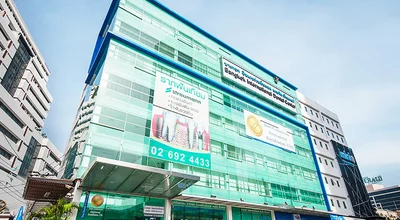
Bangkok International Dental Center
Thailand's first JCI-accredited dental center with more than 70 specialist dentists
View hospital profile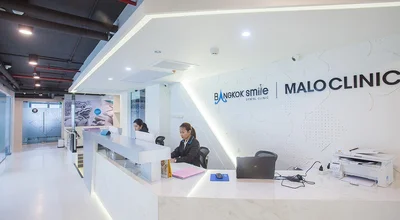
Bangkok Smile Dental Clinic
Multi-branch dental group founded in 2003 and the official Thai partner of the Malo All-on-4 network
View hospital profile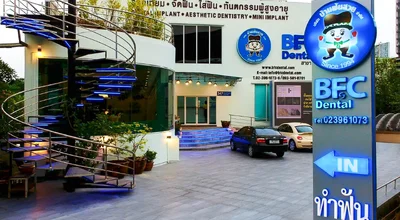
BFC Dental
Implant-focused Bangkok dental clinic founded in 1994, placing more than 4,600 implants a year
View hospital profile
Get a Free Dental Quote in Minutes
Tell us what you need and we'll match you with the right specialist and return real clinic quotes.
- Itemised clinic quotes with no hidden fees
- Matched to a dentist experienced in your specific treatment
- Completely free, even if you decide not to go ahead


Rated 5 stars by our patients
The complete guide to Minimal-Prep Veneers in Thailand
Everything below is for readers who want the full detail: costs broken down, types and techniques, recovery, risks and safety, and planning your trip.
Minimal-Prep Veneer Dentists & Clinics in Thailand
Minimal-prep demands a dentist who knows when to use the approach and, just as importantly, when not to. Here is what to look for.
Leading Dental Clinics in Bangkok
Our partner clinics are equipped with intraoral scanners, digital design software and relationships with labs that specialise in ultra-thin ceramic fabrication. They handle minimal-prep cases regularly for international patients, not as a novelty but as a standard part of their cosmetic dentistry offering.
Experienced Minimal-Prep Dentists
Our partner dentists have specific training and case experience in minimal-prep and no-prep techniques. They understand the clinical boundaries: which teeth suit prepless placement, which need light preparation, and which cases should be redirected to conventional veneers for a better long-term result.
What to Look for in a Minimal-Prep Dentist
Ask for before-and-after photos of actual minimal-prep cases, not conventional veneer work presented as minimal-prep. A trustworthy dentist will discuss the limitations openly. If your teeth are heavily discoloured, protruding or have a heavy bite, they should say so and recommend the right approach rather than forcing a minimal-prep technique where it does not belong.
Understanding Your Results
Minimal-prep veneer results are visible immediately after bonding. Here is what is realistic and what to expect.
Typical Minimal-Prep Veneer Results
Minimal-prep veneers are best at refining what is already close to good. They correct mild discolouration, smooth uneven edges, close small gaps and create a more uniform smile line, all without altering the underlying tooth. The result should look effortless because the changes are subtle by design. This is not the approach for dramatic transformations.
What Results Can You Expect?
You see the finished result the moment the veneers are bonded. Because the preparation is so conservative, there is no waiting period. Use the consultation to set clear expectations. Bring photos of the result you want and ask your dentist to explain what is achievable with your specific tooth anatomy. The consultation is where potential problems are identified and avoided.
Minimal-Prep Veneer Cost in Thailand
Average Cost of Minimal-Prep Veneers
Minimal-prep veneers in Thailand typically cost $400–$800 per tooth, depending on the material and fabrication method. A full set of 8–10 upper veneers runs $3,200–$8,000. The premium over conventional veneers reflects the specialist lab work required to produce 0.2–0.5 mm shells that are still strong enough to function long-term.
Cost Breakdown
The biggest cost component is laboratory fabrication; ultra-thin ceramics require more skill, more time and more specialised equipment than standard-thickness veneers. The dentist's fee covers consultation, any minimal preparation, bonding and follow-up. Because less chairside preparation is involved, the clinical fee is often lower than for conventional veneers.
What Affects the Price?
Material is the main variable. Handcrafted feldspathic minimal-prep veneers are the most expensive due to the ceramist time involved. Pressed ultra-thin E-Max sits in the middle. The number of teeth treated affects per-unit pricing, with larger cases typically coming in lower per tooth. Zero-prep cases may cost slightly more because bonding to unprepared enamel demands more precise lab work.
Thailand vs International Price Comparison
Minimal-prep veneers in Thailand cost 60–70% less per tooth than equivalent treatment in the US ($1,200–$2,400), Australia (A$1,100–A$2,200), and UK (£1,000–£2,000). The savings are particularly significant for minimal-prep because the lab component, the most expensive part, is where Thailand's cost advantage is greatest.
Types of Minimal-Prep Veneers
The term "minimal-prep" covers several approaches ranging from zero enamel removal to very light reshaping. Which one suits you depends on your tooth anatomy, how much colour change is needed, and whether the teeth protrude at all.
No-Prep / Prepless Veneers
The veneer is bonded directly to the natural tooth surface with zero enamel removed. The tooth is simply etched for bonding and the ultra-thin ceramic shell is cemented in place. This is the most conservative option and is fully reversible.
- Zero enamel removal, with teeth remaining completely intact
- Often requires no anaesthesia, making the appointment painless
- Not suitable for protruding teeth or cases needing significant colour masking
- Best for: well-aligned teeth that need subtle colour or shape enhancement
Minimal-Prep Veneers
A very small amount of enamel (0.1–0.3 mm) is gently reshaped to create a flush bonding surface and prevent the finished veneers from feeling bulky. This slight preparation widens the range of patients who can benefit from ultra-thin veneers.
- Preserves the vast majority of natural enamel
- Prevents a bulky or over-contoured appearance at the margins
- Suitable for a broader range of tooth positions and shapes
- Best for: patients whose anatomy needs minor adjustment to achieve a precise fit
Selective-Prep Approach
Only specific areas of each tooth are lightly prepared, for example the incisal edge or a prominent spot, while the rest of the surface remains untouched. This targeted method fine-tunes the result tooth by tooth without unnecessary reduction.
- Tailored preparation based on each individual tooth's anatomy
- Optimises contour and gingival emergence on a case-by-case basis
- Minimises the total amount of enamel removed across the full case
- Best for: cases where some teeth need preparation and others do not
Minimal-Prep Veneer Techniques
The technical challenge with minimal-prep is bonding a wafer-thin shell reliably without over-contouring the tooth. Here is how Thai dentists handle the main variables.
Digital Impression Workflow
An intraoral scanner captures a precise 3D model of the teeth, eliminating the need for traditional putty impressions. The digital file goes straight to the lab's CAD software, where the veneer is designed to exact thickness specifications. This is the standard workflow for minimal-prep cases in leading Thai clinics.
- More accurate than traditional impressions for ultra-thin restorations
- Allows the lab to control thickness to 0.1 mm tolerances
- Digital files can be shared between dentist and lab for real-time design review
- Best for: all minimal-prep cases where precision matters most
Refractory Die Technique
Feldspathic porcelain is built up layer by layer on a refractory model, fired at high temperature, then carefully removed. This handcrafted method produces the thinnest, most translucent veneers available, as thin as 0.2 mm, with lifelike colour depth.
- Produces the thinnest possible veneers with maximum translucency
- Allows the ceramist to control shade transitions precisely
- Requires a highly skilled technician and longer fabrication time
- Best for: upper front teeth where translucency and ultra-thin profile are paramount
Pressed Ultra-Thin E-Max
Lithium disilicate is pressed into moulds at reduced thickness (0.3–0.5 mm), combining the strength advantages of E-Max with a minimal-prep profile. Stronger than feldspathic at equivalent thickness, making it suitable for patients with moderate bite forces.
- Higher flexural strength than feldspathic porcelain at the same thickness
- Suitable for a wider range of bite patterns than traditional minimal-prep materials
- Can be characterised with surface staining for good aesthetics
- Best for: patients wanting minimal-prep with added durability from lithium disilicate
Minimal-Prep Veneer Recovery Timeline
Day 1
Because little or no enamel is removed, sensitivity is usually minimal or absent. You can eat normally, though it makes sense to avoid extremely hard or sticky foods for the first 24 hours while the bond fully matures.
Days 2–3
Your teeth may feel slightly different in texture or thickness as you adjust to the ultra-thin shells. This passes within a day or two. Normal brushing and flossing continue as usual.
Week 1
A follow-up visit confirms the bite is balanced and the margins sit flush with the gum line. Most patients forget the veneers are there by this point. Any minor adjustments are made at this appointment.
Ongoing
Maintain minimal-prep veneers the same way you would your natural teeth: brush twice daily, floss, and attend regular dental check-ups. Avoid biting hard objects and consider a night guard if you grind. Because the underlying enamel is largely intact, these veneers typically last 10–15 years before needing attention.
When Can You Fly After Minimal-Prep Veneers?
You can fly as soon as the veneers are bonded and checked, typically 7–10 days after your first visit. Flying has no effect on cemented veneers. Most patients schedule a follow-up appointment the day before departure to confirm everything is seated properly and comfortable.
Is Recovery Easier Than Conventional Veneers?
Yes. Because little or no enamel is removed, there is typically no post-procedure sensitivity and no need for anaesthesia in many cases. You leave the bonding appointment eating and drinking normally. The adjustment period is shorter because the underlying tooth structure is unchanged.
How Long Do Minimal-Prep Veneers Last?
Published data shows minimal-prep veneers lasting 10–15 years with good care, comparable to conventional veneers. Adhesion to intact enamel is typically stronger and more durable than to prepared dentine, which is one reason these veneers perform well over time. The main variable is whether the patient grinds their teeth, which accelerates wear on any veneer.
Risks and Safety of Minimal-Prep Veneers
Minimal-prep veneers are among the safest cosmetic dental procedures because they preserve most or all of your natural tooth structure. The risk profile is lower than conventional veneers, though a few specific considerations apply.
- Veneer debonding if the enamel surface is insufficient for a reliable bond3
- Slightly bulky feel if tooth anatomy is not assessed correctly for prepless placement
- Not suitable for all cases; severely discoloured or protruding teeth need conventional prep
- Minor chipping under excessive force, especially at ultra-thin thicknesses
- Gum irritation at the veneer margins if the fit is not precise (uncommon)
- Gradual darkening of the bonding margins over 5–10 years, as the composite luting cement yellows and shows at the thin cervical edge of a prepless shell
- Potential need for replacement at 10–15 years as bonding agent ages
Honest case selection is the most important risk-reduction step. Not every patient is a candidate for minimal-prep, and your dentist should tell you directly whether your teeth suit this approach or whether conventional preparation would produce a better, longer-lasting result.
Are Minimal-Prep Veneers Safe in Thailand?
Yes. Thai dental clinics offering minimal-prep veneers use the same ultra-thin ceramic systems available in Europe and the US. Our partner clinics hold international accreditation and use Ivoclar-certified or equivalent labs. The procedure itself is less invasive than conventional veneers, which means the safety profile is correspondingly better.
How to Ensure a Good Outcome
Case selection is everything. A good dentist will not force minimal-prep onto a case that needs conventional preparation, because doing so leads to bulky veneers, poor margins and early failure. Ask your dentist directly whether your teeth are genuinely suitable for minimal-prep or whether they are recommending it because you asked for it. Honest assessment upfront prevents problems later.
Can Minimal-Prep Veneers Be Removed?
If no enamel was removed (true no-prep), the veneers can be taken off and your teeth will be unchanged underneath.1,3 If a small amount of enamel was prepared, the teeth would need new veneers or bonding to cover the prepared surface. In either case, the process is far more conservative and more easily reversed than conventional veneer preparation.
Planning Your Trip to Thailand for Minimal-Prep Veneers
Most patients need 7–10 days in Thailand for minimal-prep veneers. Here is how to plan the trip effectively.
How Long to Stay in Thailand
Allow 7–10 days. The first appointment covers consultation, examination, shade selection and impressions (with minimal or no preparation). Lab fabrication takes three to five days. The final appointment bonds the veneers and includes bite checking. A follow-up a day or two later confirms everything is seated and comfortable before you fly home.
What Is Included in a Dental Trip
Your coordinator manages scheduling, clinic logistics and communication throughout. The dental quote covers consultation, any minimal preparation, impressions, ultra-thin veneer fabrication, bonding and follow-up visits. Flights and accommodation are arranged separately, with coordinator assistance available for nearby hotel recommendations.
Recovery During Your Stay
Because minimal-prep involves so little intervention, there is virtually no recovery period. You can sightsee, eat normally and enjoy your trip from day one. The lab fabrication days are yours to spend however you like. The bonding appointment itself has zero downtime; you walk out eating and talking normally.
Related Procedures
Other procedures that address similar goals or conditions, in case one of them is a closer fit for you.
Planning your treatment in Thailand
Independent guides to help you weigh the decision, before you commit to anything.
Common Questions About Minimal-Prep Veneers
Everything you need to know before your treatment

Medical References
Keep researching with AI
Open this guide in your AI assistant to dig deeper and ask the questions it didn't answer.
Opens in a new tab with this guide already loaded.
Medical disclaimer: This information is for educational purposes only and does not replace professional dental advice. Individual results, recovery times, and suitability vary. Always consult a qualified dentist before making decisions about treatment.
Ready to Get Started?
Speak with our care coordinators for a free, no-obligation consultation and personalised quote.
Speak to Our Team