E-Max Veneers in Thailand Your guide to cost, top dentists & hospitals
When the material is this good, the work speaks for itself. Strength and translucency in a single shell.
What Is an E-Max Veneer?
Also known as: E-Max Dental Veneers · Lithium Disilicate Veneer
E-Max veneers are thin ceramic shells that improve the colour, shape and alignment of front teeth by bonding over the visible surface. They are made from lithium disilicate, a glass-ceramic that transmits light like natural enamel, so the teeth gain depth rather than a flat, painted look. The material is strong, around 400 MPa, roughly five to six times the flexural strength of traditional feldspathic porcelain at about 60–80 MPa, allowing thinner shells that resist chipping. With good care they usually last 10 to 15 years1, and because a little enamel is removed first, they are a long-term commitment.
A veneer is a cover, not a crown, so far less of your own tooth is touched than many people fear. Your dentist examines your enamel, your bite and the shade you want, then plans how thin the shells can go. The colour and translucency are chosen with you before anything is final.
E-Max suits deep staining that will not bleach away, chips, small gaps and minor misalignment. If you grind heavily or your teeth are dark, your dentist may suggest a different material, and that conversation belongs in your consultation.
It can address a range of concerns, including:
Am I a Good Candidate for E-Max Veneers?
Candidacy mirrors conventional veneers, with one extra question: whether the premium material genuinely earns its place in your case.
Lithium disilicate bonds most predictably to enamel, so dentists check how much sound enamel you have to work with.
Adequate enamel remaining: A reliable bond needs enamel underneath. Teeth that are very thin or already heavily restored limit the bonding surface.
Healthy mouth first: Untreated cavities or periodontal disease are addressed before any preparation begins.
Thinner preparation is possible: The material's 400 MPa strength allows shells as thin as 0.3mm in suitable cases, which can mean less enamel removed than conventional veneers.
E-Max suits the same problems as conventional porcelain veneers, with extra headroom where strength matters.
Deep staining: Discolouration unresponsive to bleaching is corrected with shade and translucency chosen alongside you.
Chips, wear, gaps and minor misalignment: All corrected without braces, across both front and side teeth thanks to the stronger ceramic.
Strength without sacrificing aesthetics: The choice for patients who want the strongest all-ceramic option that still transmits light like enamel. Very heavy bites or dark underlying teeth may suit zirconia better.
E-Max resists chipping better than older ceramics, but bruxism still shapes the treatment plan.
Night guard for grinders: Untreated bruxism shortens the life of any veneer, so grinders commit to a custom night guard as part of the plan.
Monolithic for heavy bites: Grinders are usually steered toward monolithic E-Max, which has no layered porcelain zone to chip. Severe grinding may point to zirconia or a different plan.
Bite assessment first: A thorough oral examination and bite analysis happen before any preparation, which is where these calls are made.
The commitment is permanent, and the premium over standard porcelain deserves an honest assessment.
Irreversible: A thin layer of enamel is removed permanently, so your teeth will always need veneers or another restoration afterwards.
Is the premium worth it for you? In Thailand the difference is often $100-200 per tooth. For most cases the extra strength and bond justify it, but your dentist should say so case by case.
A 15-year horizon: E-Max routinely lasts 10 to 15 years.
Who is not suitable for e-max veneers?
- Untreated cavities or periodontal disease until resolved
- Severe unmanaged grinding with no commitment to a night guard
- Very thin or heavily restored enamel limiting the bonding surface
- Patients under 18 whose teeth are still developing, where enamel bonding and pulp chamber size are unpredictable
- Severe malocclusion or crossbite that needs orthodontic correction before any veneer work
- Active TMJ disorder, where bite forces stay uncontrolled and unpredictable even with a night guard
- Smoking that compromises gum health around the veneer margins, until discussed with the dentist
- Anyone wanting a reversible treatment, since the enamel removal is permanent
Pricing
How Much Will E-Max Veneers Cost in Thailand?
What e-max veneers costs at accredited hospitals in Thailand, and what your final quote depends on.
Get your exact price
Tell us what you're considering and we'll send a personalised quote from accredited clinics within 24 hours.
Get my free quoteTypical prices in Thailand
Typical ranges based on recent hospital quotes. Your exact price depends on the hospital and how complex your case is, and is confirmed at your teleconsultation.
E-Max Veneers
These are per-tooth prices, and most people having a smile makeover treat eight to ten upper teeth.
| Monolithic stained and glazed, per tooth Strong and good looking, the best value of the three | $350 to $500 ฿11,900 to ฿17,000 |
| IPS e.max CAD milled, per tooth Digitally made, efficient when several teeth are done together | $400 to $550 ฿13,600 to ฿18,700 |
| Cut-back layered E-Max, per tooth Hand layered in the lab for the most lifelike finish | $500 to $700 ฿17,000 to ฿23,800 |
Get your exact price
Tell us what you're considering and we'll send a personalised quote from accredited clinics within 24 hours.
Clinics Trusted for E-Max Veneers
From internationally accredited flagships to dedicated specialist clinics, these are the kinds of facilities where international patients have this procedure.
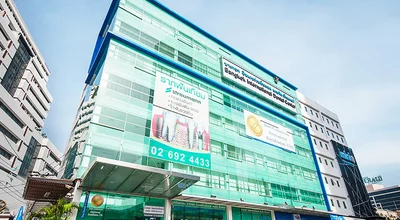
Bangkok International Dental Center
Thailand's first JCI-accredited dental center with more than 70 specialist dentists
View hospital profile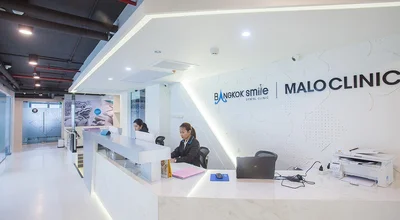
Bangkok Smile Dental Clinic
Multi-branch dental group founded in 2003 and the official Thai partner of the Malo All-on-4 network
View hospital profile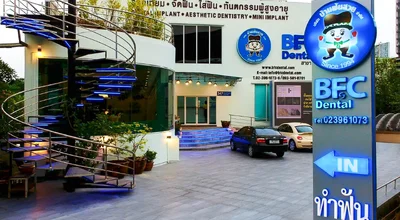
BFC Dental
Implant-focused Bangkok dental clinic founded in 1994, placing more than 4,600 implants a year
View hospital profile
Get a Free Dental Quote in Minutes
Tell us what you need and we'll match you with the right specialist and return real clinic quotes.
- Itemised clinic quotes with no hidden fees
- Matched to a dentist experienced in your specific treatment
- Completely free, even if you decide not to go ahead


Rated 5 stars by our patients
The complete guide to E-Max Veneers in Thailand
Everything below is for readers who want the full detail: costs broken down, types and techniques, recovery, risks and safety, and planning your trip.
E-Max Veneer Dentists & Clinics in Thailand
Material quality only matters if the dentist and lab execute well. Here is what to look for when choosing where to have E-Max veneers in Thailand.
Leading Dental Clinics in Bangkok
Our partner clinics are equipped with intraoral scanners, digital shade-matching devices and relationships with Ivoclar-certified laboratories. They handle high volumes of E-Max cases for both Thai and international patients. These are dedicated cosmetic dentistry practices, not general clinics fitting veneers occasionally.
Experienced E-Max Dentists
Our partner dentists are registered with the Thai Dental Council and many hold advanced cosmetic dentistry qualifications from international institutions. They work with E-Max daily, which means they understand the material's properties: how much to prepare, how thin you can go, and when monolithic is smarter than layered.
What to Look for in an E-Max Dentist
Ask which lab they use and whether it runs genuine Ivoclar materials. Request before-and-after photos of actual E-Max cases, not porcelain veneers presented as E-Max. A dentist who can explain the difference between monolithic and layered, and when each makes sense, is someone who knows the material properly.
Understanding Your Results
E-Max veneer results are visible immediately after bonding. Here is what a realistic outcome looks like and what to expect.
Typical E-Max Veneer Results
E-Max veneers correct colour, shape, spacing and minor alignment with a single restoration per tooth. The most common improvements are eliminating deep staining, evening out unequal tooth lengths, closing diastemas and creating a uniform smile line. The lithium disilicate transmits light naturally, so the finished teeth have depth and vitality rather than a flat, opaque appearance.
What Results Can You Expect?
The finished result is what you see the moment the veneers are bonded. There is no healing period, no swelling and no waiting. Shade is agreed during consultation using a combination of shade tabs, digital photography and sometimes a temporary mock-up. If you are specific about what you want during consultation, the lab can match it. If you are vague, you leave the decisions to others.
E-Max Veneer Cost in Thailand
Average Cost of E-Max Veneers
E-Max veneers in Thailand typically cost $350–$700 per tooth depending on the fabrication method, the lab used and the clinic. A full set of 8–10 upper E-Max veneers usually runs $2,800–$7,000, compared to $8,000–$21,000 for the same work in the US or UK. The premium over standard porcelain reflects the superior material, not inflated margins.
Cost Breakdown
The price includes several components. The dentist's fee covers consultation, preparation, temporaries and the bonding session. Lab fabrication is the largest variable cost. Genuine IPS e.max materials are not cheap anywhere, but Thai lab fees are significantly lower than Western equivalents. Follow-up visits for bite check and polishing are typically bundled in.
What Affects the Price?
Fabrication method matters most. A monolithic stained-and-glazed E-Max veneer costs less than a cut-back layered one because the lab time is shorter. The number of units affects per-tooth pricing, and larger cases usually come in lower per unit. Clinics in central Bangkok may charge more than those outside the city, reflecting rent and staffing costs.
Thailand vs International Price Comparison
E-Max veneers in Thailand cost 60–70% less per tooth than equivalent work in the US ($1,050–$2,100), Australia (A$1,000–A$1,950), and UK (£900–£1,750). The price gap is even more significant when you factor in that Thai labs use the same Ivoclar e.max ingots and blocks as Western labs. You get identical material at a fraction of the cost.
Veneers vs Bonding and Whitening
The two main alternatives are composite bonding and professional whitening. Whitening lifts the overall shade of healthy teeth and is the simplest, least invasive option, but it only changes colour: it cannot reshape a chipped edge, close a gap or correct alignment, and it does nothing for staining that will not bleach. Composite bonding goes further, building up resin directly onto the tooth to repair chips, close small gaps and improve shape, usually with little or no enamel removed, which makes it largely reversible.
The trade-offs are durability and finish. Composite is softer than lithium disilicate, so it stains over time, can chip more easily and typically needs touching up or replacing every five to seven years. It also lacks the light transmission of ceramic, so an extensive composite case rarely matches the depth of well-made E-Max. Whitening fades and needs topping up. Neither is a permanent answer where the goal is a uniform, lasting change across several teeth.
E-Max veneers are the route when you want a stable, long-term result that corrects colour, shape and minor alignment together, particularly for deep staining that will not whiten or a smile where several front teeth need to match. The ceramic resists staining, holds its finish, and routinely lasts 10 to 15 years, which is why it suits a complete smile makeover rather than a single small repair.
Types of E-Max Veneers
E-Max veneers are all made from the same lithium disilicate base, but the fabrication method affects the final aesthetics, strength profile and cost. The right approach depends on the clinical situation and how visible the teeth are.
IPS e.max Press
Molten lithium disilicate is pressed into a precision mould using a lost-wax technique. This produces a dense, bubble-free restoration with consistent strength. It can be left monolithic for maximum durability or cut back and layered for enhanced aesthetics.
- Flexural strength approximately 400 MPa, highly chip-resistant
- Can be stained or layered for additional aesthetic refinement
- Most popular E-Max fabrication method in Thai dental labs
- Best for: cases needing both structural reliability and good aesthetics
IPS e.max CAD
Digitally designed from an intraoral scan and milled from a pre-crystallised lithium disilicate block. After milling, the veneer is crystallised in a furnace to reach full strength and translucency. Precise, efficient and highly reproducible.
- Digitally designed fit from CAD/CAM workflow
- Consistent material quality from industrially manufactured blocks
- Faster turnaround in clinics with in-house milling capability
- Best for: multiple-unit cases where precision and efficiency matter
Layered Cut-Back E-Max
A pressed or milled E-Max core is partially cut back and hand-layered with feldspathic porcelain by a skilled ceramist. This hybrid method combines the strength of lithium disilicate with the colour depth and surface detail that only hand layering can achieve.
- Maximum aesthetic customisation with lifelike depth and texture
- E-Max core provides structural backbone while porcelain adds translucency
- Higher cost and longer lab time than monolithic options
- Best for: upper central and lateral incisors where every nuance is visible
E-Max Veneer Techniques
Fabrication method and prep design are the two big technical decisions. Here is what Thai dentists typically use and why each option suits different situations.
Full-Contour Monolithic
The entire veneer is milled or pressed as a single piece of lithium disilicate with no layering. Maximum strength and faster lab turnaround. External staining is applied for surface characterisation. Ideal when durability is the priority.
- Strongest configuration with full 400 MPa throughout
- No porcelain overlay means no risk of delamination
- Staining adds colour variation without compromising structural integrity
- Best for: premolars, lower anteriors, or patients with heavy bite forces
Stained and Glazed
A monolithic E-Max shell is characterised with surface stains and a final glaze firing to add colour transitions, translucency effects and surface texture. This brings the aesthetics closer to hand-layered work without the added fragility of a porcelain overlay.
- Retains full monolithic strength with enhanced surface aesthetics
- Faster and more cost-effective than cut-back layering
- Requires a ceramist experienced in stain-and-glaze characterisation
- Best for: most anterior teeth where a balance of aesthetics and strength is needed
Cut-Back Layering
The incisal third of the E-Max shell is cut back and hand-layered with feldspathic porcelain to create realistic translucency and colour depth. The most aesthetically refined option, but the layered zone is less resistant to chipping than monolithic E-Max.
- Exceptional depth and realism in the incisal edge
- Requires a highly skilled ceramist to execute well
- Slightly higher risk of chipping in the layered porcelain zone
- Best for: upper front teeth in patients with a conservative bite
Minimal-Prep & No-Prep Veneers
Because lithium disilicate stays strong even when made very thin, the shells can be bonded over the tooth with little or no enamel reshaping. Minimal-prep removes only a fraction of a millimetre to seat the veneer cleanly, while no-prep cases bond straight onto the existing surface, which keeps the work conservative and, in true no-prep cases, potentially reversible. It suits the right teeth rather than every smile, and your dentist confirms whether your enamel and alignment allow it.
- Thin E-Max shells need far less enamel removed than conventional prep
- No-prep cases bond onto the existing surface and can be reversible
- Only suits teeth that are not already too far forward or crowded
- Best for: small gaps, minor shape changes, or anyone wanting to keep their enamel
Digital Smile Design
(link: procedures/cosmetic-dentistry/digital-smile-design text: Digital Smile Design) plans the new smile on screen before any tooth is touched. Photographs and an intraoral scan are used to map tooth proportions to your face, lips and gum line, and the proposed shape is often turned into a trial mock-up you can see and approve in your own mouth. It removes guesswork from shade and shape, so the lab fabricates to a design you have already signed off rather than a verbal description.
- Plans tooth shape and proportion against your face and lips digitally
- Lets you preview and approve the result before preparation begins
- Gives the lab a precise blueprint, reducing shade and shape surprises
- Best for: multi-tooth makeovers where you want certainty about the final look
E-Max Veneer Recovery Timeline
Day 1
Mild temperature sensitivity is typical after bonding. Cut-back layered veneers on the upper centrals need deeper incisal-third preparation than a monolithic shell, so expect slightly more pronounced sensitivity in the first day or two if you chose layered. Avoid very hot, cold or sticky foods for the first 24 hours while the resin cement reaches its full cure. Normal daily activities can resume immediately.
Days 2–3
Any lingering sensitivity usually resolves. Your bite adjusts to the new veneer contours and they start to feel entirely your own. Continue eating with care, steering clear of excessive force on the front teeth.
Week 1
A follow-up appointment checks the fit, bite balance and gum health around each veneer margin. Most patients report the veneers feel completely natural by this point. Normal eating resumes fully.
Ongoing
Maintain good oral hygiene: brushing twice daily, flossing around veneer margins, and seeing a dentist regularly. Use a non-abrasive toothpaste and wear a night guard if you tend to clench or grind. E-Max veneers routinely last 10 to 15 years with consistent maintenance.
When Can You Fly After E-Max Veneers?
You can fly home as soon as the veneers are bonded and checked at a follow-up appointment, typically 7–10 days after your first visit. Flying has zero effect on cemented veneers. Cabin pressure changes do not impact the bond or the ceramic. Most patients schedule their return flight for the day after their follow-up.
When Can You Eat Normally?
Normal eating resumes within two to three days of bonding. The first 24 hours require softer foods while the resin cement fully polymerises. After that, eat as you normally would. The one permanent adjustment is avoiding point-loading: do not crack nuts with your front teeth, chew ice or bite into bone. This applies to natural teeth too.
Does Sensitivity Differ by Veneer Type?
Yes, and it is worth knowing before you choose. Monolithic and stained-and-glazed shells need very little enamel removed, so most patients feel only brief temperature sensitivity that fades within two to three days. Cut-back layered veneers, which we usually reserve for the upper central and lateral incisors where every nuance shows, require deeper incisal-third preparation, so post-bonding sensitivity there can be a little more pronounced and may take a few extra days to settle. It still resolves on its own and is managed with over-the-counter pain relief and a non-abrasive toothpaste. If you grind, the night guard also protects against the sensitivity that comes from clenching on freshly prepared teeth.
How Long Until You See Final Results?
The result is immediate. The moment your permanent E-Max veneers are bonded, what you see is what you get. There is no swelling to subside or healing period to wait through. The only thing that changes over the first few days is how your bite settles, and minor adjustments are handled at the follow-up visit.
Will It Hurt?
Fitting E-Max veneers is done under local anaesthetic, so you stay fully awake and simply have the area around the teeth being treated numbed3. The tooth preparation, where a thin layer of enamel is reshaped, is the only part that needs numbing, and you feel pressure and movement rather than pain. The bonding appointment, when the finished veneers are cemented on, is usually painless and often needs no anaesthetic at all.
If you tend to feel anxious in the dental chair, that is worth raising at your consultation. Most of our partner clinics can offer light sedation options alongside the local anaesthetic to help you relax, while keeping you awake and responsive. Your dentist decides what suits you based on how many teeth are being prepared and how comfortable you feel, and there is no pressure to have anything beyond the numbing if you would rather not.
Before any preparation, your dentist reviews your dental history and checks the teeth and gums are healthy enough to proceed. You feel nothing while the work is done. Afterwards, mild temperature sensitivity for a day or two is normal as the teeth settle, and it is easily managed with over-the-counter pain relief. There is no recovery period to wait through, and most people are back to normal eating within a couple of days.
Risks and Safety of E-Max Veneers
E-Max veneers have a well-documented clinical track record with high survival rates at 10 years and beyond. Risks are low but worth understanding before you commit.
- Slight shade discrepancy if the ceramist does not match surrounding teeth precisely
- Marginal gum irritation if the veneer edge does not sit flush (uncommon)
- Debonding under impact, though re-cementation is usually straightforward
A thorough oral examination and bite assessment happens before any preparation. If you grind your teeth, a protective night guard will be part of the plan. The better the diagnostics upfront, the fewer surprises after bonding.
Are E-Max Veneers Safe in Thailand?
Yes. E-Max is a globally standardised material system manufactured by Ivoclar Vivadent. Thai dental labs use the same e.max ingots, pressing furnaces and crystallisation protocols as labs in Europe, the US and Australia. Our partner clinics maintain infection-control standards that meet international accreditation requirements, and dentists are registered with the Thai Dental Council.
How to Reduce Risks
Verify that the clinic uses an Ivoclar-certified lab running genuine IPS e.max materials, as counterfeit lithium disilicate exists in some markets. Ask your dentist about their approach to bite analysis, especially if you grind. A night guard is essential for bruxism patients. Clear communication about shade expectations prevents the most common source of dissatisfaction.
When Would Replacement Be Needed?
E-Max veneers typically last 10 to 15 years before replacement is considered1. Replacement is usually needed when the bonding cement degrades, a chip extends beyond repair, or gum recession exposes the veneer margin. Individual veneers can be replaced without disturbing the rest.
Planning Your Trip to Thailand for E-Max Veneers
Most patients need 7–10 days in Thailand for E-Max veneers. Here is how the trip is structured and what to expect.
How Long to Stay in Thailand
Allow 7–10 days minimum. The first appointment covers examination, shade selection and tooth preparation. Lab fabrication takes three to five days. The final appointment bonds the permanent veneers with bite adjustment and polishing. A follow-up visit before your flight home confirms everything is settled and comfortable.
What Is Included in a Dental Trip
Your coordinator manages appointment scheduling, clinic logistics and communication. The dental quote covers consultation, preparation, temporaries, E-Max lab fabrication, bonding and follow-up visits. Flights and hotel are arranged separately, though your coordinator can recommend accommodation close to the clinic and help with bookings.
Making the Most of Lab Days
While the lab fabricates your veneers (typically three to five days), you are free to explore. Bangkok has more than enough to fill the time, and some patients fly to the islands or up to Chiang Mai. Just coordinate with your care team so you are back for the bonding appointment and allow at least one day after for the follow-up check.
Related Procedures
Other procedures that address similar goals or conditions, in case one of them is a closer fit for you.
Planning your treatment in Thailand
Independent guides to help you weigh the decision, before you commit to anything.
Common Questions About E-Max Veneers
Everything you need to know before your treatment

Medical References
Keep researching with AI
Open this guide in your AI assistant to dig deeper and ask the questions it didn't answer.
Opens in a new tab with this guide already loaded.
Medical disclaimer: This information is for educational purposes only and does not replace professional dental advice. Individual results, recovery times, and suitability vary. Always consult a qualified dentist before making decisions about treatment.
Ready to Get Started?
Speak with our care coordinators for a free, no-obligation consultation and personalised quote.
Speak to Our Team