Ceramic Braces in Thailand Your guide to cost, top dentists & hospitals
All the reliability of fixed braces with brackets that blend into your teeth instead of announcing themselves.
What Are Ceramic Braces?
Also known as: Clear Ceramic Braces · Aesthetic Fixed Orthodontic Appliance
Ceramic braces are fixed braces that straighten teeth by bonding tooth-coloured brackets to each tooth and linking them with an archwire that applies gentle, controlled pressure over time. The brackets are made from polycrystalline alumina or clear sapphire, both tooth-shaded, rather than stainless steel, so they blend with your enamel4. They correct the same problems as metal braces, including crowding, gaps, and bite issues. Treatment usually runs 12 to 30 months, with adjustments every 4 to 6 weeks.
The appeal is simple: the reliability of fixed braces without the metal look in every photo. Many adults choose ceramic for that reason, whether for work, a wedding, or just feeling more like themselves while their teeth move. Your orthodontist builds the plan from your scans and shapes it around your bite.
Ceramic is strong but more brittle than steel, so if you grind your teeth or have a deep bite, metal brackets on the lower teeth are often suggested for added strength. The clinical results closely match metal braces; the main difference is visibility. A consultation is the best way to see which bracket type suits your case.
It can address a range of concerns, including:
Am I a Good Candidate for Ceramic Braces?
Ceramic braces suit adults who need fixed orthodontics but want discretion, provided their bite and habits will not break the brackets.
Ceramic is strong but more brittle than steel, so your bite has to let the brackets survive.
Deep overbites checked: Lower teeth biting directly onto upper brackets raises the fracture risk significantly, and may steer you towards metal lowers or another system.
Grinding addressed: Heavy clenching or bruxism needs managing before brackets are bonded, because repeated fractures disrupt treatment.
Mixed setups solve a lot: Ceramic uppers with metal lowers keep discretion where it shows and strength where the bite forces land, at a lower cost too.
The periodontal screen for ceramic braces is the same as for any fixed appliance.
Stable gums before movement: Active periodontal disease must be stabilised before tooth movement adds strain to the supporting bone.
Cleaning discipline: Brackets trap plaque regardless of material, and demineralisation around them is the main avoidable risk for any braces wearer.
Whiten first if you plan to: Professional whitening should happen before bonding, so brackets are shade-matched to your whitened teeth rather than the old shade.
The brackets themselves resist stains; the elastic ligatures holding the wire do not.
Staining diets flagged: Coffee, tea, red wine, curry, and smoking discolour the ligatures visibly between adjustments.
Ligatures refreshed each visit: Conventional ceramic ties are replaced at every 4-6 week adjustment, so discolouration is temporary rather than permanent.
Self-ligating sidesteps it: Clip-based ceramic brackets such as Damon Clear have no ties to stain and can stretch adjustment intervals to 8-10 weeks, which suits international patients.
Expect the same schedule and duration as metal braces, with a little extra care for the material.
12-30 months: The mechanics and timelines are identical to metal; only the bracket material differs.
Adjustments every 4-6 weeks: Handled through return visits or a local orthodontist using the full treatment records provided.
Brittle-bracket habits: Cut hard foods into pieces, skip sticky sweets and gum, and get any fractured bracket repaired promptly rather than waiting for the next appointment.
Who is not suitable for ceramic braces?
- Heavy grinding or clenching until the bruxism is addressed
- Active periodontal disease until stabilised
- A deep overbite where lower teeth bite directly onto upper brackets
- A staining-heavy diet you are not prepared to manage between adjustments
- Cases needing precise high-torque mechanics (e.g. significant incisor torque correction), where ceramic's higher slot friction limits torque expression
Pricing
How Much Will Ceramic Braces Cost in Thailand?
What ceramic braces costs at accredited hospitals in Thailand, and what your final quote depends on.
Get your exact price
Tell us what you're considering and we'll send a personalised quote from accredited clinics within 24 hours.
Get my free quoteTypical prices in Thailand
Typical ranges based on recent hospital quotes. Your exact price depends on the hospital and how complex your case is, and is confirmed at your teleconsultation.
Ceramic Braces
The ceramic brackets are what you pay the premium for, so the cheapest route keeps them on the upper teeth where they show and uses metal below.
| Ceramic upper with metal lower Keeps the visible upper teeth discreet while metal handles the lower arch | $1,800 to $2,800 ฿61,200 to ฿95,200 |
| Polycrystalline ceramic, both arches The standard tooth-coloured option across upper and lower teeth | $2,000 to $3,000 ฿68,000 to ฿102,000 |
| Sapphire ceramic, both arches The most transparent bracket, closest to invisible against tooth enamel | $2,500 to $3,500 ฿85,000 to ฿119,000 |
| Self-ligating ceramic No elastic ties, so nothing stains or yellows between appointments | $2,500 to $4,000 ฿85,000 to ฿136,000 |
Get your exact price
Tell us what you're considering and we'll send a personalised quote from accredited clinics within 24 hours.
Clinics Trusted for Ceramic Braces
From internationally accredited flagships to dedicated specialist clinics, these are the kinds of facilities where international patients have this procedure.
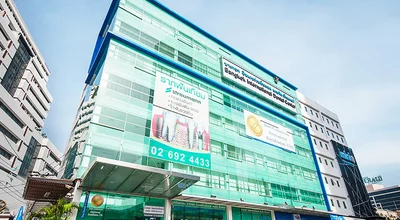
Bangkok International Dental Center
Thailand's first JCI-accredited dental center with more than 70 specialist dentists
View hospital profile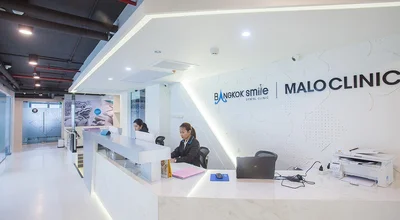
Bangkok Smile Dental Clinic
Multi-branch dental group founded in 2003 and the official Thai partner of the Malo All-on-4 network
View hospital profile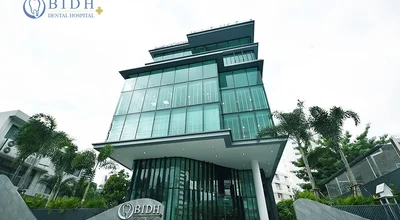
Bangkok International Dental Hospital
Purpose-built dental hospital opened in 2020 with an operating theatre and in-patient recovery rooms
View hospital profile
Get a Free Dental Quote in Minutes
Tell us what you need and we'll match you with the right specialist and return real clinic quotes.
- Itemised clinic quotes with no hidden fees
- Matched to a dentist experienced in your specific treatment
- Completely free, even if you decide not to go ahead


Rated 5 stars by our patients
The complete guide to Ceramic Braces in Thailand
Everything below is for readers who want the full detail: costs broken down, types and techniques, recovery, risks and safety, and planning your trip.
Orthodontists for Ceramic Braces in Thailand
Ceramic brackets require a slightly different handling technique than metal. Here is what our partners bring to the table and what to look for.
Leading Clinics in Bangkok
Our partner clinics carry the full range of ceramic bracket systems (polycrystalline, sapphire, and self-ligating) with on-site imaging and laboratory support. They handle a high volume of aesthetic orthodontic cases and have protocols specifically designed for international patient coordination.
Specialist Orthodontists
Our partners are specialist orthodontists experienced with ceramic bracket systems. Ceramic brackets require more precise bonding technique and careful debonding to protect enamel; these are skills refined through high case volume, not theoretical knowledge.
What to Look for in a Provider
Confirm they are a specialist orthodontist. Ask specifically about their experience with ceramic brackets: how many cases they treat annually, which brands they use, and how they handle debonding to protect enamel. Ask to see before-and-after photos of ceramic braces cases, not just metal.
Understanding Your Results
Ceramic braces produce identical clinical outcomes to metal braces. The only difference is aesthetics during treatment.
Typical Ceramic Braces Results
The same outcomes as metal braces: resolved crowding, corrected bite, closed gaps, and aligned arches. The brackets are aesthetic, but the mechanics are identical. Ceramic braces are measured against the same clinical benchmarks as metal because the treatment is fundamentally the same.
What Results Can You Expect?
Exactly the same range of results as metal braces. Your orthodontist uses diagnostic records to plan the projected outcome and will explain what is achievable for your specific case. The only consideration unique to ceramic is that sapphire brackets may show more if your teeth are heavily stained; whitening before bonding can address this.
Ceramic Braces Cost in Thailand
Average Cost of Ceramic Braces
Ceramic braces in Thailand typically cost between $1,800 and $4,000 depending on the bracket type (polycrystalline, sapphire, or self-ligating ceramic), case complexity, and whether aesthetic wires are included. The price is higher than metal braces but the gap narrows in Thailand because both benefit from lower operating costs.
Cost Breakdown
The total includes the orthodontist's consultation and planning fee, diagnostic records, ceramic bracket bonding, initial archwires, and follow-up appointments during your stay. Aesthetic wires, if chosen, add a modest premium. Ongoing adjustment visits are quoted separately. The ceramic brackets themselves account for the largest share of the price difference versus metal.
What Affects the Price?
Bracket material is the biggest variable: sapphire costs more than polycrystalline, and self-ligating ceramic costs more again. Aesthetic wires add to the total. Case complexity matters too, since more complex cases need longer treatment and more adjustments. Mixing ceramic uppers with metal lowers reduces cost by roughly 20–30% compared to full ceramic.
Thailand vs International Price Comparison
Ceramic braces in Thailand cost 50–70% less than equivalent treatment in the US ($6,000–$12,000), Australia (A$5,600–A$11,000), and UK (£5,000–£10,000). The brackets are identical global products. The savings come from lower orthodontist fees and clinic operating costs in Thailand.
Types of Ceramic Braces
Ceramic brackets vary in material, translucency, and durability. The right choice depends on how visible you want your braces to be and how much you are prepared to invest.
Polycrystalline Ceramic Brackets
The most common ceramic bracket type, made from polycrystalline alumina. Strong, stain-resistant, and closely matching natural tooth colour. A reliable middle ground between aesthetics and durability at a moderate price point.
- Tooth-coloured and highly resistant to staining during treatment
- Strong enough to handle the same archwire forces as metal brackets
- Available from leading brands including Clarity and Radiance
- Best for: most patients wanting discreet fixed braces at a reasonable price
Monocrystalline (Sapphire) Brackets
Made from single-crystal sapphire, these brackets are genuinely transparent rather than just tooth-coloured. The highest level of aesthetic discretion among fixed bracket systems. More expensive than polycrystalline but the most invisible fixed option available.
- Nearly invisible due to true optical transparency
- Exceptionally smooth surface for patient comfort
- The premium aesthetic choice among fixed braces
- Best for: patients for whom appearance is the top priority
Ceramic with Aesthetic Wires
Pairing ceramic brackets with tooth-coloured or white-coated archwires makes the entire system blend with your teeth. This combination produces the least visible fixed orthodontic option short of lingual braces.
- Tooth-coloured wires reduce visibility of the entire brace system
- Coated wires available in nickel-titanium and stainless steel
- Creates the most discreet fixed labial orthodontic setup
- Best for: patients who want fixed braces to be as inconspicuous as possible
Ceramic Braces Techniques
The technique selected depends on your case complexity and aesthetic preferences. Here is what is available and when each approach applies.
Full Ceramic System
Ceramic brackets on both upper and lower arches with the option of tooth-coloured archwires. The most aesthetically consistent approach, delivering a uniform low-visibility look across the entire mouth. Slightly higher cost but the most discreet labial option.
- Uniform aesthetic appearance across both arches
- Can be paired with coated wires for maximum discretion
- Same treatment control as a metal bracket system
- Best for: patients wanting the most aesthetically consistent fixed braces
Combination Ceramic and Metal
Ceramic brackets on the upper arch (the teeth most visible when smiling) and metal brackets on the lower arch for added durability and lower cost. This is one of the most popular configurations because the lower teeth are far less visible during normal interaction.
- Upper ceramic provides aesthetic discretion where it matters most
- Lower metal adds durability and reduces overall cost
- A practical compromise that most patients are very satisfied with
- Best for: patients balancing aesthetics with budget and durability concerns
Ceramic Self-Ligating Brackets
Self-ligating ceramic brackets like Damon Clear use a built-in clip instead of elastic ties. This eliminates ligature staining, one of the main aesthetic drawbacks of conventional ceramic braces, and can reduce adjustment frequency to every 8–10 weeks.
- No elastic ties means no ligature staining between appointments
- Longer adjustment intervals suit international patients
- Combines self-ligation efficiency with ceramic aesthetics
- Best for: patients who want both aesthetic discretion and reduced appointment frequency
Ceramic Braces Treatment Timeline
Days 1–3
Soreness and sensitivity after bracket bonding and archwire placement. Teeth feel tender when biting, and because ceramic brackets are bulkier and have a rougher edge profile than metal, cheek and lip rubbing is usually more noticeable in the first week than with metal braces. This is separate from the tooth-movement soreness and settles as the soft tissue toughens. Cover any sharp spots with orthodontic wax, and use soft foods and standard pain relief to stay comfortable.
Week 1
Most patients adjust to the feel of ceramic braces within a few days. A follow-up in Thailand confirms all brackets are bonded securely and the archwire is performing correctly. Your orthodontist reviews stain-prevention techniques specific to ceramic brackets.
Weeks 2–4
Discomfort fades and daily routines settle. Your orthodontist provides a full treatment plan with adjustment schedules before you leave Thailand. Dietary guidance on avoiding staining foods and drinks is included.
Ongoing (Monthly Adjustments)
Ceramic braces need adjustment every 4–6 weeks, the same schedule as metal braces. Adjustments can be managed through return visits or coordinated with a local orthodontist. Full treatment records ensure a straightforward handover.
How Do You Manage Adjustments From Overseas?
Same options as metal braces: return to Thailand every 4–8 weeks, or coordinate with a local orthodontist using the full treatment records we provide. Ceramic brackets are adjusted the same way as metal, so any qualified orthodontist can handle your care. Your coordinator helps arrange whichever option suits your schedule.
When Can You Fly Home?
You can fly home within 7–10 days of your first appointment, once bracket bonding is confirmed and your first archwire is tracking. There are no flying restrictions. Make sure your next adjustment appointment is scheduled before departure.
When Will You See Final Results?
Treatment timelines for ceramic braces are the same as for metal: 12–30 months depending on case complexity.1,2 Teeth begin moving within the first few weeks, with significant visible improvement by 6 months. The full result, including bite correction and fine-tuning, emerges toward the end of treatment. Retainers are fitted at debonding3,6.
Risks and Safety of Ceramic Braces
Ceramic braces carry the same general risks as metal braces, plus a few material-specific considerations. Overall, they are well-established and safe.
- Soreness after adjustments (normal, temporary)5
- Elastic ligature staining between appointments (cosmetic, replaceable)
- Bracket fracture under heavy bite forces (more common than metal)
- Wear of the opposing enamel where lower teeth contact upper ceramic brackets (ceramic is harder than enamel and steel)
The main ceramic-specific risks are bracket fracture from heavy biting forces and wear of the opposing enamel, since ceramic is harder than both natural enamel and steel and can abrade lower teeth that bite onto upper brackets. Patients who grind their teeth or have a deep bite, where this contact is heaviest, may be advised to use metal brackets on the lower arch for added strength and to protect the opposing enamel.
Are Ceramic Braces Safe in Thailand?
Yes. The ceramic brackets used in Thailand (Clarity, Radiance, Inspire ICE, Damon Clear) are the same products used by orthodontists internationally. Our partners are specialist orthodontists with extensive experience in aesthetic bracket systems. The safety profile is identical to treatment in any other country.
How to Prevent Staining
Modern ceramic brackets themselves are highly stain-resistant. The staining issue is with the elastic ligatures (small ties holding the wire), which can discolour between appointments from coffee, tea, red wine, curry, and smoking. Self-ligating ceramic brackets eliminate this issue entirely. If you use conventional ceramics, ligatures are replaced at each adjustment.
When Is Retreatment Needed?
Ceramic braces rarely require retreatment if the case is well-planned and managed. Broken brackets occasionally need rebonding; ceramic is harder but more brittle than metal. If a bracket fractures, contact your orthodontist for a repair appointment. The treatment outcome itself is the same as metal braces when both are managed correctly.
Planning Your Trip to Thailand for Ceramic Braces
The planning process mirrors metal braces, with a few aesthetic-specific considerations. Here is what to expect.
How Long to Stay in Thailand
Plan for 7–10 days. This covers consultation, diagnostic records, any pre-treatment, bracket bonding, initial adjustment, and a follow-up check. The timeline is identical to metal braces. You leave with your braces in place and a full plan for ongoing care.
What Is Included in Your Treatment
Your care coordinator handles scheduling, clinic transfers, and records handover. The treatment quote covers the orthodontist fee, diagnostic records, ceramic bracket bonding, first archwires, follow-up appointments during your stay, and stain-prevention guidance. Ongoing adjustment visits are quoted separately. Flights and accommodation are arranged independently.
Preparing for Ceramic Braces
If you are considering professional whitening, do it before bracket bonding so your teeth and brackets are shade-matched to your whitened teeth. Ask your coordinator about scheduling whitening during the same trip. Also bring your stain-avoidance list: coffee, tea, red wine, turmeric, and tomato-based sauces are the main offenders for ligature discolouration.
Related Procedures
Other procedures that address similar goals or conditions, in case one of them is a closer fit for you.
Planning your treatment in Thailand
Independent guides to help you weigh the decision, before you commit to anything.
Common Questions About Ceramic Braces in Thailand
Everything you need to know before starting treatment

Medical References
- Braces and orthodontics (NHS)
- Braces (American Dental Association)
- Orthodontics (NHS)
- How Do Braces Work (American Association of Orthodontists)
- Do Braces Hurt Your Comprehensive Guide to Managing Orthodontic Pain (American Association of Orthodontists)
- Orthodontic Retainers Types Care and Life After Braces (American Association of Orthodontists)
Keep researching with AI
Open this guide in your AI assistant to dig deeper and ask the questions it didn't answer.
Opens in a new tab with this guide already loaded.
Medical disclaimer: This information is for educational purposes only and does not replace professional dental advice. Individual results, recovery times, and suitability vary. Always consult a qualified dentist before making decisions about treatment.
Ready to Get Started?
Speak with our care coordinators for a free, no-obligation consultation and personalised ceramic braces quote.
Speak to Our Team