Lingual Braces in Thailand Your guide to cost, top dentists & hospitals
Fixed braces that no one can see, with every bracket sitting behind your teeth and completely hidden from view.
What Are Lingual Braces?
Also known as: Hidden Braces · Lingual Fixed Orthodontic Appliance
Lingual braces are fixed braces that straighten teeth by guiding them along an archwire, with the brackets bonded to the inner, tongue-side surface instead of the front. They use the same mechanics as conventional braces, so they correct crowding, gaps, and bite problems across the same range of cases, and treatment usually takes 12 to 30 months1. Custom systems like Incognito and WIN shape each bracket and bend the archwires to your teeth, so placement is precise. From the front, the system stays hidden in normal conversation and photos.
The big difference you feel is the tongue, not the smile. It rests against the brackets, so a temporary lisp and some soreness are normal at first, and for most people that settles within about two weeks2. Reading aloud each day helps you adapt faster.
It is worth being realistic about the practical side. Fixed braces need adjustments every few weeks, so this works best if you can return to Thailand or line up a lingual-trained orthodontist at home. A consultation confirms that your bite and the room behind your teeth suit hidden brackets, since not every mouth does.
It can address a range of concerns, including:
Am I a Good Candidate for Lingual Braces?
Hidden braces demand suitable anatomy, room in your schedule for speech adaptation, excellent gum health, and a credible adjustment plan back home.
The brackets live on the tongue side, so your anatomy has to leave them room to work.
Lingual surface space: A very deep overbite or limited lingual tooth surface restricts where brackets can sit and how forces can be applied.
Tongue room: Tongue size, bite depth, and oral anatomy all affect comfort and adaptation, and are assessed at consultation.
Alternatives if ruled out: Where anatomy makes lingual impractical, clear aligners or labial ceramic braces usually offer the next-best discretion.
A temporary lisp is near-universal, and your work schedule needs to absorb it.
One to two weeks of adjustment: Most patients reach near-normal speech by day 10-14, and reading aloud daily speeds the transition.
Speaking-critical roles: Broadcasters, teachers, and performers should time the bonding around a quieter fortnight rather than a heavy speaking schedule.
Smaller brackets adapt faster: Semi-customised low-profile systems may shorten the speech transition, which is worth weighing against the precision of fully customised brackets.
The lingual surface is the hardest place in the mouth to clean, which raises the stakes on gum health.
No active disease: Inflammation worsens quickly behind lingual brackets, so gum disease must be stabilised before treatment starts.
Specialised cleaning tools: Interdental brushes, floss threaders, and a water flosser are essentials, not extras, for the duration of treatment.
Professional cleans: Hygiene appointments every 3-4 months are recommended throughout, wherever you are based.
Lingual systems are not interchangeable with conventional braces, and that shapes who can treat you at home.
A certified orthodontist at home: Ongoing adjustments need a practitioner trained in your specific system. We help identify one before you leave Thailand.
Return visits as the alternative: Adjustments every 4-8 weeks can also run through scheduled trips back, with full records covering bracket prescriptions and wire sequences.
Advance fabrication: Custom brackets take 3-6 weeks to manufacture, so planning starts 6-8 weeks before you travel.
Who is not suitable for lingual braces?
- A very deep overbite or limited lingual tooth surface
- A large or enlarged tongue (macroglossia) that limits bracket access and adaptation
- Very short clinical crowns or very small, worn, or peg-shaped teeth with too little lingual surface to bond brackets
- Active gum disease until stabilised
- No access to a lingual-certified orthodontist for ongoing adjustments
- A speaking-critical role with no room for the 1-2 week adaptation period
Pricing
How Much Will Lingual Braces Cost in Thailand?
What lingual braces costs at accredited hospitals in Thailand, and what your final quote depends on.
Get your exact price
Tell us what you're considering and we'll send a personalised quote from accredited clinics within 24 hours.
Get my free quoteTypical prices in Thailand
Typical ranges based on recent hospital quotes. Your exact price depends on the hospital and how complex your case is, and is confirmed at your teleconsultation.
Lingual Braces
Brackets are bonded to the tongue-side surface of the teeth and guided along an archwire, so the braces stay hidden from the front.
| Lingual upper with labial lower Hides the arch people actually see, with ceramic or metal below | $2,500 to $4,000 ฿85,000 to ฿136,000 |
| Semi-customised lingual, both arches Pre-made brackets behind both arches, invisible from every angle | $3,000 to $4,000 ฿102,000 to ฿136,000 |
| Fully customised lingual, both arches Brackets built individually for your teeth with robotically bent wires | $4,500 to $6,000 ฿153,000 to ฿204,000 |
Get your exact price
Tell us what you're considering and we'll send a personalised quote from accredited clinics within 24 hours.
Clinics Trusted for Lingual Braces
From internationally accredited flagships to dedicated specialist clinics, these are the kinds of facilities where international patients have this procedure.
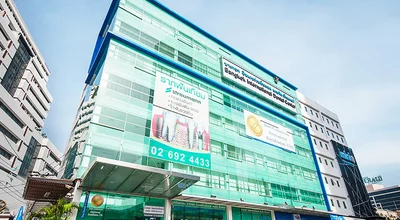
Bangkok International Dental Center
Thailand's first JCI-accredited dental center with more than 70 specialist dentists
View hospital profile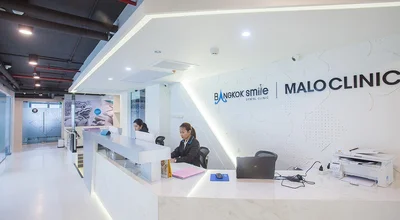
Bangkok Smile Dental Clinic
Multi-branch dental group founded in 2003 and the official Thai partner of the Malo All-on-4 network
View hospital profile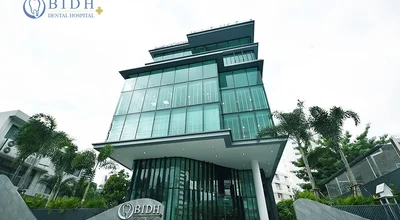
Bangkok International Dental Hospital
Purpose-built dental hospital opened in 2020 with an operating theatre and in-patient recovery rooms
View hospital profile
Get a Free Dental Quote in Minutes
Tell us what you need and we'll match you with the right specialist and return real clinic quotes.
- Itemised clinic quotes with no hidden fees
- Matched to a dentist experienced in your specific treatment
- Completely free, even if you decide not to go ahead


Rated 5 stars by our patients
The complete guide to Lingual Braces in Thailand
Everything below is for readers who want the full detail: costs broken down, types and techniques, recovery, risks and safety, and planning your trip.
Lingual Orthodontists in Thailand
Lingual orthodontics demands specialist training beyond general orthodontics. Here is what our partners offer and what you should verify when choosing a provider.
Leading Clinics in Bangkok
Our partner clinics have dedicated lingual orthodontic capabilities including digital impression systems, indirect bonding facilities, and the infrastructure to coordinate custom bracket fabrication with international laboratories. They handle lingual cases as a core part of their practice, not as an occasional offering.
Certified Lingual Specialists
Our partners hold manufacturer certification in Incognito, WIN, or STb and maintain active lingual caseloads. Lingual orthodontics is technically demanding; bracket placement, wire activation, and adjustment all require different skills than labial work. High case volume is the only way these skills stay sharp.
What to Look for in a Lingual Orthodontist
Confirm they hold certification in the specific lingual system you are considering. Ask how many lingual cases they treat annually; occasional cases are a warning sign. Look at before-and-after photos of lingual cases specifically, not just labial work. And ask about their protocol for international patients: how do they handle ongoing adjustments when you are overseas?
Understanding Your Results
Lingual braces deliver the same clinical outcomes as labial braces. The difference is that the treatment is invisible throughout.
Typical Lingual Braces Results
Resolved crowding, corrected bite alignment, closed gaps, and straightened arches: the same outcomes as labial braces. The treatment is mechanically identical; only the bracket position differs. Patients who complete lingual treatment get the satisfaction of dramatic improvement without anyone having known they were wearing braces.
What Results Can You Expect?
Your orthodontist uses diagnostic records and digital planning to project the outcome. Fully customised systems produce highly predictable results because every bracket and wire is manufactured to a patient-specific prescription. The conversation during consultation should focus on what is achievable for your anatomy and how long it will realistically take.
Lingual Braces Cost in Thailand
Average Cost of Lingual Braces
Lingual braces in Thailand typically cost between $2,500 and $6,000 for a full case, depending on the system (fully customised vs semi-customised), case complexity, and whether both arches are treated lingually or only the upper. Fully customised Incognito or WIN systems sit at the upper end because each bracket is individually manufactured.
Cost Breakdown
The total includes orthodontist consultation and planning, diagnostic records, custom bracket fabrication (the largest cost component), indirect bonding, robotically bent archwires (for fully customised systems), and follow-up appointments during your stay. Ongoing adjustments are quoted separately. The bracket fabrication fee is significant because each bracket is individually designed and manufactured.
What Affects the Price?
The primary cost driver is the level of bracket customisation. Fully customised systems (Incognito, WIN) cost more because each bracket is individually CAD/CAM manufactured. Semi-customised systems (STb) use pre-made brackets at lower cost. Treating both arches lingually costs more than a combination approach with labial brackets on the lower arch. Case complexity also affects the total.
Thailand vs International Price Comparison
Lingual braces in Thailand cost 50–70% less than equivalent treatment in the US ($9,000–$18,000), Australia (A$8,400–A$16,500), and UK (£7,500–£15,000). The savings are particularly impactful on lingual cases because the absolute prices are high internationally. The bracket systems are identical; the savings come from lower specialist fees and operating costs.
Types of Lingual Braces
Lingual systems differ significantly in how brackets are designed and manufactured. The choice affects precision, comfort, cost, and the range of cases that can be treated.
Fully Customised Lingual Systems
Incognito and WIN use CAD/CAM to design each bracket individually to match every tooth's lingual anatomy. Archwires are robotically bent to a unique prescription. Maximum precision and the lowest possible profile for patient comfort.
- Each bracket is individually designed for the best fit and lowest profile
- Robotically bent archwires reduce the need for manual adjustment
- Handles the full range of orthodontic complexity
- Best for: complex cases requiring precise three-dimensional control
Semi-Customised Lingual Systems
Systems like STb use smaller pre-manufactured brackets with digitally planned bonding positions. Less expensive than fully customised systems while still providing completely hidden treatment. Better suited for simpler cases.
- Smaller bracket profile may improve initial comfort and speech adaptation
- Lower cost entry point to lingual orthodontics
- Digitally planned bonding positions for accuracy
- Best for: mild to moderate cases where budget is a consideration
Combination Lingual and Labial
Lingual brackets on the upper arch and ceramic or metal brackets on the lower. Hides the most visible arch completely while reducing overall cost and tongue irritation. The lower teeth are rarely noticed during normal conversation.
- Upper arch completely hidden from view
- Lower labial brackets are far less visible during interaction
- Reduces tongue irritation compared to full lingual on both arches
- Best for: patients who want upper invisibility at a lower price point
Lingual Braces Techniques
Lingual orthodontics uses specialised techniques that differ from conventional braces. Here is how the main approaches work and when each is appropriate.
Indirect Bonding Protocol
All lingual brackets are bonded using an indirect technique. Brackets are first positioned on a 3D-printed model of your teeth, then transferred to your mouth using a custom bonding tray. This ensures millimetre-level accuracy that would be impossible to achieve with freehand placement.
- Brackets positioned on a model first for precision placement
- Custom transfer trays ensure each bracket lands exactly where planned
- Critical for lingual brackets where access and visibility are limited
- Best for: all lingual cases. This is the standard bonding protocol
Robotically Bent Archwires
Fully customised systems use robotic wire-bending to create archwires programmed to each patient's individual prescription. The wire is pre-shaped to guide teeth along a planned path, reducing the orthodontist's chairside adjustments and improving treatment predictability.
- Archwires are bent to an individual prescription by robotic machines
- Reduces adjustment time and improves movement precision
- Available with Incognito and WIN systems
- Best for: complex cases where precise three-dimensional control is essential
Speech and Tongue Adaptation Management
Tongue adaptation is the main patient-facing challenge with lingual braces. Most speech changes resolve within 7–14 days. Practice exercises, orthodontic wax, and careful bracket edge finishing accelerate the adjustment. Experienced lingual orthodontists know how to minimise this transition.
- Most patients achieve near-normal speech within two weeks
- Reading aloud and practice exercises speed adaptation
- Orthodontic wax helps manage tongue soreness during the first week
- Best for: all lingual patients. Tongue adaptation management is part of every case
Lingual Braces Treatment Timeline
Days 1–5
The tongue needs time to adjust to brackets on the inner tooth surfaces. A temporary lisp is common and tongue soreness is expected. Speech exercises help; reading aloud for 20 minutes a day accelerates adaptation. Soft foods and orthodontic wax are your best allies this week.
Weeks 1–2
Speech improves significantly as the tongue adapts. Most patients report near-normal speech by day 10–14. A follow-up in Thailand lets your orthodontist check bonding, smooth any irritating edges, and make initial archwire adjustments.
Weeks 3–4
By the end of the first month, most patients are fully adapted. Before leaving Thailand, you receive a detailed treatment plan, adjustment schedule, and complete records for continuity of care.
Ongoing (Adjustments Every 4–8 Weeks)
Lingual braces need regular adjustments by an orthodontist experienced with your specific system. We coordinate return visits or identify a certified lingual orthodontist in your home country. System-specific expertise matters here more than with any other bracket type.
How Long Does Speech Adaptation Take?
Most patients experience a temporary lisp for the first 7–14 days. Reading aloud, speech exercises, and simply talking through the adjustment accelerate adaptation. The vast majority report completely normal speech within two weeks, and many adjust sooner. Smaller-profile semi-customised brackets may offer slightly faster speech adaptation.
Managing Adjustments From Overseas
Lingual adjustments require an orthodontist trained in your specific system. We coordinate return visits to Thailand every 6–8 weeks, or identify certified lingual practitioners in your home country. Full treatment records (bracket prescriptions, wire sequences, bonding positions) are provided to ensure precise continuity. Do not allow a non-lingual-trained orthodontist to adjust your braces.
When Will You See Final Results?
Treatment timelines match labial braces: 12–30 months depending on complexity. You will feel teeth moving within weeks, but the full result including bite correction takes the full treatment duration. Retainers are fitted at debonding and sit conveniently on the same lingual surface where your braces were.
Risks and Safety of Lingual Braces
Lingual braces are safe and effective. Their unique placement introduces some considerations that differ from conventional braces, primarily related to tongue adaptation and access for adjustments.
- Temporary lisp lasting 1–2 weeks (normal adaptation period)
- Tongue irritation and soreness during the first week
- Greater difficulty maintaining oral hygiene on the lingual surface
- Enamel demineralisation and white-spot lesions, since the lingual surface is the hardest to clean and plaque around brackets can decalcify enamel4
- Longer chair time for adjustments compared to labial braces
- Minor root resorption (rare, associated with all orthodontic treatment)
- Bracket debonding on the lingual surface (harder to detect visually)
Suitability depends on tongue size, bite depth, and oral anatomy. Patients with a very deep bite or extremely limited lingual space may be better served by clear aligners or labial ceramic braces instead.
Are Lingual Braces Safe in Thailand?
Yes. The lingual bracket systems used in Thailand (Incognito, WIN, STb) are the same globally manufactured products used worldwide. What matters more than location is the orthodontist's lingual-specific training and case volume. Our partners hold manufacturer certifications and maintain active lingual caseloads.
How to Reduce Risks
Invest in specialised lingual cleaning tools. Interdental brushes, a water flosser, and floss threaders are essential because the lingual surface is harder to reach. Attend all adjustment appointments on schedule. If a bracket debonds, get it rebonded promptly; lingual debonds are harder to notice, so check regularly with your tongue.
Finding a Lingual Orthodontist for Ongoing Care
Not every orthodontist is trained in lingual techniques. Before you leave Thailand, we help identify lingual-certified practitioners in your home country who can perform adjustments. We provide full treatment records including bracket prescriptions, archwire sequences, and bonding positions so the receiving orthodontist can continue your care precisely.
Planning Your Trip to Thailand for Lingual Braces
Lingual braces require advance planning because custom brackets need to be fabricated before your arrival. Here is how to organise your trip.
How Long to Stay in Thailand
Plan for 7–10 days. Custom brackets are fabricated in advance based on digital impressions sent ahead, or taken during an earlier visit. Your bonding appointment, initial adjustment, and early adaptation monitoring all happen during this window. Allow extra days for tongue adjustment before flying home.
Advance Preparation
Because custom lingual brackets require fabrication time (typically 3–6 weeks for Incognito or WIN), planning starts well before your trip. You may need to visit a local clinic for preliminary impressions or 3D scans, which are sent to Thailand for bracket manufacture. Alternatively, arrive a few days early for scanning, then return for bonding once brackets are ready.
What Is Included in Your Treatment
Your care coordinator manages the full process, from initial assessment through bracket fabrication to bonding and handover. The treatment quote covers orthodontist fees, diagnostic records, custom bracket fabrication, indirect bonding, robotically bent archwires (for fully customised systems), and follow-up appointments. Ongoing adjustments are quoted separately.
Related Procedures
Other procedures that address similar goals or conditions, in case one of them is a closer fit for you.
Planning your treatment in Thailand
Independent guides to help you weigh the decision, before you commit to anything.
Common Questions About Lingual Braces in Thailand
Everything you need to know before starting treatment

Medical References
Keep researching with AI
Open this guide in your AI assistant to dig deeper and ask the questions it didn't answer.
Opens in a new tab with this guide already loaded.
Medical disclaimer: This information is for educational purposes only and does not replace professional dental advice. Individual results, recovery times, and suitability vary. Always consult a qualified dentist before making decisions about treatment.
Ready to Get Started?
Speak with our care coordinators for a free, no-obligation consultation and personalised lingual braces quote.
Speak to Our Team