Zygomatic Implants in Thailand Your guide to cost, top dentists & hospitals
When there is not enough jawbone for implants, the cheekbone provides the anchor point that makes fixed teeth possible.
What Is a Zygomatic Implant?
Also known as: Cheekbone Implants · Zygomatic Fixture
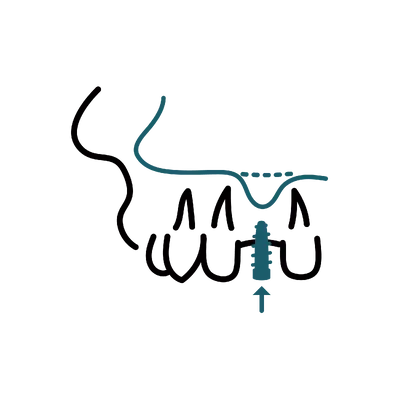
Zygomatic implants are extra-long dental implants that hold a fixed set of upper teeth by anchoring into the cheekbone, or zygoma, instead of the upper jaw. They are used when the upper jawbone has worn too thin for ordinary implants to grip, usually after years of tooth loss or denture wear. They avoid the grafting that would add six to twelve months and a separate surgery, and fixed temporary teeth often go on the same day.
If you have been told there is not enough bone for implants, this is often the option that went unmentioned. Most cases pair two zygomatic implants at the back with two conventional ones at the front; the most severe use four. Your surgeon decides the layout from your scan.
This is specialist surgery, with a longer recovery and a deeper surgical field near the sinus. Studies report high long-term implant survival, but mostly in experienced hands3, so much depends on the surgeon's zygomatic training and on what your CT scan shows about your sinuses and bone. A consultation is the honest way to know if it suits you.
It can address a range of concerns, including:
Am I a Good Candidate for Zygomatic Implants?
Zygomatic implants suit a narrow, well-defined group: patients whose upper jaw can no longer hold conventional implants but whose health supports specialist surgery.
Specialists confirm on a 3D CT scan that conventional implants genuinely cannot be placed before recommending the cheekbone route.
Severe upper jaw bone loss: The defining indication. Years of denture wear or tooth loss have left too little maxillary bone for standard implants, even after grafting was considered.
CT scan first: Bone height, volume and the width of the zygoma itself are measured on a 3D scan, often reviewed remotely before you travel.
Front jaw bone decides the protocol: Preserved bone at the front of the upper jaw points to the hybrid approach with two conventional implants; near-total loss points to quad zygomatic.
Because the implants pass close to or through the maxillary sinus, sinus condition is checked carefully before surgery is planned.
Clear, quiet sinuses: Active or chronic sinusitis, nasal polyps or previous sinus surgery need an ENT review and clearance before zygomatic placement goes ahead.
Safe trajectory on the scan: Limited mouth opening or a narrow zygomatic bone on CT can make the path through the cheekbone uncertain and rule the technique out.
Pressure discipline afterwards: You need to follow strict rules on nose-blowing and pressure changes during early healing, so willingness to comply is part of the assessment.
Zygomatic surgery uses general anaesthesia or deep sedation, so general health is screened more rigorously than for standard implant placement.
Medically fit for anaesthesia: Good general health is expected. Significant comorbidities that raise anaesthetic risk are flagged before any surgical date is set.
Medication history reviewed: Recent IV bisphosphonates raise concern for jaw bone healing and need discussing openly during consultation.
Smoking and diabetes stabilised: Heavy smoking or uncontrolled diabetes carries more weight here than with routine implants, given the deeper surgical field and longer recovery.
The trade-off is one more demanding surgery in exchange for fixed teeth without months of bone grafting first.
Longer recovery than standard implants: Plan on 10-14 days in Thailand with pronounced cheek swelling, compared with 3-5 days for conventional implant surgery.
Two visits to finish: A fixed temporary prosthesis is attached on surgery day; the permanent prosthesis follows at 4-6 months on a second 3-5 day trip.
Strong evidence, specialist-dependent: Published success rates are high over the long term, but only in the hands of surgeons with specific zygomatic training and case volume.
Who is not suitable for zygomatic implants?
- Active or chronic maxillary sinusitis or nasal polyps until cleared by an ENT review
- Recent IV bisphosphonate therapy affecting jaw bone healing
- Medical conditions that make general anaesthesia or deep sedation high risk, until stabilised
- Smoking or uncontrolled diabetes you are not ready to address before surgery
- Anatomy unsuitable on CT, such as a narrow zygomatic bone or very limited mouth opening
- Severe lower jaw bone loss, since zygomatic implants are designed for the upper jaw only
Pricing
How Much Will Zygomatic Implants Cost in Thailand?
What zygomatic implants costs at accredited hospitals in Thailand, and what your final quote depends on.
Get your exact price
Tell us what you're considering and we'll send a personalised quote from accredited hospitals within 24 hours.
Get my free quoteTypical prices in Thailand
Typical ranges based on recent hospital quotes. Your exact price depends on the hospital and how complex your case is, and is confirmed at your teleconsultation.
Zygomatic Implants
How many zygomatic implants you need is decided by how much upper jaw bone is left on your CT scan.
| Hybrid, two zygomatic plus two conventional implants The usual protocol when some front bone remains usable | $10,000 to $18,000 ฿340,000 to ฿612,000 |
| Quad zygomatic, four zygomatic implants Used when bone loss across the upper jaw is total | $15,000 to $25,000 ฿510,000 to ฿850,000 |
Added to the above where needed
| Permanent prosthesis Fitted at a second visit once healing is complete | $3,000 to $7,000 ฿102,000 to ฿238,000 |
Get your exact price
Tell us what you're considering and we'll send a personalised quote from accredited hospitals within 24 hours.
Clinics Trusted for Zygomatic Implants
From internationally accredited flagships to dedicated specialist clinics, these are the kinds of facilities where international patients have this procedure.

Thantakit International Dental Center
Thailand's longest established dental center, operating in Bangkok since 1945 with more than 40 dentists
View hospital profile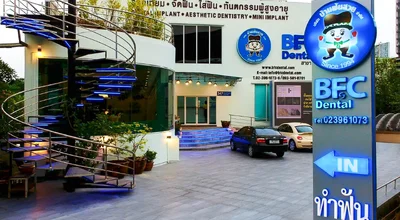
BFC Dental
Implant-focused Bangkok dental clinic founded in 1994, placing more than 4,600 implants a year
View hospital profile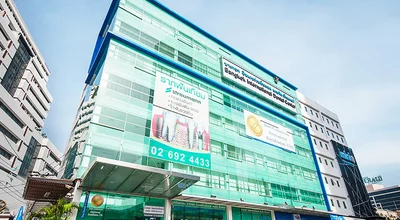
Bangkok International Dental Center
Thailand's first JCI-accredited dental center with more than 70 specialist dentists
View hospital profile
Get a Free Dental Quote in Minutes
Tell us what you need and we'll match you with the right specialist and return real clinic quotes.
- Itemised clinic quotes with no hidden fees
- Matched to a dentist experienced in your specific treatment
- Completely free, even if you decide not to go ahead


Rated 5 stars by our patients
The complete guide to Zygomatic Implants in Thailand
Everything below is for readers who want the full detail: costs broken down, types and techniques, recovery, risks and safety, and planning your trip.
Zygomatic Implant Specialists & Clinics in Thailand
Zygomatic implants require specialist training beyond standard implant placement. Here is how our partners are qualified and what their clinics provide.
Specialist Clinics in Bangkok
Our zygomatic implant partners operate from facilities with advanced imaging (cone beam CT and panoramic), general anaesthesia capability, and overnight monitoring rooms. These are not general dental practices, they are equipped for the complexity that zygomatic surgery demands, including managing the rare intra-operative complication.
Fellowship-Trained Specialists
The surgeons we work with for zygomatic cases have completed specific fellowship training in zygomatic implant techniques, typically in Europe. Years of focused practice, with the case volume that produces consistent outcomes, sets them apart. They maintain this as a core part of their practice, not an occasional add-on. Case volume matters with zygomatic surgery more than almost any other implant procedure.
What to Verify Before Committing
Ask your surgeon how many zygomatic cases they have performed and over what period. Request before-and-after examples of similar cases. Confirm the facility has general anaesthesia capability and overnight monitoring. Verify they use a recognised zygomatic implant system with published clinical data. If the surgeon cannot provide clear answers to these questions, look elsewhere.
Understanding Your Results
Zygomatic implants deliver one of the most dramatic transformations in implant dentistry, particularly for patients who were told no other option existed.
Typical Zygomatic Implant Results
Patients move from a loose upper denture, or no teeth at all, to a fixed set of teeth in a single surgical session. The improvement in eating, speaking, and social confidence is immediate. The prosthesis fills out the upper lip and mid-face profile, which often appears collapsed in patients with severe bone loss. The result is a complete upper arch that functions without removal, without adhesive, and without compromise.
What Results Can You Expect?
The temporary prosthesis provides immediate function and a significant aesthetic improvement. The permanent prosthesis, fitted at four to six months, is the definitive result: precision-milled, shade-matched, and engineered for long-term durability. Published studies show high long-term implant survival rates. Patients who were living with a poor-fitting denture consistently describe a significant improvement in daily function and confidence.
Zygomatic Implant Cost in Thailand
Average Cost of Zygomatic Implants
Zygomatic implant treatment in Thailand typically costs between $10,000 and $25,000 per pair of zygomatic implants, as part of a full-arch treatment. A complete hybrid case (two zygomatic plus two conventional implants with temporary prosthesis) ranges from $10,000 to $18,000. Quad zygomatic cases cost more due to the additional hardware and surgical complexity.
Cost Breakdown
The price covers the zygomatic implant posts, any conventional implants used, the specialist surgical fee, anaesthesia (general or IV sedation), temporary prosthesis, 3D CT scan, digital planning, overnight monitoring if needed, and all follow-up appointments during your stay. The permanent prosthesis is quoted separately and fitted at a second visit.
What Affects the Price?
The number of zygomatic implants is the primary cost driver, two versus four. Whether general anaesthesia or IV sedation is used affects the anaesthesia fee. The implant brand, prosthetic material, and clinic facility level all influence the total. Cases requiring overnight hospitalisation add to the cost. The surgeon's experience with zygomatic procedures is reflected in their fee.
Thailand vs International Price Comparison
Zygomatic implant treatment costs $15,000–$30,000 per pair in the US, A$14,000–A$27,500 in Australia, and £12,500–£25,000 in the UK. Thailand's $5,000–$10,000 per pair represents a saving of 50–70%. For a procedure that would otherwise require extensive bone grafting at additional cost and time, the overall financial advantage is even greater.
Zygomatic Implants vs Bone Grafting
The usual alternative for severe upper jaw bone loss is bone grafting: rebuilding the missing maxillary bone, often with a sinus lift, so that conventional implants can be placed once it has healed. It is a well-established route and, where there is enough residual bone to graft onto, it lets you stay with standard implants rather than the specialist zygomatic approach.
The trade-off is time and staging. Grafting adds roughly six to twelve months of healing before the implants can go in1, means a separate surgery with its own risks of graft failure, infection, and resorption, and in the most severe cases there is simply not enough host bone for a graft to succeed at all. It rebuilds the foundation rather than working around it, which is why it suits moderate loss more than near-total loss.
Where the upper jaw has deteriorated past the point a graft can reliably fix, or where you want to avoid a year of staged surgery, zygomatic implants anchor into the dense cheekbone instead and carry a fixed arch the same day, with no grafting at all. That is the route the rest of this page covers, and your CT scan is what confirms which one your jaw can actually support.
Types of Zygomatic Implant Treatment
The number of zygomatic implants depends on how much viable jawbone remains in the front of the upper jaw. Here are the main configurations.
Hybrid Approach (2 Zygomatic + 2 Conventional)
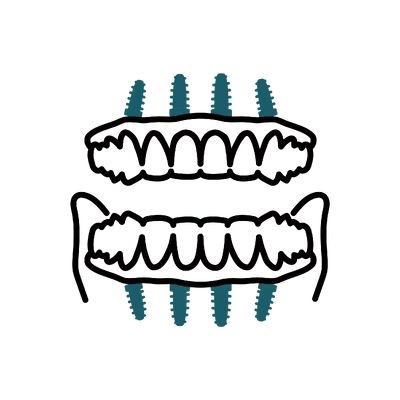
Two zygomatic implants anchor into the cheekbones at the back, while two standard implants are placed in the front jaw where bone is typically preserved. Together, four implants support a full-arch fixed prosthesis. This is the most common protocol.
- Most widely documented zygomatic protocol with the longest clinical track record
- Front implants provide additional anterior support and stability
- Same-day fixed teeth in most cases
- Best for: patients with severe posterior bone loss but adequate bone in the front jaw
Quad Zygomatic (4 Zygomatic Implants)
Four zygomatic implants, two per side, support the prosthesis without any conventional implants. Used when bone loss is so extensive that even the front of the upper jaw cannot support standard implants. A more complex procedure but the only option for the most severe cases.
- Complete solution for the most extreme cases of maxillary bone loss
- No conventional implants needed, everything anchors into the cheekbone
- Same-day teeth still possible in most quad zygomatic cases
- Best for: patients with total or near-total upper jaw bone loss
Zygomatic with Immediate Loading
A fixed temporary prosthesis is attached to the zygomatic implants on surgery day. You leave the clinic with functional upper teeth immediately. The permanent prosthesis replaces the temporary after four to six months of integration.
- Eliminates the period without teeth during healing
- The temporary prosthesis is functional for soft-food eating and speaking
- Permanent prosthesis fitted at a second visit once integration is confirmed
- Best for: all zygomatic patients, immediate loading is the standard approach
Zygomatic Implant Techniques
Zygomatic placement is a specialist procedure that requires advanced 3D planning, a thorough understanding of sinus and cheekbone anatomy, and confidence with longer surgical times.
Intra-Sinus vs Extra-Sinus Trajectory
The implant can pass through the maxillary sinus (intra-sinus) or along its outer wall (extra-sinus). The intra-sinus route is the original technique and remains widely used. The extra-sinus approach avoids sinus involvement but is more technically demanding.
- Intra-sinus: established technique, extensive clinical evidence, slightly higher sinusitis risk
- Extra-sinus: avoids sinus cavity entirely, lower post-operative sinus complications
- Trajectory choice depends on sinus anatomy and the specialist's experience
- Best for: intra-sinus is the standard; extra-sinus is preferred when anatomy allows it
3D-Guided Zygomatic Surgery
High-resolution CT scanning maps the exact path from jaw to cheekbone. Some specialists use custom surgical guides for zygomatic placement, though the technique often requires intra-operative adjustments that limit guide use. Virtual surgical planning is standard regardless.
- Virtual planning maps the trajectory through bone before surgery begins
- Identifies optimal implant entry and exit points in the zygoma
- Custom guides are used when anatomy is predictable and trajectory is consistent
- Best for: all zygomatic cases benefit from virtual planning even when freehand placement is used
Combined Zygomatic and Conventional Protocol
Most zygomatic cases combine long zygomatic implants posteriorly with shorter conventional implants anteriorly. This mixed approach takes advantage of whatever bone remains in the front jaw while relying on the cheekbone where the jawbone has failed.
- Maximises available bone in the front while bypassing loss in the back
- Four total implants, two zygomatic, two conventional, support a full upper arch
- Same-day prosthetic attachment is routine with this configuration
- Best for: the majority of zygomatic cases where some anterior jaw bone is preserved
Zygomatic Implant Recovery Timeline
Days 1–3
Noticeable swelling around the cheeks and under the eyes, more pronounced than conventional implant surgery because of the deeper surgical area. Pain medication, antibiotics, and anti-inflammatory medication are prescribed. Eat only soft, cool foods. Apply cold compresses regularly. Some patients stay overnight in the clinic for monitoring.
Days 4–7
Cheek swelling begins to recede. Bruising may appear around the mid-face but resolves progressively. You can introduce soft cooked foods. A follow-up appointment checks the implant sites and adjusts the temporary prosthesis if needed.
Weeks 2–4
Swelling and bruising resolve. Your diet can expand to include most soft and moderately firm foods. The temporary prosthesis lets you eat and speak comfortably. Follow your dentist's instructions for oral hygiene around the implant sites carefully.
Months 4–6
The zygomatic implants are fully integrated with the cheekbone. You return for a second visit of three to five days for impressions and fitting of the permanent prosthesis, typically high-strength zirconia or porcelain on a titanium framework. This is built to withstand years of daily use.
When Can You Fly After Zygomatic Surgery?
Plan to stay in Thailand for 10–14 days after zygomatic implant surgery. The recovery is longer than conventional implants because the surgical area is deeper and involves the cheekbone. Swelling takes longer to resolve and follow-up appointments are important during the first two weeks. Your surgeon will clear you for travel once healing milestones are met.
When Can You Return to Work and Exercise?
Most patients need 10–14 days before returning to normal activities. Desk work may be possible after one week if swelling is manageable. Physical exercise should wait at least three to four weeks. The recovery is more demanding than standard implant surgery, plan accordingly and give your body the time it needs.
When Will You See Final Results?
The temporary teeth provide an immediate functional result. The permanent prosthesis is the final aesthetic and structural outcome, fitted at four to six months once the zygomatic implants have integrated with the cheekbone. At that point, the prosthesis is optimised for bite, comfort, and appearance. Published studies report high long-term zygomatic implant survival, and the prosthesis itself is built for years of daily use.
Anaesthesia for Zygomatic Implants
Zygomatic implants reach deeper than a standard dental implant, working near the sinus and into the cheekbone, so the surgery is performed under general anaesthesia. You are fully asleep and feel nothing throughout. An anaesthetist stays with you for the whole procedure and monitors you continuously, which is why these cases are done in facilities with full anaesthesia teams and overnight monitoring rather than a routine dental chair.
For some cases a specialist may use deep IV sedation instead, where you are not fully under but are deeply relaxed and pain-free with the surgical area numbed. Which route is used depends on how many implants are planned, your medical history, and what your surgeon and anaesthetist judge safest. They confirm this with you before the day, and the choice also feeds into your quote.
Because general anaesthesia and deep sedation are involved, you have a pre-operative assessment first, covering your medical history, current medications, and fitness for anaesthesia, alongside the CT scan that plans the implant path. You feel nothing during surgery. Afterwards the discomfort is moderate and a little more than a conventional implant because the surgical field is deeper, with cheek swelling the main feature, but it is well controlled by the medication your surgeon prescribes and eases over the first week to ten days.
Risks and Safety of Zygomatic Implants
Zygomatic surgery is more involved than conventional implant placement. The recovery is longer and the potential complications are different. But the procedure has been refined over three decades and success rates in published studies are consistently high.
- Pronounced cheek and periorbital swelling (resolves within 10–14 days)
- Sinusitis or sinus infection from intra-sinus implant trajectory
- Temporary cheek or upper lip numbness from nerve involvement2
- Infection at the implant site (managed with antibiotics)
- Implant failure to integrate (uncommon, replaceable)
- Oro-antral communication between mouth and sinus (treatable)2
- Longer recovery period than conventional implant procedures
Zygomatic surgery requires a specialist, not every implant dentist is qualified to perform it. The most important risk-reduction step is confirming your surgeon has specific training and documented experience with zygomatic protocols.
Are Zygomatic Implants Safe in Thailand?
Yes. The procedure has been used internationally since the 1990s, with well-documented safety data. Our partner specialists have fellowship training in zygomatic techniques and perform these cases regularly. They operate in JCI-accredited facilities with on-site imaging, anaesthesia teams, and overnight monitoring capability.
How to Reduce Risks
Verify your surgeon has specific zygomatic implant training, this is not a procedure where general implant experience is sufficient. Provide a complete medical history, particularly regarding sinus conditions. Follow post-operative instructions strictly, especially regarding nose-blowing and pressure changes. Attend all follow-up appointments and report any unusual symptoms promptly.
Zygomatic vs Bone Grafting: Risk Comparison
Bone grafting is a less complex surgery but adds six to twelve months to the treatment timeline, requires a separate surgical procedure, and introduces its own risks, graft failure, infection, and resorption. Zygomatic implants are a more involved single procedure but eliminate the grafting stage entirely. For patients who want to avoid multiple surgeries and months of healing, zygomatic implants typically carry a better risk-benefit profile overall.
Planning Your Trip to Thailand for Zygomatic Implants
Zygomatic implant treatment requires a longer initial stay and more pre-operative planning than standard implant procedures. Here is how to organise it.
How Long to Stay in Thailand
Plan 10–14 days for the first visit. The first two to three days cover consultation, CT scanning, treatment planning, and pre-operative preparation. Surgery typically happens on day three or four. The remaining time is for recovery, follow-up appointments, and prosthesis adjustments before you fly home. The second visit for the permanent prosthesis takes three to five days.
What's Included in a Treatment Trip
Your coordinator manages every appointment, transfer, and follow-up. The surgical quote covers zygomatic and conventional implants, anaesthesia, temporary prosthesis, CT scan, digital planning, overnight monitoring, and all in-Thailand appointments. Flights and accommodation are separate. Recovery-friendly hotel options near the clinic are recommended by your coordinator.
Pre-Trip Preparation
A CT scan taken at home is reviewed by your specialist in Thailand before you travel. This allows the surgical plan to be drafted in advance, which saves time on arrival. You will receive pre-operative instructions including medications to avoid, medical clearance requirements, and guidance on arranging your schedule for the recovery period.
Related Procedures
Other procedures that address similar goals or conditions, in case one of them is a closer fit for you.
Planning your treatment in Thailand
Independent guides to help you weigh the decision, before you commit to anything.
Common Questions About Zygomatic Implants
Everything you need to know before your treatment

Medical References
Keep researching with AI
Open this guide in your AI assistant to dig deeper and ask the questions it didn't answer.
Opens in a new tab with this guide already loaded.
Medical disclaimer: This information is for educational purposes only and does not replace professional dental advice. Individual results, recovery times, and suitability vary. Always consult a qualified dentist before making decisions about treatment.
Ready to Get Started?
Speak with our care coordinators for a free, no-obligation consultation and personalised quote.
Speak to Our Team