Bone Grafting in Thailand Your guide to cost, top dentists & hospitals
Bone grafting rebuilds what tooth loss takes away, so the implant you need has somewhere solid to go.
What Is Bone Grafting?
Also known as: Dental Bone Graft · Alveolar Bone Augmentation
Bone grafting is a minor oral surgery that rebuilds thinned or missing jawbone by placing graft material at the site so your own bone grows through it. It restores the volume lost after an extraction, gum disease, or years in a denture, giving an implant solid bone to anchor into. The graft acts as a scaffold that your body remodels into living bone1,2 over roughly three to six months. The material can be your own bone, processed donor or bovine bone, or a synthetic substitute, usually held under a thin protective membrane.
Most people come to us after being told elsewhere that there simply is not enough bone for implants. This is the step that usually reopens that door. It is a routine part of implant dentistry, done under local anaesthesia in well under two hours, with the technique matched to your gap from a 3D scan.
Grafts take in the large majority of cases, though healing is biological and no two sites fill in quite the same way. A consultation and CT scan are the honest way to know what your jaw actually needs.
It can address a range of concerns, including:
Am I a Good Candidate for Bone Grafting?
Most patients short on jawbone can be grafted; the assessment centres on healing capacity and whether the site is healthy enough to build on.
Graft material only succeeds in a clean, infection-free site, so any disease at the planned area is dealt with before grafting.
No active infection: Gum disease or infection at the graft site is eliminated first; placing graft material into an infected area sets it up to fail.
Soft tissue that can cover the graft: Blood supply and soft-tissue coverage are two of the main determinants of graft success, so the surrounding tissue is examined closely.
Fresh extraction sites are ideal: A recently extracted tooth is the best timing of all, since socket preservation at the extraction appointment prevents the rapid early bone collapse.
New bone has to grow on the graft scaffold, so dentists screen for anything that impairs your healing response.
Smoking is the biggest single risk: Reduced blood flow is the leading predictor of graft failure. You are expected to stop at least four weeks before surgery.
Stable medical conditions: Uncontrolled diabetes or autoimmune conditions affecting healing need stabilising with your physician before the graft is scheduled.
Bisphosphonate history disclosed: Recent or ongoing IV bisphosphonate therapy significantly raises the risk of medication-related osteonecrosis and must be reviewed first.
Grafting is a staged commitment: in most cases the bone needs three to six months before implants can follow.
Two visits in most cases: A 7-10 day trip for the graft, then a second 7-10 day visit after 3-6 months of healing for implant placement.
A same-session option exists: Moderate defects with enough native bone for implant stability can have graft and implant placed together, which your CT scan determines.
Scan-confirmed readiness: A follow-up CT confirms bone volume and density before the implant visit is booked, so the timeline follows your biology rather than a fixed calendar.
A graft rebuilds foundation, not appearance; the visible result arrives later with the implant and crown.
No cosmetic change from the graft itself: It sits beneath the gum line and becomes part of your jaw, behaving like native bone for implant support.
High but not guaranteed success: Graft failure is uncommon, and if the follow-up scan shows insufficient regeneration the site can usually be regrafted with a different technique.
Patience pays: Socket preservation heals in around three to four months, while larger block grafts take closer to six before the bone is implant-ready.
Who is not suitable for bone grafting?
- Active gum disease or infection at the graft site until fully treated
- Smoking or vaping you are not prepared to stop at least four weeks before surgery
- Recent or ongoing IV bisphosphonate therapy until osteonecrosis risk has been reviewed
- Previous radiotherapy to the jaw, head, or neck until osteoradionecrosis risk has been assessed and oncology clearance given
- Anticoagulant or antiplatelet blood thinners until their management around surgery has been agreed with your physician
- Uncontrolled diabetes or autoimmune conditions not yet stabilised with your physician
Pricing
How Much Will Bone Grafting Cost in Thailand?
What bone grafting costs at accredited hospitals in Thailand, and what your final quote depends on.
Get your exact price
Tell us what you're considering and we'll send a personalised quote from accredited hospitals within 24 hours.
Get my free quoteTypical prices in Thailand
Typical ranges based on recent hospital quotes. Your exact price depends on the hospital and how complex your case is, and is confirmed at your teleconsultation.
Bone Grafting
Grafting is priced per site, so a plan covering more than one gap is quoted site by site.
| Socket preservation, per site Done at extraction to stop the empty socket collapsing | $500 to $700 ฿17,000 to ฿23,800 |
| Guided bone regeneration, per site Granulated bone under a membrane to rebuild a thin ridge | $600 to $900 ฿20,400 to ฿30,600 |
| Block bone graft, per site A solid block of bone where more volume is needed | $800 to $1,000 ฿27,200 to ฿34,000 |
Get your exact price
Tell us what you're considering and we'll send a personalised quote from accredited hospitals within 24 hours.
Clinics Trusted for Bone Grafting
From internationally accredited flagships to dedicated specialist clinics, these are the kinds of facilities where international patients have this procedure.
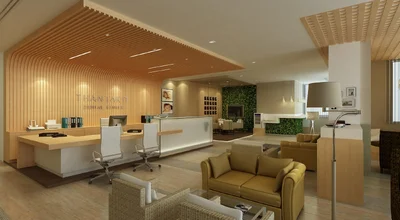
Thantakit International Dental Center
Thailand's longest established dental center, operating in Bangkok since 1945 with more than 40 dentists
View hospital profile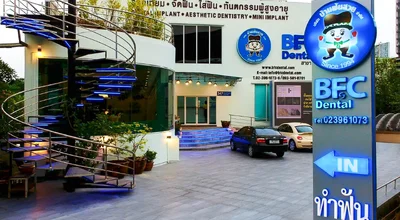
BFC Dental
Implant-focused Bangkok dental clinic founded in 1994, placing more than 4,600 implants a year
View hospital profile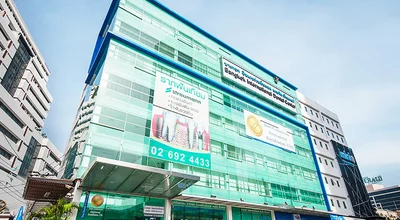
Bangkok International Dental Center
Thailand's first JCI-accredited dental center with more than 70 specialist dentists
View hospital profile
Get a Free Dental Quote in Minutes
Tell us what you need and we'll match you with the right specialist and return real clinic quotes.
- Itemised clinic quotes with no hidden fees
- Matched to a dentist experienced in your specific treatment
- Completely free, even if you decide not to go ahead


Rated 5 stars by our patients
The complete guide to Bone Grafting in Thailand
Everything below is for readers who want the full detail: costs broken down, types and techniques, recovery, risks and safety, and planning your trip.
Bone Grafting Dentists & Clinics in Thailand
Bone grafting is a foundational skill in implant dentistry. Here is what distinguishes the clinics and dentists we partner with.
Leading Clinics in Bangkok
Our partners operate from clinics with on-site CT scanning, guided surgery capability, and access to a full range of graft materials. They perform bone grafting routinely as part of their implant workflow, which means the protocols are refined and the materials are always in stock. In-house labs handle any prosthetic work that runs in parallel.
Experienced Grafting Specialists
The dentists we work with include oral surgeons and periodontists with specific training in bone augmentation techniques. They assess each case individually, recommending the graft type, material, and approach that fits the defect, not defaulting to a one-size-fits-all protocol.
Planning the Graft as Part of Your Implant Timeline
Your dentist will explain how the grafting procedure fits into the overall implant treatment plan. In some cases, the graft and implant can be placed in the same session. In others, the graft heals for three to six months before the implant visit. Your coordinator schedules both trips as part of a single, coordinated treatment plan.
Understanding Your Results
Bone grafting is a preparatory procedure, the result is not a visible change but a rebuilt foundation. Here is what success looks like clinically.
Typical Bone Grafting Results
A successful graft regenerates enough bone volume and density to support an implant. This is confirmed by a follow-up CT scan at three to six months. The regenerated bone is biologically integrated, it is your bone, grown on the graft scaffold. It behaves exactly like native bone for implant support purposes.
What Results Can You Expect?
Expect the graft to provide the foundation that makes implant placement possible. The visible result comes later, when the implant and crown are placed in the newly regenerated bone. The graft itself is invisible, it sits beneath the gum line and becomes part of your jaw. Success rates for bone grafting in the published literature are consistently high when proper technique and materials are used.
Bone Grafting Cost in Thailand
Average Cost of Bone Grafting
Bone grafting in Thailand typically costs $500–$1,000 per site, depending on the technique, graft material, and defect size. Socket preservation is at the lower end. Block grafting and larger guided bone regeneration procedures sit at the higher end. When combined with implant treatment, the bundled savings are considerable.
Cost Breakdown
The price covers the surgical fee, graft material, barrier membrane, local anaesthesia with sedation, CT scan, and all follow-up appointments during your stay. Post-operative medications are included. If bone is harvested from a donor site (autograft), the additional surgical time is reflected in the fee.
What Affects the Price?
Graft material type affects cost, autograft involves a donor-site procedure, xenograft uses processed bovine bone, and synthetic materials vary in price. The volume of graft material needed scales with the defect size. Whether a resorbable or non-resorbable membrane is used changes the cost. And simultaneous implant placement adds the implant fee to the session.
Thailand vs International Price Comparison
Bone grafting costs $1,500–$3,000 per site in the US, A$1,400–A$2,750 in Australia, and £1,250–£2,500 in the UK. Thailand's $500–$1,000 per site represents a saving of 50–70%. When grafting is part of a broader implant treatment plan, the cumulative savings across all procedures can be very substantial.
Alternatives to Bone Grafting
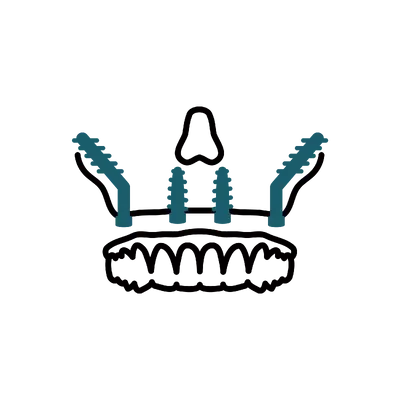
Not every case that looks short on bone actually needs a graft. Where the loss is in a specific spot, graftless implant strategies can sometimes work around it rather than rebuild it. Short and narrow implants seat into shallower or thinner bone; tilted implants angle past a deficient area into the denser bone that remains, which is the principle behind All-on-4 for a full arch; and zygomatic implants anchor into the cheekbone to bypass severe upper-jaw loss altogether. For the right anatomy, these can avoid grafting and collapse a staged, multi-trip plan into a single visit.
The catch is that they only suit certain patterns of bone loss. They depend on enough sound bone surviving in the right place to hold an implant steady, and angled or zygomatic placement is technically demanding, so it is not a universal shortcut. A graft, by contrast, rebuilds the site itself, restoring volume and density so a standard implant can sit where the tooth actually was, in a position that is easier to clean and restore well long term.
Which route fits is decided from your 3D CT scan, not from a preference stated up front. Where a graftless option genuinely works, a good dentist will say so. Where the bone is simply not there to build on, grafting is the route that reopens the implant door, and that is what the rest of this page covers.
Types of Bone Grafting
The grafting technique is dictated by the size and location of the bone defect. A small socket fill is a different procedure from rebuilding a collapsed jaw ridge.
Socket Preservation
Graft material is placed into the tooth socket immediately after extraction to prevent the rapid bone loss that otherwise occurs. A membrane covers the graft. This preserves the bone volume for implant placement three to four months later.
- Prevents the significant bone collapse that occurs in the first weeks after extraction
- Often performed as part of the extraction appointment, one procedure, not two
- Keeps the implant option open without needing more extensive grafting later
- Best for: any extraction site where a future implant is planned
Guided Bone Regeneration (GBR)
Particulate bone graft material is packed around the deficient area and covered with a barrier membrane. The membrane keeps soft tissue from growing into the graft site, allowing bone to regenerate undisturbed. Can be done at the same time as implant placement in many cases.
- The most versatile grafting technique, suitable for a wide range of defects
- Can be combined with simultaneous implant placement for smaller defects
- Membrane dissolves on its own or is removed at follow-up
- Best for: moderate bone defects where the implant can potentially be placed at the same time
Block Bone Graft
A block of bone is harvested from another site, typically the chin or the back of the lower jaw, and fixed to the deficient area with small titanium screws. Used for larger defects that require substantial volume reconstruction before implants are feasible.
- Provides significant bone volume for major defect reconstruction
- Uses your own bone, which has the highest regenerative potential
- Healing period of four to six months before implant placement
- Best for: large defects where particulate grafting alone would not provide enough volume
Sinus Lift (Sinus Augmentation)
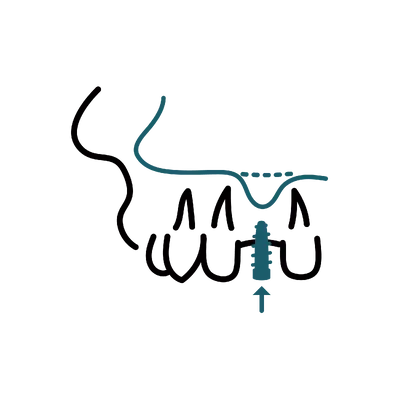
In the upper back jaw the floor of the sinus often sits too low for an implant, especially after molar loss. A sinus lift gently raises the sinus membrane and packs graft material into the space beneath it, building new bone height where the implant needs to anchor. A lateral-window approach is used for larger lifts; a less invasive crestal approach through the implant channel suits smaller ones, sometimes alongside implant placement.
- Creates bone height in the upper back jaw where the sinus has dropped too low
- Lateral-window approach for bigger lifts; crestal approach for smaller ones
- Crestal lifts can sometimes be done alongside implant placement
- Best for: upper posterior implants where there is too little bone below the sinus
Bone Grafting Techniques
The technique depends on the defect size, location, and whether simultaneous implant placement is planned. Here is what our partner clinics commonly perform.
Graft Material Options
Autograft (your own bone) has the highest regenerative potential. Allograft (donor bone) is processed and widely available. Xenograft (bovine bone) integrates predictably and is the most commonly used material globally. Alloplast (synthetic) avoids any biological origin. The choice depends on defect size and patient preference.
- Autograft: strongest biological response, requires a donor site
- Allograft: no donor site needed, well-documented clinical performance
- Xenograft: most commonly used worldwide, predictable integration
- Best for: your dentist selects the material based on defect size, location, and your medical history
Barrier Membrane Techniques
A membrane is placed over the graft to act as a physical barrier, preventing fast-growing soft tissue from invading the graft site. Resorbable membranes dissolve on their own. Non-resorbable membranes provide longer-lasting protection but require a second procedure for removal.
- Resorbable: dissolves in weeks to months, no removal needed
- Non-resorbable: stronger barrier, used for larger or more critical defects
- Titanium-reinforced membranes maintain space over large defects
- Best for: resorbable for routine cases; non-resorbable for larger or more demanding reconstructions
Simultaneous Graft and Implant Placement
When the bone defect is moderate and enough native bone exists to achieve primary implant stability, the graft and implant can be placed in the same session. This reduces the total number of procedures and trips. Whether this is feasible depends on your 3D scan findings.
- Combines two procedures into one surgical appointment
- Saves time and reduces the total number of trips to Thailand
- Only possible when sufficient native bone provides initial implant stability
- Best for: moderate defects where enough residual bone supports the implant during graft healing
Bone Grafting Recovery Timeline
Days 1–3
Moderate swelling and discomfort around the graft site. Pain medication, antibiotics, and antiseptic mouthwash are prescribed. Apply ice packs to the outside of your face. Eat soft, cool foods. Do not disturb the graft site with your tongue or fingers. If the graft is in the upper jaw, avoid blowing your nose.
Days 4–7
Swelling reduces and discomfort becomes manageable with over-the-counter medication. Soft cooked foods can be reintroduced. A follow-up appointment confirms healing is on track. Sutures may be dissolving at this stage.
Weeks 2–6
Soft tissue over the graft site heals. Any remaining sutures dissolve or are removed. Normal eating and activities resume, though avoid putting direct pressure on the graft area. New bone is beginning to form within the graft scaffold.
Months 3–6
Sufficient new bone has regenerated for implant placement. A follow-up CT scan confirms bone volume and density. Implant surgery can now be scheduled, typically during a second visit to Thailand of seven to ten days.
When Can You Fly After Bone Grafting?
Most patients can fly home 7–10 days after bone grafting. If the graft is in the upper jaw near the sinus, avoid nose-blowing and discuss timing with your dentist. Cabin pressure during flight is not a concern for most graft sites. Your follow-up appointment before departure confirms healing is progressing normally.
When Can You Return to Work and Exercise?
Desk work can resume two to three days after surgery. Light walking is fine from day one. Avoid strenuous activity for one to two weeks, raised blood pressure can increase swelling at the graft site. Sports and heavy exercise should wait until the soft tissue is fully healed, usually at three to four weeks.
When Is the Bone Ready for Implants?
Bone regeneration takes three to six months depending on the graft size and technique. Socket preservation grafts heal faster, often three to four months. Larger block grafts may take five to six months. A follow-up CT scan confirms when the bone is dense enough for implant placement. Your coordinator schedules the implant visit based on the scan results.
Anaesthesia for Bone Grafting
Bone grafting in Thailand is done under local anaesthetic, so you stay fully awake but the area being worked on is completely numb. The dentist places the anaesthetic before starting, and you feel pressure and movement rather than pain while the graft is positioned. Because most grafts take well under two hours and involve no general anaesthesia, there is no hospital stay and you walk out the same day.
If you feel anxious about dental surgery, sedation can be added alongside the local anaesthetic to keep you calm and relaxed throughout, while you remain awake and able to respond. Whether you want sedation is your choice, discussed at your consultation, and the dentist confirms it is suitable based on your medical history.
Before any graft, you have a consultation and 3D CT scan, and the dentist reviews your medications and general health. You feel nothing sharp during the procedure itself. Afterwards there is moderate swelling and tenderness around the site for the first few days, which is well controlled with the pain medication and antibiotics you are prescribed, and most patients find the recovery gentler than they expected.
Risks and Safety of Bone Grafting
Bone grafting is a routine, well-documented procedure with high success rates. Modern graft materials and membrane technologies make outcomes highly predictable, though as with any surgery, some risks exist.
- Localised swelling and post-operative discomfort
- Graft site infection (uncommon with antibiotics and good hygiene)1
- Graft failure, insufficient new bone growth (can be regrafted)
- Barrier membrane exposure through the gum tissue
- Sinus membrane (Schneiderian) perforation during a sinus lift, the main intra-operative risk of upper-jaw sinus augmentation; small tears are repaired at the time and may pause the graft, larger ones can lead to sinusitis or an oro-antral communication
- Inferior alveolar or mental nerve injury when a block graft is harvested from the chin (symphysis) or back of the lower jaw (ramus), causing altered sensation in the lip, chin, or gum; usually temporary but occasionally persistent paraesthesia1
- Donor-site morbidity after an autograft harvest, including prolonged pain, swelling, bruising, or wound breakdown (dehiscence) at the chin or ramus site
- Resorption of grafted bone before implant placement
The main determinants of graft success are blood supply to the site, soft-tissue coverage, and patient compliance with post-operative instructions. Smoking is the single biggest risk factor for graft failure1,2, stopping before treatment substantially improves outcomes.
Is Bone Grafting Safe in Thailand?
Yes. Bone grafting is one of the most routine procedures in implant dentistry. Our partner clinics use internationally sourced graft materials, the same brands used in clinics across the US, UK, and Australia. The surgical protocols are standardised and well understood. JCI accreditation confirms the facilities meet international infection-control standards.
How to Reduce Risks
Stop smoking at least four weeks before surgery, tobacco impairs blood flow and is the leading cause of graft failure. Follow post-operative instructions carefully, particularly regarding oral hygiene and dietary restrictions. Do not disturb the graft site during healing. Attend all follow-up appointments to catch any early signs of membrane exposure or infection.
What If the Graft Does Not Take?
Graft failure, where insufficient new bone forms, is uncommon but possible. If the follow-up CT scan shows inadequate regeneration, the site can be regrafted using a different material or technique. This adds time to the overall treatment plan but does not rule out implant placement. Your dentist will assess the cause of failure and adjust the approach accordingly.
Planning Your Trip to Thailand for Bone Grafting
Bone grafting is typically the first step in a multi-visit implant treatment plan. Here is how the trip structure works.
How Long to Stay in Thailand
Plan 7–10 days for the grafting visit. Day one covers consultation and CT scan. The grafting procedure happens on day two or three. The remaining days allow for initial healing and a follow-up appointment. The second visit for implant placement, three to six months later, takes another 7–10 days.
What's Included in a Dental Trip
Your coordinator schedules the grafting procedure and plans the implant visit around your healing timeline. The surgical quote covers graft material, membrane, surgical fee, anaesthesia, CT scan, and all in-Thailand follow-ups. Flights and accommodation are arranged separately.
Combining Grafting With Other Procedures
If you need grafting in one area and an implant in another (where bone is already sufficient), both can be done during the same visit. Socket preservation at extraction sites and implant placement at healed sites is a common same-visit combination. Your coordinator works with the dental team to maximise what gets done in each trip.
Related Procedures
Other procedures that address similar goals or conditions, in case one of them is a closer fit for you.
Planning your treatment in Thailand
Independent guides to help you weigh the decision, before you commit to anything.
Common Questions About Bone Grafting
Everything you need to know before your treatment

Medical References
Keep researching with AI
Open this guide in your AI assistant to dig deeper and ask the questions it didn't answer.
Opens in a new tab with this guide already loaded.
Medical disclaimer: This information is for educational purposes only and does not replace professional dental advice. Individual results, recovery times, and suitability vary. Always consult a qualified dentist before making decisions about treatment.
Ready to Get Started?
Speak with our care coordinators for a free, no-obligation consultation and personalised quote.
Speak to Our Team