Dental Implants in Thailand Your guide to cost, top dentists & hospitals
A dental implant does not just fill a gap. It replaces the root, preserves bone, and gives you back a tooth that works.
What Is a Dental Implant?
Also known as: Tooth Implant · Endosseous Implant
A dental implant is a small titanium or zirconia post that is placed into the jawbone to replace the root of a missing tooth. Over the following three to six months the bone grows around it, a process called osseointegration1,3, and a custom-made crown is fixed on top. Unlike a bridge, it replaces the tooth without touching the neighbours, and the result looks, feels and works like a natural one. Done well, implants are among the most reliable procedures in dentistry, with high long-term success rates.
How simple the treatment is comes down to the bone underneath. A single implant in healthy bone is one of the most reliable procedures in dentistry. If bone has been lost over time, or the gap sits close to the sinus or at the front of your smile, the case needs more planning and sometimes a bone graft first.
Your dentist starts with a scan of the jaw, so you will know exactly what your own case involves before anything begins.
It can address a range of concerns, including:
Am I a Good Candidate for Dental Implants?
Most healthy adults with a missing tooth qualify; what dentists actually assess is bone volume, gum health, and smoking.
An implant is only as good as the bone and gum around it, so this is where assessment starts.
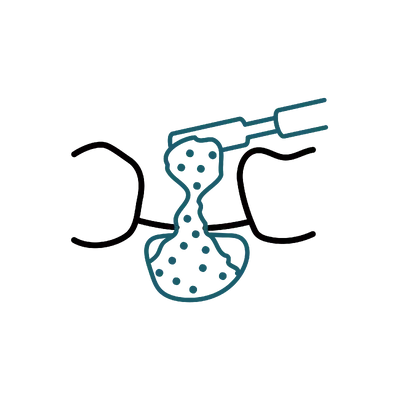
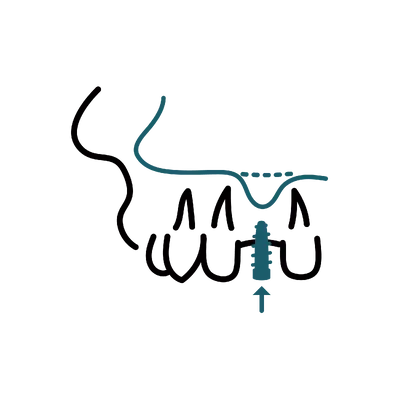
Enough bone on the CT scan: Adequate height and width to anchor the implant. Insufficient bone is not a refusal, but it does mean grafting or a sinus lift first.
Gums infection-free: Active periodontal disease or infection at the planned site must be treated before placement.
Site-specific factors: Proximity to the sinus or an aesthetic-zone position in the front of the mouth adds planning, not exclusion.
Dentists screen for the handful of factors that genuinely raise implant failure rates.
Smoking is the big one: Nicotine restricts blood flow to bone and is the largest modifiable cause of failed integration. You need to stop before surgery and through healing.
Diabetes under control: Well-controlled diabetes has near-normal success rates. Uncontrolled levels are a reason to delay, not a permanent bar.
Medications disclosed: IV bisphosphonates affect bone healing, and heavy grinding needs a night guard. Both shape the plan rather than automatically ruling you out.
A standard implant is staged around bone healing, and candidates need to be comfortable with that rhythm.
First visit of 7-10 days: Consultation, CT scan, placement, and a follow-up before flying home.
Integration takes 3-6 months: The bone fuses to the implant before the final crown can be fitted.
Second short visit or home finish: The permanent crown means a 3-5 day return trip, or it can be coordinated with a dentist at home using digital impressions taken in Thailand.
Implants are among the most predictable procedures in dentistry, with a few honest caveats.
High success: Failure to integrate is uncommon. When it does, the implant is removed, the site heals for two to three months, and a new one is placed.
The crown wears, the post does not: The implant is designed to last a lifetime; the crown typically needs replacing after 10-15 years.
Hygiene is the contract: Implants do not decay, but the gum around them inflames if neglected.
Who is not suitable for dental implants?
- Active gum disease or untreated infection at the implant site
- Uncontrolled diabetes until blood sugar is stable
- Current IV bisphosphonate therapy
- Smoking that will not be stopped before surgery and through healing
- Insufficient bone on CT with no willingness to consider grafting
- Heavy tooth grinding without a night guard
- Previous head or neck radiation therapy to the jaw, which reduces blood supply to the bone and impairs osseointegration; placement may still be possible but needs specialist assessment and sometimes hyperbaric oxygen support
- Jaw growth not yet complete in adolescents, since placing an implant before the jaw has finished developing can leave it looking sunken as surrounding teeth and bone continue to grow
Pricing
How Much Will Dental Implants Cost in Thailand?
What dental implants costs at accredited hospitals in Thailand, and what your final quote depends on.
Get your exact price
Tell us what you're considering and we'll send a personalised quote from accredited hospitals within 24 hours.
Get my free quoteTypical prices in Thailand
Typical ranges based on recent hospital quotes. Your exact price depends on the hospital and how complex your case is, and is confirmed at your teleconsultation.
Dental Implants
A titanium or zirconia post is set into the jawbone to replace a missing tooth's root, and a custom crown is then fixed on top of it.
| Straumann Neodent, per implant with crown Neodent is the Straumann Group's value-tier titanium implant system | $1,900 ฿65,000 |
| Straumann Roxolid SLA, per implant with crown Roxolid is a titanium-zirconium alloy, and SLA is Straumann's long-established implant surface | $2,750 to $3,500 ฿94,000 to ฿118,200 |
| Astra EV, per implant with crown A different implant system, published at the same price as Roxolid SLA | $2,750 to $3,500 ฿94,000 to ฿118,200 |
| Straumann Roxolid SLActive, per implant with crown The same alloy with a chemically active surface the manufacturer designs for faster healing | $2,900 to $3,650 ฿99,000 to ฿123,200 |
| Straumann BLX, per implant with crown A newer implant design the manufacturer intends for immediate placement | $3,200 to $3,950 ฿109,500 to ฿133,700 |
Added to the above where needed
| 3D CT scan and digital planning Priced separately from the implant fee, and the scan the placement is planned from | $60 to $260 ฿2,100 to ฿8,700 |
| Surgical extraction of the tooth being replaced Only where the failing tooth is still in the jaw and has to come out first | $135 to $180 ฿4,700 to ฿6,000 |
Typically not included
- Bone grafting or a sinus lift, which the hospital carries no set price for
- Consultation and X-rays before treatment, which are billed as separate items
- Treatment of gum disease, which has to be dealt with before an implant can be placed
Get your exact price
Tell us what you're considering and we'll send a personalised quote from accredited hospitals within 24 hours.
Clinics Trusted for Dental Implants
From internationally accredited flagships to dedicated specialist clinics, these are the kinds of facilities where international patients have this procedure.

Thantakit International Dental Center
Thailand's longest established dental center, operating in Bangkok since 1945 with more than 40 dentists
View hospital profile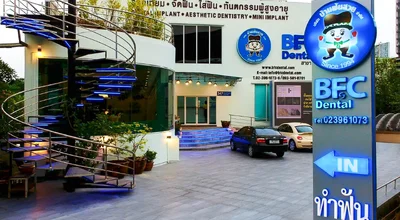
BFC Dental
Implant-focused Bangkok dental clinic founded in 1994, placing more than 4,600 implants a year
View hospital profile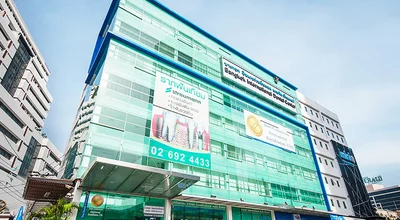
Bangkok International Dental Center
Thailand's first JCI-accredited dental center with more than 70 specialist dentists
View hospital profile
Get a Free Dental Quote in Minutes
Tell us what you need and we'll match you with the right specialist and return real clinic quotes.
- Itemised clinic quotes with no hidden fees
- Matched to a dentist experienced in your specific treatment
- Completely free, even if you decide not to go ahead


Rated 5 stars by our patients
The complete guide to Dental Implants in Thailand
Everything below is for readers who want the full detail: costs broken down, types and techniques, recovery, risks and safety, and planning your trip.
Dental Implant Dentists & Clinics in Thailand
The dentist and clinic you choose matter more than the implant brand. Here is what to look for and what our partners offer.
Leading Clinics in Bangkok
Our partner clinics operate from JCI-accredited hospitals and standalone dental centres equipped with on-site CT scanners, CAD/CAM milling, and in-house laboratories. These are not small shopfront practices, they handle high patient volumes with dedicated implant departments. Our partner facilities include JCI-accredited international hospitals and leading dental centres in Bangkok.
Experienced Implant Dentists
Our partner dentists are registered with the Thai Dental Council, many with postgraduate qualifications in implantology from institutions in Germany, South Korea, and the US. Years of focused practice, with the case volume that produces consistent outcomes, means complications are caught early by dentists who have seen them before.
What to Look for in a Dentist
Ask which implant system they use and why. Check for Thai Dental Council registration and specific implant training, not just a general dentistry degree. Look at before-and-after photos of cases similar to yours. Read independent reviews. And pay attention to how they communicate during consultation, a good dentist will tell you what you need to hear, not just what you want to hear.
Understanding Your Results
Implant results are permanent, but the full outcome takes months to materialise. Here is what a realistic timeline and result looks like.
Typical Dental Implant Results
A well-placed implant with a quality crown is visually indistinguishable from a natural tooth. The gum tissue adapts around it, the crown is shade-matched to adjacent teeth, and from every practical standpoint it functions identically. The implant post itself preserves the jawbone underneath, preventing the bone shrinkage that occurs when a tooth is missing.
What Results Can You Expect?
After the crown is fitted, the tooth looks and feels complete immediately. Gum tissue takes a few weeks to settle fully around the crown margin. Long-term, a well-maintained implant can last 25 years or more. The crown may need replacing after 10–15 years due to normal wear, but the implant post beneath it is designed to last a lifetime1.
Dental Implant Cost in Thailand
Average Cost of Dental Implants
Our partner hospital holds a fee for each implant system it places, covering one implant and the crown that goes on it. Those fees run from ฿65,000 for a Neodent implant up to ฿133,700 at the top of the Straumann BLX range, roughly $1,911 to $3,933 a tooth. The implant system is what moves the figure, and each system is quoted as a range rather than a single price. That is one accredited hospital's schedule rather than a Thailand-wide rate, and standalone dental clinics generally price below a hospital.
Cost Breakdown
The fee covers the implant post, the abutment that connects to it, the crown on top and the surgery to place the lot. Several things sit outside it. The consultation, the X-rays and the 3D scan the placement is planned from are separate line items on the same schedule, and bone grafting or a sinus lift is not priced there at all, so a jaw that needs building up first has to be quoted on its own. Ask for your quote itemised, because what one clinic bundles another bills line by line.
What Affects the Price?
The implant system does most of the work. The gap between Neodent at ฿65,000 and Straumann BLX at up to ฿133,700 is more than double, and the same team places both in the same chair. Each system is then quoted as a range rather than one figure, and the hospital does not break down what puts a case at the top of that range, so ask where yours falls before you commit. Anything the jaw needs beforehand sits outside the fee entirely.
Thailand vs International Price Comparison
A single implant with a crown costs $3,000–$6,000 in the US, A$2,800–A$5,500 in Australia, and £2,500–£5,000 in the UK. Our partner hospital's fees work out at about $1,911 to $3,933. The entry system undercuts the American floor comfortably, but a premium Straumann implant at the top of its range lands above the cheapest US quotes rather than below them, and it sits close to Australian pricing. Against a hospital rate the saving is real but nearer a third than a half, and the larger savings in Thailand are found at standalone dental clinics rather than at a private hospital.
Implants vs Bridges and Dentures
The two long-standing alternatives to an implant are a fixed bridge and a removable denture. A bridge fills the gap by anchoring a false tooth to the teeth on either side, so it is fixed and looks natural, but it means grinding down two otherwise healthy neighbours to act as supports. A partial denture clips in and out, costs the least up front, and needs no surgery, which makes it the quickest route to filling a gap.
Both come with real trade-offs. A bridge does nothing to replace the missing root, so the bone underneath keeps shrinking, and it typically needs redoing every ten to fifteen years; if a supporting tooth fails, the whole bridge fails with it. Dentures move while you eat and speak, can feel bulky, need taking out to clean, and accelerate the same bone loss because nothing is stimulating the jaw. Neither preserves the bone the way a tooth root does.
An implant is the route when you want a lasting, standalone replacement that protects the jawbone, leaves the neighbouring teeth untouched, and works like a natural tooth rather than something you manage around. It costs more at the outset and takes longer to complete, but for a single gap or several missing teeth it is the only option that replaces the root itself, which is what the rest of this page covers.
Types of Dental Implants
The implant type your dentist recommends depends on bone quality, location in the mouth, and whether speed or maximum long-term stability is the priority.
Conventional Two-Stage Implant
The implant is placed and left beneath the gum to integrate for three to six months. A second minor procedure exposes it for crown attachment. This is the most researched approach with the longest track record of predictable outcomes.
- Highest documented long-term success rates across all implant types
- Ideal when bone grafting is performed at the same time as placement
- Requires two visits to Thailand spaced several months apart
- Best for: patients who want maximum predictability and have time for two trips
Immediate-Load Implant (Same-Day Tooth)
A temporary crown is placed on the implant the same day it is inserted. You leave the clinic with a functional tooth immediately. The permanent crown replaces it once integration is confirmed, usually after three to six months.
- Eliminates the gap period, you have a tooth from day one
- Works best in the front of the mouth where aesthetics matter most
- Requires excellent bone quality and volume for safe immediate loading
- Best for: single front teeth where bone conditions allow same-day function
Flapless (Guided) Implant Placement
Using a 3D-printed surgical guide from your CT scan, the implant is placed through a small punch in the gum without cutting a flap. Less tissue trauma means less swelling, no stitches, and a noticeably faster recovery.
- Computer-guided accuracy reduces surgical time and post-operative discomfort
- No incisions and no sutures, the gum heals around the implant naturally
- Requires detailed digital planning and sufficient bone volume
- Best for: straightforward cases where anatomy allows a guided approach
All-on-4 / All-on-6 (Full-Arch)
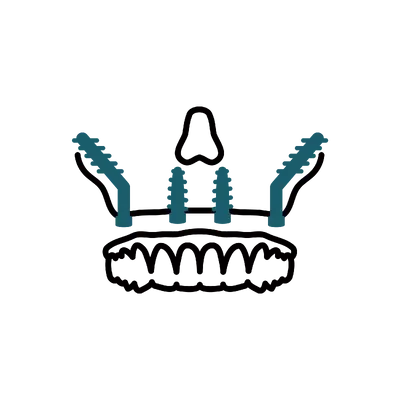
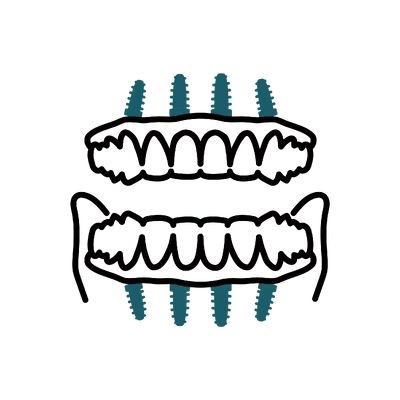
Rather than one implant per tooth, a full arch of teeth is supported on just four or six implants. Two are angled at the back to make the most of available bone, which often avoids the need for grafting, and a fixed bridge of teeth is secured on top, frequently the same day. It is the route for replacing a whole upper or lower jaw, or for moving on from a full denture.
- A full fixed arch on four or six implants instead of one implant per tooth
- Angled rear implants often avoid bone grafting and a sinus lift
- A temporary fixed bridge is usually fitted on surgery day, permanent later
- Best for: full-arch tooth loss or denture wearers wanting fixed, non-removable teeth
Dental Implant Techniques
Technique selection is driven by bone condition, implant position, and how the crown will be loaded. Here is what our partner clinics use and when each approach makes sense.
Titanium vs Zirconia Implants
Titanium is the default, decades of data, predictable integration, cost-effective. Zirconia is metal-free and tooth-coloured, relevant for patients with metal sensitivities or thin gums where a grey titanium margin might show through.
- Titanium: longest track record, highest volume of clinical evidence globally
- Zirconia: biocompatible, no metal, aesthetically superior in thin-tissue cases
- Zirconia costs more and has a shorter evidence base but growing adoption
- Best for: titanium suits most cases; zirconia suits metal-sensitive or high-aesthetic-demand patients
Digital Guided Surgery
A surgical template is 3D-printed from your CT scan data. The implant is placed through the guide with sub-millimetre accuracy, reducing chair time and tissue trauma. This is standard practice at our partner clinics for single and multiple implant cases.
- Pre-planned implant angle, depth, and position before surgery begins
- Shorter procedure time with less post-operative swelling
- Temporary crowns can be pre-fabricated and ready for surgery day
- Best for: any case where precision matters, which is most of them
Immediate vs Delayed Loading
Immediate loading means attaching a temporary crown on surgery day. Delayed loading means waiting three to six months for bone integration before loading. The choice depends on bone density, implant stability at placement, and location in the mouth.
- Immediate: faster aesthetic result, but requires strong primary stability
- Delayed: more conservative, allows full integration before any load
- Front teeth are more commonly loaded immediately than molars
- Best for: immediate suits aesthetic-zone teeth with good bone; delayed suits posterior or grafted sites
Dental Implant Recovery Timeline
Days 1–3
Mild swelling and tenderness around the implant site. Pain is well controlled with prescribed medication. Stick to soft foods and avoid chewing on the implant side. Ice packs reduce swelling. Most patients describe the discomfort as less than they expected.
Days 4–7
Swelling settles and discomfort drops to minimal. You can broaden your diet to include soft cooked foods. A follow-up appointment confirms healing is on track and the implant site looks clean. Most patients are cleared for travel after this visit.
Weeks 2–8
The implant is integrating with your jawbone beneath the surface. You can eat normally, avoiding very hard foods on the implant side. Oral hygiene around the site is important, brush gently and use the mouthwash provided.
Months 3–6
Osseointegration is complete. Your permanent crown is fabricated and fitted, either during a second visit to Thailand of three to five days or coordinated with a dentist at home. Once the crown is seated, the implant functions exactly like a natural tooth.
When Can You Fly After a Dental Implant?
Most patients fly home 7–10 days after implant placement, once the follow-up appointment confirms the site is healing well. Flying does not affect implant integration. If a sinus lift was performed alongside the implant, your dentist may recommend waiting a few extra days before flying as a precaution.
When Can You Return to Work and Exercise?
Desk work can resume the day after surgery for most patients. Light walking is fine from day one. Avoid strenuous exercise for five to seven days, raised blood pressure can increase swelling at the surgical site. Contact sports should wait at least four weeks, and a mouthguard is advisable once the crown is fitted.
When Will You See Final Results?
You will see a significant improvement as soon as the temporary crown is placed, but the final result comes when the permanent crown is fitted after osseointegration, typically three to six months later. At that point, the tooth is fully functional and aesthetically complete. Gum tissue around the crown settles over the following weeks.
Will Getting an Implant Hurt?
Dental implant surgery is done under local anaesthetic, so you stay awake but the area is completely numb. Your dentist injects the gum and bone around the implant site, much like a routine filling, and you feel pressure and movement but no pain while the implant is placed. The team monitors you throughout, and most patients are surprised how straightforward it is, often easier than having the tooth taken out in the first place.
If you are anxious about dental work, conscious sedation can usually be added on top of the local anaesthetic. You stay awake and able to respond, but relaxed and far less aware of the procedure. Whether sedation is suitable is something your dentist confirms with you beforehand, based on your medical history and how the case is planned.
Before treatment you have a CT scan and a health review, so the dentist knows exactly where the nerves and sinus sit and can plan the placement precisely. You feel nothing sharp during surgery, and once the numbness wears off any soreness is mild, more tenderness than pain, and settles within a few days with standard medication.
Risks and Safety of Dental Implants
Dental implants carry one of the highest success rates of any surgical procedure, and are usually successful3,4. Complications are uncommon but worth understanding before you commit.
- Localised swelling and bruising around the surgical site
- Peri-implantitis (infection of the tissue around the implant)
- Nerve damage causing temporary numbness in the lip or chin (rare)
- Failure of the implant to integrate with the bone (uncommon)3
- Sinus membrane perforation when placing upper jaw implants (uncommon)
- Damage to adjacent tooth roots during placement (rare with guided surgery)
- Crown loosening or porcelain chipping (repairable)
- Gum recession around the implant over time
The main risk factors are smoking, uncontrolled diabetes, and poor oral hygiene, all of which are assessed before treatment. Choosing an experienced implant dentist at an accredited clinic is the single biggest thing you can do to reduce complications.
Are Dental Implants Safe in Thailand?
Yes. At JCI-accredited clinics, the sterilisation protocols, implant systems, and clinical standards are the same as those used in Australia, the UK, and the US. Our partner dentists hold qualifications from the Thai Dental Council and many have trained internationally. The equipment is identical, the difference is the operating cost, not the standard of care.
How to Reduce Risks
Stop smoking at least four weeks before surgery, nicotine restricts blood flow to the bone and is the single biggest modifiable risk factor for implant failure1,2. Get any gum disease treated before placement. Follow post-operative instructions carefully, particularly around oral hygiene. And choose a clinic that uses 3D-guided planning, it reduces placement errors significantly compared to freehand surgery.
What Happens If an Implant Fails?
If an implant fails to integrate, it is removed under local anaesthesia, a quick, low-discomfort procedure. The site heals for two to three months, and a new implant can then be placed. Failure is uncommon, but when it occurs it is almost always manageable without significant additional cost or disruption to your treatment plan.
Planning Your Trip to Thailand for Dental Implants
Most single-implant patients need 7–10 days in Thailand for the first visit, with a second short trip for the permanent crown. Here is how to plan it.
How Long to Stay in Thailand
For a single implant, plan 7–10 days. Day one covers your consultation and CT scan. Implant placement usually happens on day two or three. The remaining days allow for initial healing and a follow-up appointment before flying home. If you are having multiple implants, your dentist may spread the placements across two to three appointments during the same stay.
What's Included in a Dental Trip
Your care coordinator handles clinic scheduling, transfers, and follow-up logistics. The surgical quote covers the implant, the abutment, the crown, the anaesthesia and your in-Thailand follow-ups. Imaging and anything the jaw needs before placement can be separate line items depending on where you are treated, so ask for the quote itemised. Flights and accommodation are arranged separately, but your coordinator can recommend hotels near the clinic and help with bookings.
First Visit vs Second Visit
The first trip is for placement, the implant goes into the bone and a temporary crown or healing cap is fitted. The second trip, three to six months later, takes three to five days and is for fitting the permanent crown. Some patients arrange to have the permanent crown done by a dentist at home using digital impressions taken in Thailand. Your coordinator can advise on both options.
Related Procedures
Other procedures that address similar goals or conditions, in case one of them is a closer fit for you.
Planning your treatment in Thailand
Independent guides to help you weigh the decision, before you commit to anything.
Common Questions About Dental Implants
Everything you need to know before your treatment

Medical References
Keep researching with AI
Open this guide in your AI assistant to dig deeper and ask the questions it didn't answer.
Opens in a new tab with this guide already loaded.
Medical disclaimer: This information is for educational purposes only and does not replace professional dental advice. Individual results, recovery times, and suitability vary. Always consult a qualified dentist before making decisions about treatment.
Ready to Get Started?
Speak with our care coordinators for a free, no-obligation consultation and personalised quote.
Speak to Our Team