All-on-6 Dental Implants in Thailand Your guide to cost, top dentists & hospitals
Six implants spread the load wider, and for many patients that extra support is what makes the difference long-term.
What Are All-on-6 Dental Implants?
Also known as: All on 6 Implants · Full-Arch Fixed Implant Prosthesis
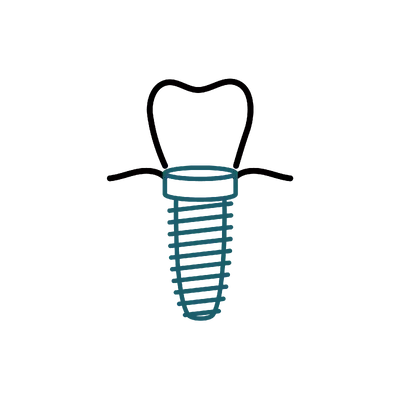
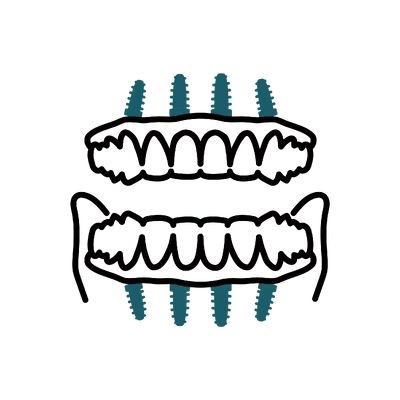
All-on-6 dental implants are a treatment that replaces a full arch of missing teeth with a fixed bridge anchored on six titanium posts set into the jawbone. Six posts spread chewing forces across a wider base than four, lowering the load on each, so it suits the softer upper jaw, heavy biters, and people who grind. Temporary teeth are usually fitted on the day of surgery, with the permanent bridge following four to six months later, once the posts fuse with the jaw through osseointegration, where bone grows around each implant to hold it firm2,3.
Losing a whole arch of teeth is hard, and fixing it with surgery abroad feels like a lot. The six anchor points give the bridge built-in backup, so if one implant struggles during healing the others usually carry it. Your dentist plans each post around your own bone and bite from a CT scan.
Six implants are not always the answer, and a good dentist will tell you so. For a healthy lower jaw, four are often enough, so it is worth asking. With careful cleaning and check-ups, implants like these usually last many years.
It can address a range of concerns, including:
Am I a Good Candidate for All-on-6 Dental Implants?
Six-implant support suits full-arch patients with enough bone who want wider load distribution, particularly in the upper jaw.
All-on-6 demands more usable bone than All-on-4, because six sites have to hold, not four.
Six viable positions: Your CT scan must show sufficient volume across the arch, typically two anterior and four posterior sites.
Borderline sites can be grafted: Localised deficiency at one or two positions is often handled with grafting in the same surgical session, with no separate trip.
Severe upper loss changes the plan: Where bone cannot support six implants, All-on-4 with zygomatic implants may be the sounder recommendation.
The strongest case for six implants over four is mechanical, so dentists assess how hard your jaw actually works.
Heavy biters benefit: Strong bite patterns and bruxism are the textbook reasons to spread load across six anchor points.
Softer upper bone: The upper jaw's bone density makes six-point anchorage particularly relevant there.
A night guard is still required: Six implants do not protect the prosthesis itself from grinding forces, so heavy bruxers must commit to one regardless of implant count.
The medical screening mirrors any full-arch implant case, with the same handful of genuine gates.
Mouth stabilised first: Active periodontitis, untreated tooth infections, or significant gum recession must be treated before placement.
Smoking and diabetes: Stopping smoking before surgery and through healing matters, and uncontrolled diabetes means stabilising levels first.
Bone medication history: Recent IV bisphosphonates affect healing across multiple sites at once and need addressing before surgery is scheduled.
Honest framing here includes whether you need six implants at all.
Four may be enough: For a straightforward lower jaw with good bone, All-on-4 is often sufficient, and a good dentist will say so rather than upsell. Ask why six is recommended for your case specifically.
Two-trip timeline: Same-day temporaries, then the permanent bridge at a 3-5 day second visit after 4-6 months.
Built-in redundancy: If one implant struggles during healing, the bridge can usually keep functioning on the remaining five.
Who is not suitable for all-on-6 dental implants?
- Borderline posterior bone without discussing grafting or zygomatic alternatives
- Active periodontitis or untreated tooth infection
- Heavy bruxism without commitment to a night guard
- Recent IV bisphosphonate treatment
- Prior radiotherapy to the jaw, which raises the risk of osteoradionecrosis at the implant sites
- Systemic immunosuppression, which raises infection and healing-failure risk across all six sites
- Active or recently treated oral cancer, which must be cleared by your oncology team first
- Uncontrolled diabetes or smoking not yet addressed
Pricing
How Much Will All-on-6 Dental Implants Cost in Thailand?
What all-on-6 dental implants costs at accredited hospitals in Thailand, and what your final quote depends on.
Get your exact price
Tell us what you're considering and we'll send a personalised quote from accredited hospitals within 24 hours.
Get my free quoteTypical prices in Thailand
Typical ranges based on recent hospital quotes. Your exact price depends on the hospital and how complex your case is, and is confirmed at your teleconsultation.
All-on-6 Dental Implants
Prices here are quoted per arch, so the biggest step up is simply whether you are treating one jaw or both.
| Single-arch All-on-6 Six implants and same-day temporary teeth for one jaw | $9,000 to $18,000 ฿306,000 to ฿612,000 |
| All-on-6 with bone grafting, per arch For one jaw where bone needs building up at a site or two | $10,000 to $20,000 ฿340,000 to ฿680,000 |
| Dual-arch All-on-6 Both jaws treated, twelve implants in total | $18,000 to $36,000 ฿612,000 to ฿1,224,000 |
Added to the above where needed
| Final permanent prosthesis, per arch Fitted at a second visit, priced by the material you choose | $3,000 to $7,000 ฿102,000 to ฿238,000 |
Get your exact price
Tell us what you're considering and we'll send a personalised quote from accredited hospitals within 24 hours.
Clinics Trusted for All-on-6 Dental Implants
From internationally accredited flagships to dedicated specialist clinics, these are the kinds of facilities where international patients have this procedure.

Thantakit International Dental Center
Thailand's longest established dental center, operating in Bangkok since 1945 with more than 40 dentists
View hospital profile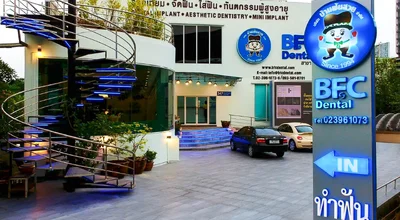
BFC Dental
Implant-focused Bangkok dental clinic founded in 1994, placing more than 4,600 implants a year
View hospital profile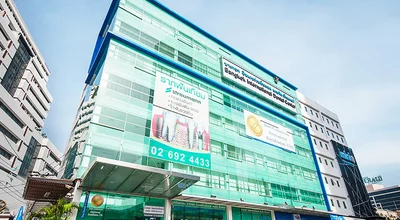
Bangkok International Dental Center
Thailand's first JCI-accredited dental center with more than 70 specialist dentists
View hospital profile
Get a Free Dental Quote in Minutes
Tell us what you need and we'll match you with the right specialist and return real clinic quotes.
- Itemised clinic quotes with no hidden fees
- Matched to a dentist experienced in your specific treatment
- Completely free, even if you decide not to go ahead


Rated 5 stars by our patients
The complete guide to All-on-6 Dental Implants in Thailand
Everything below is for readers who want the full detail: costs broken down, types and techniques, recovery, risks and safety, and planning your trip.
All-on-6 Dentists & Clinics in Thailand
All-on-6 requires the same specialist infrastructure as All-on-4, plus the clinical judgment to decide when six implants genuinely add value over four.
Leading Clinics in Bangkok
Our partners operate from purpose-built implant centres with on-site CT scanning, guided surgery capability, and in-house milling labs. The entire workflow, from scan to surgery to prosthesis, happens within the same facility. This reduces turnaround time and eliminates communication gaps between surgeon and lab technician.
Experienced Full-Arch Dentists
The implant dentists we work with have completed advanced training in full-arch protocols and many hold international fellowships. Crucially, they perform these cases frequently enough to maintain sharp surgical technique and sound clinical judgment about when six implants are genuinely better than four.
Choosing Between All-on-4 and All-on-6
A good dentist will not push six implants if four will do the job. Ask your dentist to explain why they are recommending six for your case specifically. Valid reasons include softer upper jaw bone, heavy bruxism, longer prosthetic spans, or a desire for maximum redundancy. If the answer is vague, get a second opinion.
Understanding Your Results
All-on-6 results are comparable to All-on-4 in appearance, with the added structural confidence of two extra anchor points.
Typical All-on-6 Results
The visual outcome is a complete arch of natural-looking teeth that sit flush with the gum line. The prosthesis restores facial contour, particularly in patients whose lip and cheek profile had collapsed from long-term tooth loss. Functionally, six implants provide a solid bite platform that handles all foods without flexion or movement.
What Results Can You Expect?
Same-day teeth are visible immediately. The permanent prosthesis, fitted at four to six months, is the definitive result. Colour, shape, and alignment are customised during the prosthetic design phase. Patients typically report that the permanent teeth feel more natural and stable than the temporaries, and that eating confidence returns fully once the final restoration is seated.
All-on-6 Cost in Thailand
Average Cost of All-on-6
All-on-6 in Thailand typically costs between $9,000 and $36,000 per arch. Dual-arch treatment ranges from $18,000 to $36,000. The price includes six implants, the surgical fee, extractions, temporary prosthesis, CT scan, anaesthesia, and all in-Thailand follow-ups. The permanent prosthesis is quoted separately based on your material choice.
Cost Breakdown
Six implant posts and abutments make up the bulk of the hardware cost. The surgical fee covers the implant placement, any extractions, and soft-tissue management. Digital planning and CT scanning are included. The temporary prosthesis is bundled into the surgical quote. The permanent prosthesis, fitted at a second visit, is priced based on whether you choose zirconia, porcelain-on-titanium, or acrylic-on-titanium.
What Affects the Price?
Two more implants than All-on-4 means higher material and surgical costs. The implant brand, prosthetic material, and whether guided surgery is used all influence the total. Cases requiring localised bone grafting alongside placement add cost. Premium clinics in central Bangkok price higher than regional alternatives, reflecting their facilities and specialist teams.
Thailand vs International Price Comparison
All-on-6 costs $27,000–$54,000 per arch in the US, A$25,200–A$49,500 in Australia, and £22,500–£45,000 in the UK. Thailand's $9,000–$18,000 per arch represents a saving of 50–70%. For a dual-arch case, the saving can exceed $40,000, enough to cover flights, accommodation, and a comfortable recovery with money left over.
Fixed Implants vs Dentures and Other Options
The most common alternative to All-on-6 is a conventional full denture, which is far cheaper, needs no surgery, and can replace a whole arch in a few weeks. A removable implant-supported overdenture sits between the two: it clips onto two to four implants for better grip than a plain denture, but still lifts out for cleaning. Both restore a smile and basic chewing without the cost or healing time of six fixed implants.
The trade-offs are real, though. A conventional denture rests on the gum, so it can rock or slip when you eat and talk, and because nothing replaces the tooth roots the jawbone keeps shrinking underneath4, which is why dentures need relining or remaking every few years and tend to fit worse over time. An overdenture is more stable but still removable, with clips and attachments that wear and need servicing. Neither delivers the bite strength of a fixed full-arch bridge, and neither is a permanent fix.
All-on-6 is the route when you want teeth that stay put day and night, the bite strength to eat normally, and the jawbone preserved rather than left to shrink, all in a bridge built to last many years. The six anchor points particularly suit the softer upper jaw, heavy biters, and longer prosthetic spans where the extra support earns its place, and that fixed, lasting result is what the rest of this page covers.
Types of All-on-6 Treatment
All-on-6 follows the same general protocol as All-on-4 but offers different configurations depending on bone conditions and patient needs.
Standard All-on-6
Six implants placed across one arch, typically two anterior vertical and four distributed through the premolar and molar regions. A fixed temporary prosthesis attaches the same day. This is the standard protocol for patients with adequate bone volume.
- Six-point support provides superior load distribution across the arch
- Redundancy if one implant encounters healing issues
- Same-day function and aesthetics from the temporary prosthesis
- Best for: patients with adequate bone who want maximum stability from day one
All-on-6 with Guided Surgery
A 3D-printed surgical template positions all six implants with pre-planned precision. Flapless placement through the guide reduces tissue trauma and surgical time. The temporary prosthesis can be pre-fabricated from the digital plan.
- Sub-millimetre accuracy for all six implant positions
- Shorter chair time and reduced post-operative swelling
- Pre-made temporaries fitted immediately after implant placement
- Best for: any All-on-6 case where the anatomy suits a guided approach
All-on-6 with Localised Bone Grafting
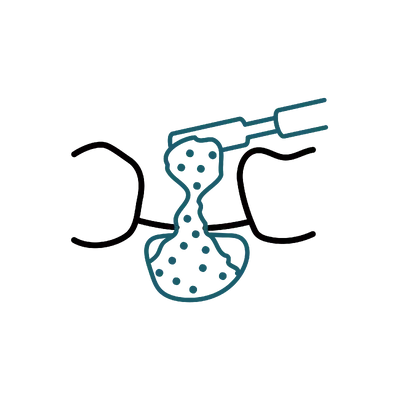
When bone volume is borderline in one or two sites, localised grafting is performed alongside implant placement. This allows patients with moderate bone loss to still benefit from six-implant support without a separate grafting procedure first.
- Combines grafting and implant placement in a single surgical session
- Avoids the delay of a separate grafting stage for moderate defects
- The grafted sites integrate simultaneously with the implants
- Best for: patients with localised bone deficiency who still have enough volume for most implant sites
All-on-6 Techniques
The techniques overlap with All-on-4 but the additional implants change the planning calculus. Here is what our partner clinics use.
Implant Distribution Strategies
Six implants can be arranged in several configurations, equally spaced, clustered anteriorly with wider posterior spread, or distributed to avoid anatomical structures. The arrangement is planned digitally from your CT scan to maximise bone contact and force distribution.
- Equal spacing distributes forces evenly across the entire arch
- Posterior angling can access deeper bone and avoid the sinus cavity
- Digital planning optimises each implant position before a single incision is made
- Best for: all All-on-6 cases, distribution strategy is case-specific, not one-size-fits-all
Prosthetic Framework Options
The final prosthesis sits on a milled framework, titanium or zirconia, that connects all six implants. Titanium frameworks are lighter and have a longer track record. Full-contour zirconia eliminates the framework entirely with a single monolithic piece.
- Titanium framework with acrylic or porcelain teeth is the proven standard
- Monolithic zirconia is the strongest and most aesthetic option available
- Framework design is CAD/CAM milled from a digital scan for precise fit
- Best for: titanium framework for reliability; monolithic zirconia for premium aesthetics and strength
Immediate Function Protocol
The temporary prosthesis is attached to the implants within hours of surgery. It is designed to handle soft-food chewing forces while the implants integrate. The prosthesis is adjusted at follow-up visits as swelling resolves and bite patterns settle.
- Patients leave with functional teeth on surgery day
- The temporary is adjusted during healing to maintain comfort and occlusion
- Replaces dentures or failing teeth immediately, no transition period without teeth
- Best for: all All-on-6 patients, immediate function is the standard protocol
Tilted Posterior Implants
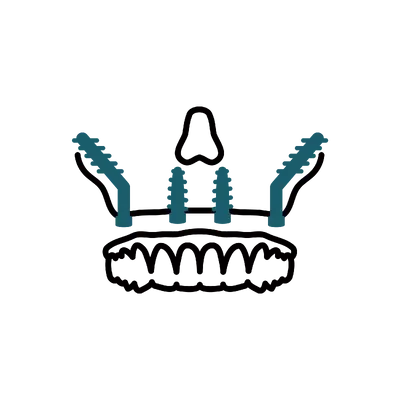
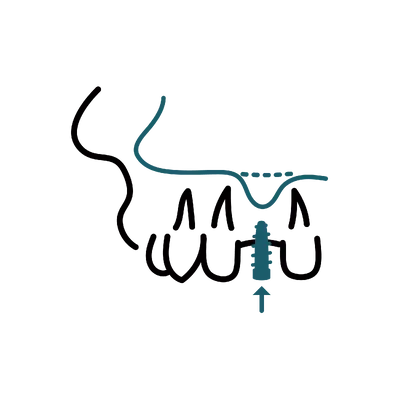
Rather than placing every implant straight up and down, the back implants are angled so they engage more of your own bone and reach past the sinus and nerve. This avoids the sinus cavity in the upper jaw, lets longer implants anchor in denser bone, and often means grafting can be avoided altogether. It is a defining technique of full-arch treatment and the reason many patients qualify without separate bone surgery.
- Angled posterior implants engage more bone and avoid the sinus and lower-jaw nerve
- Often removes the need for sinus lifting or grafting before placement
- Longer implants in denser bone give a stable base for immediate temporaries
- Best for: patients with reduced posterior bone who want to avoid a separate grafting stage
All-on-6 Recovery Timeline
Days 1–3
Jaw swelling and generalised soreness across the arch are expected after six-implant placement. Pain medication, antibiotics, and anti-inflammatory drugs are prescribed. Eat only liquids and very soft foods. Apply ice packs to both sides of the face and keep your head elevated when sleeping.
Days 4–7
Swelling reduces noticeably and discomfort becomes manageable. Soft cooked foods can be reintroduced. A follow-up appointment checks the implant sites and adjusts the temporary prosthesis. You stay in Bangkok for a final review between days 7 and 10, which is when your dentist confirms you are healing well enough to fly home.
Weeks 2–8
The implants are integrating with your jawbone. You can eat a progressively wider range of foods but should avoid anything hard or crunchy that could stress the healing implants. Maintain oral hygiene around the prosthesis using the brushes and rinse your dentist provided.
Months 4–6
Integration is confirmed with imaging. You return for a second visit of three to five days for impressions and fitting of the final permanent prosthesis. This is precision-milled from your chosen material and designed for decades of daily function.
When Can You Fly After All-on-6?
Most patients fly home 7–10 days post-surgery, following a final follow-up where healing is confirmed. Six implant sites may produce slightly more swelling than four, so recovery in the first few days can be marginally more intense. Your dentist will clear you for travel based on how the sites are healing and how you are managing comfort.
When Can You Return to Work and Exercise?
Desk work is manageable after about a week. Physical labour and gym workouts should wait at least two to three weeks to avoid aggravating jaw swelling. Contact sports need a minimum six-week pause. Take the recovery seriously, protecting six integrating implants during the first few weeks is worth the patience.
When Will You See Final Results?
Temporary teeth give you a functional smile from day one. The permanent prosthesis arrives at four to six months once integration is verified. That is when you see the real finished product, precisely milled, shade-matched, and designed to last decades. The difference between the temporary and permanent prosthesis is noticeable in both feel and appearance.
Anaesthesia for All-on-6
All-on-6 in Thailand is done under local anaesthetic, so the jaw is fully numbed and you stay awake but feel no pain while the implants are placed. Because it is a longer appointment than a single implant, sedation is offered alongside the local, leaving you relaxed and drowsy through the surgery without being fully under. The dental team monitors you throughout, and how deep the sedation goes is decided with you, based on how anxious you feel and your medical history.
For most patients, conscious sedation paired with local is the comfortable middle ground: you are calm, time passes quickly, and you remember little of the surgery itself. The amount of numbing and sedation needed often runs a little higher than for All-on-4, simply because six implant sites take longer to work through, but the principle is the same and the local handles the pain.
Before treatment you have a consultation and a CT scan, and your dentist reviews any medications and conditions that affect sedation or healing. You feel pressure and movement during placement rather than pain, and any soreness afterwards is mild, peaks around day two, and is controlled with the medication your dentist prescribes.
Risks and Safety of All-on-6
All-on-6 shares the same risk profile as All-on-4, with the added advantage that six implants provide redundancy, if one encounters an issue, the remaining five can still support the prosthesis during healing.
- Facial swelling and bruising along the jawline (resolves within 10 days)
- Infection at implant sites (managed with antibiotics and local treatment)
- Temporary lip or chin numbness from nerve proximity in the lower jaw2
- Individual implant failure during healing (replaceable without losing the prosthesis)
- Peri-implantitis, bacterial inflammation around a healed implant that causes progressive bone loss if plaque is not controlled (the main long-term risk, managed with daily hygiene and six-monthly professional cleaning)
- Temporary prosthesis fracture (repairable chairside)
- Sinus membrane involvement with upper posterior implants (rare)
- Bite adjustment needed as swelling resolves and tissues settle
The built-in redundancy of six implants is one of the main advantages of this approach. Comprehensive pre-operative scanning and an experienced surgical team are the best safeguards against complications.
Is All-on-6 Safe in Thailand?
Yes. All-on-6 follows the same internationally recognised implant protocols used in clinics worldwide. Our partners use the same implant brands, guided surgery software, and prosthetic materials as clinics in the US and Europe. JCI accreditation verifies that the facility meets international safety and infection-control standards.
How to Reduce Risks
The same precautions as any full-arch implant treatment apply. Stop smoking well before surgery. Disclose all medications and medical conditions during consultation. Follow the soft-food protocol strictly during healing, the temporary prosthesis is functional but not designed for hard foods. Keep follow-up appointments, both in Thailand and at home.
All-on-6 vs All-on-4: Is One Safer?
Both have comparable safety profiles. All-on-6 offers a mechanical advantage in force distribution and redundancy, which some clinicians prefer for the upper jaw, bruxism patients, or longer prosthetic spans. All-on-4 has a larger body of published research. The decision between four and six implants is clinical, not about safety, your dentist will recommend the right number based on your bone and bite.
Planning Your Trip to Thailand for All-on-6
The trip structure mirrors All-on-4, two visits, with the bulk of the treatment happening on the first.
How Long to Stay in Thailand
First visit: 7–10 days for consultation, CT scan, surgery, recovery, and follow-up. Second visit: three to five days for the permanent prosthesis fitting, typically four to six months later. The timeline is the same as All-on-4 because the healing biology is identical, the extra implants do not change the integration period.
What's Included in a Dental Trip
Your coordinator books all clinic appointments, arranges airport transfers, and manages the timeline between visits. The surgical quote is itemised and transparent. Flights and hotels are separate but your coordinator recommends options close to the clinic. Some patients combine the second visit with a short holiday once the prosthesis is fitted.
Recovery in Bangkok
Stay close to the clinic during your first visit. You will have one to two follow-up appointments before flying home, and if any adjustment to the temporary prosthesis is needed, you want to be minutes away, not hours. Bangkok offers comfortable, affordable accommodation within walking distance of every major dental facility we partner with.
Related Procedures
Other procedures that address similar goals or conditions, in case one of them is a closer fit for you.
Planning your treatment in Thailand
Independent guides to help you weigh the decision, before you commit to anything.
Common Questions About All-on-6 Dental Implants
Everything you need to know before your treatment

Medical References
Keep researching with AI
Open this guide in your AI assistant to dig deeper and ask the questions it didn't answer.
Opens in a new tab with this guide already loaded.
Medical disclaimer: This information is for educational purposes only and does not replace professional dental advice. Individual results, recovery times, and suitability vary. Always consult a qualified dentist before making decisions about treatment.
Ready to Get Started?
Speak with our care coordinators for a free, no-obligation consultation and personalised quote.
Speak to Our Team