Wisdom Teeth Extraction in Thailand Your guide to cost, top dentists & hospitals
Dealing with problem wisdom teeth before they cause real damage is always the smarter move.
What Is Wisdom Teeth Extraction?
Also known as: Wisdom Tooth Removal · Third Molar Extraction
Wisdom teeth extraction is oral surgery that removes one or more of the last molars by lifting them from the jaw, sometimes after raising the gum and easing away a little bone. It treats teeth that are impacted, meaning trapped beneath the gum or angled into a neighbour, along with teeth causing recurring pain, infection, or crowding. A simple case is loosened out under local anaesthetic; an impacted tooth is often sectioned into pieces for a gentler removal. The result is permanent: once a tooth is out, the trouble it caused stops.
If surgery on your jaw makes you tense, that is normal, and most people find it gentler than they expect. A 3D scan first maps each tooth against the nerve that gives feeling to your lip and chin, so your surgeon plans the safest route. You stay numb throughout, with sedation available if you would rather be relaxed.
Most lower-jaw extractions are straightforward, though when roots sit very close to that nerve there is a small chance of temporary numbness. A consultation and CT scan confirm how your teeth come out.
It can address a range of concerns, including:
Am I a Good Candidate for Wisdom Teeth Extraction?
If a wisdom tooth is impacted or causing trouble, you are very likely suitable; the CT scan decides how it comes out.
Surgery is planned from evidence, not guesswork.
A tooth genuinely causing problems: Recurring pain, swelling or infection, crowding of neighbouring teeth, a trapped gum flap, or a cyst visible on X-ray.
A CBCT scan before surgery: Three-dimensional imaging maps each tooth against the nerve and sinus and predicts complexity accurately.
The right technique chosen in advance: Simple extraction, surgical removal or coronectomy is selected from your scan, not improvised on the day.
Lower wisdom teeth sit near the nerve supplying feeling to the lip and chin, and that risk is mapped before anything else.
Roots checked against the nerve canal: Close contact on the CBCT raises the chance of temporary numbness, which the surgeon explains honestly beforehand.
Coronectomy for high-risk roots: When roots wrap the nerve, removing only the crown avoids nerve damage; the retained roots rarely cause problems.
Numbness usually temporary: Where it does occur, it almost always resolves over weeks to months.
A few medical and habit factors shape the plan rather than rule you out.
No uncontrolled bleeding disorders: Good general health is the baseline; blood thinners are reviewed by your prescribing doctor first, never stopped on your own.
Smoking paused around surgery: Nicotine sharply raises dry socket risk and slows healing, so pause from before surgery until the sockets have sealed.
Aftercare followed: No straws, smoking or vigorous rinsing in the first 48 hours, and a follow-up around day five or six before flying.
Who is not suitable for wisdom teeth extraction?
- Blood thinners not yet reviewed by the prescribing doctor
- Unwillingness to pause smoking around surgery
- Uncontrolled bleeding disorders
- Bisphosphonate or other bone-modifying drug use until cleared by your prescribing specialist (osteonecrosis-of-the-jaw risk)
- Active pericoronitis or acute infection until antibiotic treatment has settled it
- A previous dry socket without a prevention plan agreed with the surgeon
- Roots wrapping the nerve canal until coronectomy has been discussed
Pricing
How Much Will Wisdom Teeth Extraction Cost in Thailand?
What wisdom teeth extraction costs at accredited hospitals in Thailand, and what your final quote depends on.
Get your exact price
Tell us what you're considering and we'll send a personalised quote from accredited hospitals within 24 hours.
Get my free quoteTypical prices in Thailand
Typical ranges based on recent hospital quotes. Your exact price depends on the hospital and how complex your case is, and is confirmed at your teleconsultation.
Wisdom Teeth Extraction
Every figure here covers one tooth, so having all four out in a single visit multiplies the cost, though usually at a lower rate per tooth.
| Simple extraction, per tooth The tooth is fully through the gum and lifts straight out | $200 to $260 ฿6,800 to ฿8,840 |
| Surgical extraction, partially impacted, per tooth A gum flap and a little bone removal to reach it | $260 to $330 ฿8,840 to ฿11,220 |
| Complex surgical extraction, fully impacted, per tooth Buried in the jaw, needing bone removal and often splitting | $330 to $400 ฿11,220 to ฿13,600 |
Added to the above where needed
| PRF socket grafting, per socket Platelet-rich fibrin from your own blood packed in to aid healing | $60 to $120 ฿2,040 to ฿4,080 |
Get your exact price
Tell us what you're considering and we'll send a personalised quote from accredited hospitals within 24 hours.
Clinics Trusted for Wisdom Teeth Extraction
From internationally accredited flagships to dedicated specialist clinics, these are the kinds of facilities where international patients have this procedure.
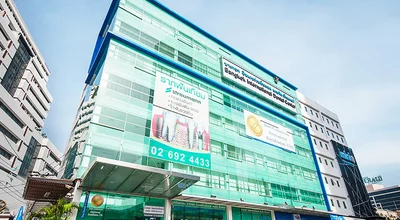
Bangkok International Dental Center
Thailand's first JCI-accredited dental center with more than 70 specialist dentists
View hospital profile
Bangkok Smile Dental Clinic
Multi-branch dental group founded in 2003 and the official Thai partner of the Malo All-on-4 network
View hospital profile
Thantakit International Dental Center
Thailand's longest established dental center, operating in Bangkok since 1945 with more than 40 dentists
View hospital profile
Get a Free Dental Quote in Minutes
Tell us what you need and we'll match you with the right specialist and return real clinic quotes.
- Itemised clinic quotes with no hidden fees
- Matched to a dentist experienced in your specific treatment
- Completely free, even if you decide not to go ahead


Rated 5 stars by our patients
The complete guide to Wisdom Teeth Extraction in Thailand
Everything below is for readers who want the full detail: costs broken down, types and techniques, recovery, risks and safety, and planning your trip.
Wisdom Teeth Surgeons & Clinics in Thailand
The surgeon's experience and the available imaging are the two factors that matter most for wisdom teeth. Here is what to look for.
Leading Oral Surgery Clinics in Bangkok
Our partner clinics have dedicated oral surgery suites with cone-beam CT scanners, piezoelectric equipment, and full sedation capabilities. They are set up for the volume and complexity of impacted wisdom teeth; this is not dentistry done in a general practice treatment room.
Experienced Oral Surgeons
Our partner surgeons are board-certified in oral and maxillofacial surgery, which is the speciality trained specifically for surgical tooth extraction, bone surgery, and nerve management. They handle impacted wisdom teeth daily and are experienced with difficult cases involving nerve proximity, ankylosis, and unusual root anatomy.
What to Look for in a Surgeon
Confirm the surgeon is board-certified in oral surgery specifically, not general dentistry. Ask whether cone-beam CT imaging is included as standard and whether piezoelectric instruments are available. A surgeon who discusses your CT findings with you, explains the extraction plan tooth by tooth, and outlines specific risks for your anatomy is one who takes the procedure seriously.
Understanding Your Results
Wisdom teeth extraction results are functional rather than aesthetic. Here is what to expect.
Typical Wisdom Teeth Extraction Results
The problem teeth are permanently removed. Recurring pain, infection, and the pressure on adjacent teeth stop immediately. Any damage to neighbouring teeth from the impaction ceases to progress. The extraction sites heal over two to four weeks on the surface, with bone filling in over three to six months beneath.
What Results Can You Expect?
Relief is the primary result. Patients who have been dealing with repeated infections or chronic jaw pain notice the difference within days of recovery. The adjacent teeth are no longer under pressure and any drift that was starting can be addressed separately if needed. There is no visible change to your smile because wisdom teeth sit at the very back of the mouth.
Wisdom Teeth Extraction Cost in Thailand
Average Cost of Wisdom Teeth Extraction
A single wisdom tooth extraction in Thailand typically costs between $200 and $400, depending on complexity. Simple extractions of fully erupted teeth sit at the lower end. Deeply impacted surgical cases requiring bone removal and sectioning sit higher. Removing all four in one session usually brings the per-tooth cost down.
Cost Breakdown
The total cost covers the oral surgeon's fee, cone-beam CT scan, local anaesthesia and sedation, the extraction procedure, post-operative medications, and follow-up appointments. Everything is included in a single quote with no hidden fees.
What Affects the Price?
Complexity is the primary variable. A fully erupted tooth with simple roots costs less than a deeply impacted tooth requiring bone removal and sectioning. Sedation adds a modest fee. The number of teeth extracted in a single session also influences the total, with per-tooth costs typically decreasing for multi-tooth cases.
Thailand vs International Price Comparison
Wisdom teeth extraction in Thailand costs 60–70% less than equivalent procedures in the US ($600–$1,200 per tooth), Australia (A$550–A$1,100), and UK (£500–£1,000). The savings are even more pronounced when removing all four teeth, where the total in Thailand may be less than a single extraction at home.
Do Wisdom Teeth Always Need Removing?
Not every wisdom tooth has to come out. A tooth that has erupted fully, sits in a useful position, and causes no pain or infection can often be left alone and simply watched, with periodic check-ups and X-rays to confirm it stays healthy. This "watch and wait" approach is the right call for genuinely trouble-free teeth, and removing a wisdom tooth that is doing no harm just to be safe is no longer recommended practice1,2.
Monitoring only works while the tooth behaves, though. An impacted or partially erupted tooth traps food and bacteria under the gum, drives recurring infection and crowding, and can damage the molar in front or form a cyst, none of which a watch-and-wait plan reverses. Once those problems start, observation has run its course, and a tooth that flares up repeatedly only gets harder to remove cleanly as the years pass.
When a wisdom tooth is impacted, symptomatic, or already affecting its neighbour, extraction is the route that actually ends the trouble, and a CT scan taken beforehand confirms whether yours has reached that point. That is what the rest of this page covers.
Types of Wisdom Teeth Extraction
The extraction method depends on whether the tooth has erupted, is partially visible, or is fully buried. A CT scan taken before the procedure determines the approach.
Simple Extraction
Used when the wisdom tooth has fully erupted and can be loosened and removed with elevators and forceps. Quicker, with faster recovery and less post-operative swelling than surgical cases. Only possible when root anatomy is straightforward and the tooth is accessible.
- Suitable for fully erupted teeth with uncomplicated root patterns
- Performed under local anaesthesia, often in under 30 minutes per tooth
- Minimal soft tissue disruption and shorter healing time
- Best for: erupted wisdom teeth that are decayed or crowding adjacent teeth
Surgical Extraction
Required for impacted or partially erupted teeth. The surgeon raises a gum flap, removes a small amount of covering bone if needed, and may section the tooth into pieces for easier delivery. Dissolvable sutures close the site. This is the more common scenario for wisdom teeth.
- Necessary for teeth trapped beneath bone or growing at an angle
- Tooth sectioning reduces bone removal and shortens operating time
- Dissolvable sutures protect the site and eliminate a separate removal visit
- Best for: impacted and partially erupted wisdom teeth (the majority of cases)
Coronectomy
A conservative alternative when CT imaging shows the roots are intimately wrapped around the inferior alveolar nerve. Only the crown of the tooth is removed, leaving the roots undisturbed to avoid nerve damage. The roots are monitored and rarely cause problems.
- Reserved for high-risk cases where full extraction threatens nerve function
- Eliminates the source of infection while preserving nerve integrity
- Roots are followed up with imaging and seldom require further intervention
- Best for: lower wisdom teeth with roots in direct contact with the nerve canal
Wisdom Teeth Extraction Techniques
Technique matters because it directly affects recovery speed, complication risk, and the likelihood of nerve injury. Here is what Thailand's oral surgeons use.
Cone-Beam CT Planning
A three-dimensional CT scan maps the exact position, angulation, and root morphology of each wisdom tooth relative to the inferior alveolar nerve and maxillary sinus. The surgeon plans the extraction route on screen before picking up an instrument. This level of pre-operative detail prevents surprises.
- Three-dimensional nerve mapping shows root-to-nerve proximity so the surgeon can plan around it
- Root curvature and angulation are assessed before the procedure begins
- Identifies pathology such as cysts or resorption of adjacent teeth
- Best for: all surgical wisdom tooth cases (imaging is the foundation of safe extraction)
Piezoelectric Bone Surgery
Ultrasonic instruments cut bone precisely without cutting adjacent soft tissue, nerves, or blood vessels, because the tip works on hard tissue only. Several studies report less post-operative swelling and bruising than conventional rotary burs, though evidence on healing speed is mixed. Not available at every clinic, but standard at our partner facilities.
- Cuts bone selectively while leaving soft tissue and nerves intact
- Reduced post-operative swelling and bruising compared to rotary instruments
- Finer control in tight spaces near the inferior alveolar nerve
- Best for: complex impactions near the nerve canal where precision matters most
Tooth Sectioning and Minimally Invasive Delivery
Dividing the tooth into two or three pieces before extraction dramatically reduces the force and bone removal needed. Each fragment is delivered individually through a smaller access window. This technique shortens operating time, preserves bone for future implants if needed, and speeds recovery.
- Reduces the surgical footprint and amount of bone removed
- Lower post-operative pain and faster healing than en-bloc removal
- Preserves socket bone for potential future implant placement
- Best for: deeply impacted or multi-rooted teeth where full removal would require excessive bone removal
PRF Socket Grafting
After a difficult or deep extraction, some surgeons place platelet-rich fibrin (PRF) into the empty socket. A small sample of your own blood is spun in a centrifuge to concentrate the natural healing factors, which are then packed into the site. This is an optional add-on that supports clot stability and soft-tissue healing, and it is used selectively rather than for every case.
- Uses your own blood, so there is no foreign material involved
- Helps stabilise the clot and supports gum healing over the socket
- Used selectively for deeper sockets or where dry socket risk is higher
- Best for: deep or surgical extractions where the surgeon wants to support socket healing
Wisdom Teeth Extraction Recovery Timeline
Day 1
Expect bleeding, swelling, and jaw soreness. Apply ice packs in 20-minute intervals. Stick to soft, cool foods and avoid straws; suction can dislodge the blood clot. Prescribed pain medication keeps you comfortable. Rest for the remainder of the day.
Days 2–3
Swelling peaks on day two then begins subsiding. Gentle warm salt-water rinses after meals keep the sites clean. Continue soft foods and avoid strenuous activity. Most patients transition to over-the-counter pain relief by this stage.
Days 4–7
Swelling and bruising fade noticeably. Gradually reintroduce normal foods, avoiding hard or crunchy items near the extraction sites. Your follow-up confirms healing is on track and clears you for travel.
Weeks 2–4
Soft tissue heals fully and the extraction sockets continue filling in with new bone. Normal activities resume without restriction. Bone remodelling beneath the sockets continues quietly over three to six months.
When Can You Fly After Wisdom Teeth Extraction?
Most patients can fly home five to seven days after extraction, once the follow-up confirms proper healing. Cabin pressure changes do not affect extraction sites, so there are no altitude-related risks. If all four wisdom teeth were removed surgically, staying the full seven days gives your surgeon time to check for complications like dry socket before clearing you to travel.
When Can You Eat and Drink Normally?
Soft, cool foods are best for the first two to three days: yoghurt, soup, smoothies, and scrambled eggs. Avoid hot drinks, straws, and anything crunchy that could disturb the blood clot. By day four or five, most patients reintroduce firmer foods gradually. Full, unrestricted eating typically resumes within two weeks once the sockets have healed over.
When Will You See Final Results?
Relief from pain and infection is noticeable within days of the extraction. Surface healing of the gum tissue takes two to four weeks. Beneath the surface, bone fills in the empty sockets over three to six months. There is no visible cosmetic change because wisdom teeth sit at the very back of the mouth.
Will It Hurt?
Wisdom teeth extraction is done under local anaesthetic, so you are fully awake but the area around the tooth is completely numb. You feel pressure and some movement as the tooth is eased out, but no pain. Your oral surgeon works alongside trained dental staff who keep an eye on you throughout, and you can signal at any point if you need a pause or more numbing.
If you are anxious, or having all four teeth out in one session, sedation is available on top of the local anaesthetic. Oral sedation leaves you calm and drowsy; IV sedation takes that further, so you stay relaxed and remember little of the procedure while still breathing on your own. Your surgeon and care coordinator help you choose, and IV sedation means fasting for six hours beforehand and having someone with you for the trip back to your hotel.
Before anything begins, your CT scan and medical history are reviewed so the anaesthetic and any sedation are planned around you. You feel nothing sharp during the extraction itself. The discomfort comes afterwards, peaking around day two, and it is mild to moderate and well controlled with the medication your surgeon prescribes. Most patients tell us the recovery was gentler than they had feared.
Risks and Safety of Wisdom Teeth Extraction
Wisdom teeth extraction is one of the most frequently performed oral surgeries globally. Complication rates are low when performed by an experienced oral surgeon with proper imaging.
- Post-operative infection at the extraction site (rare with antibiotic cover)
- Minor bleeding that settles with gauze pressure
- Jaw stiffness (trismus) making opening difficult for a few days
A thorough review of your CT scan, including the relationship between the tooth roots and the inferior alveolar nerve, is completed before you proceed. Any case-specific risks are explained clearly so you can make an informed decision.
Is Wisdom Teeth Extraction Safe in Thailand?
Yes. Our partner oral surgeons are board-certified and perform wisdom teeth extractions daily. They use cone-beam CT imaging for surgical planning, which is not always standard at home for routine wisdom teeth. The clinics maintain rigorous sterilisation protocols and have emergency equipment on-site. Complication rates are consistent with published international data.
How to Reduce Your Risk
Ensure a CT scan is taken and reviewed before the procedure; this is the single most important risk-reduction step. Follow post-operative instructions precisely, especially avoiding straws, smoking, and vigorous rinsing in the first 48 hours (the main causes of dry socket)3. Take prescribed antibiotics as directed. Attend the follow-up appointment before flying home.
When Should You Be Concerned After Extraction?
Contact your surgeon if you experience worsening pain after day three (may indicate dry socket), persistent numbness of the lip or tongue beyond two weeks, significant swelling that increases rather than decreases after day three, or fever above 38°C. These situations are uncommon but require prompt attention. Your care coordinator can arrange an urgent review during your stay.
Planning Your Trip to Thailand for Wisdom Teeth Extraction
Wisdom teeth extraction requires five to seven days in Thailand. Here is how to plan it.
How Long to Stay in Thailand
Plan for five to seven days. Day one covers your consultation, CT scan, and the extraction itself. The next five days are for recovery, with a follow-up appointment around day five or six to confirm healing before you fly home. If you are removing all four teeth, the same timeline applies. They are all done in a single session.
What Is Included in a Dental Trip
Your care coordinator arranges the consultation, CT scan, extraction appointment, and follow-up. The treatment quote covers the surgeon's fee, CT imaging, anaesthesia and sedation, the procedure, post-operative medications, and follow-up. Flights and accommodation are separate, but your coordinator recommends nearby hotels.
Recovery in Bangkok
The first two to three days after extraction are best spent resting at your hotel with soft foods, ice packs, and pain medication. By day four or five, most patients feel well enough to venture out for gentle sightseeing. Many patients combine wisdom teeth extraction with other dental work, scheduling less invasive treatments like cleanings or crowns for later in the trip.
Related Procedures
Other procedures that address similar goals or conditions, in case one of them is a closer fit for you.
Planning your treatment in Thailand
Independent guides to help you weigh the decision, before you commit to anything.
Common Questions About Wisdom Teeth Extraction
Everything you need to know before your procedure

Medical References
Keep researching with AI
Open this guide in your AI assistant to dig deeper and ask the questions it didn't answer.
Opens in a new tab with this guide already loaded.
Medical disclaimer: This information is for educational purposes only and does not replace professional dental advice. Individual results, recovery times, and suitability vary. Always consult a qualified dentist before making decisions about treatment.
Ready to Get Started?
Speak with our care coordinators for a free, no-obligation consultation and personalised quote.
Speak to Our Team