Laser Gum Treatment in Thailand Your guide to cost, top dentists & hospitals
Treating gum disease without cutting or stitching. Laser therapy eliminates infection while the body regenerates what was lost.
What Is Laser Gum Treatment?
Also known as: LANAP Treatment · Laser-Assisted New Attachment Procedure
Laser gum treatment is a periodontal therapy that clears infection from below the gum line by directing a focused laser into the deep pockets gum disease opens around the teeth. It removes diseased tissue, kills the bacteria driving the inflammation, and helps the gum reattach without the cutting or stitching of flap surgery. The best-known version, LANAP, also forms a clot that seals each pocket; it is FDA-cleared, with peer-reviewed evidence for new bone and gum attachment. A session takes one to two hours under local anaesthetic.
If your gums bleed, feel tender, or have pulled away from your teeth, surgery abroad can feel daunting. This is a gentler route, with no incisions or sutures, so most people feel only mild soreness for a day or two and can fly home within the week. Your periodontist maps your pockets first, then plans around the disease.
Results vary with how far the disease has progressed and how loose any teeth already are, and your periodontist will be honest about what it can and cannot rescue. Periodontitis is managed rather than cured1, so improvement holds best with regular maintenance cleanings once home.
It can address a range of concerns, including:
Am I a Good Candidate for Laser Gum Treatment?
Laser therapy is matched to disease severity, and the periodontist will be honest about what it can and cannot rescue.
Pocket depth measurements decide which protocol fits your disease.
Pockets of 5mm or deeper: Moderate to severe periodontitis is where the full LANAP protocol earns its place.
Milder disease treated more simply: Mild to moderate cases often do better with scaling and root planing plus adjunctive diode laser therapy.
Full charting first: Probing depths, X-rays and bone levels are mapped before any treatment is recommended.
Some teeth are too far gone, and a frank assessment beforehand prevents disappointment.
Loose teeth judged honestly: Mobile teeth often stabilise as bone regenerates, but teeth already beyond saving need a frank prognosis discussion first.
Advanced cases tempered: Severe bone loss may improve significantly without resolving completely.
Regeneration takes time: Bone changes appear on follow-up X-rays over six to twelve months, not weeks.
Healing after periodontal treatment depends on factors largely within your control.
Smoking paused around treatment: Smokers respond poorly to LANAP, so pausing is part of the treatment, not an optional extra.
Diabetes under control: Uncontrolled blood sugar needs to be brought into range before periodontal surgery.
Medications disclosed: Blood thinners in particular are flagged at consultation so the plan can be adjusted.
Periodontitis is managed, not cured, and the result only holds with maintenance.
Maintenance every three to four months: Without it, bacteria recolonise the treated pockets and the disease progresses again.
A coordinated handover: Treatment records, periodontal charts and a maintenance schedule go to your home dentist before you leave Thailand.
Daily home care: Compliance between visits determines long-term success as much as the laser session itself.
Who is not suitable for laser gum treatment?
- A pacemaker or other implanted cardiac device, as the PerioLase Nd:YAG laser carries an electromagnetic-interference contraindication
- An active periodontal abscess, which must be drained and settled before any laser protocol can begin
- Blood thinners that have not been reviewed and managed with your doctor before treatment
- Teeth already beyond saving, which need extraction or a frank prognosis rather than laser therapy
Pricing
How Much Will Laser Gum Treatment Cost in Thailand?
What laser gum treatment costs at accredited hospitals in Thailand, and what your final quote depends on.
Get your exact price
Tell us what you're considering and we'll send a personalised quote from accredited clinics within 24 hours.
Get my free quoteTypical prices in Thailand
Typical ranges based on recent hospital quotes. Your exact price depends on the hospital and how complex your case is, and is confirmed at your teleconsultation.
Laser Gum Treatment
Which laser treatment you need depends on whether your gums are infected, sitting too low over the teeth, or simply darker than you would like.
| Laser periodontal therapy (LANAP), per quadrant Clears infection from deep gum pockets without cutting or stitches | $520 to $650 ฿17,680 to ฿22,100 |
| Laser gingivectomy, per arch Reshapes gum that covers too much of the teeth | $400 to $520 ฿13,600 to ฿17,680 |
| Laser gum depigmentation, full mouth Lifts dark patches for an even pink gum line | $650 to $800 ฿22,100 to ฿27,200 |
Get your exact price
Tell us what you're considering and we'll send a personalised quote from accredited clinics within 24 hours.
Clinics Trusted for Laser Gum Treatment
From internationally accredited flagships to dedicated specialist clinics, these are the kinds of facilities where international patients have this procedure.
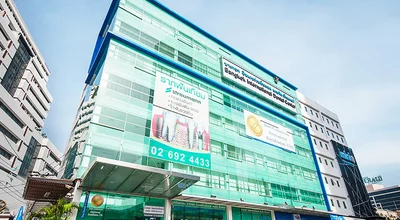
Bangkok International Dental Center
Thailand's first JCI-accredited dental center with more than 70 specialist dentists
View hospital profile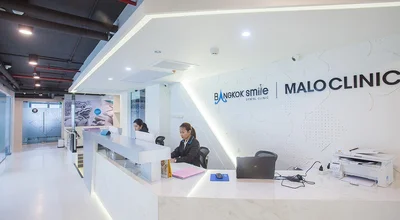
Bangkok Smile Dental Clinic
Multi-branch dental group founded in 2003 and the official Thai partner of the Malo All-on-4 network
View hospital profile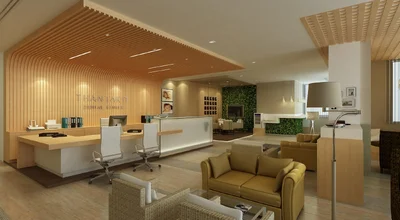
Thantakit International Dental Center
Thailand's longest established dental center, operating in Bangkok since 1945 with more than 40 dentists
View hospital profile
Get a Free Dental Quote in Minutes
Tell us what you need and we'll match you with the right specialist and return real clinic quotes.
- Itemised clinic quotes with no hidden fees
- Matched to a dentist experienced in your specific treatment
- Completely free, even if you decide not to go ahead


Rated 5 stars by our patients
The complete guide to Laser Gum Treatment in Thailand
Everything below is for readers who want the full detail: costs broken down, types and techniques, recovery, risks and safety, and planning your trip.
Laser Gum Treatment Dentists & Clinics in Thailand
Laser gum treatment quality depends on the laser system, the protocol followed, and the periodontist's training. Here is what to look for.
Leading Periodontal Clinics in Bangkok
Our partner clinics are equipped with FDA-cleared PerioLase Nd:YAG lasers for LANAP, diode lasers for adjunctive therapy, and digital periodontal charting systems. They are set up for comprehensive periodontal treatment including laser therapy, conventional deep cleaning, and regenerative procedures.
Trained LANAP Periodontists
Our partner periodontists have completed specific training and certification for the LANAP protocol. This matters because the protocol has precise parameters (laser settings, pulse duration, fibre angle, and two-pass sequence) that must be followed correctly for the regenerative benefit. General dentists using lasers without protocol training produce different results.
What to Look for in a Periodontist
Confirm the periodontist is LANAP-trained and uses an FDA-cleared PerioLase system if you want the full regenerative protocol. Ask about their approach to maintenance planning after treatment. A periodontist who emphasises long-term maintenance as part of the treatment plan: not just the laser session itself: understands that treating periodontitis is an ongoing commitment.
Understanding Your Results
Laser gum treatment results develop progressively over months. Here is what to expect.
Typical Laser Gum Treatment Results
Pocket depths reduce as diseased tissue is removed and healthy attachment forms. Bleeding on probing decreases dramatically. Loose teeth often stabilise as bone regeneration progresses. Gums appear healthier, less red, less swollen, and more firmly attached. The visual improvement is noticeable within weeks, while bone changes are measured on X-rays over six to twelve months.
What Results Can You Expect?
Most patients experience significant pocket depth reduction and symptom improvement. Bone regeneration, documented in LANAP studies, occurs over six to twelve months and is visible on follow-up imaging. Teeth that were mobile often become more stable. The extent of improvement depends on disease severity at the start and maintenance compliance after treatment. Advanced cases with severe bone loss may see improvement but not complete resolution.
Laser Gum Treatment Cost in Thailand
Average Cost of Laser Gum Treatment
Laser gum treatment in Thailand typically costs between $400 and $800 per arch for full-mouth LANAP treatment. Diode laser therapy as an adjunct to deep cleaning costs less. Per-quadrant pricing is also available. The total depends on the severity of disease and the number of teeth requiring treatment.
Cost Breakdown
The total cost covers the periodontist's fee, local anaesthesia, digital X-rays and periodontal charting, the laser treatment sessions, ultrasonic scaling performed during the procedure, post-operative medications, and follow-up appointments. All components are included in a single transparent quote.
What Affects the Price?
The laser protocol is the main variable. Full LANAP with the PerioLase system costs more than adjunctive diode laser therapy. The extent of disease affects treatment time: more teeth and deeper pockets require longer sessions. Full-mouth treatment (both arches) is more cost-effective per arch than treating one quadrant at a time.
Thailand vs International Price Comparison
Laser gum treatment in Thailand costs 60–70% less than equivalent LANAP treatment in the US ($1,200–$2,400 per arch), Australia (A$1,100–A$2,200), and UK (£1,000–£2,000). Full-mouth treatment in Thailand often costs less than a single arch at home.
Non-Surgical Alternatives to Laser Gum Treatment
The first-line treatment for gum disease is non-surgical scaling and root planing, often called a deep clean. A hygienist or periodontist removes plaque and tartar from above and below the gum line and smooths the root surfaces so the gums can reattach.4,1 For mild to moderate disease it is genuinely effective, lower cost, and frequently all that is needed, which is why a course of deep cleaning is usually tried before any laser or surgical option is recommended.
The limit is depth. Scaling and root planing works well for shallower pockets, but once pockets reach 5mm or deeper, hand and ultrasonic instruments struggle to reach the bacteria embedded in the pocket walls, and deep cleaning alone does not regenerate the bone that has already been lost. In more advanced cases the inflammation settles for a while and then returns, so repeated deep cleans manage the disease without truly resolving the deeper pockets.
When pockets are deep, bone loss has begun, or conventional cleaning has not held, laser periodontal therapy is the route that reaches further. It decontaminates the deep pockets without cutting or stitching, and the LANAP protocol has peer-reviewed evidence for new bone and gum attachment forming over the months that follow, which is what the rest of this page covers.
Types of Laser Gum Treatment
Several laser systems and protocols are used for periodontal treatment. The choice depends on the severity of disease, the equipment available, and whether the goal is adjunctive decontamination or true tissue regeneration.
LANAP (Laser-Assisted New Attachment Procedure)
The FDA-cleared protocol using a PerioLase Nd:YAG laser. A fibre-optic tip is inserted into each pocket for a two-pass sequence: diseased tissue removal and bacterial kill on the first pass, fibrin clot stabilisation on the second. The evidence base includes peer-reviewed histological studies demonstrating true bone regeneration.
- FDA-cleared protocol with published evidence supporting new bone formation
- No cutting, no sutures, and significantly less post-operative pain
- Selectively removes diseased tissue while preserving healthy gum attachment
- Best for: moderate to severe periodontitis where bone regeneration is the treatment goal
Diode Laser Therapy
A diode laser used alongside scaling and root planing to decontaminate pockets and reduce bacterial load. Enhances the effectiveness of conventional deep cleaning rather than replacing surgery. Widely available and well tolerated with minimal discomfort.
- Supplements standard deep cleaning with targeted bacterial decontamination
- Effective at reducing pocket bacteria and promoting tissue healing
- Widely available and lower cost than full LANAP protocol
- Best for: mild to moderate periodontitis as an adjunct to conventional non-surgical treatment
Er:YAG Laser Treatment
The erbium laser removes calculus from root surfaces and decontaminates pockets using a wavelength highly absorbed by water. It can handle both soft and hard tissue applications with minimal thermal damage to surrounding structures. Useful for patients with calculus deposits that resist conventional scaling.
- Removes calculus directly, reducing the need for hand instruments
- Minimal thermal damage due to high water absorption of the wavelength
- Versatile for both soft tissue decontamination and hard tissue applications
- Best for: cases with heavy subgingival calculus or patients who need combined soft and hard tissue treatment
Laser Gingivectomy & Gum Contouring
A soft-tissue laser is used to remove or reshape excess gum, whether trimming overgrown tissue, recontouring an uneven gum line, or evening out a gummy smile. The laser cuts and seals as it works, so bleeding is minimal and there are no sutures, and the gum heals faster than with a conventional scalpel. It is aesthetic and tissue-management work rather than deep-pocket disease treatment.
- Reshapes or removes excess gum tissue with little bleeding and no stitches
- Seals as it cuts, so healing is quicker than scalpel gingivectomy
- Used for gummy smiles, uneven gum lines, and tissue overgrowth
- Best for: cosmetic gum reshaping or removing excess tissue, rather than deep-pocket gum disease
Laser Gum Treatment Techniques
The laser is a tool, not a treatment in itself. The protocol (how the laser is used, in what sequence, and combined with what other steps) determines the outcome.
Full LANAP Protocol
The complete LANAP sequence involves perio charting, the first laser pass for diseased tissue and bacteria, ultrasonic scaling to remove calculus, the second laser pass to create a fibrin clot seal, and bite adjustment to reduce traumatic forces on weakened teeth. Each step serves a specific biological purpose.
- Two-pass laser sequence designed for tissue selectivity and clot formation
- Ultrasonic scaling between passes removes calculus from root surfaces
- Occlusal adjustment reduces forces on teeth weakened by bone loss
- Best for: the full LANAP protocol as a standalone periodontal treatment
Laser-Assisted Scaling and Root Planing
Diode or Er:YAG laser is used after conventional scaling and root planing to decontaminate the pocket walls and root surfaces. The laser energy kills residual bacteria that scaling alone cannot reach, improving healing outcomes and reducing pocket depth more effectively than scaling alone.
- Laser decontamination reaches bacteria embedded in pocket walls and dentine tubules
- Enhances outcomes when added to conventional scaling and root planing
- Quick to perform as an add-on to standard non-surgical periodontal treatment
- Best for: adjunctive bacterial reduction alongside conventional deep cleaning
Post-Treatment Maintenance Protocol
Laser gum treatment is not a one-time fix. Periodontitis is a chronic condition that requires ongoing management. Periodontal maintenance appointments every three to four months prevent bacteria from re-establishing deep pockets. This schedule is coordinated between your Thai periodontist and your dentist at home.
- Three-to-four-month maintenance intervals prevent disease recurrence
- Pocket depths are re-measured at each maintenance visit to track stability
- Home care compliance and maintenance attendance determine long-term success
- Best for: every laser gum treatment patient. Maintenance is what sustains the result
Laser Gum Treatment Recovery Timeline
Day 1
Mild tenderness and slight bleeding from treated areas. Eat soft foods, avoid hot drinks, and take any prescribed pain medication. Most patients report significantly less discomfort than expected: many need only over-the-counter relief.
Days 2–3
Tenderness fades quickly. Resume a normal soft diet and gentle brushing of treated areas. Avoid flossing the treated pockets for the time specified by your periodontist to allow the fibrin clot to stabilise.
Weeks 1–2
Gum tissue is healing and beginning to tighten around the teeth. Follow-up appointment checks healing and provides updated hygiene instructions. Most patients return to all normal activities within a few days of treatment.
Months 3–6
Pocket depths are re-measured to assess improvement. Bone regeneration, where it occurs, becomes visible on follow-up X-rays over six to twelve months. Regular maintenance appointments every three to four months are essential to sustain the results.
When Can You Fly After Laser Gum Treatment?
Most patients can fly home the next day or within two to three days. Laser gum treatment is minimally invasive with no incisions or sutures, so recovery is faster than traditional gum surgery. There are no cabin-pressure concerns, and discomfort is typically mild enough to travel comfortably within 24 to 48 hours.
When Can You Eat and Drink Normally?
You can eat soft foods on the same day. Avoid hot, spicy, or crunchy foods for the first two to three days while the treated gum tissue settles. Most patients return to their normal diet within three to five days. Because there are no sutures or open incisions, the dietary restrictions are shorter than with conventional gum surgery.
When Will You See Final Results?
Healthier gum tissue is visible within a few weeks as inflammation resolves and pockets begin to tighten. Bone regeneration stimulated by the laser continues beneath the surface for six to twelve months. Full periodontal stability is assessed at follow-up appointments and confirmed with probing measurements that show reduced pocket depths.
Anaesthesia for Laser Gum Treatment
Laser gum treatment is an outpatient procedure done under local anaesthesia. The gums and the pockets being treated are numbed first, so you are fully awake and aware throughout but feel no pain while the periodontist works. Because there is no cutting or stitching, the numbing required is similar to a routine deep cleaning rather than anything more involved, and you can travel back to your hotel the same day.
For most people local anaesthetic is all that is needed. If you are anxious about dental work, ask at your consultation: many of our partner clinics can offer light sedation to keep you relaxed and settled, though it is not usually necessary for a procedure this minimally invasive. Your periodontist reviews your medical history and any medications, particularly blood thinners, before deciding the right approach for you.
You feel nothing during the session itself beyond the laser fibre and scaling around the gum line. Once the anaesthetic wears off, any discomfort is mild: typically slight tenderness for a day or two that most patients manage with over-the-counter pain relief. The whole point of the laser approach is that it spares you the soreness and recovery of traditional flap surgery.
Risks and Safety of Laser Gum Treatment
Laser gum treatment carries fewer risks than traditional flap surgery because there are no incisions or sutures involved. The procedure has a favourable safety profile across all published studies.
- Mild gum tenderness in the first day or two (temporary and self-resolving)
- Slight bleeding from treated pockets immediately after treatment
- Temporary increase in tooth sensitivity as gum tissue tightens
- Incomplete pocket resolution in advanced cases with severe bone loss
- Gum recession as inflammation resolves and swollen tissue shrinks to its true level1,2
- Thermal injury to adjacent gum or root surface if laser settings are not correctly controlled (rare in trained hands)
- Periodontal abscess after LANAP if the fibrin clot seals residual bacteria into a treated pocket, which needs prompt drainage
- Need for ongoing maintenance: periodontitis is chronic and requires lifelong management
A comprehensive periodontal assessment with probing depths, X-rays, and bone level evaluation determines whether laser treatment is appropriate for your specific disease pattern and severity.
Is Laser Gum Treatment Safe in Thailand?
Yes. Our partner periodontists operate FDA-cleared laser systems at clinics with rigorous sterilisation and infection-control protocols. The LANAP protocol is backed by peer-reviewed studies demonstrating safety and efficacy. The treatment is outpatient, performed under local anaesthesia, and carries minimal medical risk.
How Does Laser Treatment Compare to Traditional Surgery?
Laser treatment eliminates incisions and sutures, resulting in less pain, less swelling, less bleeding, and faster recovery. Published studies show comparable pocket depth reduction to traditional surgery. The LANAP protocol has the additional advantage of peer-reviewed evidence supporting true bone regeneration: something conventional flap surgery does not reliably achieve.
What Happens If Treatment Is Not Maintained?
Without regular maintenance appointments, bacteria will re-colonise the treated pockets and the disease will progress again. Periodontitis is a chronic condition. It is managed, not cured. Maintenance every three to four months is the standard recommendation. A maintenance schedule is coordinated with your home dentist before you leave Thailand.
Planning Your Trip to Thailand for Laser Gum Treatment
Full-mouth laser gum treatment fits into a five-to-seven-day trip. Here is how to plan it.
How Long to Stay in Thailand
Plan for five to seven days. Day one covers the periodontal assessment, charting, and X-rays. Treatment sessions are spread across one to two days: typically one half of the mouth per session. A follow-up appointment checks healing before departure. Recovery is rapid enough that most patients are comfortable within 24–48 hours of each session.
What Is Included in a Dental Trip
Your care coordinator arranges the periodontal assessment, treatment sessions, and follow-up. The quote covers the periodontist's fee, anaesthesia, imaging, periodontal charting, laser treatment, ultrasonic scaling, medications, and follow-up. Flights and accommodation are separate.
Coordinating Aftercare at Home
Your periodontist provides full treatment records, periodontal charts, and a maintenance schedule for your home dental team. This documentation ensures continuity of care and proper maintenance frequency. Your coordinator can help establish the handoff to your regular dentist before you leave Thailand.
Related Procedures
Other procedures that address similar goals or conditions, in case one of them is a closer fit for you.
Planning your treatment in Thailand
Independent guides to help you weigh the decision, before you commit to anything.
Common Questions About Laser Gum Treatment
Everything you need to know before your treatment

Medical References
Keep researching with AI
Open this guide in your AI assistant to dig deeper and ask the questions it didn't answer.
Opens in a new tab with this guide already loaded.
Medical disclaimer: This information is for educational purposes only and does not replace professional dental advice. Individual results, recovery times, and suitability vary. Always consult a qualified dentist before making decisions about treatment.
Ready to Get Started?
Speak with our care coordinators for a free, no-obligation consultation and personalised quote.
Speak to Our Team