Crown Lengthening in Thailand Your guide to cost, top dentists & hospitals
Whether it is a gummy smile or a tooth that broke below the gum, crown lengthening creates the structure you need.
What Is Crown Lengthening?
Also known as: Gum Reshaping · Surgical Crown Lengthening
Crown lengthening is minor gum surgery that exposes more of a tooth by reshaping the gum, and sometimes the bone beneath it, so a crown or filling can grip securely or a low gum line, the gummy smile, can be lifted. Trimming gum alone is a gingivectomy; lowering the bone too is osseous crown lengthening, where recontouring the bone keeps the gum from creeping back1,2. It is usually done under local anaesthetic in about 30 to 60 minutes1, and once the tissue heals the result holds.
There is no single version of this surgery. A periodontist checks where your bone sits with gentle probing and an X-ray, then maps the plan around your own teeth. For a cosmetic case the gum line is shaped across every tooth that shows, so the finished smile reads as even.
It helps to know this is rarely a same-day crown. The gum usually needs six to twelve weeks to settle before a permanent crown is fitted, so functional cases sometimes mean a return visit. Your coordinator will tell you which before you book.
It can address a range of concerns, including:
Am I a Good Candidate for Crown Lengthening?
Suitability rests on what is actually causing the short-looking teeth, and whether your gums, bone, and timeline can support the fix.
A gummy smile has several possible causes, and only one of them is fixed by removing gum.
Tissue overgrowth responds: When excess gum genuinely covers the tooth crown, recontouring reveals it and the result is dramatic.
Lip and skeletal causes do not: A gummy smile driven by lip dynamics or vertical maxillary excess needs a different treatment, and a careful periodontist checks this before cutting.
Probing and X-rays decide: Where the bone sits relative to the gum margin determines gingivectomy versus osseous surgery, and whether the result will hold or grow back.
Healthy foundations decide whether the new gum line stays where it is put.
No active gum disease: Periodontal disease or recession should be controlled before any recontouring.
Enough root length: Removing support around a tooth with a short root could compromise the crown-to-root ratio, so this is measured before the plan is agreed.
Bone work where needed: If bone sits too close to the gum margin, trimming gum alone regrows to its old position. Osseous recontouring is what makes the result permanent.
The procedure is quick, but the schedule around it is not, especially if a crown comes next.
Six to twelve weeks before crowns: Gum tissue keeps settling after surgery. Impressions taken too early leave the crown margin in the wrong place.
Possibly two trips: Functional cases with bone recontouring usually need a return visit for the crown, while cosmetic-only gingivectomy may allow restorative work on the same trip.
Seven to ten days in Thailand: Surgery happens early in the stay, with follow-up checks confirming healing before you fly.
Who is not suitable for crown lengthening?
- A gummy smile caused by lip dynamics or vertical maxillary excess
- Active periodontal disease or recession until controlled
- Insufficient root length for the planned reduction
- Unable to accommodate the six-to-twelve-week healing window before final crowns
Pricing
How Much Will Crown Lengthening Cost in Thailand?
What crown lengthening costs at accredited hospitals in Thailand, and what your final quote depends on.
Get your exact price
Tell us what you're considering and we'll send a personalised quote from accredited hospitals within 24 hours.
Get my free quoteTypical prices in Thailand
Typical ranges based on recent hospital quotes. Your exact price depends on the hospital and how complex your case is, and is confirmed at your teleconsultation.
Crown Lengthening
Crown lengthening reshapes the gum, and sometimes the bone beneath it, to expose more of a tooth so a crown can grip or a gummy smile is lifted.
| Functional crown lengthening, single tooth Gum and bone adjusted so a crown has enough tooth to grip | $250 to $320 ฿8,500 to ฿10,880 |
| Aesthetic crown lengthening, per arch Several front teeth reshaped together to even out a gummy smile | $320 to $420 ฿10,880 to ฿14,280 |
| Aesthetic crown lengthening with osseous recontouring Bone reshaping alongside the gum work for more complex smiles | $400 to $500 ฿13,600 to ฿17,000 |
Get your exact price
Tell us what you're considering and we'll send a personalised quote from accredited hospitals within 24 hours.
Clinics Trusted for Crown Lengthening
From internationally accredited flagships to dedicated specialist clinics, these are the kinds of facilities where international patients have this procedure.
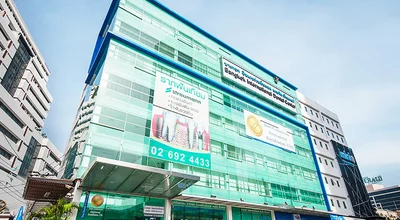
Bangkok International Dental Center
Thailand's first JCI-accredited dental center with more than 70 specialist dentists
View hospital profile
Bangkok Smile Dental Clinic
Multi-branch dental group founded in 2003 and the official Thai partner of the Malo All-on-4 network
View hospital profile
Thantakit International Dental Center
Thailand's longest established dental center, operating in Bangkok since 1945 with more than 40 dentists
View hospital profile
Get a Free Dental Quote in Minutes
Tell us what you need and we'll match you with the right specialist and return real clinic quotes.
- Itemised clinic quotes with no hidden fees
- Matched to a dentist experienced in your specific treatment
- Completely free, even if you decide not to go ahead


Rated 5 stars by our patients
The complete guide to Crown Lengthening in Thailand
Everything below is for readers who want the full detail: costs broken down, types and techniques, recovery, risks and safety, and planning your trip.
Crown Lengthening Dentists & Clinics in Thailand
Crown lengthening quality depends on the periodontist's surgical precision and aesthetic judgment. Here is what to look for.
Leading Periodontal Clinics in Bangkok
Our partner clinics have dedicated periodontal suites with microsurgical instruments, dental lasers, and piezoelectric bone-cutting systems. They handle both functional and cosmetic crown lengthening cases and coordinate directly with the restorative team for subsequent crown or veneer work.
Experienced Periodontists
Our partner periodontists hold postgraduate qualifications in periodontology and perform crown lengthening as a regular part of their practice. They understand the relationship between bone levels, biologic width, and crown margin placement. The knowledge that determines whether a functional crown lengthening actually works.
What to Look for in a Periodontist
Ask whether they assess bone levels with probing and X-rays before recommending gingivectomy versus osseous surgery: a periodontist who defaults to gingivectomy without checking bone position may produce a result that relapses. For cosmetic cases, review before-and-after photos with attention to symmetry and proportionality. A periodontist who discusses tooth width-to-height ratios is thinking about aesthetics properly.
Understanding Your Results
Crown lengthening results are visible once healing is complete. Here is what to expect.
Typical Crown Lengthening Results
For cosmetic cases, the gummy smile is corrected and teeth appear proportional: longer, more defined, and framed by an even gum line. The change is often dramatic. For functional cases, sufficient tooth structure is exposed for a crown to grip securely, saving a tooth that might otherwise have needed extraction.
What Results Can You Expect?
Cosmetic results are visible within two to three weeks as swelling resolves. The final gum line shape stabilises by six to twelve weeks. Functional results are measured by the restorative dentist's ability to place a crown with adequate ferrule and margin. This is confirmed at the crown preparation appointment. Both types of crown lengthening produce permanent, stable results when osseous recontouring is done correctly.
Crown Lengthening Cost in Thailand
Average Cost of Crown Lengthening
Crown lengthening in Thailand typically costs between $250 and $500 per site, depending on whether the procedure involves soft tissue only or includes bone recontouring. Cosmetic crown lengthening across multiple front teeth may be quoted as a per-arch fee rather than per tooth.
Cost Breakdown
The total cost covers the periodontist's fee, local anaesthesia and sedation, the surgical procedure including any bone recontouring, sutures, antimicrobial rinse, post-operative medications, and follow-up appointments. Crown fabrication is quoted separately when applicable.
What Affects the Price?
The main variables are whether bone recontouring is needed (osseous cases cost more than gingivectomy) and how many teeth are treated. Cosmetic cases covering six to eight front teeth in a single session cost more total but less per tooth than treating one or two teeth individually.
Thailand vs International Price Comparison
Crown lengthening in Thailand costs 60–70% less than equivalent procedures in the US ($750–$1,500), Australia (A$700–A$1,400), and UK (£650–£1,250). For patients needing both crown lengthening and subsequent crowns or veneers, the combined savings in Thailand are substantial.
Alternatives to Crown Lengthening
The right alternative depends on why the tooth looks short. For a gummy smile caused by muscle pull rather than excess tissue, a periodontist may suggest Botox to relax the lip or a lip repositioning procedure, both of which leave the gum untouched. For a tooth broken or decayed below the gum line, orthodontic extrusion can slowly pull the root upward over a few months so more sound structure sits above the gum without removing any bone.
Each has real limits. Botox is temporary and wears off within months, so the gum show returns. Lip repositioning treats the lip, not the gum, and does nothing when the problem is genuinely excess tissue covering the crown. Orthodontic extrusion is slow, needs braces or a fixed appliance, and only suits certain cases, while it changes the bone and gum alongside the tooth, which sometimes still leaves a small recontouring step at the end.
When excess gum genuinely covers the tooth crown, or when a crown needs sound structure and proper clearance at the margin and the bone sits too high, crown lengthening is the route that gives a stable, lasting result in a single short procedure. That is what the rest of this page covers.
Types of Crown Lengthening
The approach depends on whether the goal is functional or cosmetic and whether bone recontouring is needed alongside gum reshaping. A probing and X-ray assessment determines which type is right.
Gingivectomy (Soft Tissue Only)
Used when only excess gum tissue needs trimming and the bone level is already positioned adequately below the gum margin. The periodontist sculpts the gum line with a scalpel, laser, or both to expose more tooth crown. Faster healing because no bone is involved.
- Suitable when bone already sits well below the desired gum position
- Faster healing than procedures involving bone recontouring
- Commonly used for cosmetic gummy smile correction when bone levels are favourable
- Best for: gummy smiles where bone positioning does not require adjustment
Osseous Crown Lengthening (Bone and Soft Tissue)
When bone sits too close to the gum margin, trimming gum alone does not work. The gum grows back to its original position driven by the underlying bone level. The periodontist raises a flap, recontours the bone to a lower level, then repositions the gum. This creates a lasting result.
- Essential when biologic width needs to be re-established for crown placement
- Provides a stable, permanent result because the new gum position is supported by bone
- Required for most functional cases where a crown margin needs adequate clearance
- Best for: functional cases and gummy smiles where bone recontouring is needed for stability
Laser-Assisted Crown Lengthening
A dental laser serves as the primary cutting tool or as an adjunct to conventional surgery for soft tissue removal. Laser treatment offers excellent bleeding control and precision, particularly for aesthetic contouring across multiple teeth. Suturing requirements are reduced.
- Reduced bleeding for better visibility and more precise contouring
- Minimal suturing required, leading to faster initial comfort
- Ideal for shaping the gum line symmetrically across multiple front teeth
- Best for: cosmetic gum line levelling where bleeding control and precision are priorities
Crown Lengthening Techniques
The technical execution determines whether the result is symmetrical, stable, and proportional. Here is what the process involves.
Smile Design Assessment
For cosmetic cases, the periodontist assesses tooth proportions, lip dynamics, and gum symmetry before surgery. Ideal tooth width-to-height ratios guide how much tissue to remove. The gum line is mapped across multiple teeth to create an even, natural-looking arc that matches your smile.
- Tooth width-to-height ratios guide the amount of tissue removal
- Lip dynamics assessed, how much gum shows during full smile, speaking, and resting
- Symmetry planned across all visible teeth for a balanced, even result
- Best for: cosmetic crown lengthening: planning the aesthetics before cutting is essential
Flap Surgery and Bone Recontouring
The periodontist raises a gum flap, exposing the underlying bone. Bone is carefully reduced with rotary instruments or piezoelectric tools to the level needed for proper biologic width and crown margin placement. The flap is repositioned and sutured at the new level.
- Bone recontouring creates a new, lower foundation for stable gum positioning
- Biologic width re-establishment ensures healthy tissue around the future crown
- Piezoelectric instruments reduce bone precisely without soft tissue damage
- Best for: all osseous crown lengthening cases. The bone determines the final gum position
Healing and Crown Timing
After crown lengthening, the gum tissue needs six to twelve weeks to mature and stabilise before final crown impressions are taken. Taking impressions too early means the crown margin will sit in the wrong position as the tissue continues settling. Patience at this stage prevents crown failure.
- Six to twelve weeks of healing before final crown preparation
- Tissue stabilises at its new level during this maturation period
- Premature crown placement risks margin exposure as the gum settles
- Best for: every functional crown lengthening case: rushing to the crown undermines the surgery
Microsurgical Technique
For aesthetic cases in the smile zone, the periodontist works under magnification (loupes or a microscope) with fine micro-instruments and very small sutures. Handling the gum and flap this gently reduces tissue trauma, so the contour heals cleaner and the gum line ends up more precise and symmetrical. It is the approach to ask about when even slight asymmetry would show.
- Magnification and micro-instruments allow finer, more atraumatic tissue handling
- Smaller flaps and fine sutures support cleaner, more predictable healing
- Particularly valuable across the visible front teeth where symmetry is critical
- Best for: cosmetic crown lengthening in the smile zone where precision and even contour matter most
Crown Lengthening Recovery Timeline
Days 1–3
Mild swelling and tenderness around the treated teeth. Take prescribed medication, apply ice packs, and eat soft cool foods. Avoid brushing the surgical site: use the provided antimicrobial rinse instead.
Days 4–7
Swelling subsides and comfort improves noticeably. Gradually return to a normal soft diet. Continue the antimicrobial rinse and avoid flossing the treated area. The gum tissue begins shaping itself around its new contour.
Weeks 2–3
Sutures dissolve or are removed. Newly exposed tooth structure is visible. Gentle brushing with a soft toothbrush can resume in the treated area. Your follow-up confirms healing is progressing well.
Weeks 6–12
Gum tissue has fully matured and stabilised at its new position. For functional cases, your restorative dentist can now take impressions for the permanent crown. For cosmetic cases, the final symmetrical gum line is established and the smile transformation is complete.
When Can You Fly After Crown Lengthening?
Most patients fly home toward the end of the 7 to 10 day stay, once the follow-up confirms the surgical site is healing properly. The procedure involves reshaping gum and sometimes bone tissue, so several days of monitored recovery is prudent before travel. Cabin pressure poses no risk to the healing site.
When Can You Eat and Drink Normally?
Stick to soft, cool foods for the first week and avoid chewing on the treated side. Hot, spicy, and crunchy foods can irritate the surgical site. By week two, you can gradually return to firmer foods as the gum tissue heals. Full, unrestricted eating typically resumes within three to four weeks.
When Will You See Final Results?
The new gum line is visible immediately after surgery, though swelling obscures the precise result for the first week or two. As tissue heals and swelling resolves over four to six weeks, the final contour becomes clear. If crown lengthening was done to prepare a tooth for a restoration, the permanent crown is placed once healing is complete: usually six to twelve weeks later.
Anaesthesia for Crown Lengthening
Crown lengthening is done under local anaesthetic, so you stay fully awake throughout while the area around the treated teeth is completely numbed. The periodontist administers it the same way you would have for a filling, and once it has taken effect you feel pressure and movement as the gum is reshaped, but no pain. There is no need to be put to sleep for a procedure of this kind, and you can go back to your accommodation the same day.
If you tend to be anxious in the dental chair, sedation can be added to keep you relaxed and calm while still awake and breathing on your own. This is a conversation to have at your consultation, where your periodontist also reviews your medical history and any blood-thinning medication before settling the plan. For osseous cases where bone is recontoured, the same local anaesthetic covers the bone work too, as the periodontist simply numbs a slightly wider area.
The honest picture is that you feel nothing sharp during the surgery itself. Afterwards, as the numbness wears off, expect mild tenderness and some swelling around the treated teeth for a few days1, which is well controlled with the medication and antimicrobial rinse your periodontist prescribes. Most patients find the recovery gentler than they expected for a procedure that involves the gum and sometimes the bone.
Risks and Safety of Crown Lengthening
Crown lengthening is a routine periodontal procedure with a well-established safety record. It is performed under local anaesthesia in a standard dental clinic setting.
- Temporary swelling and tenderness around the treated teeth
- Increased tooth sensitivity as more root surface is exposed1, which may settle over weeks but can persist when significant root surface is newly uncovered
- Teeth appearing longer than expected if too much tissue is removed
- Post-operative infection at the surgical site (rare)1
- Slight gum line asymmetry requiring minor touch-up (uncommon)
- Gum tissue attempting to regrow if osseous recontouring was insufficient2
- A weakened crown-to-root ratio if more bone is removed than the root length can support, leaving the tooth less stable
- Delayed bone healing or, rarely, bone necrosis at the recontoured site after flap surgery and osseous reduction
Gum and bone levels, tooth proportions, and smile aesthetics are evaluated thoroughly before deciding the extent of crown lengthening needed. The planned outcome is discussed and agreed before surgery proceeds.
Is Crown Lengthening Safe in Thailand?
Yes. Crown lengthening is routine periodontal surgery performed under local anaesthesia. Our partner periodontists are experienced in both functional and cosmetic applications, using microsurgical instruments and piezoelectric bone-cutting tools. The procedure carries minimal medical risk and produces predictable, stable results.
How to Ensure a Good Cosmetic Result
For cosmetic crown lengthening, insist on a smile design assessment before surgery. The periodontist should measure tooth proportions, assess lip dynamics, and plan the gum line contour across all visible teeth. Ask to see photos of previous cosmetic crown lengthening cases. Rushing into surgery without proper aesthetic planning produces uneven or exaggerated results.
Why Does the Crown Have to Wait?
After crown lengthening, gum tissue continues settling for six to twelve weeks. If crown impressions are taken too early, the gum will shift position after the crown is made, leaving the margin exposed or buried: both of which cause problems. Waiting for tissue maturation is not optional for functional crown lengthening. For cosmetic-only gingivectomy without bone work, the wait is shorter.
Planning Your Trip to Thailand for Crown Lengthening
Crown lengthening requires seven to ten days for surgery and initial healing. Crown placement may require a return trip.
How Long to Stay in Thailand
Plan for seven to ten days. The procedure is performed early in the trip, with follow-up appointments checking healing over the following days. For cosmetic-only cases (gingivectomy without bone work), crowns or veneers may be started on the same trip. For functional cases with osseous surgery, crown work typically requires a return visit after six to twelve weeks.
What Is Included in a Dental Trip
Your care coordinator schedules the periodontal surgery, follow-up appointments, and any planned restorative work. The crown lengthening quote covers the periodontist's fee, anaesthesia, the procedure, medications, and follow-up. Crown fabrication is quoted separately.
Planning a Return Trip for Crowns
If your case requires osseous crown lengthening followed by crowns, your coordinator plans the two-trip timeline upfront. The first trip covers the surgery. The second trip, six to twelve weeks later, covers crown preparation and fitting. Both trips are typically five to seven days each. Many patients use the second trip as an opportunity to address additional dental work.
Related Procedures
Other procedures that address similar goals or conditions, in case one of them is a closer fit for you.
Planning your treatment in Thailand
Independent guides to help you weigh the decision, before you commit to anything.
Common Questions About Crown Lengthening
Everything you need to know before your procedure

Medical References
Keep researching with AI
Open this guide in your AI assistant to dig deeper and ask the questions it didn't answer.
Opens in a new tab with this guide already loaded.
Medical disclaimer: This information is for educational purposes only and does not replace professional dental advice. Individual results, recovery times, and suitability vary. Always consult a qualified dentist before making decisions about treatment.
Ready to Get Started?
Speak with our care coordinators for a free, no-obligation consultation and personalised quote.
Speak to Our Team