TMJ Surgery in Thailand Your guide to cost, top dentists & hospitals
When splints and physiotherapy have run their course, surgery addresses the joint damage directly.
What Is TMJ Surgery?
Also known as: Jaw Joint Surgery · Temporomandibular Joint Surgery
TMJ surgery is an operation that treats the temporomandibular joint, the hinge in front of each ear that links the lower jaw to the skull, by repairing or replacing the damaged structures inside it. It can flush an inflamed joint, reposition a slipped disc, smooth worn bone, release scar tissue, or fit a custom prosthetic joint in severe cases. The approach ranges from a keyhole washout to open surgery, decided by what an MRI scan shows rather than symptoms alone.
If splints and physiotherapy could not settle your jaw pain, clicking, or locking, surgery can feel like a big step. It is reserved for damage you can actually see on a scan, so your surgeon reviews your imaging first and matches the procedure to what is wrong. Many people find the recovery ache afterwards is milder than the chronic pain they lived with.
Honest expectations matter. Most people gain meaningful pain relief and freer movement, and the physiotherapy afterwards shapes how well that holds. Long-standing problems usually improve a lot, though complete relief cannot be promised in every case, which is why a careful consultation comes first.
It can address a range of concerns, including:
Am I a Good Candidate for TMJ Surgery?
Surgery is reserved for jaw joints with confirmed structural damage that splints, physiotherapy, and medication have genuinely failed to settle.
Surgeons will not plan an operation on symptoms alone; the damage has to be visible on imaging.
MRI-confirmed pathology: Disc displacement, degeneration, or other structural damage must show on MRI before any surgical option is discussed. Surgery without imaging is speculation.
Joint, not muscle: Pain driven mainly by myofascial tension or bruxism does not respond to joint surgery and points to other treatment first.
Procedure matched to damage: The scan determines whether arthrocentesis, arthroscopy, open surgery, or joint replacement is the right level of intervention.
Every credible TMJ surgeon expects a proper trial of non-surgical treatment before operating.
Three to six months minimum: Splint therapy, physiotherapy, and medication should have been tried for at least three to six months without adequate relief.
A documented history: Your treatment records and existing imaging are reviewed before any surgical recommendation is made, so gather them early.
Surgery as the next step, not the first: A surgeon who discusses conservative alternatives and explains why surgery is indicated for your specific pathology is approaching the joint correctly.
The operation is performed under general anaesthesia, so a standard medical review applies alongside the joint assessment.
Fit for general anaesthesia: Good general health is required for surgery and the one to two night hospital stay.
Inflammatory disease controlled: An underlying autoimmune or inflammatory joint condition needs medical control before surgery can deliver lasting benefit.
Medications and smoking: Blood thinners are stopped two weeks before surgery with your prescriber's input, and smoking should stop at least four weeks prior.
The outcome depends as much on what you do after surgery as on the surgery itself.
Rehab is non-negotiable: Physiotherapy and daily jaw exercises continue for months, and outcomes correlate directly with how consistently you do them.
Improvement, not always cure: Long-standing cases usually improve significantly, but complete symptom elimination is not guaranteed in every case.
A progressive recovery: Pain relief often begins within the first week, while full stability and comfortable movement typically take three to six months.
Who is not suitable for tmj surgery?
- A full trial of conservative care (splint, physiotherapy, medication) not yet completed
- Pain driven mainly by muscle tension or bruxism rather than joint damage
- Uncontrolled inflammatory or autoimmune joint disease until medically managed
- Unable to commit to the post-surgical physiotherapy programme
- Keyhole arthroscopy specifically is ruled out when the jaw barely opens (less than about 5 mm), as in severe ankylosis, since the scope cannot be inserted; these cases are directed to open surgery or total joint replacement instead
- Smoking, unless stopped at least four weeks before surgery
- Significant uncontrolled heart or lung disease, or otherwise not medically fit for general anaesthesia
- Pregnancy, as this elective surgery and its CT imaging are best deferred until after delivery
Pricing
How Much Will TMJ Surgery Cost in Thailand?
What tmj surgery costs at accredited hospitals in Thailand, and what your final quote depends on.
Get your exact price
Tell us what you're considering and we'll send a personalised quote from accredited hospitals within 24 hours.
Get my free quoteTypical prices in Thailand
Typical ranges based on recent hospital quotes. Your exact price depends on the hospital and how complex your case is, and is confirmed at your teleconsultation.
TMJ Surgery
TMJ surgery repairs or replaces the damaged jaw joint in front of the ear, easing the pain, clicking, and locking that splints and physiotherapy could not settle.
| Arthrocentesis, joint lavage The joint space is washed out through needles, with no incision | $3,000 to $3,800 ฿102,000 to ฿129,200 |
| TMJ arthroscopy A camera guides the release of adhesions or repositioning of the disc | $3,800 to $4,800 ฿129,200 to ฿163,200 |
| Open TMJ surgery, disc repair or replacement Direct access to the joint for complex disc damage or reconstruction | $4,800 to $6,000 ฿163,200 to ฿204,000 |
Get your exact price
Tell us what you're considering and we'll send a personalised quote from accredited hospitals within 24 hours.
Clinics Trusted for TMJ Surgery
From internationally accredited flagships to dedicated specialist clinics, these are the kinds of facilities where international patients have this procedure.
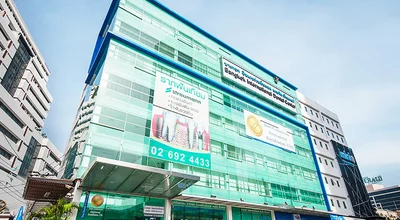
Bangkok International Dental Center
Thailand's first JCI-accredited dental center with more than 70 specialist dentists
View hospital profile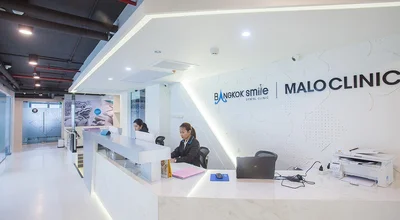
Bangkok Smile Dental Clinic
Multi-branch dental group founded in 2003 and the official Thai partner of the Malo All-on-4 network
View hospital profile
Thantakit International Dental Center
Thailand's longest established dental center, operating in Bangkok since 1945 with more than 40 dentists
View hospital profile
Get a Free Dental Quote in Minutes
Tell us what you need and we'll match you with the right specialist and return real clinic quotes.
- Itemised clinic quotes with no hidden fees
- Matched to a dentist experienced in your specific treatment
- Completely free, even if you decide not to go ahead


Rated 5 stars by our patients
The complete guide to TMJ Surgery in Thailand
Everything below is for readers who want the full detail: costs broken down, types and techniques, recovery, risks and safety, and planning your trip.
TMJ Surgeons & Clinics in Thailand
TMJ surgery requires a surgeon with specific joint expertise, not just general oral surgery training. Here is what to look for.
Leading Hospitals in Bangkok
Our partner hospitals have dedicated maxillofacial departments with MRI suites, arthroscopic systems, and the capability to manufacture custom joint prostheses. They are set up for the full spectrum of TMJ procedures: from simple joint lavage to total replacement, with operating theatres and post-operative care units equipped for the complexity involved.
Experienced TMJ Surgeons
Our partner surgeons hold board certification in oral and maxillofacial surgery and have specific experience with TMJ disorders. They perform arthroscopic and open joint procedures regularly and maintain relationships with physiotherapists who specialise in jaw rehabilitation.
What to Look for in a Surgeon
Ask about TMJ-specific surgical volume, how many TMJ procedures they perform annually. Verify they have arthroscopic capability and MRI access on-site. A surgeon who insists on reviewing MRI before discussing surgical options, and who talks about physiotherapy as part of the treatment plan, is approaching TMJ surgery correctly.
Understanding Your Results
TMJ surgery results are functional: pain relief, restored movement, and improved daily quality of life. Here is what to expect.
Typical TMJ Surgery Results
Successful TMJ surgery reduces or eliminates chronic jaw pain, restores smooth jaw opening, and resolves locking episodes. Patients report being able to eat normally, yawn without fear, and go through the day without constant jaw awareness. The extent of improvement depends on the type and duration of the disorder and the specific procedure performed.
What Results Can You Expect?
Improvement is progressive rather than immediate. Pain relief often begins within the first week as inflammation resolves. Jaw opening range improves over weeks to months with physiotherapy. The final result typically stabilises by three to six months. Patients with chronic, long-standing disorders may need to adjust expectations: significant improvement is likely, but complete symptom elimination is not guaranteed in every case.
TMJ Surgery Cost in Thailand
Average Cost of TMJ Surgery
TMJ surgery in Thailand typically costs between $3,000 and $6,000, depending on the type of procedure. Arthrocentesis and arthroscopy sit at the lower end. Open arthroplasty sits in the middle. Total joint replacement with custom prosthesis sits at the higher end. The price includes the surgeon's fee, hospital stay, anaesthesia, imaging, and follow-up.
Cost Breakdown
The total cost covers the maxillofacial surgeon's fee, general anaesthesia, hospital stay with nursing care, MRI and CT imaging, surgical materials and instruments, post-operative medications, initial physiotherapy sessions, and follow-up appointments. Custom joint prostheses for total replacement cases add a significant component.
What Affects the Price?
The type of surgery is the main driver. Arthrocentesis is the simplest and most affordable. Arthroscopy costs more due to equipment and operating time. Open arthroplasty requires longer surgery and hospital stay. Total joint replacement is the most expensive because of the custom prosthesis manufacturing.
Thailand vs International Price Comparison
TMJ surgery in Thailand costs 60–70% less than the same procedures in the US ($9,000–$18,000), Australia (A$8,400–A$16,500), and UK (£7,500–£15,000). For total joint replacement cases, where the prosthesis alone can cost thousands, the savings in Thailand are particularly significant.
Types of TMJ Surgery
The surgical approach depends on what is damaged inside the joint and how severely. MRI and CT imaging determine the diagnosis and guide the treatment plan.
Arthrocentesis and Arthroscopy
Arthrocentesis flushes the joint space with sterile fluid to break up adhesions and remove inflammatory debris.2 Arthroscopy inserts a small camera through a tiny incision to visualise the joint3,2 and perform repairs: disc repositioning, adhesion release, or debridement. Minimally invasive with faster recovery.
- Minimally invasive with small incisions and rapid recovery
- Effective for disc displacement, adhesions, and early joint disease
- Can be combined with hyaluronic acid or corticosteroid injection
- Best for: early to moderate disc displacement and inflammatory joint conditions
Open Joint Surgery (Arthroplasty)
A larger incision in front of the ear provides full access to the joint. The surgeon can reposition or reshape the disc, smooth damaged bone surfaces, remove loose bodies, or release scar tissue under direct vision. Required when arthroscopy cannot adequately address the pathology.
- Allows disc repair, removal, or replacement under direct visualisation
- Addresses bone abnormalities and severe adhesions not reachable by scope
- Incision placed in the natural ear crease for minimal visible scarring
- Best for: advanced disc displacement, bone abnormalities, or failed arthroscopic procedures
Total Joint Replacement
For severely degenerated joints where both bone surfaces and disc are destroyed, a custom prosthetic joint replaces the entire TMJ. The prosthesis is designed from CT data to match your anatomy precisely. Reserved for end-stage disease where no other intervention can restore function.
- Custom patient-specific prosthesis designed from your CT scan data
- Restores jaw opening and function in end-stage joint disease
- Reserved for ankylosis, failed previous surgery, or complete joint destruction
- Best for: patients with no remaining joint function who have exhausted all other options
TMJ Surgery Techniques
Diagnosis determines technique. Thailand's maxillofacial units use the same MRI-guided diagnosis and arthroscopic systems as leading TMJ centres internationally.
MRI-Guided Diagnosis and Planning
High-resolution MRI of both TMJs captures disc position, joint fluid, bone surfaces, and soft tissue condition in open and closed mouth positions. This imaging determines whether the disc is displaced, whether bone degeneration is present, and which surgical approach is appropriate. Surgery without proper MRI diagnosis is surgery without a map.
- Visualises disc position in both open and closed mouth positions
- Detects bone degeneration, joint effusion, and soft tissue changes
- Guides surgical approach by revealing the specific pathology
- Best for: all TMJ surgical cases: MRI is the essential diagnostic step
High-Definition Arthroscopy
A 1.9mm or 2.3mm arthroscope inserted through a tiny incision provides magnified, high-definition views of the joint interior. The surgeon can lyse adhesions, reposition the disc, debride damaged tissue, and irrigate the joint space under direct visualisation with minimal tissue disruption.
- High-definition camera provides magnified views of intra-articular structures
- Adhesion lysis, disc repositioning, and debridement performed through tiny ports
- Much less tissue disruption than open surgery, with faster recovery
- Best for: diagnostic assessment and treatment of moderate disc displacement and adhesions
Post-Surgical Rehabilitation Protocol
Physiotherapy and structured jaw exercises begin within days of surgery and continue for months. The rehabilitation protocol is as important as the surgery itself: without it, scar tissue can reform and jaw opening may not reach its full potential. Initial sessions are conducted in Thailand, with a home exercise programme provided for continuation.
- Jaw opening exercises prevent scar tissue formation and improve range of motion
- Physiotherapy sessions begin during your stay in Thailand
- Detailed home exercise programme provided for continuation with a therapist at home
- Best for: every TMJ surgical patient: rehabilitation determines the quality of the outcome
Piezosurgery (Ultrasonic Bone Surgery)
When open surgery involves reshaping or removing bone, piezosurgery uses ultrasonic vibration to cut bone precisely while leaving soft tissue, nerves, and blood vessels unharmed. Because the joint sits close to the facial nerve, this selective cutting is a real safety advantage over conventional burs and saws, and it tends to mean less bleeding and a cleaner field. It is used in arthroplasty and bony reconstruction rather than keyhole washouts.
- Cuts bone selectively without damaging the nearby facial nerve or soft tissue
- Less bleeding and a clearer surgical field than rotary burs or saws
- Used in open arthroplasty, ankylosis release, and bone reshaping
- Best for: open TMJ surgery involving bone reshaping or removal close to the facial nerve
TMJ Surgery Recovery Timeline
Days 1–3
One to two nights in hospital with IV pain management and monitoring, then early rest at your hotel. Jaw swelling and limited opening are typical. Ice packs and a liquid diet begin immediately. Gentle guided jaw opening exercises may start within this window.
Weeks 1–2
Swelling subsides progressively. Follow-up appointments and structured physiotherapy restore range of motion. Diet advances from liquid to soft foods. Pain medication transitions to oral tablets. Most patients manage short outings by the end of week one.
Weeks 3–6
Jaw function improves noticeably as healing progresses and physiotherapy continues. Soft-chew diet resumes. Light daily activities return to normal. Avoid hard foods, wide yawning, and contact sports during this phase.
Months 3–6
Most patients reach full recovery. Jaw opening range and strength keep improving with ongoing exercises. Follow-up imaging confirms healing. Maintaining good habits (stress management, avoiding clenching, continuing exercises) protects the result long-term.
When Can You Fly After TMJ Surgery?
Plan to fly home ten to fourteen days after TMJ surgery. This stay covers your one to two nights in hospital, the first physiotherapy sessions, and follow-up appointments that confirm stable healing and progressing jaw movement before you travel. Keyhole arthroscopy patients sit at the earlier end of that window and open joint surgery at the later end, but the ten-day minimum applies to both so swelling and any bleeding can be monitored on the ground. Your surgeon makes the final call before clearing you to fly.
When Can You Eat and Drink Normally?
A soft diet is essential for the first two to four weeks while the joint heals. Start with liquids and smooth foods, progressing to soft solids as jaw movement improves. Avoid wide opening and hard or chewy foods for at least six weeks. Full, unrestricted eating typically resumes once your surgeon confirms the joint has healed, usually around two to three months.
When Will You See Final Results?
Pain relief is often noticeable within the first week as surgical swelling subsides. Jaw function improves gradually over six to twelve weeks as the joint heals and you regain range of motion through guided exercises. Final results, including full stability and comfortable jaw movement, are typically reached within three to six months.
Anaesthesia for TMJ Surgery
TMJ surgery in Thailand is performed under general anaesthesia4,3, so you are fully asleep and feel nothing during the operation. Because the joint sits just in front of the ear and close to the facial nerve, the surgeon needs you completely still and the airway protected, which is exactly what a general anaesthetic provides. A consultant anaesthetist stays with you throughout and monitors you continuously, with ICU backup available at the accredited hospitals we work with.
This applies across the full range of procedures, whether it is a keyhole arthroscopy through tiny ports or open joint surgery through an incision in the ear crease. The anaesthetist and your maxillofacial surgeon agree the plan together based on the type of procedure, the length of surgery, and your medical history. Before you are cleared you have a pre-operative assessment, including blood tests and a review of any medications, particularly blood thinners, which are usually paused beforehand.
You feel nothing while the joint is being worked on. When you wake, discomfort is managed from the start with intravenous pain relief during your one to two nights in hospital, moving to oral tablets once you are discharged, alongside ice and a soft or liquid diet. Many patients tell us the recovery ache is milder than the chronic jaw pain they lived with before surgery, and it eases steadily through the first couple of weeks.
Risks and Safety of TMJ Surgery
TMJ surgery is performed by specialist maxillofacial surgeons under general anaesthesia. As with any joint surgery, there are inherent risks, though serious complications are uncommon with experienced teams.
- Scar tissue formation within the joint (mitigated by physiotherapy)
- Tinnitus, ear fullness, or transient hearing changes3, as the joint sits directly in front of the ear canal (usually temporary)
- With total joint replacement: prosthesis loosening or wear debris, revision once the implant reaches the end of its typical 10–15 year lifespan, and limits on future MRI scanning of the area
- Incomplete symptom relief in complex or long-standing cases (uncommon)
A detailed review of MRI findings, medical history, and previous treatments ensures all risks and realistic outcome expectations are established before any surgical plan is finalised.
Is TMJ Surgery Safe in Thailand?
Yes. Our partner maxillofacial surgeons operate at JCI-accredited hospitals with full anaesthesia monitoring, ICU backup, and dedicated post-operative care. They use the same arthroscopic systems, MRI diagnostic protocols, and surgical approaches as leading TMJ centres internationally. The safety infrastructure matches the complexity of the procedure.
How to Reduce Your Risk
Ensure MRI diagnosis is completed before any surgical plan is proposed: surgery without proper imaging is speculation. Choose a surgeon who discusses conservative alternatives and explains why surgery is indicated for your specific pathology. Commit to post-surgical physiotherapy. This is not optional; it determines whether the surgical result holds.
When Is Revision Surgery Needed?
Revision surgery may be considered if symptoms persist or recur after the initial procedure. Scar tissue reformation is the most common reason. Post-operative physical therapy is a substantial part of TMJ recovery; outcomes correlate with consistent participation in the exercise programme. If revision is needed, arthroscopy can often address the issue without requiring a second open procedure.
Planning Your Trip to Thailand for TMJ Surgery
TMJ surgery requires ten to fourteen days in Thailand. Here is how to plan your trip.
How Long to Stay in Thailand
Plan for ten to fourteen days. This covers pre-operative MRI and consultation, one to two nights in hospital after surgery, initial physiotherapy sessions, and follow-up appointments to confirm stable healing before you travel. A longer stay allows more physiotherapy sessions and greater confidence in your recovery progress.
What Is Included in a Medical Trip
Your care coordinator arranges MRI, surgeon consultation, hospital admission, surgery, physiotherapy, and follow-up. The treatment quote covers the surgeon's fee, anaesthesia, hospital stay, imaging, surgical materials, medications, initial physio, and follow-up. Flights and accommodation are separate.
Recovery in Bangkok
The first few days after surgery are spent resting at your hotel with a liquid diet, pain medication, and ice packs. By mid-week one, most patients manage gentle outings. Physiotherapy sessions continue throughout your stay. The combination of structured rehabilitation and close follow-up during the critical first two weeks gives the best foundation for long-term recovery.
Related Procedures
Other procedures that address similar goals or conditions, in case one of them is a closer fit for you.
Planning your treatment in Thailand
Independent guides to help you weigh the decision, before you commit to anything.
Common Questions About TMJ Surgery
Everything you need to know before your procedure

Medical References
Keep researching with AI
Open this guide in your AI assistant to dig deeper and ask the questions it didn't answer.
Opens in a new tab with this guide already loaded.
Medical disclaimer: This information is for educational purposes only and does not replace professional dental advice. Individual results, recovery times, and suitability vary. Always consult a qualified dentist before making decisions about treatment.
Ready to Get Started?
Speak with our care coordinators for a free, no-obligation consultation and personalised quote.
Speak to Our Team