Root Canal Treatment in Thailand Your guide to cost, top dentists & hospitals
Keeping your natural tooth is almost always worth it. A root canal makes that possible when infection reaches the nerve.
What Is Root Canal Treatment?
Also known as: Root Canal · Endodontic Therapy
Root canal treatment is a dental procedure that saves an infected tooth by removing the pulp, the nerve and blood supply inside it. The endodontist cleans and shapes the narrow canals in the root, disinfects them, then fills them with a rubber-like material so bacteria cannot return. It treats teeth where decay, a crack, or injury has let infection reach the nerve, letting you keep your natural tooth instead of losing it to extraction. A crown usually goes on afterwards to protect it, and most appointments take about 60 to 90 minutes.
If you have only heard root canals described as painful, it helps to know the toothache is the infection, not the treatment. The procedure is what takes the pain away, and it is done under local anaesthetic, much like a filling. Your dentist decides whether one visit or two suits the tooth.
Done well, a treated tooth feels like any other and can last many years. Not every tooth can be saved, so your dentist checks the X-rays first and will tell you honestly if extraction is the more sensible path.
It can address a range of concerns, including:
Am I a Good Candidate for Root Canal Treatment?
Most infected teeth qualify; what the endodontist actually checks is whether this particular tooth is structurally worth saving.
The decision is about the tooth itself, and a good endodontist tells you honestly when extraction is the better call.
No vertical root fracture: A fractured root will not respond to root canal treatment. X-rays and scans are assessed before anything begins, so you are not paying to treat a hopeless tooth.
Enough structure for a crown: Sufficient sound tooth must remain to support the final restoration, even with a build-up.
A restorable prognosis: Severe resorption or extensive damage below the gum can make extraction and an implant the more honest plan.
Active infection shapes the timing of treatment rather than ruling it out.
Swelling settled first: Acute facial swelling needs antibiotics and drainage before the root canal can start, so mention symptoms early when booking.
Straightforward cases in one visit: Teeth with no draining abscess are often completed in a single 60-90 minute appointment.
Two visits when needed: A draining infection or a molar with complex anatomy may be medicated between two appointments a few days apart, still fitting a 5-7 day stay.
The root canal is only half the restoration; the crown that protects the tooth afterwards is the other half.
A crown within months: Back teeth become more brittle after treatment and need a crown promptly. Delaying it risks fracture and undoes the work.
Usually done in the same trip: The permanent crown is typically fitted three to five days after treatment, so you fly home with the tooth fully restored.
Or firmly arranged at home: If the crown cannot be completed in Thailand, you need a concrete plan to have it placed within a few months.
Who is not suitable for root canal treatment?
- A suspected vertical root fracture
- Extensive external root resorption that has destroyed too much root structure
- Too little remaining tooth structure to support a crown, even after build-up
- Active facial swelling until antibiotics and drainage have settled it
- No way to arrange the final crown within a few months of treatment
Pricing
How Much Will Root Canal Treatment Cost in Thailand?
What root canal treatment costs at accredited hospitals in Thailand, and what your final quote depends on.
Get your exact price
Tell us what you're considering and we'll send a personalised quote from accredited clinics within 24 hours.
Get my free quoteTypical prices in Thailand
Typical ranges based on recent hospital quotes. Your exact price depends on the hospital and how complex your case is, and is confirmed at your teleconsultation.
Root Canal Treatment
Root canal is priced per tooth, and what you pay tracks how many canals that tooth has rather than how much it has been hurting.
| Anterior tooth, per tooth A front tooth with one canal, the quickest treatment to complete | $200 to $260 ฿6,800 to ฿8,840 |
| Premolar, per tooth One or two canals to clean and fill, so a little longer in the chair | $260 to $330 ฿8,840 to ฿11,220 |
| Molar, per tooth A back tooth with three or four curved canals, the longest appointment | $330 to $400 ฿11,220 to ฿13,600 |
Get your exact price
Tell us what you're considering and we'll send a personalised quote from accredited clinics within 24 hours.
Clinics Trusted for Root Canal Treatment
From internationally accredited flagships to dedicated specialist clinics, these are the kinds of facilities where international patients have this procedure.
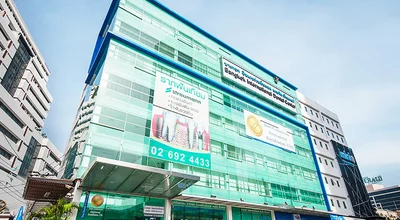
Bangkok International Dental Center
Thailand's first JCI-accredited dental center with more than 70 specialist dentists
View hospital profile
Bangkok Smile Dental Clinic
Multi-branch dental group founded in 2003 and the official Thai partner of the Malo All-on-4 network
View hospital profile
Thantakit International Dental Center
Thailand's longest established dental center, operating in Bangkok since 1945 with more than 40 dentists
View hospital profile
Get a Free Dental Quote in Minutes
Tell us what you need and we'll match you with the right specialist and return real clinic quotes.
- Itemised clinic quotes with no hidden fees
- Matched to a dentist experienced in your specific treatment
- Completely free, even if you decide not to go ahead


Rated 5 stars by our patients
The complete guide to Root Canal Treatment in Thailand
Everything below is for readers who want the full detail: costs broken down, types and techniques, recovery, risks and safety, and planning your trip.
Root Canal Dentists & Clinics in Thailand
Root canal quality depends on the endodontist's training, their equipment, and their judgment about which teeth are worth saving. Here is what to look for.
Leading Dental Clinics in Bangkok
Our partner clinics have dedicated endodontic suites equipped with operating microscopes, electronic apex locators, and ultrasonic irrigation systems. The endodontists work in purpose-built environments designed for precision: good lighting, ergonomic positioning, and the right instruments make a measurable difference in outcomes.
Specialist Endodontists
Our partner endodontists hold postgraduate qualifications in endodontics and treat root canal cases as their primary focus. They handle complex anatomy, retreatment, and difficult cases routinely. The volume of cases they manage produces the kind of pattern recognition and technical confidence that general dentists doing occasional root canals simply cannot match.
What to Look for in an Endodontist
Confirm the dentist has a postgraduate qualification in endodontics specifically. Ask whether they use an operating microscope for every case: not just difficult ones. Verify they use rotary nickel-titanium files rather than hand files. An endodontist who discusses canal anatomy, prognosis, and alternatives with specificity is one who is invested in the outcome.
Understanding Your Results
Root canal results are functional: pain relief and tooth preservation. Here is what to expect.
Typical Root Canal Results
A successful root canal eliminates infection, resolves pain, and preserves the natural tooth. The tooth is restored with a crown that looks and functions identically to a healthy tooth. There is no visible difference between a root-canal-treated tooth with a crown and a natural tooth. The treated tooth can bear normal chewing forces and serve you for decades.1,2
What Results Can You Expect?
Pain relief is usually immediate once the infection is addressed. The tooth settles within a day or two and, once crowned, functions exactly like any other tooth. Success rates are often above 90%, up to 95% for initial specialist treatment. The key to long-term success is a well-sealed root canal combined with a well-fitting crown: neither component works without the other.
Root Canal Treatment Cost in Thailand
Average Cost of Root Canal Treatment
Root canal treatment in Thailand typically costs between $200 and $400 per tooth, depending on the tooth type and complexity. Front teeth with single canals sit at the lower end. Molars with three or four canals cost more due to longer treatment time. Retreatment cases cost more than initial treatment because of the additional complexity.
Cost Breakdown
The root canal quote covers the endodontist's fee, local anaesthesia, digital X-rays, the root canal procedure including all irrigation and filling materials, and follow-up. The crown is quoted separately because material choice (porcelain, zirconia, e.max) affects the price. Combined quotes for root canal plus crown are provided on request.
What Affects the Price?
Tooth type is the main variable: molars have more canals and take longer than front teeth. Retreatment costs more than initial treatment because removing old material and re-cleaning is more time-intensive. Whether the case is straightforward or involves calcified canals, unusual anatomy, or separated instruments also affects complexity and price.
Thailand vs International Price Comparison
Root canal treatment in Thailand costs 60–70% less than equivalent specialist treatment in the US ($600–$1,200), Australia (A$550–A$1,100), and UK (£500–£1,000). Combined with the crown savings, a full root-canal-and-crown restoration in Thailand often costs less than the root canal alone at home.
Root Canal vs Extraction and Implant
The main alternative to a root canal is pulling the tooth and replacing it, usually with a dental implant, or sometimes a bridge or denture. An implant is a titanium post placed in the jaw with a crown on top, and for a tooth that genuinely cannot be saved it is an excellent, long-lasting replacement.
The trade-off is what you give up to get there. Extraction removes your natural tooth and root for good3,4, and an implant is a more involved process: minor surgery, a healing period of several months before the final crown, and a higher cost. Pulling a tooth can also let neighbouring teeth drift and the jawbone shrink over time, which is why dentists rarely recommend extraction when the tooth is still restorable.
When the root is sound and enough structure remains for a crown, a root canal is the more conservative route: it keeps your own tooth and root, is quicker, costs considerably less, and nothing replicates a natural root for chewing and feel. Extraction and an implant make sense only when the tooth truly cannot be saved, which is exactly what your endodontist checks from the X-rays before recommending either path.
Types of Root Canal Treatment
The approach depends on the tooth's anatomy, the extent of infection, and whether the tooth has had previous endodontic treatment. Thailand's endodontists handle all three scenarios.
Conventional Root Canal Treatment
The standard approach for most infected teeth. The endodontist accesses the pulp chamber, removes infected tissue, shapes the canals with rotary nickel-titanium files, irrigates with sodium hypochlorite, and fills with gutta-percha. Performed under an operating microscope for precision.
- Operating microscope reveals canal anatomy invisible to the naked eye
- Rotary files shape canals efficiently with minimal risk of instrument fracture
- Electronic apex locators ensure filling extends to the exact root tip
- Best for: first-time root canal treatment on teeth with standard canal anatomy
Retreatment
When a previous root canal has failed: missed canals, inadequate cleaning, or reinfection. The endodontist removes old filling material, re-cleans and reshapes the canals, and re-seals them. Retreatment gives the tooth a second chance before considering extraction.
- Addresses persistent infection from a previous failed root canal
- Ultrasonic instruments remove posts, separated files, and old gutta-percha
- Success rates are high with specialist microscope-guided retreatment
- Best for: teeth with persistent symptoms or radiographic pathology after initial treatment
Single-Visit Root Canal
For straightforward cases with no active abscess, the entire procedure (access, cleaning, shaping, and filling) is completed in one appointment. Particularly convenient for dental tourists who want to minimise clinic visits and move straight to crown preparation.
- Entire treatment completed in a single sitting, reducing total appointment count
- Eliminates inter-visit contamination risk from temporary filling leakage
- The tooth is immediately ready for crown preparation at the next appointment
- Best for: uncomplicated cases with no draining abscess or complex anatomy
Root Canal Techniques
Modern endodontics has been transformed by magnification, rotary instrumentation, and advanced irrigation. These are not optional extras. They are what separates a good root canal from one that fails.
Operating Microscope Endodontics
The operating microscope provides 10–25x magnification and co-axial illumination, allowing the endodontist to see canal entrances, cracks, and anatomical variations that are invisible without magnification. It is the single most important piece of equipment in endodontics.
- Reveals missed canals, isthmuses, and micro-fractures
- Co-axial illumination eliminates shadows inside the tooth
- Essential for retreatment cases where canal anatomy has been altered
- Best for: every root canal. Microscope use is the defining feature of specialist treatment
Rotary Nickel-Titanium Instrumentation
Engine-driven nickel-titanium files shape the canals faster and more uniformly than hand files. Their flexibility allows them to negotiate curved canals without straightening them, preserving root integrity. Modern file systems are designed for single use, eliminating cross-contamination.
- Flexible files negotiate curved canals without altering their natural shape
- Faster and more uniform canal preparation than manual techniques
- Single-use systems eliminate instrument fatigue and cross-contamination risk
- Best for: all root canal cases. Rotary instrumentation is the current standard
Activated Irrigation Protocols
Antimicrobial irrigant (sodium hypochlorite) is the main bacteria killer during root canal treatment. Ultrasonic or sonic activation pushes the irrigant into areas that passive flooding cannot reach: lateral canals, isthmuses, and dentine tubules. This step significantly improves disinfection and long-term success.
- Ultrasonic activation drives irrigant into lateral canals and dentine tubules
- Reaches areas of the canal system that files and passive irrigation cannot
- Measurably improves disinfection compared to syringe irrigation alone
- Best for: every root canal: activated irrigation elevates cleaning quality across all cases
Endodontic Microsurgery (Apicoectomy)
When infection persists at the root tip and retreatment through the crown is not possible, endodontic microsurgery seals the tooth from the other end. The endodontist makes a tiny incision in the gum, removes the very tip of the root and the surrounding infected tissue, then places a bioceramic seal under the operating microscope. Modern microsurgical technique, with magnification and ultrasonic root-end preparation, has far higher success rates than older root-end surgery.
- Treats persistent root-tip infection without removing existing crowns or posts
- Microscope and ultrasonic tips allow a small, precise root-end seal
- Bioceramic root-end materials seal better and heal more predictably than older fillings
- Best for: persistent apical infection where conventional retreatment is not feasible
Root Canal Treatment Recovery Timeline
Day 1
Mild tenderness around the treated tooth once anaesthesia wears off. Over-the-counter pain medication handles it for most patients. Avoid chewing on the treated side and keep to softer foods for comfort.
Days 2–3
Tenderness fades quickly. Most patients return to normal eating and activities within 48 hours. If a temporary filling was placed, avoid sticky or hard foods that could dislodge it before your crown appointment.
Days 4–7
Completely comfortable. Your crown preparation or fitting is typically scheduled during this window. The endodontist confirms the tooth is settling well and clears it for permanent restoration.
Weeks 2–4
Once the permanent crown is fitted, the tooth functions just like any other. No special care is needed beyond normal brushing, flossing, and regular check-ups. A well-restored root-canal tooth can serve you for decades.
When Can You Fly After Root Canal Treatment?
You can fly home the same day or the day after a root canal. The procedure is performed under local anaesthesia with no open surgical wounds, so cabin pressure is not a concern. If a crown is being placed over the treated tooth, plan to stay five to seven days for lab fabrication and the final fitting appointment.
When Can You Eat and Drink Normally?
Wait until the local anaesthesia wears off (usually two to three hours) before eating to avoid biting your lip or cheek. Once numbness clears, you can eat normally on the opposite side. If a temporary filling or crown is in place while the permanent restoration is being made, avoid hard or sticky foods on that side until the final crown is cemented.
When Will You See Final Results?
Pain relief is often immediate once the infected nerve tissue is removed. Any residual tenderness around the tooth settles within a few days.2 The tooth is fully restored once the permanent crown is placed, which is the final step. Long-term success rates are often above 90%, up to 95% for initial specialist treatment, and the treated tooth can last a lifetime with proper care.
Will a Root Canal Hurt?
Root canal treatment is done under local anaesthetic, exactly like having a filling.2,3 You stay fully awake and aware throughout, but the tooth and the gum around it are completely numbed, so you feel pressure and movement at most, never the sharp pain people associate with the procedure. The pain you may have arrived with is the infection in the nerve; once the endodontist removes that tissue, the source of the toothache is gone.
The dentist gives the anaesthetic at the start and checks the tooth is fully numb before any work begins, topping it up if needed during a longer molar case. If you are anxious about dental treatment, mention it when you book. Many of our partner clinics offer sedation options alongside the local anaesthetic to keep you relaxed, while you remain awake and responsive.
Before treatment, the endodontist reviews your X-rays and medical history and confirms the tooth is suitable to save. Afterwards, mild tenderness around the tooth for a day or two is normal as the area settles, and it responds well to over-the-counter pain relief. Most patients are surprised by how routine the appointment feels.
Risks and Safety of Root Canal Treatment
Root canal treatment is one of the most commonly performed and thoroughly studied dental procedures. Success rates are often above 90%, and up to 95% for initial treatments performed by endodontic specialists.1
- Mild post-operative tenderness for one to two days (normal and self-resolving)
- Missed canal due to complex anatomy (minimised by microscope use)
- Instrument separation within the canal (uncommon with modern single-use files)
A thorough evaluation with digital imaging covers the tooth's prognosis and any specific risks before treatment begins. Teeth with complex anatomy or previous treatment may have slightly different success rates, and this is explained clearly upfront.
Is Root Canal Treatment Safe in Thailand?
Yes. Root canal treatment is routine endodontic therapy performed under local anaesthesia. Our partner endodontists use operating microscopes, rotary instrumentation, and activated irrigation protocols that match or exceed the standard at specialist practices in the US, UK, and Australia. The treatment is entirely outpatient and carries minimal medical risk.
How to Ensure Quality Treatment in Thailand
Ensure you are seeing a specialist endodontist, not a general dentist. Verify the clinic has an operating microscope and uses rotary nickel-titanium instrumentation. Ask about irrigation protocols: activated irrigation significantly outperforms passive syringe delivery. A specialist who discusses canal anatomy, prognosis, and retreatment rates is working at the right level.
When Is Extraction the Better Option?
Extraction is preferred when the root is fractured vertically, the tooth has extensive external resorption, or insufficient structure remains to support a crown even with a post. A good endodontist tells you honestly when a tooth is not worth saving. Attempting root canal treatment on a tooth with a poor prognosis wastes time and money and delays implant planning.
Planning Your Trip to Thailand for Root Canal Treatment
Root canal treatment fits neatly into a five-to-seven-day trip, especially when combined with the crown fitting.
How Long to Stay in Thailand
Plan for five to seven days. The root canal is performed on day one or two. Crown preparation follows immediately. The permanent crown is fitted three to five days later. You leave with the tooth fully restored. If multiple teeth need treatment, the same timeline usually works because root canals on different teeth can be done on consecutive days.
What Is Included in a Dental Trip
Your care coordinator schedules the endodontist appointment and crown work, ensuring they are sequenced efficiently. The root canal quote covers the endodontist's fee, imaging, anaesthesia, procedure, materials, and follow-up. The crown is quoted separately. Flights and accommodation are arranged independently.
Combining Root Canal with Other Work
Root canal treatment is commonly combined with crowns on other teeth, implant consultations, or general dental work during the same trip. Your coordinator builds a schedule that maximises the value of your time in Thailand. Many patients address years of deferred dental work in a single visit.
Related Procedures
Other procedures that address similar goals or conditions, in case one of them is a closer fit for you.
Planning your treatment in Thailand
Independent guides to help you weigh the decision, before you commit to anything.
Common Questions About Root Canal Treatment
Everything you need to know before your treatment

Medical References
Keep researching with AI
Open this guide in your AI assistant to dig deeper and ask the questions it didn't answer.
Opens in a new tab with this guide already loaded.
Medical disclaimer: This information is for educational purposes only and does not replace professional dental advice. Individual results, recovery times, and suitability vary. Always consult a qualified dentist before making decisions about treatment.
Ready to Get Started?
Speak with our care coordinators for a free, no-obligation consultation and personalised quote.
Speak to Our Team