Full Mouth Restoration Package in Thailand Your guide to cost, top dentists & hospitals
When most of your teeth need work, a coordinated plan rebuilds everything at once: function, strength, and appearance.
What Is Full Mouth Restoration Package?
Also known as: Full Mouth Package · Comprehensive Oral Rehabilitation
A full mouth restoration package is a coordinated dental treatment that rebuilds every tooth across both jaws by combining implants, crowns, and bridges into one staged plan. It treats widespread damage from decay, wear, grinding, or failing older work, and restores how you bite, eat, speak, and look. A prosthodontist, a specialist in rebuilding teeth, plans it from a 3D cone beam CT scan, judging each tooth so that what can be saved is restored and what cannot is replaced. Done well, implants can often last a lifetime1, while the crowns and bridges on top typically last five to 15 years before replacement2,3.
When most of your mouth needs attention, rebuilding it all can feel overwhelming. The work is broken into manageable stages, and you leave each session with functional teeth. Your prosthodontist maps the whole plan around your mouth and your priorities first.
The exact mix of implants, crowns, and bridges is only confirmed once a specialist has reviewed your scan in person. Some teeth that look lost may be saveable, and most plans run across two trips a few months apart so implants can settle. The consultation is where a realistic plan and timeline are set out for you.
It can address a range of concerns, including:
Am I a Good Candidate for Full Mouth Restoration Package?
Candidacy for full mouth work is decided tooth by tooth on imaging, then confirmed against your health and travel capacity.
This package exists for mouths where problems span both arches and isolated fixes no longer make sense.
Multiple missing teeth: Gaps affecting eating and speech across the mouth, replaced with implants or implant-supported bridges as the plan dictates.
Widespread damage: Extensive decay, wear from grinding or acid erosion, and failing crowns, bridges, or dentures all fall within scope.
A collapsed bite: When overall function has broken down through wear and loss, restoration rebuilds the bite rather than patching individual teeth.
The 3D CT scan and periodontal assessment decide what is structurally possible and in what order.
Periodontal control first: Advanced gum disease must be brought under control before implants or crowns are placed on compromised foundations.
Adequate bone for implants: Bone quality at each planned implant site is measured on the CT scan. Significant bone loss may require staged grafting and a longer timeline than a single trip allows.
Salvageable versus not: Every tooth is judged individually; what can be saved is restored, what cannot is replaced.
A 1-2 week run of procedures asks more of your body than a single appointment, so general health is screened.
Fit for sequential treatment: Adequate health to undergo multiple dental procedures over a 10-14 day stay, with all medications and conditions disclosed in advance.
Smoking stopped: At least 4 weeks before treatment; smoking undermines implant integration and surgical healing1.
Medical flags screened: Bisphosphonate or antiresorptive use (osteonecrosis risk), uncontrolled diabetes, head or neck radiotherapy, and blood thinners or bleeding disorders all need disclosing, as each affects implant suitability and surgical healing.
Bruxism managed: Severe grinding needs a nightguard and bite plan, or new restorations risk overload and fracture.
Full mouth cases are staged, and prosthodontists check the whole timeline is realistic before starting.
Two trips for most plans: 10-14 days for surgery and temporaries, then a 5-7 day return after 3-6 months for final implant-supported restorations, or coordinated completion with your dentist at home.
Aftercare discipline: Long-term success depends on following the post-treatment care and maintenance schedule precisely.
Soft-food patience: The first 1-2 weeks of healing restrict your diet while surgical sites settle.
Who is not suitable for full mouth restoration package?
- Advanced periodontal disease until brought under control
- Current or recent bisphosphonate or other antiresorptive medication (such as alendronate or denosumab), which raises the risk of medication-related osteonecrosis of the jaw after extractions or implant surgery
- Poorly controlled or uncontrolled diabetes, which impairs surgical healing and is a recognised risk factor for implant failure<sup class='cite'><a href='#ref-1'>1</a></sup>
- Radiotherapy to the head, neck, or jaw, whether previous or planned, as irradiated bone carries a substantially higher implant failure risk
- Severe unmanaged bruxism without a nightguard and bite plan
- Smoking continued within 4 weeks of implant surgery
- Expecting severe bone loss cases to finish in a single trip without staged grafting
- No capacity for a follow-up visit or home-dentist coordination of final crowns
Pricing
How Much Will Full Mouth Restoration Package Cost in Thailand?
What full mouth restoration package costs at accredited hospitals in Thailand, and what your final quote depends on.
Get your exact price
Tell us what you're considering and we'll send a personalised quote from accredited hospitals within 24 hours.
Get my free quoteTypical prices in Thailand
Typical ranges based on recent hospital quotes. Your exact price depends on the hospital and how complex your case is, and is confirmed at your teleconsultation.
Full Mouth Restoration Package
The number of implants your jaw needs is the single biggest driver of what you pay.
| Moderate case Salvageable teeth crowned, with a few implants filling the gaps | $10,000 to $13,000 ฿340,000 to ฿442,000 |
| Complex case Extensive rebuilding across both arches with implants and bridges | $13,000 to $17,000 ฿442,000 to ฿578,000 |
| Full reconstruction Rebuilt from the ground up with bone grafting and zirconia | $17,000 to $20,000 ฿578,000 to ฿680,000 |
Get your exact price
Tell us what you're considering and we'll send a personalised quote from accredited hospitals within 24 hours.
Clinics Trusted for Full Mouth Restoration Package
From internationally accredited flagships to dedicated specialist clinics, these are the kinds of facilities where international patients have this procedure.

Thantakit International Dental Center
Thailand's longest established dental center, operating in Bangkok since 1945 with more than 40 dentists
View hospital profile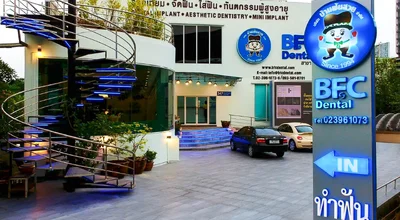
BFC Dental
Implant-focused Bangkok dental clinic founded in 1994, placing more than 4,600 implants a year
View hospital profile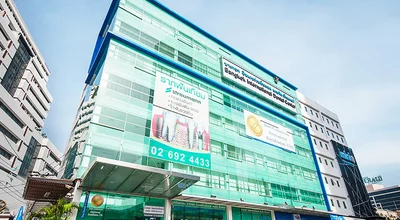
Bangkok International Dental Center
Thailand's first JCI-accredited dental center with more than 70 specialist dentists
View hospital profile
Get a Free Dental Quote in Minutes
Tell us what you need and we'll match you with the right specialist and return real clinic quotes.
- Itemised clinic quotes with no hidden fees
- Matched to a dentist experienced in your specific treatment
- Completely free, even if you decide not to go ahead


Rated 5 stars by our patients
The complete guide to Full Mouth Restoration Package in Thailand
Everything below is for readers who want the full detail: costs broken down, types and techniques, recovery, risks and safety, and planning your trip.
Specialists for Full Mouth Restoration in Thailand
A full mouth case requires a team, not a single dentist. Here is how our partner clinics are set up and what to look for.
Leading Clinics in Bangkok
Our partner clinics house prosthodontists, implantologists, endodontists, and periodontists under one roof. They have on-site cone beam CT, digital impression systems, and in-house or affiliated ceramic laboratories. This integration allows treatment phases to overlap efficiently rather than being scheduled months apart at separate practices.
Specialist Team Approach
Full mouth cases are led by a specialist prosthodontist who coordinates the overall plan. Implant surgery is handled by a dedicated implantologist. Root canal treatments by an endodontist. Gum procedures by a periodontist. Each specialist focuses on their area of expertise within a unified treatment plan. This produces better results than a single generalist attempting everything.
What to Look for
Ask about the team structure: who leads the plan, who performs the surgery, who handles the restorative work? Look for a clinic with in-house specialists rather than visiting consultants. Check what implant systems they use and verify they are premium brands. Ask to see full mouth cases in their portfolio, not just single-tooth restorations.
Understanding Your Results
Full mouth restoration produces the most dramatic change of any dental treatment. Here is what realistic outcomes look like.
Typical Full Mouth Restoration Results
Patients go from severely compromised dentition (multiple missing teeth, failing crowns, painful bite) to a fully functional, natural-looking set of teeth. The improvement is not just cosmetic; it fundamentally changes how you eat, speak, and feel. Implants provide permanent support, crowns restore individual teeth, and the overall bite is rebuilt for comfortable function.
What Results Can You Expect?
The treatment plan maps the projected outcome tooth by tooth. Your prosthodontist will explain what each phase achieves and what the final result will look and function like. Expect a fully functional bite that handles all foods, a natural appearance that suits your face, and stability that lasts 15–25 years with proper maintenance. The initial consultation is where realistic expectations are established.
Full Mouth Restoration Cost in Thailand
Average Cost of Full Mouth Restoration
A full mouth restoration in Thailand typically costs between $10,000 and $20,000 depending on the number of implants, type of restorations, and complexity of the case. Simpler cases with fewer implants sit at the lower end, while complex reconstructions involving bone grafting and premium zirconia prosthetics cost more.
Cost Breakdown
The total covers prosthodontist and implantologist fees, 3D CT imaging, digital treatment planning, all implants, crowns, bridges, laboratory fabrication, sedation, medications, and follow-up appointments during your stay. Implant costs and laboratory fees typically make up the largest portion. Every component is itemised in your quote.
What Affects the Price?
The number of implants is the biggest single cost driver. Crown material matters; zirconia costs more than porcelain-fused-to-metal. Bone grafting adds cost if jawbone volume is insufficient. The complexity of the case and number of specialist appointments affect the total. Using premium implant systems (Nobel Biocare, Straumann) costs more than off-brand implants but is worth the investment for long-term reliability.
Thailand vs International Price Comparison
Full mouth restoration in Thailand costs 50–70% less than equivalent treatment in the US ($30,000–$60,000), Australia (A$28,000–A$55,000), and UK (£25,000–£50,000). The savings on a full mouth case are among the largest in dental tourism because the absolute prices are high internationally. Premium implant systems and materials are identical.
Fixed Restoration vs Removable Dentures
A full set of removable dentures, or an implant-supported overdenture that clips onto a few implants, is the lower-cost way to replace a failing or missing dentition. A conventional denture rests on the gums and can be made in a matter of weeks without surgery, while an overdenture clips onto two to four implants for far more stability than a denture that sits loose. For some patients, especially where budget or bone volume is the deciding factor, this is a sensible route.
The trade-offs are real, though. A removable denture covers the palate, can slip when you eat or speak, transmits less bite force so harder foods stay difficult, and needs relining over the years as the jawbone shrinks beneath it, because nothing is stimulating the bone the way a tooth root would. Even a clip-on overdenture still comes out for cleaning and never feels quite like your own teeth. None of these options rebuilds individual teeth or preserves the bone the way a fixed reconstruction does.
A full mouth restoration package takes the opposite approach: implants anchored into the jaw with fixed crowns and bridges on top, so the result stays put, preserves bone, handles all foods, and is cleaned like natural teeth rather than taken out. Where the aim is a permanent, fixed rebuild of the whole mouth that looks and functions like real teeth, that is the route the rest of this page covers.
Full Mouth Restoration Configurations
No two full mouth cases are the same. The specific combination of treatments depends on how many teeth are missing, which can be saved, the condition of your jawbone, and your goals. Here are the most common configurations.
Implant and Crown Restoration
Missing teeth replaced with individual implants, salvageable teeth restored with porcelain crowns. This approach preserves as much natural tooth structure as possible while replacing what cannot be saved. Produces the most natural tooth-by-tooth result.
- Single implants combined with individual crowns for a natural result
- Preserves healthy roots to maintain jawbone density
- Suited for scattered missing and damaged teeth across both arches
- Best for: patients with a mix of missing and restorable teeth
Implant-Supported Bridge Restoration
Strategic implant placement supports fixed bridges spanning multiple missing teeth. Reduces the total implant count while still delivering a permanent fixed result. More efficient than replacing every tooth individually.
- Fewer implants needed compared to individual tooth replacement
- Fixed bridges cemented or screwed onto implants for a secure result
- Suited for patients with multiple gaps or sections of missing teeth
- Best for: cases with several consecutive missing teeth in one area
Combination Restoration
The most comprehensive approach, combining implants, crowns, bridges, root canal treatments, and gum procedures to address every dental concern in a single plan. Coordinated across multiple specialists (prosthodontist, implantologist, endodontist) under one roof.
- Every tooth in both arches addressed with the most appropriate treatment
- May include bone grafting, gum treatment, or endodontic work as needed
- Coordinated across multiple dental specialties for integrated results
- Best for: complex multi-faceted cases needing the full range of restorative options
All-on-4 / All-on-6 Full-Arch Restoration
Where an entire arch is missing or beyond saving, a full fixed bridge is anchored on just four or six implants per jaw rather than replacing every tooth with its own implant. The implants at the back are angled to make the most of available bone, which often avoids grafting and means a fixed set of teeth can be rebuilt with fewer implants. It is the standard approach when one or both arches are fully edentulous rather than partly restorable.
- A complete fixed arch supported on four (All-on-4) or six (All-on-6) implants
- Angled rear implants often avoid the need for bone grafting
- Permanent and fixed, unlike a removable denture or overdenture
- Best for: a fully missing or unsalvageable upper or lower arch
Full Mouth Restoration Process
The process follows a structured sequence from diagnostic assessment through to final restoration. Here is how each stage works.
3D Diagnostic Planning
Cone beam CT imaging, digital impressions, and clinical examination produce a complete picture of your dental and skeletal anatomy. The prosthodontist maps out which teeth can be saved, where implants will go, and how the final bite will function. Everything is planned digitally before any work begins.
- Full 3D imaging of teeth, bone, nerves, and sinuses
- Digital treatment plan maps every procedure in sequence
- Identifies bone quality for implant placement accuracy
- Best for: the foundation of every full mouth case; no shortcuts here
Surgical Phase
Extractions of unsalvageable teeth, implant placement, and any bone grafting or gum procedures are completed during the surgical phase. Temporary restorations or immediate provisionals are placed so you leave each session with functional teeth. Sedation is available for patient comfort.
- Extractions, implant placement, and bone procedures completed efficiently
- Temporary restorations placed so function is maintained throughout
- Sedation available for comfort during longer surgical sessions
- Best for: the treatment phase where the structural foundation is built
Restorative Phase
Crowns, bridges, and final prosthetics are fabricated in the laboratory and fitted over multiple appointments. Each restoration is individually adjusted for fit, bite, and colour. The final bite is refined and verified using articulation analysis.
- Laboratory-fabricated restorations fitted and adjusted individually
- Bite refined through occlusal analysis for comfortable function
- Colour and shape verified against the original treatment plan
- Best for: the completion phase where the plan becomes reality
Full Mouth Restoration Recovery Timeline
Days 1–3
Swelling and mild discomfort at implant and extraction sites. Pain medication and antibiotics are prescribed. Stick to soft foods and avoid hot drinks. Rest and use ice packs. Your care coordinator checks in daily.
Days 4–7
Swelling subsides and discomfort decreases noticeably. Temporary restorations are functioning so you can eat soft solids. Follow-up appointments for progress checks, suture removal, and fitting adjustments.
Weeks 2–4
Gum tissue heals around the implant and extraction sites. You continue on the temporary restorations placed during surgery; permanent implant-supported crowns and bridges are not fitted yet, as the implants still need to integrate. Final check-ups before departure confirm everything is tracking correctly.
Months 3–6
Implants fully integrate with the jawbone through osseointegration1. Any remaining permanent restorations are fitted during a short return visit or coordinated with your dentist at home. Your restored dentition is fully functional.
When Can You Fly Home?
Most patients fly home 10–14 days after treatment begins, once the initial surgical healing is underway and temporary restorations are in place. There are no flying restrictions. Your prosthodontist confirms you are safe to travel at your final check-up. A return visit for final restorations is typically needed after 3–6 months.
When Can You Eat Normally?
Soft foods for the first 1–2 weeks while surgical sites heal. Temporary restorations let you eat progressively more solid foods from week 2 onwards. Once permanent restorations are in place and fully healed, you can eat everything you could with natural teeth. Avoid extremely hard foods that could damage crowns or bridges.
Can You Drive After Treatment?
After appointments under local anaesthetic alone you can travel as normal. On any day you have sedation for the surgical sessions, do not drive or operate vehicles for the rest of that day, as it leaves you drowsy and slows reactions; your coordinator arranges transfers between the clinic and your accommodation for those visits. You are clear to drive again once any sedation has fully worn off, usually by the next day.
What About the Second Visit?
If your plan includes implants with a two-stage protocol, you return after 3–6 months for permanent implant-supported restorations. This visit typically takes 5–7 days. The temporary restorations function well during the healing period. If a return trip is not possible, we coordinate the final stage with your dentist at home.
Anaesthesia & Sedation for Full Mouth Restoration
Full mouth restoration is carried out under local anaesthetic, so you stay awake throughout but feel no pain. The area being worked on is fully numbed before any extraction, implant, or crown preparation begins, and the dentist tops it up as needed across the session. Because a full mouth case involves longer appointments than a single filling, your comfort is checked regularly as the work moves around the mouth.
For the more involved surgical sessions, such as multiple extractions or implant placement, sedation is available on top of the local anaesthetic for anxious patients or anyone who simply prefers to be more relaxed. This keeps you calm and drowsy while still awake and breathing on your own, and your dentist and team decide with you whether it is worth using based on the day's procedures and how you feel about treatment.
Before any surgery you have a full assessment, including your 3D CT scan, a medication review, and any blood work the clinic needs. During treatment you feel pressure and movement but not pain. Afterwards, discomfort around the implant and extraction sites is usually mild to moderate for the first few days and is well controlled with the medication your dentist prescribes, so most patients find the recovery more manageable than they expected.
Risks and Safety of Full Mouth Restoration
Full mouth restorations involve well-established procedures with strong individual safety records. When coordinated by experienced specialists using advanced planning, the combined risk is manageable.
- Post-operative swelling and discomfort (normal healing response)
- Implant site infection (rare with proper protocols)
- Temporary numbness near surgical sites
- Implant integration failure (uncommon)1
- Sinus perforation or sinus communication when placing upper-arch implants (planned around with 3D imaging and angled implants)
- Inferior alveolar nerve irritation or injury with lower-arch implants, causing temporary or, rarely, lasting numbness of the lip or chin
- Bite adjustment period as you adapt to new restorations
- Tooth sensitivity under new crowns (usually temporary)
Thorough diagnostic planning using 3D imaging is the single most important risk-reduction step. It identifies potential complications before they happen and allows the treatment sequence to be planned around them.
Is Full Mouth Restoration Safe in Thailand?
Yes. Each procedure in a full mouth case (implant placement, crown preparation, bridge fabrication) is a routine procedure at accredited Thai dental clinics. Our partner clinics coordinate these under one roof with specialist teams who work together daily. The planning infrastructure (3D CT, digital impressions, guided surgery) reduces surgical risk and improves precision.
How to Reduce Risks
Choose an accredited clinic with a multi-specialist team. Confirm the implant system used is a premium brand with published long-term data (Nobel Biocare, Straumann). Follow pre-treatment instructions: stop smoking, disclose all medications, get blood work done. After treatment, follow the maintenance schedule precisely. Most complications from full mouth work are avoidable with proper planning and patient compliance.
What If a Second Visit Is Needed?
Many full mouth cases require a second visit after 3–6 months for the final implant-supported restorations once osseointegration is complete. This is a planned part of the treatment, not a complication. Temporary restorations placed during your first visit function well in the interim. If a return trip is not feasible, final restorations can be coordinated with your dentist at home using the records we provide.
Planning Your Full Mouth Restoration Trip to Thailand
A full mouth case requires the most planning of any dental trip. Here is how to organise it efficiently.
How Long to Stay in Thailand
Plan for 10–14 days for the first visit. This covers 3D imaging, treatment planning, surgical procedures, temporary restorations, and follow-up appointments. A second visit of 5–7 days is typically needed after 3–6 months for final implant-supported restorations. Your coordinator maps out both visits before you book flights.
What Is Included in Your Package
Your care coordinator manages the entire process: scheduling across multiple specialists, clinic transfers, medication management, and recovery support. The package quote covers all specialist fees, 3D imaging, implants, crowns, bridges, laboratory fabrication, sedation, medications, and follow-up appointments. Flights and accommodation are separate.
Preparing for Your Trip
Get a recent set of dental X-rays or a CBCT scan if available; this helps the team begin planning before you arrive. Stop smoking at least 4 weeks before treatment. Disclose all medications and medical conditions. Arrange comfortable accommodation near the clinic for easy access to daily appointments. Your coordinator provides a full preparation checklist.
Related Procedures
Other procedures that address similar goals or conditions, in case one of them is a closer fit for you.
Planning your treatment in Thailand
Independent guides to help you weigh the decision, before you commit to anything.
Common Questions About Full Mouth Restoration in Thailand
Everything you need to know before your treatment

Medical References
Keep researching with AI
Open this guide in your AI assistant to dig deeper and ask the questions it didn't answer.
Opens in a new tab with this guide already loaded.
Medical disclaimer: This information is for educational purposes only and does not replace professional dental advice. Individual results, recovery times, and suitability vary. Always consult a qualified dentist before making decisions about treatment.
Ready to Get Started?
Speak with our care coordinators for a free, no-obligation consultation and personalised quote for your full mouth restoration.
Speak to Our Team