Smile Makeover in Thailand Your guide to cost, top dentists & hospitals
Not one fix but a plan, with everything coordinated so your smile works as a whole.
What Is Smile Makeover?
Also known as: Smile Transformation · Comprehensive Aesthetic Rehabilitation
A smile makeover is a combined treatment plan that improves how your smile looks by coordinating several cosmetic and restorative procedures together. It can brighten colour, reshape teeth, close gaps, rebuild damaged or missing teeth and balance the gum line, drawing on veneers, whitening, gum contouring, crowns, bridges, implants and bonding. The mix depends on what your teeth, gums and bite need, and the steps are sequenced so each builds on the last. Most plans finish within 10 to 14 days.
Your smile is the part of you others see most, so wanting it to feel right, not just fixed, is normal. This is a series of steps mapped to your mouth, not a single appointment. Nothing irreversible happens until you have seen and agreed the design in a preview.
A good makeover aims for a smile that looks like yours, cohesive and natural rather than uniform and obvious. At consultation, with your photos and X-rays, your dentist sets out honestly what is achievable in your case.
It can address a range of concerns, including:
Am I a Good Candidate for Smile Makeover?
Because the plan adapts to your mouth, candidacy is broader than any single procedure; what matters is foundation, commitment and motivation.
Cosmetic work is never placed over active problems, so the state of your mouth sets the starting point.
Decay and gum disease treated first: Either at home before you fly or built into the start of the plan, since no veneer or crown goes over active disease.
Failing old dentistry addressed: Aged, worn or mismatched restorations are replaced as part of the plan rather than worked around.
Orthodontics sequenced honestly: Mild crowding can be disguised with veneers, but significant misalignment is better corrected with braces first, and future orthodontic plans would undo the new positioning.
A makeover is a coordinated multi-procedure plan, and suitability includes having the time and discipline it demands.
10-14 days minimum in Thailand: Diagnostics, sequenced procedures, lab fabrication and follow-up checks all need to fit inside the trip.
A night guard if you grind: Heavy grinders must commit to protecting the new restorations, with no exceptions.
Smoking around surgical stages: If implants or gum surgery are in the plan, you will be asked to stop, since smoking slows gum healing and raises implant failure risk4.
A second visit if implants are included: Permanent implant crowns are fitted three to six months later.
The aim is a cohesive, natural result agreed in advance, not isolated perfection on every tooth.
Preview before commitment: Digital smile design and a physical mock-up let you see and approve the plan before anything irreversible happens.
Coordinated improvement, not perfection: Expecting absolute perfection rather than a realistic, well-sequenced improvement is a caution flag dentists take seriously.
Component lifespans vary: Veneers and crowns last 10-15 years1, implants can last decades, and whitening needs topping up periodically.
A makeover changes something people see every day, so motivation gets an honest conversation at consultation.
For yourself: Feeling held back by your smile in social or professional settings is the kind of grounded motivation that predicts satisfaction.
Clear goals: Patients who arrive knowing their priorities get the best results, because the consultation can focus on what actually matters to you.
A plan, not an impulse: You should be comfortable with several procedures coordinated together over two weeks, rather than expecting a single magic appointment.
Who is not suitable for smile makeover?
- Untreated decay or gum disease you are unwilling to have treated as part of the plan
- Heavy grinding with no commitment to a night guard
- Planned future orthodontic work that would shift the new restorations
- Smoking you are not prepared to stop around any surgical stages
- Current or past bisphosphonate or antiresorptive drug use, which raises implant failure and jaw healing risk
- An active TMJ or TMD disorder that is not yet stabilised, since it compromises bite and occlusion planning
- Wanting implants but unwilling to have the bone grafting needed where alveolar bone is insufficient
- An immunocompromising condition or poorly controlled diabetes that impairs implant and gum healing
- Expectations of absolute perfection rather than a coordinated, realistic improvement
Pricing
How Much Will Smile Makeover Cost in Thailand?
What smile makeover costs at accredited hospitals in Thailand, and what your final quote depends on.
Get your exact price
Tell us what you're considering and we'll send a personalised quote from accredited clinics within 24 hours.
Get my free quoteTypical prices in Thailand
Typical ranges based on recent hospital quotes. Your exact price depends on the hospital and how complex your case is, and is confirmed at your teleconsultation.
Smile Makeover
The number of teeth in the plan drives the price, so a few front teeth polished up and a rebuild of both arches are very different quotes.
| Conservative makeover, whitening and bonding Tidies up a few front teeth without cutting them down | $500 to $1,500 ฿17,000 to ฿51,000 |
| Veneer-centred makeover, 6 to 10 veneers The most popular plan, covering the teeth that show when you smile | $2,000 to $4,000 ฿68,000 to ฿136,000 |
| Full-mouth rehabilitation, both arches Implants, crowns and veneers where teeth are missing or heavily worn | $4,000 to $8,000 ฿136,000 to ฿272,000 |
Get your exact price
Tell us what you're considering and we'll send a personalised quote from accredited clinics within 24 hours.
Clinics Trusted for Smile Makeover
From internationally accredited flagships to dedicated specialist clinics, these are the kinds of facilities where international patients have this procedure.
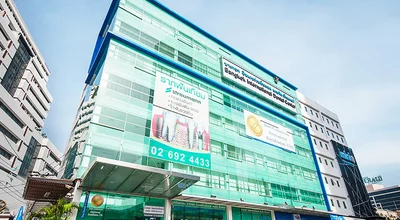
Bangkok International Dental Center
Thailand's first JCI-accredited dental center with more than 70 specialist dentists
View hospital profile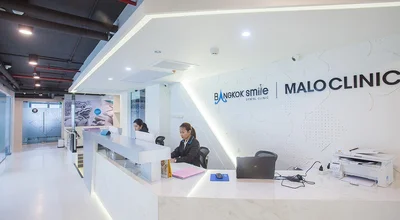
Bangkok Smile Dental Clinic
Multi-branch dental group founded in 2003 and the official Thai partner of the Malo All-on-4 network
View hospital profile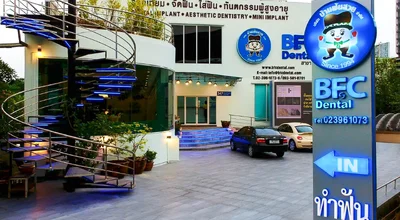
BFC Dental
Implant-focused Bangkok dental clinic founded in 1994, placing more than 4,600 implants a year
View hospital profile
Get a Free Dental Quote in Minutes
Tell us what you need and we'll match you with the right specialist and return real clinic quotes.
- Itemised clinic quotes with no hidden fees
- Matched to a dentist experienced in your specific treatment
- Completely free, even if you decide not to go ahead


Rated 5 stars by our patients
The complete guide to Smile Makeover in Thailand
Everything below is for readers who want the full detail: costs broken down, types and techniques, recovery, risks and safety, and planning your trip.
Smile Makeover Dentists & Clinics in Thailand
A smile makeover requires a clinic that can coordinate multiple procedures and specialists. Here is what sets the right clinic apart.
Leading Dental Clinics in Bangkok
Our partner clinics have multi-chair facilities with cosmetic dentists, periodontists, prosthodontists and implantologists on the same team. They run digital smile design, in-house scanning and relationships with top dental laboratories. These clinics treat complex multi-procedure international cases as their standard workload, not their exception.
Experienced Makeover Dentists
The lead cosmetic dentist coordinates your overall plan, but individual components may be handled by specialists: a periodontist for gum work, an implantologist for implant placement. This team model produces better outcomes than a single dentist attempting everything alone. Our partner clinics operate this way as standard.
What to Look for in a Makeover Clinic
Ask whether the clinic has in-house specialists or refers out. Check for digital smile design capability. Review before-and-after portfolios of completed multi-procedure makeovers, not just individual veneer cases. Ask how they handle scheduling for international patients; a clinic experienced with dental tourists will have a clear, efficient process.
Understanding Your Results
Smile makeover results combine the impact of multiple individual improvements. Here is what a realistic transformation looks like.
Typical Smile Makeover Results
The combined effect of veneers, whitening, gum contouring and any restorative work is a smile that looks completely different from the starting point. Colour is uniform, proportions are balanced, gaps are closed, damaged teeth are rebuilt and the gum line frames everything evenly. The individual procedures each contribute, but the impact of the whole is greater than the sum of the parts.
What Results Can You Expect?
A well-planned makeover produces a result that looks cohesive and intentional. This is not about making every tooth perfect in isolation; it is about making the smile work as a unit. Your consultation is where expectations are aligned. The digital smile design shows you what is achievable, the mock-up lets you test it, and the final treatment delivers what was agreed.
Smile Makeover Cost in Thailand
Average Cost of a Smile Makeover
A smile makeover in Thailand typically costs $500–$8,000 depending on the procedures included. A conservative makeover (whitening plus bonding) sits at the lower end, around $500–$1,500. A veneer-centred makeover with gum contouring runs $2,000–$4,000. Plans involving implants and full-mouth rehabilitation run higher, from $4,000 upward. Every quote is itemised so you see exactly what each component costs.
Cost Breakdown
Your total is the sum of individual procedures: veneers, whitening, gum contouring, implants, crowns, lab fabrication and follow-up visits. Each procedure is quoted separately and itemised clearly. The coordination and care management is included in our service at no additional cost to you. There are no hidden bundling fees.
What Affects the Price?
The number and complexity of procedures included are the main drivers. A plan with 8 E-Max veneers, gum contouring and whitening costs more than one with 4 composite veneers and bonding. Material choice matters: E-Max costs more than standard porcelain, which costs more than composite. If implants are involved, the implant brand and whether bone grafting is needed affect the total.
Thailand vs International Price Comparison
A smile makeover in Thailand costs 60–80% less than the same combination of procedures in the US ($6,000–$12,000), Australia (A$5,600–A$11,000), and UK (£5,000–£10,000). The savings compound with complexity: the more procedures involved, the greater the total saving compared to Western pricing.
Conservative vs Full Smile Makeover
If your teeth are mostly sound and the issue is colour, a few chips or small gaps, a conservative route can get you a long way without reshaping much. Professional whitening lifts the overall shade, and composite bonding repairs chips, closes minor gaps and reshapes edges by adding material to the tooth rather than cutting it down. It is reversible, cheaper, and keeps your natural enamel intact, which is the single biggest advantage of staying conservative.
The trade-offs are durability and reach. Whitening is not permanent and fades over time, needing topping up periodically3; bonding stains over time and chips more easily than porcelain, typically needing replacement within three to ten years2. Neither can correct worn-down or broken teeth, replace missing teeth, fix significant misalignment, or deliver the uniform, lasting result of porcelain across a whole smile. Pushed beyond what they are designed for, they end up looking patched rather than transformed.
A full makeover, drawing on veneers, crowns, bridges or implants, is the route when the goal is a complete, cohesive change that lasts: rebuilding damaged teeth, replacing missing ones, evening out colour and proportion across the whole smile, and holding that result for ten to fifteen years or more. A good plan still preserves as much tooth structure as the case allows, which is what the rest of this page covers.
Types of Smile Makeover
Every smile makeover is different because every mouth is different. The plan is built around your specific problems and goals, not a template. These are the most common configurations.
Veneer-Centred Makeover
The most common approach. Porcelain or E-Max veneers on the upper front teeth (typically 6–10), often combined with professional whitening on the remaining teeth and gum contouring to frame the result. This covers most patients who want a dramatic but conservative transformation.
- Veneers correct shape, colour and minor alignment in one step
- Whitening matches the untreated teeth to the new veneer shade
- Gum contouring balances the gum line for even proportions
- Best for: patients with mostly intact teeth who want a complete aesthetic upgrade
Full-Mouth Rehabilitation
A comprehensive plan for patients with extensive damage, wear, missing teeth or bite problems. This may involve implants, crowns, bridges and veneers across both arches, restoring full function alongside aesthetics. More complex and longer but addresses everything.
- Implants replace missing teeth permanently
- Crowns and bridges restore damaged or broken-down teeth
- Veneers and bonding refine the visible surfaces for a uniform result
- Best for: patients with significant dental problems across both arches
Conservative Makeover
For patients who want a meaningful improvement without extensive treatment. Typically combines whitening, dental bonding on a few key teeth and minor gum reshaping. Achievable in fewer appointments and at a lower cost than a full veneer makeover.
- Whitening delivers an overall brighter baseline shade
- Composite bonding repairs chips, closes gaps and smooths edges
- Minimal gum contouring balances proportions where needed
- Best for: patients with good teeth who need targeted fixes rather than a full overhaul
Smile Makeover Techniques
The technical approach depends on the procedures included. Here are the main components and how they fit together.
Digital Smile Design Planning
Most smile makeovers in Thailand start with a digital smile design session. Photography, video and 3D scans of your teeth, gums and face are analysed, and a digital blueprint is created showing the proposed result. A physical mock-up lets you preview the outcome before treatment begins.
- Visualise your result on screen and in a trial mock-up before committing
- Coordinates proportions across veneers, gum line and facial features
- Serves as the lab's blueprint for consistent, predictable fabrication
- Best for: any makeover involving four or more veneers or multiple procedure types
Phased Treatment Sequencing
Procedures are ordered for optimal results. Gum contouring comes first to establish the right proportions. Then teeth are whitened to set the baseline shade. Veneers and crowns are prepared and bonded last, colour-matched to the whitened teeth within the corrected gum frame. Sequencing matters more than most patients realise.
- Each step builds on the previous one for a cohesive final result
- Lab work is scheduled in parallel with healing from earlier procedures
- Reduces total trip time compared to doing treatments in isolation
- Best for: all multi-procedure makeovers where sequence affects the outcome
Same-Trip Implant Integration
If implants are part of the plan, the implant placement and any bone grafting can be done during the same trip as the cosmetic work. Temporary restorations fill the gaps while implants integrate. A second short visit three to six months later finishes the implant crowns.
- Implant placement coordinated with the rest of the makeover timeline
- Temporary teeth fitted so you never leave Thailand with visible gaps
- Final implant crowns placed on a follow-up visit once integration is confirmed
- Best for: patients missing teeth who want implants incorporated into their makeover
Minimal-Prep & No-Prep Veneers
Where the teeth and the planned design allow, veneers can be bonded with little or no removal of natural enamel rather than reducing the tooth first. Keeping enamel intact means the bond is stronger and the result is often reversible, which is one of the clearest ways to avoid the over-prepared "ground-down" look. It suits the right case rather than every smile, and your dentist decides at the design stage whether your teeth allow it.
- Preserves natural enamel for a stronger, often reversible result
- Avoids the bulky, over-prepared look from aggressive tooth reduction
- Depends on tooth position and the design, so not suitable for every case
- Best for: patients with well-aligned teeth wanting the most conservative veneer option
Layered vs Monolithic Ceramic
Veneers and crowns can be made from a single solid block of ceramic (monolithic) or built up in layers of porcelain over a core (layered). Monolithic restorations like E-Max are strong and resist chipping, which suits back teeth and heavy bites; layered porcelain gives the ceramist more control over translucency and shade, which often reads as more lifelike on front teeth. Most makeovers use a mix, matched to where each restoration sits.
- Monolithic ceramic is stronger and more chip-resistant for the bite
- Layered porcelain offers finer translucency and shading for front teeth
- Many plans combine both, choosing by tooth position and load
- Best for: any makeover where strength and natural appearance both matter
Smile Makeover Recovery Timeline
Days 1–3
Recovery depends on which procedures are included. Veneer bonding and whitening produce mild sensitivity. Gum contouring adds light soreness. Implant placement involves localised swelling. Rest, soft foods and standard pain relief handle all of it. Your coordinator checks in daily.
Days 4–7
Most patients feel comfortable and are already enjoying the transformation. Gum tissue continues healing, sensitivity from veneer bonding resolves, and any implant site swelling reduces. Follow dietary guidance, especially if gum work or implants were performed.
Weeks 1–2
Follow-up appointments check healing, adjust the bite and complete any final procedures. If phased treatment was used, the last procedures may be done during this period. Most patients are ready to fly home by day 10–14 with their completed smile.
Weeks 3–6
Healing is complete for most procedures and you resume all normal activities without restriction. Veneers feel entirely natural and any implant sites are progressing through osseointegration. Gum tissue is still maturing and the contoured gum line settles to its final stable shape by around three months.
When Can You Fly After a Smile Makeover?
Most patients fly home 10–14 days after their first appointment. By this point, veneers are bonded, gum contouring has healed sufficiently, and any surgical sites have been checked. Flying has no effect on bonded restorations or healing gums. If implants were placed, the temporary restorations are secure for travel.
When Can You Return to Normal Activities?
Desk work and social activities can resume within a few days of completing treatment. Physical exercise should wait one to two weeks if gum surgery or implant placement was involved. Avoid contact sports for at least four weeks. The main practical constraint during recovery is diet: soft foods for the first few days, then gradual return to normal eating.
How Long Until You See Final Results?
Veneer and bonding results are visible immediately. Whitening results stabilise within a week. Gum contouring keeps maturing for four to eight weeks, with the gum line reaching its final stable contour by around three months. Implants look complete once temporary crowns are placed but reach their final form when permanent crowns are fitted at a follow-up visit three to six months later.
Anaesthesia for a Smile Makeover
A smile makeover is done under local anaesthetic, so you stay awake and aware throughout while the area being worked on is fully numbed. Each appointment, whether it is preparing teeth for veneers, contouring the gums, or placing an implant, begins with the dentist numbing only the part of the mouth in use. You feel pressure and movement but no pain, and because the makeover is spread across several visits, you are never numbed for longer than a single procedure needs.
Because a makeover stacks multiple treatments together, some appointments are longer than a routine dental visit. If that makes you anxious, conscious sedation can be arranged for the longer sessions, leaving you relaxed and drowsy but still awake and breathing on your own. Whether sedation suits you is a decision you make with the dental team, based on how you feel and your medical history, which is reviewed when your plan is drawn up.
You feel nothing during the work itself. Afterwards, any discomfort is mild and depends on what was done that day: tooth sensitivity after veneer preparation or whitening, light soreness if the gums were reshaped, or a little tenderness around an implant site. All of it is short-lived and managed comfortably with standard pain relief your dentist recommends.
Risks and Safety of Smile Makeover
A smile makeover combines multiple procedures, each with its own risk profile. When planned and executed by an experienced dental team, the overall risk is low and the outcomes are predictable.
- Veneer or crown debonding, where a restoration loosens or comes off and needs re-bonding
- Porcelain fracture or chipping, more likely on front teeth or in heavy bites without a night guard
- Tooth sensitivity, pulpitis or, rarely, irreversible nerve damage from tooth preparation, which can need root canal treatment
- Implant osseointegration failure, where an implant does not fuse with the bone and must be removed and replaced
- Gum recession after laser or surgical contouring, which can expose a restoration margin
- Infection at a surgical site such as an implant or grafted area (uncommon)
- Bite changes requiring adjustment as multiple restorations settle
Comprehensive diagnostics before treatment begins (X-rays, photographs, bite analysis and digital smile design) identify potential issues before any work starts. Risks specific to each component procedure are discussed individually during consultation so there are no surprises.
Is a Smile Makeover Safe in Thailand?
Yes. Our partner clinics are accredited, equipped for complex multi-procedure plans and staffed by specialists across cosmetic dentistry, periodontics and prosthodontics. The team approach reduces risk because each procedure is handled by the specialist best qualified for that component, not a single dentist doing everything.
How to Reduce Risks Across Multiple Procedures
Thorough diagnostics before any work starts are the single biggest risk-reduction measure. X-rays, bite analysis, gum assessment and digital smile design catch problems before they become complications. Procedure sequencing also matters: doing things in the right order prevents downstream issues. Clear communication about expectations at every stage keeps the plan on track.
What If Something Needs Adjusting After You Return Home?
Minor adjustments like bite refinement or polish touch-ups can be done by any competent cosmetic dentist at home. For anything more significant, your care coordinator facilitates communication with the treating dentist in Thailand. If a return visit is needed, it is coordinated as efficiently as possible. Most issues are caught and resolved during the follow-up appointments before departure.
Planning Your Trip to Thailand for a Smile Makeover
A smile makeover is the most complex dental trip to plan, but your coordinator handles the logistics. Here is what to expect.
How Long to Stay in Thailand
Plan for 10–14 days. This covers the initial diagnostic workup and digital smile design (day one to two), sequential treatments including preparation appointments and lab fabrication time, and follow-up checks before departure. Some simpler makeovers can be completed in 7–10 days. Plans involving implants may require a second short visit three to six months later.
What Is Included in a Dental Trip
Your coordinator schedules all appointments, sequences treatments, arranges clinic transfers and manages communication between you and the dental team. The treatment quote covers every procedure in your plan: consultations, diagnostics, all procedures, lab fabrication, temporary restorations and follow-up visits. Flights and hotel are arranged separately, with coordinator assistance available.
Maximising Value During Your Trip
Lab fabrication days are free time. While the ceramist builds your veneers or crowns, you can explore Bangkok, visit the islands or simply relax by the hotel pool. Your coordinator keeps you updated on lab progress and confirms your next appointment. Some patients bring a companion who enjoys the holiday while the dental work progresses.
Related Procedures
Other procedures that address similar goals or conditions, in case one of them is a closer fit for you.
Planning your treatment in Thailand
Independent guides to help you weigh the decision, before you commit to anything.
Common Questions About Smile Makeover
Everything you need to know before your treatment

Medical References
Keep researching with AI
Open this guide in your AI assistant to dig deeper and ask the questions it didn't answer.
Opens in a new tab with this guide already loaded.
Medical disclaimer: This information is for educational purposes only and does not replace professional dental advice. Individual results, recovery times, and suitability vary. Always consult a qualified dentist before making decisions about treatment.
Ready to Get Started?
Speak with our care coordinators for a free, no-obligation consultation and personalised quote.
Speak to Our Team