How to Choose a Safe Dental Clinic Abroad
The website sells you smiles, reviews, and a price. What actually keeps you safe is less visible: the dentist's training, the clinic's sterilisation, and the lab behind your new teeth.
Published 9 April 2026
A dental clinic's website is built around the result: bright smiles, five-star reviews, and a price that makes the trip look easy. None of it tells you whether the treatment itself will be safe and well made.
That matters, because a lot of dental work, crowns, veneers, implants, is meant to last for years. Getting it right depends on things you cannot see in a photo: who is treating you, how clean the clinic really is, and the quality of the lab and materials behind your new teeth.
The reassuring part is that all of it is checkable. This guide covers what to look for, and what the marketing leaves out.
The dentist matters more than the photos
Start with the person, not the clinic's gallery.
You want a dentist who is properly qualified and registered, and, for anything beyond routine work, one with specialist training in the procedure you need. Implants, complex cosmetic work, and oral surgery are not all the same skill. A dentist who places implants every week is a different proposition from a generalist who does a few a year.
Ask what they are qualified in, where they trained, and how often they do your specific treatment. Registration with the Thai Dental Council is the basic floor.
Sterilisation and cross-infection control
This is the dental safety basic that the brochure never mentions, and the one worth asking about directly.
A good clinic sterilises instruments properly in an autoclave, uses single-use items where it should, and follows clear cross-infection procedures. These protect you from bloodborne infections, and a clinic that takes them seriously will be glad to explain them.
If a question about sterilisation is brushed off, treat that as telling.
The lab and the materials
Here is the part unique to dentistry. Your crowns, veneers, and implants are only as good as the laboratory that makes them and the materials they are made from.
Implants in particular vary enormously. A well-known, well-documented implant system can be serviced and repaired almost anywhere in the world; a cheap, unbranded one often cannot, which becomes a problem if you ever need work on it at home. Ask which implant system and which materials the clinic uses, and whether the lab is in-house or a trusted partner.
Cheaper materials are one of the quiet ways a low price is reached. It is worth knowing what you are actually getting.
Proper diagnostics
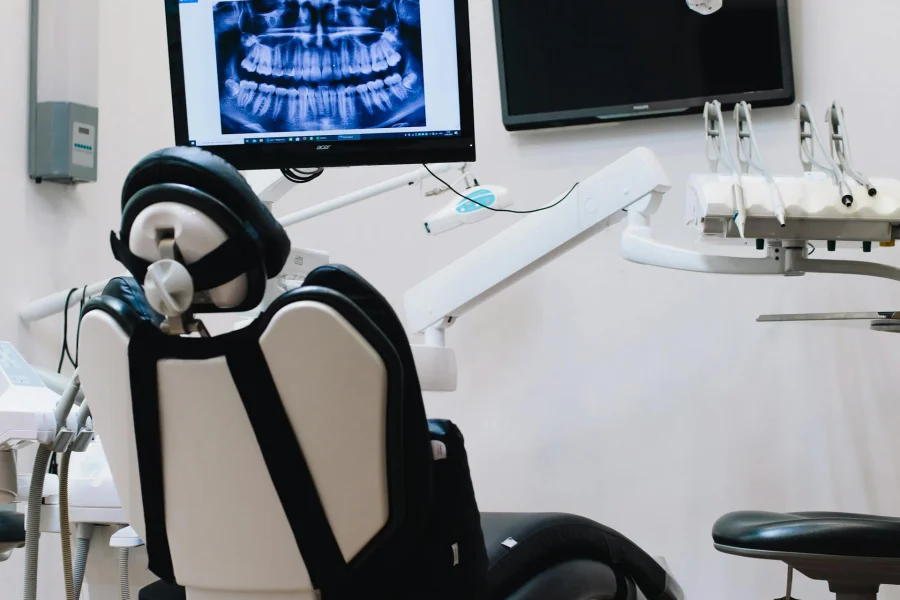
Good dentistry is planned, not improvised. For implants and complex work, that means proper imaging, including 3D scans, so the dentist can see what they are working with before they start.
A clinic that plans your treatment from real diagnostics, rather than a quick look, is one taking the work seriously.
Accreditation, in its place
Accreditation and recognised standards are a useful signal that a clinic meets audited benchmarks for hygiene, equipment, and staffing. Hospital-based dental units may hold international accreditation such as JCI; standalone clinics are held to national standards.
Treat it as a foundation rather than the whole story. It tells you the basics are sound, which frees you to focus on the dentist, the lab, and the plan.
Why smile galleries and reviews are not safety signals
It is worth being blunt. A wall of dazzling before-and-afters shows you the results a clinic chooses to display. It tells you nothing about its sterilisation, the materials it uses, or whether the work lasts.
Reviews are similar: selected, mostly happy, and quiet about the rare case that goes wrong. Use them for a feel, never as proof of safety.
If a crown or implant fails
Even good dental work can occasionally fail or need adjusting. What separates a trustworthy clinic is planning for it.
Ask whether there is a guarantee or warranty on the work, for how long, and what happens if a crown, veneer, or implant has a problem once you are home. A clear answer is reassuring. A vague one is a gap you will feel later.
How to verify it yourself
Most of this is checkable before you pay anything.
- Confirm the dentist's registration with the Thai Dental Council, and their training in your specific procedure.
- Ask, in writing, about sterilisation and cross-infection procedures.
- Ask which implant system and materials they use, and about the lab behind your work.
- Confirm any guarantee on the work, and what happens if something fails later.
A clinic that answers these plainly is the kind you want. Reluctance is your answer.
Questions worth asking before you book
- What are you qualified in, and how often do you do my specific treatment?
- How are instruments sterilised, and what are your cross-infection procedures?
- Which implant system or materials will you use, and where is the lab?
- Is there a guarantee on the work, and for how long?
- What happens if a crown, veneer, or implant has a problem after I am home?
A quick safety checklist
- A dentist registered with the Thai Dental Council, trained in your procedure.
- Clear sterilisation and cross-infection procedures.
- A known implant system and good materials, with a trusted lab.
- Proper diagnostics, including 3D imaging for implants.
- A guarantee on the work, and a plan if something fails.
Frequently asked questions
How do I know a Thai dental clinic is safe?
Check the dentist's registration and training, ask directly about sterilisation, and confirm the implant system, materials, and any guarantee. The clinic's photos and reviews are not safety signals.
Are dental instruments properly sterilised in Thailand?
At a good clinic, yes, with autoclaves and clear cross-infection procedures. It is a fair question to ask outright, and a trustworthy clinic will explain its process.
Does the implant brand matter?
Yes. A well-documented implant system can be serviced almost anywhere, while a cheap, unbranded one may be hard to repair at home. Ask which system the clinic uses.
Is accreditation enough on its own?
It is necessary but not sufficient. It confirms the basics, but you still need the right dentist, good materials, and a clear plan for your treatment.
What if my crown or implant fails after I get home?
Ask before you book. A good clinic offers a guarantee and a clear plan for problems, and uses materials your own dentist can work with.
How Thailand Smile helps
We start from the things that actually keep dental work safe and lasting: a registered, well-trained dentist, a clinic with proper sterilisation, and good materials from a trusted lab. We are glad to show you how a clinic checks out rather than ask you to trust the gallery.
If you would like help confirming a clinic's credentials, or matching your treatment to the right dentist, run the clinic past us and we will check it out with you.

Related Articles

The Real Risks of Dental Treatment Abroad, and How to Reduce Them
Every treatment carries risk, and dental work abroad adds a few specific ones. N…

Aftercare and Flying Home After Dental Work
Good news first: most dental work lets you fly home quickly. The exceptions are …

Does Insurance Cover Dental Treatment Abroad?
There is a quiet assumption that insurance has your back. For dental treatment a…

When Dental Treatment Abroad Isn't Right for You
Most of these guides help you do it well. This one is about when not to, or not …
Ready to Get Started?
Speak with our care coordinators for a free, no-obligation consultation and personalised quote.
Get a Free Quote