Clear Aligners in Thailand Your guide to cost, top dentists & hospitals
Straight teeth, no brackets, no wires. Just transparent trays that do the work quietly while you get on with life.
What Are Clear Aligners?
Also known as: Clear Braces · Thermoplastic Aligner Therapy
Clear aligners are a set of removable transparent trays that straighten teeth by applying gentle, planned pressure in sequence. Each tray is made from medical-grade thermoplastic and shifts the teeth a fraction of a millimetre, so you work through the set, usually changing trays every 7 to 14 days, until they reach their planned position. They treat mild to moderate crowding, spacing, and bite irregularities. Well-known systems include ClearCorrect, Angel Align, and quality lab-produced aligners. (Our partner clinics do not offer Invisalign; the systems they use follow the same scan, plan, and sequenced-tray approach.)
If metal braces have put you off straightening your teeth, this is the quiet alternative. The trays are nearly invisible and come out for meals and brushing, so most people fit treatment around normal life. Your orthodontist plans every movement around your own teeth first, using a 3D scan, before any tray is made.
How well it works depends a lot on wearing the trays 20 to 22 hours a day1, and aligners suit some cases better than others. For more complex bites, fixed braces are sometimes the more dependable choice, and an honest orthodontist will tell you which is right for you.
It can address a range of concerns, including:
Am I a Good Candidate for Clear Aligners?
Good aligner candidates pair a mild to moderate case with healthy gums and a daily routine that supports near-constant tray wear.
The orthodontist's first job is judging whether trays can predictably deliver your correction.
Best for mild to moderate: Crowding, spacing, post-treatment relapse, and mild bite irregularities respond well, and the 3D simulation previews the planned outcome.
Limits exist: Significant rotations, deep bites, and complex bite correction can be hard for lab-made aligners to deliver predictably; fixed braces may be the better tool.
System matched to case: Premium branded systems handle a wider range than basic lab-made trays, and bonded attachments extend what any system can move.
Aligner pressure on inflamed tissue does real harm, so gum condition is checked before treatment is planned.
No active disease: Bleeding gums or periodontal problems must be stabilised first, because movement on inflamed tissue can accelerate bone loss.
Restorations considered: Several crowns, bridges, or implants in the movement zone limit aligner grip, since attachments bond best to natural enamel.
A proper pre-check: The intraoral scan and dental review at consultation confirm your mouth is ready before trays are manufactured.
Aligners only work while they are on your teeth, and the whole system assumes you keep them there.
20-22 hours a day: Removed only for eating, drinking anything other than water, and brushing.1 Poor compliance is the most common reason treatment overruns.
Self-directed at home: Your full tray set is manufactured upfront and changed every 7-14 days, with remote photo monitoring from Thailand.
Routine matters: If your work or lifestyle makes consistent wear hard to sustain, fixed braces are the more dependable option.
A clear picture of timescale and aftercare avoids disappointment later.
4-18 months overall: Mild cases can finish in 4-6 months, moderate cases typically take 8-18, and your digital plan projects the timeline from the start.
Refinements possible: Premium systems usually include extra correction trays; lab-produced aligners may add a modest cost if teeth do not track as planned.
Retainers afterwards: Fixed, removable, or both. Without retention, teeth drift back over time2,3, so the retainer plan is part of the treatment, not an optional extra.
Who is not suitable for clear aligners?
- Active gum disease or bleeding gums until stabilised
- Significant rotations, deep bites, or complex corrections better suited to fixed braces
- A routine that cannot sustain 20-22 hours of daily wear
- Several crowns, bridges, or implants in the planned movement zone
- Heavy or uncontrolled teeth grinding (bruxism) that repeatedly cracks or distorts the trays, unless managed with a nightguard
Pricing
How Much Will Clear Aligners Cost in Thailand?
What clear aligners costs at accredited hospitals in Thailand, and what your final quote depends on.
Get your exact price
Tell us what you're considering and we'll send a personalised quote from accredited clinics within 24 hours.
Get my free quoteTypical prices in Thailand
Typical ranges based on recent hospital quotes. Your exact price depends on the hospital and how complex your case is, and is confirmed at your teleconsultation.
Clear Aligners
Which system you are offered comes down to how far your teeth need to move, since simpler cases can be finished on lab-made trays.
| Lab-manufactured aligners Suited to mild and moderate crowding or spacing | $1,000 to $1,400 ฿34,000 to ฿47,600 |
| Premium branded systems such as ClearCorrect or Angel Align Handles a wider range of cases, with refinement trays included | $1,400 to $2,000 ฿47,600 to ฿68,000 |
Get your exact price
Tell us what you're considering and we'll send a personalised quote from accredited clinics within 24 hours.
Clinics Trusted for Clear Aligners
From internationally accredited flagships to dedicated specialist clinics, these are the kinds of facilities where international patients have this procedure.
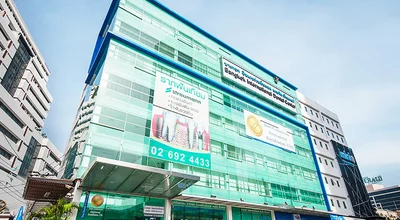
Bangkok International Dental Center
Thailand's first JCI-accredited dental center with more than 70 specialist dentists
View hospital profile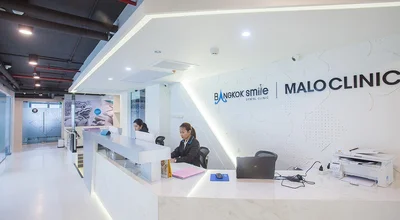
Bangkok Smile Dental Clinic
Multi-branch dental group founded in 2003 and the official Thai partner of the Malo All-on-4 network
View hospital profile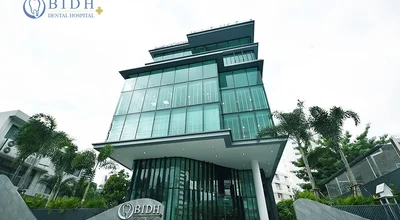
Bangkok International Dental Hospital
Purpose-built dental hospital opened in 2020 with an operating theatre and in-patient recovery rooms
View hospital profile
Get a Free Dental Quote in Minutes
Tell us what you need and we'll match you with the right specialist and return real clinic quotes.
- Itemised clinic quotes with no hidden fees
- Matched to a dentist experienced in your specific treatment
- Completely free, even if you decide not to go ahead


Rated 5 stars by our patients
The complete guide to Clear Aligners in Thailand
Everything below is for readers who want the full detail: costs broken down, types and techniques, recovery, risks and safety, and planning your trip.
Clear Aligner Orthodontists in Thailand
An aligner is only as good as the orthodontist who plans the case. Here is what sets our partners apart and what to look for when choosing a provider.
Leading Clinics in Bangkok
Our partner clinics are accredited dental centres with dedicated orthodontic departments and the latest intraoral scanning technology. They handle a high volume of aligner cases across multiple brands and have on-site lab coordination for rapid turnaround on attachments and tray adjustments.
Specialist Orthodontists
Our partners are qualified orthodontic specialists, not general dentists who offer aligners as a sideline. They hold postgraduate orthodontic qualifications and maintain active aligner caseloads across multiple systems. That breadth of experience means they match the right system to each case rather than defaulting to a single brand.
What to Look for in a Provider
Confirm your provider is a specialist orthodontist, not a general dentist. Ask how many aligner cases they treat annually and which systems they use. Look at before-and-after photos of cases similar to yours. Be cautious of any provider who pushes a single brand regardless of case complexity; good orthodontists match the system to the problem.
Understanding Your Results
Clear aligner results are permanent when maintained with retainers. Here is what realistic outcomes look like.
Typical Clear Aligner Results
Common improvements include resolving mild to moderate crowding, closing gaps, and correcting minor bite issues. The teeth move incrementally with each tray, and the final result matches the digital simulation in most well-managed cases. The outcome looks natural because the changes are gradual and precisely planned.
What Results Can You Expect?
The 3D treatment simulation is your most accurate preview. It maps each tooth from its current position to the target. Clear aligners work best for mild to moderate cases. Severe skeletal problems, significant rotations, or complex bite issues may need fixed braces instead.1 An honest orthodontist will tell you upfront if aligners are the wrong tool for your case.
Clear Aligner Cost in Thailand
Average Cost of Clear Aligners
Clear aligners in Thailand typically cost between $1,000 and $2,000 depending on the brand, case complexity, and number of trays needed. Lab-manufactured systems sit at the lower end, while premium branded systems cost more. Quotes should itemise what is included so you can compare accurately.
Cost Breakdown
The total covers the orthodontist's consultation and treatment planning fee, the cost of manufacturing your full tray set, any attachments or IPR required, follow-up appointments during your stay, and remote monitoring after departure. All of these are typically bundled into a single package price at our partner clinics.
What Affects the Price?
The brand matters: premium internationally branded systems cost more than locally manufactured alternatives. Case complexity drives price too, because more complex cases need more trays and potentially more refinement rounds. Whether refinement trays are included or charged separately is another factor to clarify when comparing quotes.
Thailand vs International Price Comparison
Clear aligners in Thailand cost 50–70% less than equivalent treatment in the US ($3,000–$6,000), Australia (A$2,800–A$5,500), and UK (£2,500–£5,000). The savings reflect lower operating costs, not lower quality. The aligner materials, digital planning tools, and treatment protocols are the same as those used internationally.
Types of Clear Aligner Systems
Not all clear aligner brands are equal. The difference comes down to material quality, software sophistication, and the range of cases each system can handle. Your orthodontist will recommend the system that fits your case and budget.
Premium Branded Systems
Systems like ClearCorrect and Angel Align use proprietary materials and advanced digital planning platforms with strong clinical track records. They handle a wider range of case complexity and typically include refinement trays in the package.
- Backed by clinical research and international track records
- Advanced treatment planning software for complex movements
- Refinement trays often included within the treatment plan
- Best for: moderate cases or patients wanting a well-established brand
Lab-Manufactured Custom Aligners
Thailand's top dental labs produce high-quality aligners using the same 3D scanning and printing technology as international brands. These systems are designed in partnership with your orthodontist and deliver strong results at a considerably lower price point.
- Significant cost savings versus premium international brands
- Produced locally for faster turnaround and easier refinements
- Well-suited for mild to moderate alignment cases
- Best for: patients wanting effective aligner treatment at the lowest price
Hybrid Approach with Attachments
For cases that push the limits of what aligners can handle, your orthodontist bonds small tooth-coloured composite attachments to specific teeth. These give the tray extra grip for more demanding movements like rotation or extrusion.
- Extends the effective range of clear aligner treatment
- Attachments are tooth-coloured and barely visible
- Removed cleanly at end of treatment without enamel damage
- Best for: cases involving rotation, extrusion, or more complex movements
Clear Aligner Techniques and Features
The technical approach varies depending on the system used and the complexity of your case. Here is what each technique involves and when it makes sense.
Digital Treatment Planning
Every aligner case starts with a 3D intraoral scan. Software maps the planned movement of each tooth from start to finish, generating a virtual simulation you can review. The orthodontist adjusts staging, timing, and sequencing before trays are manufactured.
- Full 3D simulation of projected tooth movement
- Plan is reviewed and approved before manufacturing begins
- Staging can be adjusted to prioritise specific teeth or movements
- Best for: all aligner cases. This is the foundation of every treatment plan
Interproximal Reduction (IPR)
Controlled removal of thin strips of enamel between teeth to create space for alignment without extraction. The amount removed is tiny, fractions of a millimetre, and well within safe limits. IPR is a standard part of many aligner plans for crowded cases.
- Creates space for crowded teeth to align without extractions
- Amounts removed are clinically insignificant and well within safe limits
- Performed chairside in a few minutes with no anaesthesia needed
- Best for: crowding cases where space is needed but extractions are not warranted
Sequential Tray Progression
Aligners are changed every 7–14 days in a prescribed sequence.1 Each tray moves teeth a fraction of a millimetre. The pace can be adjusted based on how your teeth respond: slower for complex movements, faster if tracking is ahead of schedule.
- Controlled incremental movement reduces discomfort per tray change
- Change intervals can be adjusted based on individual tracking response
- Full set manufactured upfront so treatment is self-directed at home
- Best for: all aligner patients. The core mechanism of clear aligner therapy
Clear Aligner Treatment Timeline
Days 1–3
Mild tightness and pressure as your teeth start responding to the first tray. A slight lisp is common but clears within 48 hours as your tongue adjusts. Any discomfort is manageable with standard pain relief.
Week 1
Most patients are fully adapted by the end of the first week. A follow-up in Thailand lets your orthodontist check the fit, place any attachments, and confirm your tray-change schedule before you head home.
Weeks 2–4
Changing trays becomes routine. Before leaving Thailand, you collect your complete set of aligners with written instructions covering the full treatment timeline. Rinse each tray in cool water and brush it gently with a soft brush morning and night; avoid hot water, which warps the plastic. Treatment continues at home without interruption.
At home (caring for your trays)
Store each tray in its case when out of your mouth, never wrapped in tissue where it gets thrown away. Keep your current and previous tray until the next one fits well. If a tray cracks or is lost before the next is due, drop back to the previous tray to hold your teeth and message your orthodontist; do not skip ahead. If a new tray will not seat fully, use chewies, wear it the full hours, and check in before moving on rather than forcing it.
Ongoing (Months 2–12+)
Regular tray changes at home with remote monitoring by your Thai orthodontist. If refinement trays are needed, they can be posted to you or picked up on a return visit. Local orthodontist oversight can also be arranged.
How Does Remote Monitoring Work?
Your orthodontist establishes a monitoring protocol before you leave Thailand. You submit photos on a regular schedule via a secure app or email. Progress is reviewed, tray changes are confirmed, and any concerns are addressed remotely. If something needs hands-on attention, a return visit or local orthodontist referral is arranged.
Will You Need to Return to Thailand?
In most cases, no. Since all trays are manufactured upfront, you complete treatment at home with remote oversight. If refinement trays are needed, they can be shipped to you or collected during a return visit. We can also coordinate with a local orthodontist in your home country if you prefer in-person check-ups.
When Will You See Final Results?
Teeth begin moving within the first few weeks, and visible progress builds with each tray change. Mild cases can finish in as little as 4 months, while moderate cases typically take 8–18 months. The digital treatment plan gives you an accurate projected timeline from the start.
Risks and Safety of Clear Aligners
Clear aligner therapy is a low-risk orthodontic treatment. Complications are uncommon, but understanding the potential issues helps you make a well-informed decision.
- Mild tightness with each new tray (normal and temporary)
- Temporary lisping during the first few days of wear
- Tooth sensitivity, especially early in treatment
- Gum or cheek irritation from tray edges (usually self-resolving)
- Incomplete correction from not wearing trays enough hours per day
- A composite attachment debonding mid-treatment; common, and the tray may then stop tracking until it is re-bonded
- Cracked or distorted trays in patients who grind or clench (bruxism), which slows or compromises the planned movement
- Minor root resorption (rare, associated with all orthodontic movement)
Poor compliance is the single biggest risk factor with clear aligners. If you wear the trays as prescribed, the system is predictable and well-documented.
Are Clear Aligners Safe in Thailand?
Yes. Clear aligner therapy is non-invasive, and the treatment itself is the same regardless of where you start it. The trays are manufactured using standardised digital processes. What matters is the orthodontist's planning skill, and our partners are specialists with high aligner case volumes who plan every case using 3D digital simulation.
How to Reduce Risks
Wear your trays for 20–22 hours per day. Do not skip trays or change them ahead of schedule without your orthodontist's approval. Keep your remote check-in schedule so tracking issues are caught early. If a tray does not seat properly, contact your orthodontist before moving on.
When Is Retreatment Needed?
If teeth do not track as planned, refinement trays can correct the deviation. This is common with premium systems that include refinements in the package. For lab-produced aligners, additional trays may involve a modest extra cost. The key is catching tracking issues early through regular monitoring.
Planning Your Trip to Thailand for Clear Aligners
Clear aligner treatment is one of the most travel-friendly dental procedures. Here is how to plan your visit and what to expect.
How Long to Stay in Thailand
Plan for 5–7 days. This covers your consultation, 3D scanning, treatment planning, tray fitting, attachment placement, and a follow-up check. You leave with your full set of aligners and treatment continues at home. No extended stay required.
What Is Included in Your Treatment
Your care coordinator manages scheduling, clinic logistics, and post-departure support. The treatment quote covers the orthodontist fee, digital scanning and planning, your full aligner set, attachments and IPR if needed, in-clinic follow-ups, and remote monitoring. Flights and accommodation are separate, but your coordinator can suggest nearby options.
Why Bangkok for Clear Aligners
Bangkok has the highest concentration of specialist orthodontists and dental labs in Thailand. Proximity to your clinic matters for the fitting appointments and any adjustments before departure. The city offers comfortable recovery with easy access to international-standard hotels and food options.
Related Procedures
Other procedures that address similar goals or conditions, in case one of them is a closer fit for you.
Planning your treatment in Thailand
Independent guides to help you weigh the decision, before you commit to anything.
Common Questions About Clear Aligners in Thailand
Everything you need to know before starting treatment

Medical References
Keep researching with AI
Open this guide in your AI assistant to dig deeper and ask the questions it didn't answer.
Opens in a new tab with this guide already loaded.
Medical disclaimer: This information is for educational purposes only and does not replace professional dental advice. Individual results, recovery times, and suitability vary. Always consult a qualified dentist before making decisions about treatment.
Ready to Get Started?
Speak with our care coordinators for a free, no-obligation consultation and personalised clear aligner quote.
Speak to Our Team