Dentures in Thailand Your guide to cost, top dentists & hospitals
Modern dentures have come a long way. The right set looks natural, fits securely, and gives you your confidence back.
What Are Dentures?
Also known as: False Teeth · Removable Dental Prosthesis
Dentures are removable replacements for missing teeth that rebuild your bite and smile by setting custom-made teeth into a gum-coloured base shaped to your mouth. A full denture replaces a whole arch; a partial fills gaps and clips onto the teeth that remain. Both restore chewing and speech and support the cheeks and lips, so the face avoids the sunken look that follows tooth loss. They are made over several short appointments, usually within seven to ten days, and a quality set often lasts seven to 10 years3.
Losing teeth, or wearing a set that no longer fits, can quietly chip away at how freely you eat and talk. The aim here is a denture that feels like yours. Your dentist takes detailed impressions, then you preview the teeth in wax and approve the look before anything is finalised.
Dentures take practice. For most people, speech and eating feel awkward for the first few weeks, then settle as the muscles adapt.2 If stability matters most, your dentist can talk through implant-retained options at your consultation.
It can address a range of concerns, including:
Am I a Good Candidate for Dentures?
Almost anyone missing several teeth can wear dentures; the assessment is about which type will fit, hold and feel right.
Retention comes from your gum ridges, so their shape decides how secure a conventional denture can be.
Adequate ridge form: Severe resorption or flat ridges may not give a conventional denture enough grip, especially in the lower jaw.
Implant retention as the fix: Two to four implants per jaw eliminate the rocking and slipping that frustrate lower-denture wearers.
Gag reflex considered: A strong gag reflex can make upper palate coverage hard to tolerate, something the wax try-in stage tests properly.
Saliva matters: A healthy saliva film gives an upper denture its suction and steadies a lower one, so severe dry mouth (xerostomia), often from medications, predicts a poorer fit and is flagged at assessment.
Partial dentures clip onto your natural teeth, which therefore need to be worth clipping onto.
Healthy support teeth: Untreated gum disease around the teeth meant to anchor a partial denture is treated first.
Sound, stable anchors: The clasped teeth take extra load every time you chew and must be decay-free and firm.
Full or partial decided at assessment: How many teeth remain, and their condition, determines whether a partial, full or implant-retained design fits best.
Gums change shape for months after teeth are removed, and the denture is timed around that.
Settled gums fit best: Recent extraction sites keep remodelling, so waiting gives a much better-fitting final set.
Immediate dentures as a bridge: Placed on extraction day so you are never without teeth, serving as a transitional set while gums heal.
A reline within 3-6 months: Expected if extractions were part of the trip, restoring a snug fit as the ridge reaches its final shape.
Dentures ask for an adjustment period and honest expectations about chewing.
Willingness to adapt: Speech and eating take two to four weeks of practice as muscles learn to stabilise the prosthetic.
A daily cleaning routine: Removed and brushed daily, soaked overnight; maintenance determines both comfort and the 7-10 year lifespan.
Function restored, not duplicated: Conventional dentures improve eating substantially without matching natural teeth; implant retention closes much more of that gap.
Who is not suitable for dentures?
- Untreated gum disease around teeth meant to support a partial denture
- Severe ridge resorption without considering implant retention
- Very recent extractions where waiting gives a better-fitting final set
- A strong gag reflex not yet assessed for upper denture tolerance
- Severe dry mouth (xerostomia), often from medications or medical conditions, since the saliva film is what gives an upper denture its suction and helps a lower denture stay put
- Any active mouth ulcer, white or red patch, or other undiagnosed soft-tissue lesion, which must be assessed (and oral cancer ruled out) before starting irreversible prosthetic work
Pricing
How Much Will Dentures Cost in Thailand?
What dentures costs at accredited hospitals in Thailand, and what your final quote depends on.
Get your exact price
Tell us what you're considering and we'll send a personalised quote from accredited clinics within 24 hours.
Get my free quoteTypical prices in Thailand
Typical ranges based on recent hospital quotes. Your exact price depends on the hospital and how complex your case is, and is confirmed at your teleconsultation.
Dentures
Each figure is for one arch, so an upper and a lower set is two of these, and what separates them is the material the base is made from.
| Standard acrylic denture, per arch The conventional removable denture, and the most affordable way in | $300 to $380 ฿10,200 to ฿12,920 |
| Flexible nylon denture, per arch Lighter and metal-free, with a gum line that looks more natural | $380 to $480 ฿12,920 to ฿16,320 |
| Cast metal framework denture, per arch A cobalt-chrome base makes it thinner, stronger and easier to wear | $480 to $600 ฿16,320 to ฿20,400 |
Get your exact price
Tell us what you're considering and we'll send a personalised quote from accredited clinics within 24 hours.
Clinics Trusted for Dentures
From internationally accredited flagships to dedicated specialist clinics, these are the kinds of facilities where international patients have this procedure.

Bangkok International Dental Center
Thailand's first JCI-accredited dental center with more than 70 specialist dentists
View hospital profile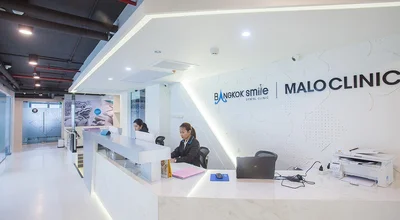
Bangkok Smile Dental Clinic
Multi-branch dental group founded in 2003 and the official Thai partner of the Malo All-on-4 network
View hospital profile
Thantakit International Dental Center
Thailand's longest established dental center, operating in Bangkok since 1945 with more than 40 dentists
View hospital profile
Get a Free Dental Quote in Minutes
Tell us what you need and we'll match you with the right specialist and return real clinic quotes.
- Itemised clinic quotes with no hidden fees
- Matched to a dentist experienced in your specific treatment
- Completely free, even if you decide not to go ahead


Rated 5 stars by our patients
The complete guide to Dentures in Thailand
Everything below is for readers who want the full detail: costs broken down, types and techniques, recovery, risks and safety, and planning your trip.
Denture Dentists & Clinics in Thailand
Denture quality depends on the impressionist, the lab technician, and the fitting dentist. Here is what to look for.
Leading Dental Clinics in Bangkok
Our partner clinics have in-house or closely partnered dental laboratories with experienced denture technicians. They handle high volumes of removable prosthetic work and maintain fast lab turnaround times, which is essential for completing dentures within a seven-to-ten-day trip. The labs use premium materials and take the time to set teeth individually for a natural appearance.
Experienced Prosthodontists and Denture Specialists
Our partner dentists include prosthodontists who specialise in removable prosthetics. They are trained in advanced impression techniques, occlusal analysis, and aesthetic tooth selection, the skills that separate a denture that sits and looks right from one that does not.
What to Look for in a Dentist
Ask about the impression technique (custom trays and border moulding should be standard) and the materials used for the base and teeth. Review photos of previous denture cases, paying attention to how natural the teeth look in terms of size, shape, and colour relative to the patient's face. A good denture looks like real teeth, not like a uniform row of identical blocks.
Understanding Your Results
Denture results are visible as soon as the final set is fitted. Here is what to expect.
Typical Denture Results
A well-made set of dentures restores a full, natural-looking smile. The teeth are selected to complement your facial shape, complexion, and age. Facial contours improve as the cheeks and lips are supported. Chewing function returns, not to the level of natural teeth, but significantly better than going without. Speech normalises within days of adaptation.
What Results Can You Expect?
You leave Thailand with a fitted set of dentures that you have already trialled, adjusted, and approved. The adaptation period continues at home as your muscles learn to control the new prosthetic. Full comfort typically arrives within two to four weeks. If extractions were done during the trip, a reline may be needed in three to six months as the gums complete their healing.
Denture Cost in Thailand
Average Cost of Dentures
A full set of conventional dentures in Thailand typically costs between $300 and $600 per arch. Partial dentures sit at a similar range depending on the number of teeth replaced and the framework type. Implant-retained dentures cost more because they include the surgical implant component, typically $2,000–$4,000 per arch including the implants and attachments.
Cost Breakdown
The total cost covers all consultations and impressions, the dental laboratory fee for fabricating the denture, wax try-in appointments, final processing and fitting, and adjustment visits. The lab fee is the largest component, reflecting the materials used and the technician's skill in setting the teeth and shaping the base.
What Affects the Price?
The main variables are denture type (full versus partial), material quality (standard versus premium acrylic and teeth), framework design (for partials, metal versus flexible nylon), and whether implant retention is included. Premium teeth and high-impact acrylic cost more but last longer and look better.
Thailand vs International Price Comparison
Dentures in Thailand cost 60–70% less than equivalent sets in the US ($900–$1,800), Australia (A$850–A$1,650), and UK (£750–£1,500). The savings are especially significant for implant-retained dentures, where the combined cost of implants and denture in Thailand is often less than just the dentures alone at home.
Types of Dentures
The right denture type depends on how many teeth you have left, the condition of your gums and bone, and your budget. Here are the main options.
Full (Complete) Dentures
Replace all teeth in the upper jaw, lower jaw, or both. Upper dentures rely on suction against the palate for retention. Lower dentures are held by close contact with the ridge, control of the tongue, cheeks and lips, and the surface tension of saliva. Gravity actually works against a lower denture, pulling it away from the ridge, which is why lower dentures are typically less stable than upper ones. Immediate dentures can be placed the same day as extractions.
- Restore a complete smile when all teeth are missing in an arch
- Support facial structure and prevent the sunken look that follows tooth loss
- Available as immediate (placed at extraction) or conventional (made after healing)
- Best for: patients with no remaining teeth who want a non-surgical solution
Partial Dentures
Replace one or more missing teeth when some natural teeth remain. A gum-coloured base holds replacement teeth, connected by a metal framework or flexible nylon clasps that grip the remaining teeth. They fill gaps, prevent drift, and restore chewing on the missing side.
- Fill gaps while working alongside your remaining natural teeth
- Metal framework (cobalt-chromium) or flexible nylon (Valplast) options available
- Prevent remaining teeth from shifting into the empty spaces
- Best for: patients with some healthy teeth remaining who need an affordable gap solution
Implant-Retained Dentures
A removable denture that snaps onto two to four dental implants placed in the jawbone. The implants provide dramatically better stability than conventional dentures, eliminating the rocking and slipping that makes lower dentures frustrating. The denture clicks off for cleaning but stays firmly in place during eating and talking.
- Eliminates slipping, rocking, and the need for denture adhesive
- Preserves jawbone by stimulating bone through the implant fixtures
- Substantially improved chewing efficiency compared to conventional dentures
- Best for: lower denture wearers struggling with stability, or anyone wanting maximum retention
Denture Fabrication Techniques
Denture quality comes down to impression accuracy, material selection, and the skill of the dental technician. Here is what the fabrication process involves.
Precision Impression Techniques
Accurate impressions capture the exact shape of your gums, ridges, and muscle attachments. Border moulding records the functional movements of your lips, cheeks, and tongue to ensure the denture sits securely during speech and eating. Getting the impression right is the foundation of a well-fitting denture.
- Custom impression trays made specifically for your mouth shape
- Border moulding captures muscle movements for optimal seal and retention
- Silicone impression materials produce sharper detail than older alginate methods
- Best for: all denture cases. A good impression is the single most important step
Wax Try-In and Aesthetic Selection
Before the final denture is processed, you try a wax version with the teeth set in position. This lets you assess appearance, bite, and speech before committing. Tooth shade, size, and arrangement are adjusted to suit your face shape and complexion.
- Preview the final appearance before the denture is finished
- Adjust tooth arrangement, shade, and bite contact at this stage
- Ensures you are satisfied with the look and feel before processing
- Best for: every denture case. Skipping the try-in is how bad dentures happen
High-Impact Acrylic Processing
The final denture base is processed from high-impact acrylic resin that resists fracture under normal use. Premium teeth made from cross-linked acrylic or composite are set into the base for natural wear resistance and colour stability.
- High-impact acrylic is significantly more fracture-resistant than standard acrylic
- Cross-linked teeth resist wear and maintain their appearance over years
- Metal-reinforced bases available for patients with thin ridges or frequent breakage
- Best for: all final dentures. Material quality directly affects durability and comfort
Denture Recovery Timeline
Days 1–3
New dentures feel bulky and unfamiliar at first. Mild gum soreness is part of the adaptation process. Eat soft foods and practise speaking aloud to speed up adjustment. If extractions were performed, follow the specific healing instructions provided.
Days 4–7
You begin adapting to the dentures. Soreness improves. Your adjustment appointment identifies and relieves any pressure points. Continue with a soft diet and practise chewing on both sides evenly.
Weeks 2–3
Gums continue adapting and the denture feels more comfortable. Gradually introduce firmer foods. Additional adjustment appointments fine-tune the fit. By this stage, speaking with the denture feels more natural.
Weeks 4–8
Most patients are comfortable wearing their dentures throughout the day. Eating a broader range of foods becomes easier. If extractions were performed, gums may still be reshaping, and a reline may be needed in the coming months to maintain a snug fit.
When Can You Fly After Getting Dentures?
You can fly home as soon as your dentures are fitted and any necessary adjustments are made, typically within seven to ten days. If extractions were performed at the same visit, wait at least five to seven days for the extraction sites to stabilise before flying. There are no altitude-related concerns with dentures themselves.
When Can You Eat and Drink Normally?
Eating with new dentures takes practice. Start with soft foods cut into small pieces during the first week, chewing on both sides evenly to keep the denture stable.4 Over two to four weeks, you can gradually reintroduce firmer foods as your muscles adapt. Some foods like corn on the cob or very sticky items remain challenging for most denture wearers.
When Will You See Final Results?
You will see the cosmetic result immediately; your smile is restored the moment the dentures are fitted. Full adaptation to speaking and eating takes two to four weeks as your muscles learn to stabilise the prosthetic. If extractions were performed, the gums may reshape over three to six months, and a reline may be needed to maintain a snug fit.
Risks and Safety of Dentures
Dentures are a non-surgical treatment. The main challenges relate to fit and adaptation rather than medical complications.
- Initial gum soreness and pressure points during the adaptation period
- Difficulty eating certain foods while adjusting to the denture
- Speech changes that resolve as muscles adapt to the new prosthetic
- Denture stomatitis, a Candida overgrowth and redness of the gum tissue under the base. It is the most common chronic problem with full dentures and is most likely in people who sleep in their dentures or skip daily cleaning1
- Accelerated shrinkage of the jawbone over years, because a conventional denture transmits no chewing force to the bone as a natural root does, which loosens the fit and is a key reason to consider implants2,3
- Gum irritation or pressure sores from spots that need adjustment
- Increased saliva production in the first few days (temporary and self-resolving)
Dentures are checked for fit and pressure points before you leave Thailand. Guidance on adaptation, daily care, and when to seek adjustments is provided. Any refinements needed after you return home can be handled by a local dentist.
Are Dentures Safe in Thailand?
Yes. Denture fabrication is a non-surgical, lab-based process. Our partner clinics in Thailand use premium acrylic materials, certified dental technicians, and thorough fitting protocols. The multiple-appointment process ensures the fit is verified and adjusted before you leave, reducing the chance of issues at home.
How to Ensure a Good Fit
The wax try-in stage is critical. Do not skip it. This is your chance to assess appearance, comfort, and bite before the final denture is processed. Make sure the dentist checks for pressure points, suction quality (for upper dentures), and even bite contact. If something does not feel right at try-in, say so. Adjustments at this stage are easy; changes after processing are not.
When Is a Reline or Replacement Needed?
After extractions, gums reshape over three to six months, which can loosen the fit. A reline adds material to the denture base to restore a snug fit without making a new set. Conventional dentures typically need replacement every seven to 10 years, in large part because the jawbone underneath keeps shrinking. A conventional denture actually hastens this bone loss, since it carries no root to transmit chewing force into the bone, so the ridge it sits on continues to flatten year on year. Implant-retained dentures load the bone through their fixtures, slow that loss, and extend the usable life of the prosthetic, which is worth weighing in the implant-versus-denture decision.
Planning Your Trip to Thailand for Dentures
Denture fabrication requires seven to ten days in Thailand. Here is how to plan your trip.
How Long to Stay in Thailand
Plan for seven to ten days. The process requires three to five appointments spaced over the trip: initial impressions and bite registration, wax try-in, final fitting, and adjustment visits. If extractions are needed before the denture, add a day or two at the beginning. Each appointment is relatively short, leaving you plenty of free time between visits.
What Is Included in a Dental Trip
Your care coordinator schedules all appointments, arranges transfers, and communicates with the dental team on your behalf. The treatment quote covers consultations, all impressions, lab fabrication, wax try-in, final fitting, adjustments, and follow-up. Flights and accommodation are separate, but your coordinator recommends nearby options.
Recovery in Bangkok
Denture treatment requires no physical recovery beyond the adaptation period. You can sightsee, dine out, and enjoy Bangkok between appointments. If extractions are part of the plan, allow two to three days of soft food and rest after those procedures. Many patients combine denture work with other dental treatments during the same trip.
Related Procedures
Other procedures that address similar goals or conditions, in case one of them is a closer fit for you.
Planning your treatment in Thailand
Independent guides to help you weigh the decision, before you commit to anything.
Common Questions About Dentures
Everything you need to know before your treatment

Medical References
Keep researching with AI
Open this guide in your AI assistant to dig deeper and ask the questions it didn't answer.
Opens in a new tab with this guide already loaded.
Medical disclaimer: This information is for educational purposes only and does not replace professional dental advice. Individual results, recovery times, and suitability vary. Always consult a qualified dentist before making decisions about treatment.
Ready to Get Started?
Speak with our care coordinators for a free, no-obligation consultation and personalised quote for your new dentures.
Speak to Our Team