Implant-Supported Dentures in Thailand Your guide to cost, top dentists & hospitals
A denture that clicks into place and stays there changes everything about how you eat and how you feel.
What Are Implant-Supported Dentures?
Also known as: Snap-On Dentures · Implant-Retained Overdenture
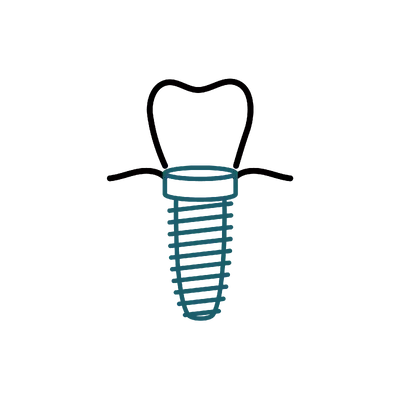
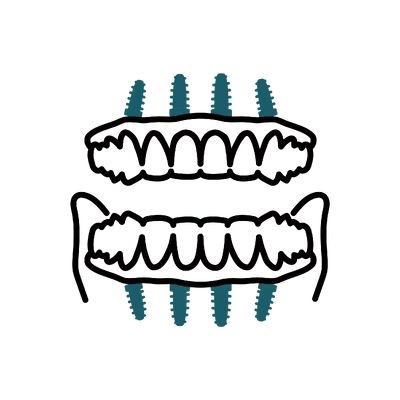
An implant-supported denture is a removable denture that clips onto two to four dental implants instead of resting on the gum alone. The implants sit fixed in the jawbone, and the denture carries matching attachments, either locator studs or a custom-milled bar, so it snaps into place and holds while you eat and talk. You still take it out at night to clean it, but it no longer depends on paste. Placement usually takes 1 to 2 hours under local anaesthetic.
If you have spent years bracing for a denture to lift mid-meal, the change here is mostly about not having to think about it any more. The difference is felt most in the lower jaw, where ordinary dentures are loosest. Your dentist checks your bone and how you want to eat, then decides how many implants give a secure hold.
Most people feel the difference as soon as the attachments clip on, though the implants usually need a few months to fuse with the bone first2,1. Whether your existing denture can be reused is confirmed after a scan.
It can address a range of concerns, including:
Am I a Good Candidate for Implant-Supported Dentures?
Designed for denture wearers tired of movement and adhesive, with enough bone for two to four anchoring implants.
This is one of the least demanding implant treatments on bone, but the ridge still has to hold the anchors.
Two to four implant sites: Two implants are the minimum standard for a lower overdenture; the softer upper jaw needs three to four.
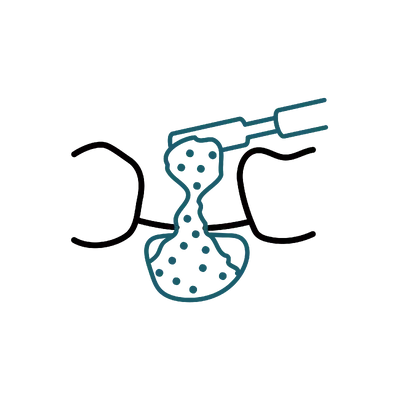
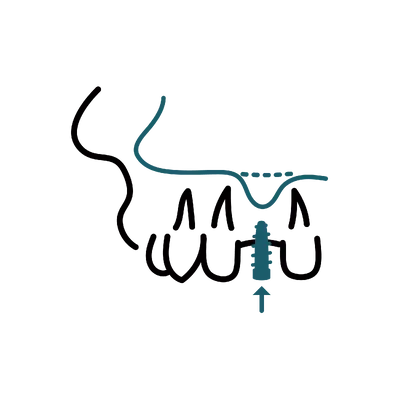
Resorbed ridges assessed honestly: A severely shrunken lower ridge with very little bone height may need grafting before even narrow implants will hold.
Existing implants checked: Any peri-implantitis or gum disease around current implants or teeth is treated before new placement.
Dentists look for the specific denture frustrations this treatment is built to solve.
A denture that moves: Rocking, lifting, or sliding when you chew, talk, or laugh is the core indication, especially in the lower jaw where conventional dentures perform worst.
Adhesive dependence: Daily reliance on paste, plus sore spots from an ill-fitting denture.
A worsening fit: Ongoing jawbone loss makes a conventional denture fit worse every year; implants slow that resorption while fixing the retention problem.
An overdenture is removable by design, and candidates need to be comfortable with the routine that comes with it.
Clip out every night: The denture is removed for overnight cleaning and soaking, then clipped back in each morning.
Dexterity matters: Hand or grip problems that make removing and cleaning the denture difficult work against this design, since the daily clip-on and clip-off is not optional.
Routine upkeep: Nylon inserts in the attachments wear and need replacing every 6-12 months, a quick chairside job at home.
The surgery is minor by implant standards, but the same healing rules apply.
Gum health first: Active gum disease around any teeth or implants is treated before placement.
Smoking and diabetes managed: Heavy smoking and uncontrolled diabetes both raise the risk of infection and bone loss around the attachments, so they need addressing before surgery.
Medication and medical history: Bisphosphonate or antiresorptive drugs, a history of head or neck radiotherapy, and immunosuppression all impair bone healing and integration, so flag them at your consultation for assessment before surgery.
Hygiene commitment: Cleaning around the implant abutments daily is the single most important thing you can do for the long-term result.
Who is not suitable for implant-supported dentures?
- Active gum disease or peri-implantitis until treated
- Severely resorbed lower ridge where grafting has not been considered
- Manual dexterity problems that make daily removal and cleaning unmanageable
- Smoking or uncontrolled diabetes not yet addressed
- Bisphosphonate or antiresorptive drug use, prior head or neck radiation, or immunosuppression until reviewed by your dentist
Pricing
How Much Will Implant-Supported Dentures Cost in Thailand?
What implant-supported dentures costs at accredited hospitals in Thailand, and what your final quote depends on.
Get your exact price
Tell us what you're considering and we'll send a personalised quote from accredited hospitals within 24 hours.
Get my free quoteTypical prices in Thailand
Typical ranges based on recent hospital quotes. Your exact price depends on the hospital and how complex your case is, and is confirmed at your teleconsultation.
Implant-Supported Dentures
How many implants hold the denture, and which jaw it sits in, is what moves the figure here.
| Two-implant lower overdenture, locator attachments Two implants clip the lower denture firmly in place | $4,000 to $5,500 ฿136,000 to ฿187,000 |
| Four-implant lower overdenture, bar-retained A milled bar across four implants for the steadiest lower fit | $6,000 to $8,000 ฿204,000 to ฿272,000 |
| Four-implant upper overdenture A palateless upper denture, so you can taste food properly | $6,500 to $8,000 ฿221,000 to ฿272,000 |
Get your exact price
Tell us what you're considering and we'll send a personalised quote from accredited hospitals within 24 hours.
Clinics Trusted for Implant-Supported Dentures
From internationally accredited flagships to dedicated specialist clinics, these are the kinds of facilities where international patients have this procedure.
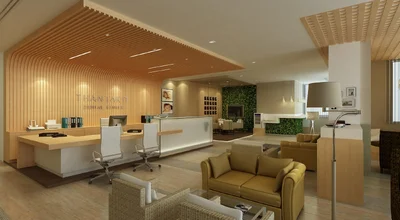
Thantakit International Dental Center
Thailand's longest established dental center, operating in Bangkok since 1945 with more than 40 dentists
View hospital profile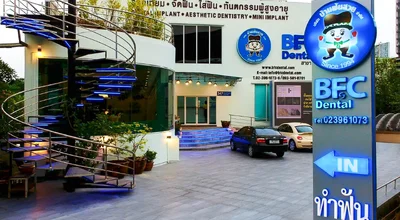
BFC Dental
Implant-focused Bangkok dental clinic founded in 1994, placing more than 4,600 implants a year
View hospital profile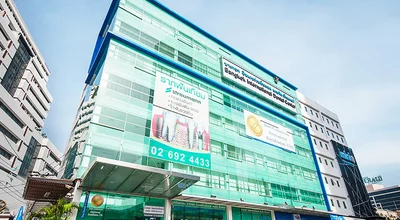
Bangkok International Dental Center
Thailand's first JCI-accredited dental center with more than 70 specialist dentists
View hospital profile
Get a Free Dental Quote in Minutes
Tell us what you need and we'll match you with the right specialist and return real clinic quotes.
- Itemised clinic quotes with no hidden fees
- Matched to a dentist experienced in your specific treatment
- Completely free, even if you decide not to go ahead


Rated 5 stars by our patients
The complete guide to Implant-Supported Dentures in Thailand
Everything below is for readers who want the full detail: costs broken down, types and techniques, recovery, risks and safety, and planning your trip.
Implant Denture Dentists & Clinics in Thailand
Implant-supported dentures are a core competency at every partner clinic we work with. Here is what sets them apart.
Leading Clinics in Bangkok
Our partners include JCI-accredited facilities with dedicated prosthodontic departments. These clinics fabricate dentures in-house, the implant team and the denture lab communicate directly, which reduces errors and turnaround time. On-site CT scanning and guided surgery are standard.
Experienced Overdenture Dentists
The dentists we work with are experienced in both the surgical placement of implants and the prosthetic design of overdentures. This dual competency matters because the success of an implant-supported denture depends as much on the denture fit and attachment design as it does on the implant placement itself.
What to Expect During Consultation
Your dentist will evaluate your existing denture, assess bone volume with a CT scan, and discuss whether two or four implants are appropriate. They will explain the attachment options, show you examples of each system, and provide a clear quote with no hidden costs. If your existing denture can be converted, they will tell you, there is no financial incentive for them to push a new one.
Understanding Your Results
The improvement is functional first, aesthetic second. Here is what changes when you upgrade from a conventional denture to an implant-supported one.
Typical Results
The denture clicks into place and stays put during eating, speaking, and laughing. Patients consistently describe it as transformative, particularly for the lower jaw, where conventional dentures are notoriously unstable. Chewing force improves significantly, opening up foods that were off-limits with a loose denture. The psychological impact is often as significant as the functional one.
What Results Can You Expect?
Expect a stable, comfortable denture that does not require adhesive. The denture still looks the same, the change is entirely in how it performs. Upper denture patients who switch to a palateless design often notice improved taste sensation and reduced gagging. Over time, the implants also slow jawbone resorption, meaning the fit of the denture degrades more slowly than it would without implant support.
Implant-Supported Denture Cost in Thailand
Average Cost of Implant-Supported Dentures
Implant-supported dentures in Thailand typically cost between $4,000 and $8,000 for a complete treatment including implants, attachments, and denture. A two-implant lower overdenture sits at the lower end. A four-implant bar-retained upper overdenture sits at the higher end. Both represent major savings over the same treatment at home.
Cost Breakdown
The quote covers the implant posts, abutments, attachment components, the denture itself (new or converted), CT scan, surgical fee, anaesthesia, and all in-Thailand follow-ups. If your existing denture can be converted, the cost is lower than fabricating a new one. Bar-retained systems cost more than ball-attachment systems due to the custom milling required.
What Affects the Price?
The number of implants is the biggest factor, two costs less than four. The attachment type matters too, bar-retained systems involve custom metalwork and cost more than locator abutments. Whether you need a new denture or can convert your existing one affects the total. And if bone grafting is needed at one or more sites, that adds to the bill.
Thailand vs International Price Comparison
Implant-supported dentures cost $12,000–$24,000 in the US, A$11,200–A$22,000 in Australia, and £10,000–£20,000 in the UK. Thailand's $4,000–$8,000 represents a saving of 50–70%. For a treatment that transforms daily comfort and eating confidence, the cost-to-benefit ratio in Thailand is hard to beat.
Conventional vs Implant-Supported Dentures
A conventional denture rests on the gum and, in the upper jaw, holds with suction across the palate. It is the cheaper, non-surgical route, can be made in a few visits with no healing time, and for some people a well-fitted upper denture works perfectly well. If cost or avoiding surgery is the deciding factor, it remains a reasonable option, particularly for the upper arch.
The trade-offs are the ones most denture wearers already know. A gum-supported denture relies on paste to stay put, tends to rock or lift when you chew or laugh, and is loosest of all in the lower jaw, where there is little ridge to grip. It also does nothing to slow the jawbone loss that follows tooth loss, so the fit drifts and worsens year on year, meaning periodic relines and remakes. None of that is a fault of the denture; it is the limit of resting on gum alone.
Adding two to four implants is what fixes the retention for good. The denture clicks onto fixed anchors rather than floating on the gum, holds while you eat and talk, frees you from adhesive, and the implants also slow ongoing bone loss so the fit stays stable far longer. If your conventional denture moves, irritates, or has simply stopped doing its job, the implant-supported version covered on this page is the lasting upgrade, and an existing denture can often be converted onto the implants rather than remade.
Types of Implant-Supported Dentures
The attachment system determines how the denture connects to the implants. Each has trade-offs in cost, retention strength, and maintenance requirements.
Ball-Attachment (Locator) Overdenture
Each implant has a small ball-shaped or locator abutment. The denture contains corresponding housings with nylon inserts that snap onto the abutments. Simple to use, easy to maintain, and the most affordable implant-supported denture option.
- Lowest cost implant-supported denture system
- Patients can clip the denture in and out easily for daily cleaning
- Nylon inserts wear over time and need replacing every six to twelve months, quick and cheap
- Best for: budget-conscious patients who want a straightforward retention upgrade
Bar-Retained Overdenture
Three to four implants are connected by a precision-milled metal bar that follows the jaw ridge. The denture clips over the bar using retention clips, providing stronger hold and more even force distribution than ball attachments.
- Stronger retention than ball-attachment systems
- Distributes chewing forces more evenly across all implants
- Higher initial cost and slightly more complex maintenance
- Best for: patients who want maximum overdenture stability or have weaker bone in certain areas
Palateless Upper Overdenture
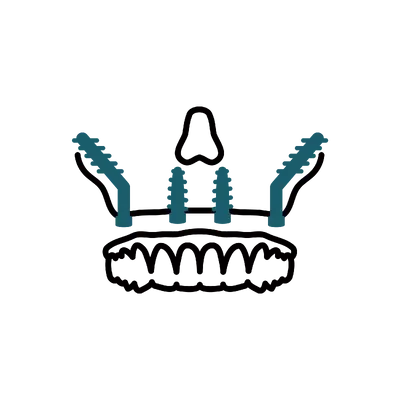
Traditional upper dentures cover the palate for suction retention. An implant-supported upper denture removes most or all of the palate coverage because the implants provide the retention instead. This restores taste sensation and reduces the gagging sensation some patients experience.
- Eliminates palate coverage for improved comfort and taste
- Requires three to four implants for adequate upper jaw retention
- Significantly more comfortable than a full-palate conventional denture
- Best for: upper denture wearers who dislike palate coverage or have a sensitive gag reflex
Implant-Supported Denture Techniques
The technical decisions revolve around how many implants to place, where to place them, and how to connect the denture. Here is what our partners use.
Two-Implant vs Four-Implant Overdenture
Two implants are the minimum for a lower overdenture and provide a substantial improvement over adhesive alone. Four implants add stability and are recommended for the upper jaw where suction alone is insufficient. The choice is driven by bone availability, jaw anatomy, and budget.
- Two implants: minimum standard of care for the lower jaw, most cost-effective option
- Four implants: recommended for the upper jaw and patients wanting maximum stability
- Adding implants later is possible if you start with two and want to upgrade
- Best for: two for lower jaw on a budget; four for upper jaw or maximum retention
Flapless Implant Placement
Using a guided approach, implants are placed through small punch holes in the gum without cutting a flap. This reduces bleeding, swelling, and healing time. It is well suited to overdenture cases where the implant positions are straightforward.
- Minimal tissue trauma, no incisions, no sutures
- Reduced swelling and faster return to wearing the denture
- Requires adequate bone volume and a guided surgical template
- Best for: straightforward cases with sufficient bone for flapless access
Denture Conversion
In many cases, your existing denture can be converted to clip onto the new implants by adding attachment housings to its underside. This avoids the cost and delay of fabricating an entirely new denture. A new denture is made if the existing one is too worn or poorly fitting.
- Uses your current denture, saving time and cost
- Housings are added chairside, often on the same day as implant placement
- Works best when the existing denture is in good structural condition
- Best for: patients whose current denture fits well structurally but lacks retention
Mini Dental Implants (MDIs)
Mini implants are narrow-diameter posts, around half the width of a standard implant, designed to anchor a lower overdenture where the ridge is too thin for conventional implants. They are placed flapless through the gum and often carry the denture the same day, with built-in ball attachments that the denture clips onto. They suit thinner ridges and tighter budgets, though they are less suited to heavy chewing loads or the upper jaw, and your dentist confirms whether your bone width allows standard implants first.
- Narrow posts placed flapless, often loaded the same day
- A route to retention when the ridge is too thin for standard-width implants
- Less suited to the upper jaw or heavy bite forces than conventional implants
- Best for: lower overdentures on a thin ridge, or patients wanting a quicker, lower-cost option
Implant-Supported Denture Recovery Timeline
Days 1–3
Mild gum tenderness and light swelling around the implant sites. Flapless placement leaves no incision, so recovery is quicker and most people feel back to normal within two to three days; flap-based placement involves sutures and takes a little longer to settle, closer to five days. Pain is manageable with over-the-counter medication for most patients. You can drive again once any sedation has fully worn off and you are off strong pain relief, usually the next day after a flapless case. Avoid wearing your denture for the first 24–48 hours to let the tissue settle. Eat soft foods and maintain gentle oral hygiene around the implant sites.
Days 4–7
Swelling subsides and tenderness fades. Your existing denture may be modified with a soft liner to sit comfortably over the healing implants. A follow-up appointment confirms everything is progressing well. You will be cleared for travel after this visit.
Weeks 2–12
The implants integrate with your jawbone over two to three months.1 You can wear your denture during this period, it is adjusted to avoid putting direct pressure on the implant sites. Normal eating and activities resume. Follow your dentist's hygiene instructions carefully.
Months 3–4
Integration is confirmed. Attachment abutments are placed on the implants and your denture is fitted with the clip-in housings. You notice the difference immediately, the denture clicks into place and stays there. This can be done during a second visit of three to five days.
When Can You Fly After Implant-Supported Denture Surgery?
Most patients can fly home 7–10 days after implant placement. The procedure is minimally invasive compared to full-arch surgery, so recovery is quicker. Your follow-up appointment before departure confirms healing is on track.
When Can You Return to Work and Exercise?
It depends on the placement technique. After flapless placement, soft-tissue recovery is quick: desk work is fine the day after surgery and most people are back to normal daily activity within two to three days. Flap-based placement involves an incision and sutures, so allow closer to five days for the gum to settle. You can drive once any sedation has fully worn off and you are off strong pain relief, usually the day after surgery in flapless cases. Light exercise can resume after a few days; avoid anything strenuous that raises blood pressure for about a week.
When Will You See Final Results?
If your existing denture is converted on surgery day, you experience improved retention immediately. The definitive result comes when the permanent attachments are fitted at three to four months after integration is confirmed. At that point, the denture clicks firmly into place with no movement whatsoever.
Anaesthesia & Sedation
Placing the implants for an overdenture is done under local anaesthetic, so you stay fully awake but the gum and jaw being worked on are completely numb.1 It is the same kind of numbing used for a filling or an extraction, just a little more of it, and your dentist checks the area is fully numb before starting. Because only two to four implants are placed, often through small punch holes in the gum rather than a cut flap, this is one of the gentler implant procedures to sit through.
If you feel anxious about dental work, sedation is available at our partner clinics to keep you relaxed and drowsy while you remain awake and able to respond. Whether you have it is your choice, made with your dentist beforehand, and it is worth raising at your consultation along with your medical history and any medications you take, which are reviewed as part of the pre-operative assessment and CT scan.
You will feel pressure and some movement while the implants go in, but no sharp pain. Most patients are surprised by how straightforward it is, often describing it as easier than a tooth extraction. Afterwards the numbness wears off over a few hours and any soreness is mild, settling within a day or two and well managed with over-the-counter pain relief.
Risks and Safety of Implant-Supported Dentures
This is one of the lower-risk implant procedures. Fewer implants, a less invasive surgery, and a well-documented protocol mean complications are uncommon.
- Mild swelling and gum tenderness at implant sites
- Infection around an implant (uncommon with proper hygiene)
- Implant failure to integrate with the bone (uncommon)
- Peri-implantitis, a progressive inflammation and bone loss around an integrated implant that can cause the implant to be lost years later if hygiene around the abutments lapses
- Attachment wear requiring periodic replacement of nylon inserts
- Nerve proximity numbness in the lower jaw (rare)
- Need for denture reline as tissue changes over time
- Bar fracture with bar-retained systems (very rare)
Pre-operative assessment includes bone density evaluation, gum health screening, and medical history review. The simplicity of this procedure means the risk profile is well understood and manageable.
Are Implant-Supported Dentures Safe in Thailand?
Yes. The procedure is one of the most straightforward in implant dentistry. Our partner clinics follow internationally standardised protocols, use premium implant systems, and operate in JCI-accredited facilities. The treatment has been performed millions of times globally with a strong safety and success record.
How to Reduce Risks
Maintain good oral hygiene around the implant abutments, this is the single most important thing you can do. Stop smoking before treatment. Attend regular dental check-ups at home to monitor gum health. Replace worn attachment inserts promptly, neglected inserts allow denture movement that can damage the implants over time.
When Is Maintenance Needed?
The rubber O-rings or nylon clips in the attachment housings wear gradually and need replacing every six to twelve months. This is a five-minute chairside procedure your local dentist can do. The denture itself may need relining every few years as the jaw ridge changes shape. These are routine maintenance items, not complications.
Planning Your Trip to Thailand for Implant-Supported Dentures
This treatment follows a two-visit structure. The first trip is for implant placement, the second for fitting the retention attachments and final denture.
How Long to Stay in Thailand
First visit: 7–10 days for consultation, CT scan, implant placement, and follow-up. Second visit: three to five days for attachment fitting and final denture adjustments. If you can spend three to four months in Thailand, both stages can be completed in a single extended stay.
What's Included in a Dental Trip
Your coordinator handles clinic scheduling, transfers, and post-operative logistics. The treatment quote covers implants, attachments, denture, CT scan, anaesthesia, and in-Thailand follow-ups. Flights and hotels are separate. Your coordinator recommends nearby accommodation and can help with bookings.
Bringing Your Current Denture
Bring your existing denture to Thailand. Your dentist will assess whether it can be converted to clip onto the new implants. If it is in good condition, conversion saves cost and eliminates the wait for a new denture to be fabricated. If a new denture is needed, it is fabricated on-site during your stay.
Related Procedures
Other procedures that address similar goals or conditions, in case one of them is a closer fit for you.
Planning your treatment in Thailand
Independent guides to help you weigh the decision, before you commit to anything.
Common Questions About Implant-Supported Dentures
Everything you need to know before your treatment

Medical References
Keep researching with AI
Open this guide in your AI assistant to dig deeper and ask the questions it didn't answer.
Opens in a new tab with this guide already loaded.
Medical disclaimer: This information is for educational purposes only and does not replace professional dental advice. Individual results, recovery times, and suitability vary. Always consult a qualified dentist before making decisions about treatment.
Ready to Get Started?
Speak with our care coordinators for a free, no-obligation consultation and personalised quote.
Speak to Our Team