Post and Core Restoration in Thailand Your guide to cost, top dentists & hospitals
When a tooth has almost nothing left above the gum, a post and core gives it back the foundation a crown needs.
What Is Post and Core Restoration?
Also known as: Tooth Post · Post and Core Build-Up
Post and core restoration is a dental procedure that rebuilds a badly broken-down tooth by anchoring a new foundation inside its root. A thin fibre or metal post is cemented into the empty root canal space, then a core of composite or cast metal is shaped around it to rebuild the missing tooth above the gum. A crown is fitted over this hidden foundation.1,2 It only applies to root-canal-treated teeth, since the post needs the canal space to grip, and takes 30 to 60 minutes.
When a tooth has crumbled to almost nothing, pulling it can feel like the only option. Often it is not. If the root underneath is healthy, a post and core gives it a new top half and keeps your own tooth. Your dentist checks the root on an X-ray first.
How long it lasts depends on the root, your bite, and how much sound tooth the crown has to grip. For most people a well-placed post and core lasts many years.5 If the root is too short, thin, or cracked, your dentist will say so honestly and suggest an implant or bridge.
It can address a range of concerns, including:
Am I a Good Candidate for Post and Core Restoration?
This is rescue dentistry for broken-down teeth, and suitability is decided almost entirely by the root below the gum.
The post sits inside the root canal, so the root has to be sound and sealed.
Completed root canal treatment: The procedure only applies to root-treated teeth; a failing or reinfected canal is retreated before any post is placed.
Clear imaging: A periapical X-ray or CBCT scan confirms the root tip is free of infection before a post is recommended.
A root worth saving: Where infection cannot be resolved, extraction followed by an implant or bridge becomes the more predictable path.
Not every root can physically accommodate a post safely.
Adequate length and width: Short or thin-walled roots risk fracturing during preparation or under chewing load.
Dentine preserved: Over-preparing the canal weakens the root, so conservative preparation is part of what makes a case suitable.
Fracture ruled out: A cracked root cannot be rebuilt; imaging checks for this before treatment starts.
Survival depends heavily on what is left above the gum for the crown to grip.
A ferrule of sound tooth: At least 1.5-2mm of solid structure above the core margin dramatically improves long-term survival.
A crown to finish the job: The post and core is only a foundation; the tooth is restored once the permanent crown is cemented over it.
Bite forces factored in: Heavy loads or grinding that have already fractured a previous post shift the choice of post system, or the plan itself.
Who is not suitable for post and core restoration?
- Root canal not yet completed or showing reinfection on imaging
- Roots too short or thin-walled to hold a post safely
- Less than 1.5-2mm of sound tooth above the gum for the crown to grip
- Bite forces or grinding that have already fractured a previous post
- Unresolved infection at the root tip, until treated
Pricing
How Much Will Post and Core Restoration Cost in Thailand?
What post and core restoration costs at accredited hospitals in Thailand, and what your final quote depends on.
Get your exact price
Tell us what you're considering and we'll send a personalised quote from accredited clinics within 24 hours.
Get my free quoteTypical prices in Thailand
Typical ranges based on recent hospital quotes. Your exact price depends on the hospital and how complex your case is, and is confirmed at your teleconsultation.
Post and Core Restoration
A post is cemented into the root canal and a core built around it to rebuild a broken-down tooth so a crown can be fitted.
| Fibre post and composite core A tooth-coloured post that flexes with the root, suited to front teeth under all-ceramic crowns | $230 to $300 ฿7,820 to ฿10,200 |
| Prefabricated metal post and composite core An off-the-shelf post cemented straight into the root canal | $150 to $190 ฿5,100 to ฿6,460 |
| Cast metal post and core Made to fit your canal from a mould, so it needs a laboratory step | $190 to $240 ฿6,460 to ฿8,160 |
Get your exact price
Tell us what you're considering and we'll send a personalised quote from accredited clinics within 24 hours.
Clinics Trusted for Post and Core Restoration
From internationally accredited flagships to dedicated specialist clinics, these are the kinds of facilities where international patients have this procedure.

Bangkok International Dental Center
Thailand's first JCI-accredited dental center with more than 70 specialist dentists
View hospital profile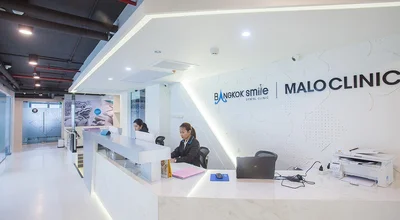
Bangkok Smile Dental Clinic
Multi-branch dental group founded in 2003 and the official Thai partner of the Malo All-on-4 network
View hospital profile
Thantakit International Dental Center
Thailand's longest established dental center, operating in Bangkok since 1945 with more than 40 dentists
View hospital profile
Get a Free Dental Quote in Minutes
Tell us what you need and we'll match you with the right specialist and return real clinic quotes.
- Itemised clinic quotes with no hidden fees
- Matched to a dentist experienced in your specific treatment
- Completely free, even if you decide not to go ahead


Rated 5 stars by our patients
The complete guide to Post and Core Restoration in Thailand
Everything below is for readers who want the full detail: costs broken down, types and techniques, recovery, risks and safety, and planning your trip.
Post and Core Dentists & Clinics in Thailand
Post and core work is typically done by the same dentist placing the crown. Here is what to look for.
Leading Dental Clinics in Bangkok
Our partner clinics have dedicated restorative departments with digital imaging, fibre and cast-metal post systems, and in-house labs for crown fabrication. The workflow from post placement to permanent crown is handled within the same clinic, eliminating the delays and communication gaps that occur when multiple providers are involved.
Experienced Restorative Dentists
Our partner dentists are experienced in both fibre post bonding and cast-metal post systems. They understand the biomechanics of post-and-core design, specifically the relationship between post length, ferrule height, and force distribution, which is what determines whether a restored tooth lasts five years or fifteen.
What to Look for in a Dentist
Ask whether the dentist uses fibre posts as the default and under what circumstances they switch to cast metal. A dentist who discusses ferrule height and root dentine preservation during the consultation is thinking about long-term outcomes, not just getting the post in. Review X-rays with them so you understand the root anatomy before treatment starts.
Understanding Your Results
Post and core results are not visible on their own; the crown is what you see. But the post and core is the reason the crown can be there at all.
Typical Post and Core Results
A successfully restored post-and-core tooth functions identically to a crowned natural tooth. It bears full chewing forces, looks like a real tooth, and can last a decade or more. The post and core are entirely hidden beneath the crown; nobody sees or feels them. The only visible result is a complete, functional tooth where there was previously a broken stump.
What Results Can You Expect?
Once the permanent crown is cemented over the core, the tooth is fully functional. You can eat on it normally, floss around it, and forget it is restored. The combined post-core-crown unit is strong enough for daily use and, with proper oral hygiene, delivers the same service life as a crown on a healthy tooth.
Post and Core Cost in Thailand
Average Cost of Post and Core
A post and core restoration in Thailand typically costs between $150 and $300 per tooth, depending on the post material and whether it is prefabricated or custom-cast. The crown is quoted separately. Combined, a post-and-core with a zirconia crown typically runs $400–$700 per tooth, often less than the post and core alone would cost at home.
Cost Breakdown
The post and core quote covers the dentist's fee for canal preparation and post placement, the post itself (fibre, prefabricated metal, or custom-cast), the core build-up material, and a temporary crown to protect the build-up while the permanent crown is fabricated. The permanent crown is quoted as a separate line item so you see each component clearly.
What Affects the Price?
Prefabricated, off-the-shelf metal posts are the most affordable option. A custom cast-metal post and core costs more because it needs a lab impression and a casting step. Fibre posts with a bonded composite core sit at the top of the range, reflecting the tooth-coloured material and the adhesive bonding protocol they require. Fibre is the most widely used system today, but it is not the cheapest. The tooth position does not significantly affect the post cost, but it may influence the crown material selected, which affects the combined total.
Thailand vs International Price Comparison
Post and core restoration in Thailand costs 60–70% less than equivalent work in the US ($450–$900), Australia (A$400–A$850), and UK (£400–£750). Combined with the crown savings, patients doing multiple post-and-core-plus-crown restorations in Thailand can save thousands on a case that might otherwise have pushed them towards extraction.
Post and Core vs Extraction and Implant
When a tooth is this broken down, the real alternative to rebuilding it is removing it and replacing the gap, usually with a dental implant or, in some cases, a bridge. Both are well-proven ways to restore a missing tooth, and if the root underneath is fractured, too short, too thin-walled, or carrying infection that will not clear, replacement is genuinely the more predictable path.
But extraction is a one-way door. An implant means losing the natural root, minor surgery, a healing period of several months, and a higher cost4; a bridge means cutting down the healthy teeth on either side to carry it. A post and core, by contrast, keeps your own root in place and is non-surgical, which is why most dentists try to save a restorable tooth before reaching for an implant.
The deciding factor is the root, not the crown you can see. If the root is healthy and there is enough sound tooth above the gum for a crown to grip, a post and core is the route that lets you keep your natural tooth, and that is what the rest of this page covers. Your dentist confirms which path fits after reviewing your X-rays.
Types of Post and Core Systems
The choice of post material affects how the tooth handles force, how it looks under a ceramic crown, and what happens if something goes wrong years later. Here are the main options.
Fibre Posts with Composite Core
A prefabricated glass or carbon fibre post is bonded into the root canal with resin cement, and a composite resin core is built around it. This is the most widely used modern system because fibre posts flex similarly to natural tooth root, reducing the risk of root fracture. Tooth-coloured, so no shadow under ceramic crowns.
- Flexes with the root, reducing root fracture risk compared to rigid metal
- Tooth-coloured; no grey show-through under all-ceramic crowns
- Placed and built up in a single appointment
- Best for: most cases, especially front teeth under all-ceramic crowns
Cast Metal Post and Core
A custom one-piece post and core cast from gold or base-metal alloy. An impression of the prepared canal is taken and the lab casts a post that fits the canal shape precisely. Extremely strong and durable, with the longest clinical track record of any post system. The trade-off is rigidity; if excessive force is applied, the root may fracture rather than the post.
- Maximum strength for teeth under heavy biting forces
- Custom-machined to fit the exact canal anatomy
- Decades of clinical evidence supporting long-term reliability
- Best for: back teeth under heavy load, or cases with very little remaining structure
Prefabricated Metal Posts with Composite Core
A factory-made stainless steel or titanium post cemented into the canal, with a composite core shaped around it. A faster, more affordable alternative to cast posts, suitable for straightforward cases where canal anatomy is regular.
- Simple, efficient placement completed in a single appointment
- Good strength for posterior teeth with regular canal anatomy
- More affordable than custom-cast posts
- Best for: straightforward back-tooth cases where cost efficiency matters
Post and Core Techniques
The technical execution of post placement matters as much as the material choice. How the canal is prepared, how the post is retained, and how the core integrates with the crown all affect longevity.
Adhesive Bonding (Fibre Posts)
The canal walls are etched and treated with a bonding agent. The fibre post is coated with silane and luted with dual-cure resin cement. This creates a chemical bond between the post, cement, and root dentine, distributing stress evenly along the root rather than concentrating it at the apex.
- Chemical bond distributes force along the full length of the root
- Dual-cure cement ensures complete curing even deep in the canal
- Canal preparation preserves maximum root dentine for strength
- Best for: all fibre post cases. Adhesive bonding is the standard protocol
Conventional Cementation (Metal Posts)
Cast and prefabricated metal posts are retained with conventional dental cement rather than adhesive bonding. The post relies on friction fit within the canal walls and the mechanical properties of the cement. This approach has worked reliably for decades.
- Proven retention mechanism with a long clinical track record
- Cement layer absorbs some stress between the post and root wall
- Suitable for canals with regular anatomy and adequate length
- Best for: cast metal posts and prefabricated metal posts in standard clinical situations
Core Build-Up and Crown Preparation
Once the post is placed, the core is shaped around it to recreate the tooth's form. The core must provide adequate height, taper, and circumferential support for the crown. For fibre posts, the composite core is sculpted chairside. For cast posts, the core is integral to the casting. The crown preparation is then completed on the core.
- Core design determines how well the crown grips and how evenly forces are distributed
- Ferrule effect (at least 1.5–2mm of tooth structure above the core margin) significantly improves survival
- Crown preparation follows the same principles as for a natural tooth
- Best for: every post-and-core case. The core build-up is the bridge between post and crown
CAD-CAM Milled Post and Core
Instead of taking a physical impression and casting the post in a lab, the prepared canal is scanned and the post and core are designed digitally, then milled in one piece from zirconia or a metal blank. The digital workflow removes the impression and casting steps, so a custom post and core can often be produced same-day at clinics with in-house milling, and zirconia gives a tooth-coloured alternative to cast metal for front teeth.
- Digital scan replaces the physical impression, improving fit accuracy
- One-piece milled post and core, often produced same-day with in-house milling
- Zirconia option avoids the grey show-through of cast metal under ceramic crowns
- Best for: cases needing a custom post where digital milling is available, especially visible front teeth
Post and Core Recovery Timeline
Day 1
The post and core are placed with minimal discomfort. If the tooth has had root canal treatment, anaesthesia may not even be needed. Mild gum tenderness around the site is normal. Avoid chewing on the treated side until the permanent crown is placed.
Days 2–3
Any lingering tenderness resolves. A temporary crown protects the build-up while the permanent crown is being fabricated. Continue eating on the opposite side and maintain gentle oral hygiene around the temporary.
Days 4–7
Return for your permanent crown fitting. The fit, bite, and aesthetics are all checked. Once the crown is cemented, the restoration is complete and you can eat normally on the treated side.
Weeks 2–4
The tooth and surrounding gum tissue have settled. The post, core, and crown function as a single integrated unit, restoring the tooth to full strength. Regular brushing, flossing, and dental check-ups protect the restoration long-term.
When Can You Fly After Post and Core Restoration?
You can fly home once the permanent crown is cemented over the post and core, typically five to seven days after starting treatment. The procedure is non-surgical, so there are no wound-healing or altitude concerns. Your follow-up appointment to check the final crown confirms everything is seated and secure before departure.
When Can You Eat and Drink Normally?
Normal eating resumes as soon as the permanent crown is fitted over the post and core. While waiting for the crown to be fabricated, a temporary protects the build-up; during this period, chew on the opposite side and avoid sticky or hard foods. Once the final crown is cemented, the tooth is fully restored and you can eat without restriction.
When Will You See Final Results?
The result is visible as soon as the permanent crown is cemented. The post and core provide the internal foundation, while the crown delivers the final appearance and function. There is no staged healing for the visible result; the tooth looks and works like a natural tooth from the moment the crown is placed.
Anaesthesia for Post and Core Restoration
A post and core is done under local anaesthetic, so you stay fully awake and feel nothing in the tooth being treated.1,2 Because the tooth has already had root canal treatment, the nerve is gone, which means many patients need very little numbing or none at all. Where any sensation remains in the surrounding gum, your dentist gives a small local injection so the whole procedure is comfortable from start to finish.
There is no general anaesthetic and no sedation needed for routine cases, so there are no fasting requirements and nothing to recover from afterwards. Your dentist works at the chair while you stay alert, and you can get up and carry on with your day straight after. If you are anxious about dental work, mention it at your consultation; calming options can be discussed, but most people find a post and core easier than they expect.
You feel pressure as the post is seated and the core is shaped, rather than pain. Once the anaesthetic wears off, any discomfort is limited to mild gum tenderness around the site, which settles within a day or two and is easily managed with everyday pain relief.
Risks and Safety of Post and Core Restoration
Post and core is a well-established procedure with predictable outcomes. Risks are low when the root is healthy and the post is placed by an experienced dentist following established protocols.
- Root perforation during canal preparation (rare with proper technique and imaging)
- Root fracture, more common with rigid metal posts than flexible fibre posts
- Post loosening over time due to cement failure (rebonding is usually possible)
- Reinfection of the root canal if the seal is compromised3
- Core fracture under heavy bite load (uncommon with adequate ferrule)
- Tooth deemed non-restorable during preparation (very rare, assessed beforehand)
Detailed X-rays assess root length, width, and health before a post is recommended. If the root is too short, too narrow, or shows signs of fracture, extraction and implant placement are discussed as the alternative.
Is Post and Core Safe in Thailand?
Yes. Post placement is routine restorative dentistry performed under local anaesthesia in a standard dental chair. Our partner dentists are experienced in both fibre and cast-metal post systems and follow evidence-based protocols for canal preparation and bonding. The procedure carries minimal risk when the root is properly assessed beforehand.
How to Reduce Your Risk
The most important step is pre-operative imaging: a periapical X-ray or CBCT scan that shows root length, canal width, and any pathology at the root tip. Ensure the dentist preserves adequate root dentine during canal preparation (over-preparation weakens the root). Ask about the ferrule; at least 1.5–2mm of sound tooth structure above the core margin dramatically improves survival.
When Is Extraction the Better Option?
If the root is too short for a post, too thin-walled, fractured, or has unresolved infection at the apex, extraction followed by an implant or bridge is the more predictable path. A good dentist will tell you honestly when a tooth is not worth saving. Attempting a post and core on a compromised root leads to failure, which costs more in the long run than extracting and replacing from the start.
Planning Your Trip to Thailand for Post and Core Restoration
Post and core fits neatly into a crown trip. Here is how to plan it.
How Long to Stay in Thailand
Five to seven days. The post and core are placed at the first appointment alongside tooth preparation for the crown. The lab fabricates the permanent crown over three to five days. The second appointment cements the crown. If multiple teeth need posts, they are all done on the same day.
What Is Included in a Dental Trip
Your care coordinator schedules appointments and handles communication. The treatment quote for the post and core covers consultation, imaging, post placement, core build-up, and temporary crown. The permanent crown is quoted separately. Flights and accommodation are arranged separately.
Combining Post and Core with Other Work
Post and core is almost always combined with crown work, and often with other treatments like root canals on adjacent teeth or additional crowns. Your coordinator will build a treatment schedule that sequences everything efficiently within your trip, maximising the value of your time in Thailand.
Related Procedures
Other procedures that address similar goals or conditions, in case one of them is a closer fit for you.
Planning your treatment in Thailand
Independent guides to help you weigh the decision, before you commit to anything.
Common Questions About Post and Core Restoration
Everything you need to know before your treatment

Medical References
Keep researching with AI
Open this guide in your AI assistant to dig deeper and ask the questions it didn't answer.
Opens in a new tab with this guide already loaded.
Medical disclaimer: This information is for educational purposes only and does not replace professional dental advice. Individual results, recovery times, and suitability vary. Always consult a qualified dentist before making decisions about treatment.
Ready to Get Started?
Speak with our care coordinators for a free, no-obligation consultation and personalised quote for your post and core restoration.
Speak to Our Team