Gum Graft in Thailand Your guide to cost, top dentists & hospitals
Receding gums do not grow back on their own. A gum graft restores the tissue your teeth need for protection.
What Is Gum Graft?
Also known as: Gum Surgery · Gingival Soft Tissue Graft
A gum graft is a periodontal procedure that covers exposed tooth roots by transplanting healthy gum tissue over the recession.2 The new tissue comes from the roof of your mouth or from a processed donor source, then joins with the existing gum over a few weeks. It rebuilds a thicker, more resilient gum line that protects the root, eases the sensitivity that comes with exposure, and evens out the smile. It is done under local anaesthetic in about 60 to 90 minutes, and several teeth can often be treated at once.
Receding gums do not grow back on their own1, which can be unsettling to watch. A graft is the established way to restore the coverage you have lost. Your periodontist looks at your recession, your tissue thickness and what caused it, then chooses the technique that suits you.
Most cases do well, though how much root coverage is achievable depends on your starting point, especially the bone beneath the gum. Results last when the original cause, such as brushing too hard or untreated gum disease, is corrected. Your periodontist sets realistic expectations at the assessment, before anything is decided.
It can address a range of concerns, including:
Am I a Good Candidate for Gum Graft?
Grafting works for patients whose recession has a corrected cause, healthy surrounding gums, and the patience to protect fragile new tissue.
A graft placed into diseased tissue fails, so periodontal stability comes before surgery.
Active disease treated: Periodontitis and bleeding gums must be stabilised before grafting; this is confirmed at the periodontal assessment.
Recession, not infection: The exposed roots should be the remaining problem, not an ongoing disease process still destroying support around the teeth.
Bone levels reviewed: Significant bone loss limits how much root coverage is achievable, and the technique and expectations are set accordingly.
Periodontists look hard at what caused the recession, because an uncorrected cause makes it come back.
Brushing habits corrected: Aggressive scrubbing is a common driver. Switching permanently to a soft brush and gentle technique has to happen before and after grafting.
Cause identified: Thin tissue biotype, periodontal disease, or previous orthodontic movement each shape the graft plan differently.
Long-term protection: The graft is long-lasting only while the original cause stays controlled, so this conversation is part of the assessment, not an afterthought.
Two specific items dominate the medical screen for soft tissue grafting.
Smoking paused: Smoking is the single biggest risk factor for graft failure. Stop at least two weeks before surgery, ideally four, and stay off it through early healing.
Bone medication history: Recent IV bisphosphonate or denosumab treatment raises osteonecrosis risk at donor sites and needs specialist review first.
Otherwise routine: The procedure is outpatient under local anaesthesia with sedation available, so ordinary good health is sufficient.
Most cases do very well, but coverage and timescale depend on your starting point.
Coverage varies: Connective tissue grafts average around 80% root coverage, with complete coverage in a subset of cases (roughly a third to a half); recession with significant bone loss may not reach full coverage.
Months to blend: Colour and texture mature over three to six months before the final result is visible.
A careful fortnight: No brushing of the graft site for two weeks, a soft cool diet in week one, and a 7-10 day stay so the team can confirm the graft is taking.
Who is not suitable for gum graft?
- Active periodontitis or bleeding gums until stabilised
- Unwilling to pause smoking around surgery
- Aggressive brushing habits not yet corrected
- Recent IV bisphosphonate or denosumab treatment without specialist review
- On prescribed anticoagulants or blood thinners without prior clinical review
Pricing
How Much Will Gum Graft Cost in Thailand?
What gum graft costs at accredited hospitals in Thailand, and what your final quote depends on.
Get your exact price
Tell us what you're considering and we'll send a personalised quote from accredited hospitals within 24 hours.
Get my free quoteTypical prices in Thailand
Typical ranges based on recent hospital quotes. Your exact price depends on the hospital and how complex your case is, and is confirmed at your teleconsultation.
Gum Graft
Every figure here is for one treated site, so if recession affects several teeth the periodontist will usually treat them together in one visit.
| Connective tissue graft (per site) Tissue taken from under the palate, the standard for covering exposed root | $300 to $380 ฿10,200 to ฿12,920 |
| Free gingival graft (per site) Surface tissue from the palate, used to thicken thin gum | $350 to $450 ฿11,900 to ฿15,300 |
| Allograft or xenograft (per site) Donor tissue, so nothing is taken from your own palate | $450 to $600 ฿15,300 to ฿20,400 |
| Pinhole Surgical Technique (per site) Your own gum eased back down without a scalpel or stitches | $450 to $600 ฿15,300 to ฿20,400 |
Added to the above where needed
| PRF augmentation, per site A membrane made from your own blood, laid with the graft to help it heal | $80 to $150 ฿2,720 to ฿5,100 |
Get your exact price
Tell us what you're considering and we'll send a personalised quote from accredited hospitals within 24 hours.
Clinics Trusted for Gum Graft
From internationally accredited flagships to dedicated specialist clinics, these are the kinds of facilities where international patients have this procedure.
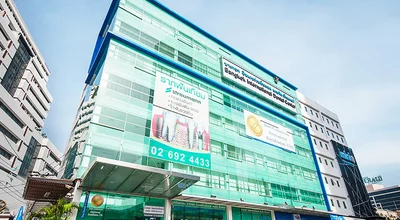
Bangkok International Dental Center
Thailand's first JCI-accredited dental center with more than 70 specialist dentists
View hospital profile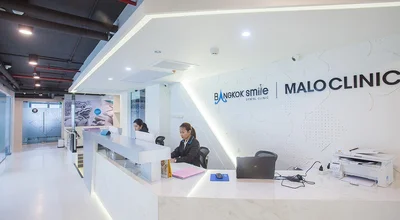
Bangkok Smile Dental Clinic
Multi-branch dental group founded in 2003 and the official Thai partner of the Malo All-on-4 network
View hospital profile
Thantakit International Dental Center
Thailand's longest established dental center, operating in Bangkok since 1945 with more than 40 dentists
View hospital profile
Get a Free Dental Quote in Minutes
Tell us what you need and we'll match you with the right specialist and return real clinic quotes.
- Itemised clinic quotes with no hidden fees
- Matched to a dentist experienced in your specific treatment
- Completely free, even if you decide not to go ahead


Rated 5 stars by our patients
The complete guide to Gum Graft in Thailand
Everything below is for readers who want the full detail: costs broken down, types and techniques, recovery, risks and safety, and planning your trip.
Gum Graft Dentists & Clinics in Thailand
Graft outcomes depend heavily on the periodontist's skill and the technique used. Here is what to look for.
Leading Periodontal Clinics in Bangkok
Our partner clinics have dedicated periodontal suites with microsurgical instruments, magnification systems, and the capability to process PRF on-site. They are equipped for the precision that soft tissue grafting demands and handle gum surgery cases routinely.
Experienced Periodontists
Our partner periodontists hold postgraduate qualifications in periodontology and specialise in soft tissue surgery. They are experienced in all graft techniques (connective tissue, free gingival, and tunnel with allograft) and recommend the approach best suited to your specific recession pattern.
What to Look for in a Periodontist
Ask about root coverage success rates and which graft technique they recommend for your case. A periodontist who discusses tissue biotype, recession classification, and expected coverage percentage is working at the specialist level. Review before-and-after photos showing gum line symmetry and colour blending.
Understanding Your Results
Gum graft results develop over several months as the tissue matures. Here is what to expect.
Typical Gum Graft Results
A successful graft covers exposed root surfaces, restores a natural gum line contour, and eliminates root sensitivity. The tissue thickens and blends in colour with the surrounding gum over two to three months. Multiple teeth treated in a single session heal with an even, symmetrical gum line.
What Results Can You Expect?
Root coverage rates vary by recession severity and technique. The Cochrane evidence puts mean root coverage from connective tissue grafts at around 80%, with complete (100%) coverage achieved in a subset of cases, roughly a third to a half, depending mainly on the bone level beneath the recession. The initial appearance improves within weeks, with final colour blending and tissue maturity reached by three to six months. Sensitivity resolves as the root becomes covered and sealed by the new tissue.
Gum Graft Cost in Thailand
Average Cost of Gum Grafting
A gum graft in Thailand typically costs between $300 and $600 per site, depending on the technique, whether autograft or allograft tissue is used, and how many teeth are treated. Connective tissue grafts from the palate are the most common and sit in the mid-range. Tunnel techniques with allograft may cost slightly more due to the processed tissue.
Cost Breakdown
The total cost covers the periodontist's fee, local anaesthesia and sedation, graft material (autograft from palate or processed allograft), sutures, post-operative medications, and follow-up appointments. If PRF augmentation or Emdogain is used, these are quoted as additional items.
What Affects the Price?
The number of teeth treated is the primary cost driver. Treating multiple sites in a single session is more cost-effective per site than treating one tooth at a time. The graft technique and donor source also affect price: allograft tissue costs more than autograft from your own palate. Adjunctive materials like PRF and Emdogain add to the total.
Thailand vs International Price Comparison
Gum grafting in Thailand costs 60–70% less than equivalent treatment in the US ($900–$1,800 per site), Australia (A$850–A$1,650), and UK (£750–£1,500). For patients needing grafts on multiple teeth, the combined savings in Thailand can cover the entire trip and leave thousands unspent.
Non-Surgical Alternatives to a Gum Graft
If your recession is mild and the main complaint is sensitivity, there are non-surgical options worth knowing about. Desensitising agents, fluoride varnishes, and bonding agents seal the exposed root and ease the cold and sweet sensitivity, while tooth-coloured composite or a thin pink composite can be bonded over the bare root to mask it and make a long tooth look shorter. Correcting the cause, usually switching to a soft brush and a gentle technique, then halts further recession. These are useful steps, and for some people they are enough.
What they cannot do is bring the lost tissue back. Bonding and desensitisers cover or soothe the root, but they do not rebuild a thicker, attached gum band, so the underlying recession stays the same and composite at the gum line can stain, chip, or trap plaque and needs upkeep. They manage the symptoms rather than reverse the recession, and they do nothing to protect a tooth where the gum has thinned to almost nothing.
A gum graft is the route when you want the recession itself restored: real tissue transplanted to cover the root, thicken the gum, and give a lasting, natural gum line rather than a cosmetic patch over the problem. Where recession is moderate to advanced, sensitivity is persistent, or there is too little attached gum left to protect the tooth, grafting is what delivers a durable result, and that is what the rest of this page covers.
Types of Gum Graft
The graft technique and donor source are matched to the extent of recession, tissue thickness, and the number of teeth involved. Here are the main approaches.
Connective Tissue Graft
The most commonly used technique and the gold standard for root coverage. A thin layer of connective tissue is harvested from beneath the palate surface through a trap-door incision, placed over the exposed root, and secured under the surrounding gum. The palate heals quickly because the surface tissue is preserved over the donor site.
- Highest root coverage rates of any graft technique
- Excellent colour and texture match for a natural-appearing result
- Palate donor site heals within one to two weeks under the intact surface
- Best for: single or multiple teeth requiring predictable root coverage
Free Gingival Graft
A strip of tissue taken directly from the palate surface and placed at the recession site. Used primarily to increase the width and thickness of attached gum tissue rather than cover roots. The colour match may differ initially but blends over months.
- Adds thickness and width to the gum band, preventing further recession
- Creates a resilient buffer zone of attached tissue around vulnerable teeth
- Colour blending improves over several months as the graft matures
- Best for: areas with minimal attached gum that need reinforcement against further recession
Tunnel Technique with Allograft
A minimally invasive approach where the periodontist creates a tunnel beneath the gum without surface incisions. Processed donor tissue is threaded through the tunnel and positioned over the exposed roots. No palate wound means less discomfort and faster recovery.
- No palate donor site: reduced post-operative discomfort
- Excellent cosmetic results with no visible incision lines
- Multiple teeth can be treated in a single minimally invasive session
- Best for: patients wanting minimal invasiveness, or those needing coverage across multiple teeth
Gum Graft Techniques
Microsurgical skill determines how well the graft integrates, how much root coverage is achieved, and how visible the result looks. Here is what the technical process involves.
Microsurgical Instrumentation
Gum grafting is increasingly performed with microsurgical instruments and magnification. Smaller incisions, finer sutures, and precise tissue handling produce less trauma, better blood supply preservation, and higher graft survival. This is the direction periodontal surgery has moved.
- Smaller instruments cause less tissue trauma during surgery
- Finer sutures (6-0 or 7-0) produce less scarring and faster healing
- Magnification allows precise graft positioning and tension-free closure
- Best for: all gum graft cases: microsurgical technique improves outcomes measurably
Root Surface Preparation
Exposed root surfaces are decontaminated and biomodified before graft placement. EDTA or citric acid conditioning removes the smear layer, and enamel matrix derivative (Emdogain) can be applied to promote new attachment. These steps improve the biological interface between graft and root.
- Root conditioning removes bacterial contamination and the smear layer
- Enamel matrix derivative promotes new connective tissue attachment
- Biologically optimised root surface improves graft integration
- Best for: cases where maximising new attachment and root coverage is the priority
Platelet-Rich Fibrin (PRF) Augmentation
A small blood draw before surgery produces a fibrin membrane concentrated with growth factors. Placed over or under the graft, PRF accelerates healing, improves graft integration, and reduces post-operative discomfort. It is an autologous material: made from your own blood.
- Growth factor concentration accelerates tissue healing
- Autologous material with no risk of rejection or allergic reaction
- Reduces post-operative swelling and discomfort
- Best for: patients wanting optimised healing, or complex cases with multiple graft sites
Pinhole Surgical Technique
A scalpel-free, suture-free method for treating recession, known as the Chao Pinhole Surgical Technique. The periodontist makes a tiny pinhole in the gum, then uses specialised instruments to loosen and gently reposition the existing tissue down over the exposed roots, holding it with small collagen strips rather than stitches. Because there are no incisions or palate harvest, swelling and downtime are minimal. It suits the right recession pattern rather than every case, and not every clinic offers it.
- No scalpel incisions and no sutures: a single pinhole entry point
- No palate donor wound, so noticeably less discomfort and faster recovery
- Several adjacent teeth can be corrected through the same minimal access
- Best for: broad, even recession across multiple teeth where minimal downtime is the priority
Gum Graft Recovery Timeline
Days 1–3
Mild swelling and discomfort at the graft site and palate donor site (if used). Take prescribed medication, apply ice packs, and eat cool soft foods on the opposite side. Do not brush or disturb the graft area: an antimicrobial rinse is provided instead.
Days 4–7
Swelling subsides and discomfort decreases noticeably. Continue salt-water rinses after meals. The graft begins establishing blood supply from the underlying tissue. Stick to a soft diet and avoid crunchy or spicy foods.
Weeks 2–3
The graft is well integrated. Any non-dissolvable sutures were already removed at the day-seven follow-up before you flew home, and fine resorbable sutures dissolve on their own around this time. The palate donor site is comfortable. Gentle brushing of the grafted area with a soft toothbrush can resume.
Months 2–3
The grafted tissue matures, thickens, and blends in colour with the surrounding gum. Root coverage is established and sensitivity resolves. Full tissue maturation continues for up to six months, with a natural, healthy gum line as the outcome.
When Can You Fly After a Gum Graft?
Most patients can fly home five to seven days after a gum graft, once the follow-up confirms the graft is attaching properly. The grafted tissue is fragile in the first few days, so staying close to your surgical team during early healing is important. Cabin pressure does not affect the graft site, but avoid anything that could bump or disturb the area during travel.
When Can You Eat and Drink Normally?
A soft, cool diet is essential for the first week: avoid hot, spicy, crunchy, or acidic foods that could irritate the graft or donor site. Chew on the opposite side of your mouth. By week two, you can gradually reintroduce warmer and slightly firmer foods. Full, unrestricted eating typically resumes within three to four weeks as the tissue matures.
When Will You See Final Results?
The graft begins integrating with the surrounding tissue within the first two weeks. Initial healing is visible within a month, but the tissue continues to mature and blend in colour and texture over three to six months. The final result is a stable, healthy gum line that protects exposed roots and looks natural.
Anaesthesia for Gum Grafting
A gum graft is an outpatient procedure done under local anaesthetic, so you stay awake and comfortable throughout.2 Your periodontist numbs the recession site and, where a connective tissue or free gingival graft is used, the palate donor area as well. You feel pressure and movement rather than pain, and the numbness lasts well past the end of the appointment.
If you feel anxious about dental surgery, sedation is available alongside the local anaesthetic to keep you relaxed and calm while still awake. Many patients are perfectly comfortable with local alone, especially with the tunnel technique, which avoids a palate wound altogether; your periodontist talks this through with you beforehand and tailors it to how you feel.
Before treatment you have a periodontal assessment that reviews your medical history and any medications, including blood thinners. You feel nothing during the graft itself, and once the numbness fades the discomfort is mild and predictable: usually most noticeable at the palate donor site for the first few days, and well controlled with the medication your periodontist prescribes.
Risks and Safety of Gum Grafting
Gum grafting is a well-established periodontal procedure with predictable outcomes when performed microsurgically by an experienced periodontist.
- Palate donor site discomfort for the first few days (temporary and manageable)
- Temporary altered sensation at the palate (numbness or tingling) after a connective tissue or free gingival harvest, as the small palatal nerve branches recover
- Colour or texture mismatch at a free gingival graft site, most noticeable early and blending over months
- Swelling and minor bruising at the graft site
- Incomplete root coverage in cases with significant bone loss
- Post-operative infection at the graft or donor site (rare)
- Graft failure due to inadequate blood supply (uncommon with proper technique)2
- Temporary increase in tooth sensitivity as the graft integrates
A thorough assessment of recession extent, tissue thickness, root condition, and bone levels guides the choice of technique and sets realistic root coverage expectations for each case.
Is Gum Grafting Safe in Thailand?
Yes. Gum grafting is a routine periodontal procedure performed under local anaesthesia as an outpatient. Our partner periodontists use microsurgical instruments, premium graft materials, and proven protocols. The procedure carries minimal medical risk and produces predictable results in experienced hands.
How to Maximise Graft Success
Stop smoking before surgery: smoking is the single biggest risk factor for graft failure. Have active gum disease treated before grafting. Follow post-operative instructions precisely, particularly the prohibition on brushing the graft site for two weeks. Switch to a soft toothbrush and gentle technique permanently to prevent future recession.
Can Recession Recur After Grafting?
With proper oral hygiene and gentle brushing technique, gum grafts are long-lasting. The original cause of recession (whether aggressive brushing, thin tissue, or periodontal disease) must be identified and corrected to prevent recurrence. Switching to a soft toothbrush and mastering a gentle circular brushing motion is essential.
Planning Your Trip to Thailand for Gum Grafting
Gum grafting requires seven to ten days in Thailand. Here is how to plan your trip.
How Long to Stay in Thailand
Plan for seven to ten days. Day one covers the consultation and periodontal assessment. The graft procedure is performed on day two or three. A follow-up around day five checks early integration, and any non-dissolvable sutures are removed at a day-seven follow-up before you fly home. Staying the full ten days gives the graft time to establish and gives you greater confidence before flying home.
What Is Included in a Dental Trip
Your care coordinator schedules all appointments and provides daily check-in support during recovery. The treatment quote covers the periodontist's fee, anaesthesia, graft material, medications, and follow-up. Flights and accommodation are separate.
Recovery in Bangkok
The first three to four days require rest and a soft diet. By mid-week, most patients feel well enough for gentle sightseeing. Avoiding spicy food, alcohol, and strenuous activity for the first week protects the graft. Many patients combine grafting with other dental treatments scheduled around the recovery window.
Related Procedures
Other procedures that address similar goals or conditions, in case one of them is a closer fit for you.
Planning your treatment in Thailand
Independent guides to help you weigh the decision, before you commit to anything.
Common Questions About Gum Grafting
Everything you need to know before your procedure

Medical References
Keep researching with AI
Open this guide in your AI assistant to dig deeper and ask the questions it didn't answer.
Opens in a new tab with this guide already loaded.
Medical disclaimer: This information is for educational purposes only and does not replace professional dental advice. Individual results, recovery times, and suitability vary. Always consult a qualified dentist before making decisions about treatment.
Ready to Get Started?
Speak with our care coordinators for a free, no-obligation consultation and personalised quote.
Speak to Our Team