All-on-4 Package in Thailand Your guide to cost, top dentists & hospitals
A full arch of fixed teeth supported by just four implants, often placed and loaded in a single day.
What Is All-on-4 Package?
Also known as: All on 4 Package · Full-Arch Implant Treatment Package
An All-on-4 package is a full-arch dental treatment that replaces every tooth in a jaw with a fixed bridge carried on four implants. Two sit straight at the front and two are tilted to engage denser bone at the back, which often avoids the bone grafting conventional implants need. The implants themselves can last a lifetime with good care, while the bridge they carry is the part more likely to need replacing over the years2, and the package bundles 3D imaging, guided planning, surgery and extractions, same-day temporary teeth, and the final prosthesis on premium systems such as Nobel Biocare or Straumann.
If you have struggled for years with loose dentures or failing teeth, full-arch surgery can feel like a big step. The reassuring part is that you usually leave with fixed teeth the same day. Your implantologist plans everything around your jaw and what you want to eat again.
The implants still need time to fuse with the bone before the permanent bridge goes on. Whether All-on-4 suits you depends on your front-jaw bone, your general health and committing to the two-trip protocol, which your 3D scan confirms before anything is booked.
It can address a range of concerns, including:
Am I a Good Candidate for All-on-4 Package?
Many patients refused conventional implants are good All-on-4 candidates; the deciding factors are anterior bone, health, and the two-trip protocol.
Implantologists check that your situation is genuinely full-arch, since All-on-4 replaces every tooth in the arch it treats.
A failing arch: All or most teeth loose, decayed, or already missing, where saving individual teeth no longer makes sense.
Denture frustration: Slipping, sore spots, and restricted eating are the classic reasons patients move to fixed implant-supported teeth.
Told you lack bone: The angled posterior implants engage dense anterior bone, so many patients refused conventional implants still qualify.
The protocol depends on sufficient bone at the front of the jaw, which the CT scan measures precisely.
Dense anterior bone: The tilted posterior implants anchor in the front of the jaw, often avoiding grafting despite bone loss further back.
Thin bone still happens: Very thin anterior bone may need grafting before placement, which extends treatment beyond a single trip.
Mapped before surgery: 3D imaging verifies bone density and nerve and sinus positions, so candidacy is confirmed objectively rather than estimated in the chair.
Implant integration is biological, and a short list of health factors dominates the success rate.
Diabetes controlled: Uncontrolled blood sugar compromises implant integration and needs to be stabilised first.
Smoking stopped: The NHS advises stopping at least six months before implant treatment and staying stopped through healing; smoking is the single biggest modifiable risk factor for implant failure.
Medication review: Osteoporosis medication can affect bone healing and must be discussed with the implantologist before planning.
Grinding managed: Severe bruxism risks bridge fracture and implant overload without a nightguard plan; an All-on-6 upgrade may be recommended instead.
All-on-4 is a two-stage protocol, and candidacy includes being able to see both stages through.
Two trips: 10-14 days for surgery and same-day temporary teeth, then 5-7 days after 3-6 months for the permanent prosthesis, or coordination with a dentist at home if returning is not possible.
Recovery protocol: Soft foods for the first 2-4 weeks and disciplined hygiene around the implants while they integrate.
Long-term maintenance: Six-monthly check-ups and daily cleaning around the prosthesis keep a 15-25 year result on track.
Who is not suitable for all-on-4 package?
- Uncontrolled diabetes until blood sugar is stabilised
- Smoking continued within six months of surgery
- Osteoporosis medication not yet discussed with the implantologist
- Severe bruxism without a nightguard plan
- Patients with very thin anterior bone expecting to avoid staged grafting
- Recent or planned radiation therapy to the jaw, which severely impairs bone healing and implant integration
- Anticoagulant or immunosuppressive medication until reviewed and a management plan is agreed with your prescribing doctor
Pricing
How Much Will All-on-4 Package Cost in Thailand?
What all-on-4 package costs at accredited hospitals in Thailand, and what your final quote depends on.
Get your exact price
Tell us what you're considering and we'll send a personalised quote from accredited hospitals within 24 hours.
Get my free quoteTypical prices in Thailand
Typical ranges based on recent hospital quotes. Your exact price depends on the hospital and how complex your case is, and is confirmed at your teleconsultation.
All-on-4 Package
Where you land depends on the prosthesis material and on whether one jaw is treated or both.
| Single arch, acrylic prosthesis Fixed teeth in one jaw at the most accessible price | $8,000 to $10,000 ฿272,000 to ฿340,000 |
| Single arch, zirconia prosthesis One jaw in stronger, more lifelike zirconia built to last longer | $11,000 to $14,000 ฿374,000 to ฿476,000 |
| Both arches, acrylic prosthesis A full mouth of fixed teeth in the lighter material | $14,000 to $18,000 ฿476,000 to ฿612,000 |
| Both arches, zirconia prosthesis The fullest result, upper and lower jaws in premium zirconia | $18,000 to $24,000 ฿612,000 to ฿816,000 |
Get your exact price
Tell us what you're considering and we'll send a personalised quote from accredited hospitals within 24 hours.
Clinics Trusted for All-on-4 Package
From internationally accredited flagships to dedicated specialist clinics, these are the kinds of facilities where international patients have this procedure.
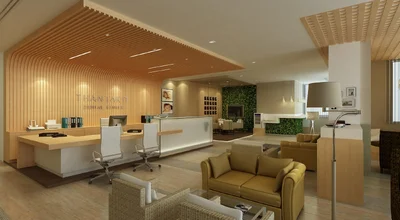
Thantakit International Dental Center
Thailand's longest established dental center, operating in Bangkok since 1945 with more than 40 dentists
View hospital profile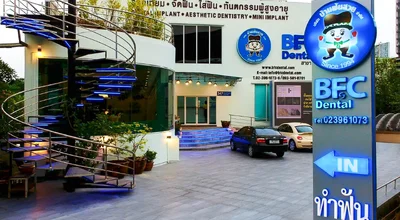
BFC Dental
Implant-focused Bangkok dental clinic founded in 1994, placing more than 4,600 implants a year
View hospital profile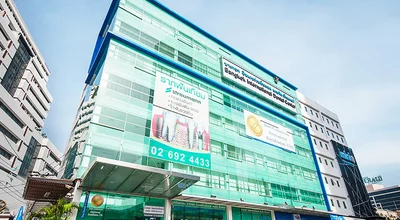
Bangkok International Dental Center
Thailand's first JCI-accredited dental center with more than 70 specialist dentists
View hospital profile
Get a Free Dental Quote in Minutes
Tell us what you need and we'll match you with the right specialist and return real clinic quotes.
- Itemised clinic quotes with no hidden fees
- Matched to a dentist experienced in your specific treatment
- Completely free, even if you decide not to go ahead


Rated 5 stars by our patients
The complete guide to All-on-4 Package in Thailand
Everything below is for readers who want the full detail: costs broken down, types and techniques, recovery, risks and safety, and planning your trip.
All-on-4 Implantologists in Thailand
All-on-4 is a protocol-driven procedure, but the implantologist's experience with the specific technique matters significantly. Here is what our partners offer.
Leading Clinics in Bangkok
Our partner clinics have dedicated implant departments with 3D CT imaging, computer-guided surgery capability, and in-house prosthetic laboratories. They handle All-on-4 cases as a regular part of their practice, not as an occasional procedure. Full-arch cases require infrastructure that boutique clinics typically lack.
Experienced Implantologists
Our partners are specialists in implantology with specific All-on-4 protocol training. They use computer-guided surgery for every case and work with premium implant systems exclusively. High case volume with this specific protocol builds the judgment needed to handle anatomical variations and unexpected situations during surgery.
What to Look for
Confirm the implantologist uses computer-guided surgery, not freehand. Ask which implant system they use and verify it is a premium brand. Ask how many All-on-4 cases they complete annually. Look at before-and-after photos of full-arch cases. And ask about their complication protocol; a good clinic has clear procedures for managing any issues.
Understanding Your Results
All-on-4 produces one of the most dramatic transformations in dentistry. Here is what the outcome looks like.
Typical All-on-4 Results
Patients go from failing or missing teeth (often with denture-related discomfort and dietary restrictions) to a full set of fixed, permanent teeth. The prosthesis is designed to look natural, with individually characterised teeth and natural gum contours. Most patients report that the improvement in confidence and quality of life is transformative.
What Results Can You Expect?
A fixed set of teeth that look, feel, and function close to natural. You can bite, chew, and smile without thinking about your teeth for the first time in years. Zirconia prostheses are virtually indistinguishable from natural teeth. Acrylic prostheses look good but may show signs of wear after several years. The consultation is where your implantologist shows you what to expect based on your specific anatomy.
All-on-4 Cost in Thailand
Average Cost of All-on-4
An All-on-4 package in Thailand typically costs between $8,000 and $24,000 depending on the implant system, prosthesis material (acrylic vs zirconia), and whether one or both arches are treated. A single arch with an acrylic prosthesis sits at the lower end; a dual-arch zirconia case sits at the upper end. Additional procedures like bone grafting or extensive extractions may also add to the total.
Cost Breakdown
The package covers the implantologist's fee, four implants per arch, 3D CT imaging, computer-guided surgical planning, all surgical procedures including extractions, the temporary fixed prosthesis, sedation, medications, and follow-up appointments during your stay. The final permanent prosthesis is quoted separately because it is fitted at a later visit.
What Affects the Price?
Prosthesis material is the biggest variable; zirconia costs significantly more than acrylic. The number of arches treated (single vs both) doubles the implant and prosthesis costs. Bone grafting adds to the total if needed. And the implant brand matters; premium systems cost more but carry far stronger long-term evidence.
Thailand vs International Price Comparison
All-on-4 in Thailand costs 60–70% less than equivalent treatment in the US ($24,000–$72,000), Australia (A$22,400–A$66,000), and UK (£20,000–£60,000). The upper end of each range covers dual-arch zirconia cases that typically run $60,000+ at home but can be completed in Thailand for $18,000–$24,000 using the same implant systems.
All-on-4 vs Dentures and Conventional Implants
A full removable denture is the non-surgical alternative, and the cheapest. It replaces a whole arch of teeth, can be made quickly, and needs no implants or surgery. For some people that is genuinely enough. The trade-off is that it rests on the gum rather than being anchored in bone, so it can slip when you eat or speak, cause sore spots, and cover the palate, which dulls taste. Crucially, the jawbone underneath a denture keeps shrinking over the years, so the fit loosens and the denture needs relining or remaking3. It is removable, taken out for cleaning, and never feels quite like your own teeth.
Conventional individual implants sit between the two. Replacing a full arch tooth by tooth can mean six to eight implants and often bone grafting where the back of the jaw has lost height, which usually means more surgery, more cost, and several months in temporaries before fixed teeth. It is a sound route when only some teeth are missing, but for a whole failing arch it is rarely the most efficient option.
All-on-4 is the route when you want fixed teeth that stay in your mouth, stop the bone loss a denture allows, and let you eat normally again, ideally without grafting. Four angled implants carry the entire bridge, you usually leave with same-day temporary teeth, and a well-maintained result is designed to last 15 to 25 years or more. If a full arch is failing and you are done with the limits of removable dentures, this is the procedure the rest of this page covers.
All-on-4 Package Options
The package configuration depends on your bone quality, prosthetic material preference, and budget. Here are the main options available at our partner clinics.
All-on-4 with Acrylic Prosthesis
Four implants per arch supporting an acrylic (PMMA) fixed bridge loaded on surgery day. The most affordable entry point to fixed full-arch teeth. Acrylic prostheses can be upgraded to zirconia once healing is complete.
- Same-day fixed teeth at the most accessible price point
- Good short- to medium-term durability (5–10 years)
- Can be upgraded to zirconia after full healing
- Best for: patients wanting immediate fixed teeth at the lowest cost
All-on-4 with Zirconia Prosthesis
The premium option using monolithic zirconia for the final bridge. Stronger, more stain-resistant, and more lifelike than acrylic. Designed to last 15–25 years or more. The closest thing to natural teeth in terms of appearance and function.
- Superior strength and aesthetics, virtually indistinguishable from natural teeth
- Highly stain-resistant with no discolouration over time
- Designed for 15–25+ years of daily function
- Best for: patients wanting the highest-quality, longest-lasting result
All-on-6 Upgrade
Six implants per arch instead of four, providing additional support and load distribution. Recommended for larger jaws, patients who grind their teeth, or those wanting extra long-term security. Available with acrylic or zirconia prostheses.
- Additional implants distribute forces more evenly across the arch
- Recommended for bruxism or above-average bite force
- Provides extra redundancy if one implant encounters problems
- Best for: patients wanting maximum stability and long-term security
Zygomatic All-on-4
A variant for the upper jaw when even the anterior bone is too thin or resorbed for standard All-on-4. Longer zygomatic implants anchor into the dense cheekbone (zygoma) rather than the maxilla, so a fixed full arch is still possible without major bone grafting. It is a more specialised procedure that only experienced implantologists perform.
- Anchors into the cheekbone when upper-jaw bone is severely deficient
- Avoids the major grafting that would otherwise delay treatment by months
- Still supports same-day fixed temporary teeth in suitable cases
- Best for: upper-arch patients with severe bone loss who would otherwise be turned down
All-on-4 Surgical Process
The All-on-4 protocol follows a structured surgical and prosthetic sequence. Here is how each phase works and what to expect.
Computer-Guided Surgical Planning
3D cone beam CT imaging maps your jawbone density, nerve positions, and sinus locations. Implant positions are planned digitally and verified using surgical guides: 3D-printed templates that direct each implant into its planned position with millimetre accuracy.
- Full 3D jawbone mapping identifies optimal implant positions
- Surgical guides ensure precision that freehand placement cannot match
- Nerve and sinus proximity verified digitally before surgery
- Best for: all All-on-4 cases; guided surgery is the standard protocol
Immediate Loading Protocol
Temporary fixed teeth are attached to the implants on the same day as surgery. This works because the angled posterior implants achieve high initial stability in dense anterior bone. You leave the clinic with a full set of functional teeth hours after implant placement.
- Fixed temporary prosthesis attached to implants on surgery day
- Angled implant design achieves immediate stability for loading
- Functional teeth from day one, no period without teeth
- Best for: the core All-on-4 advantage; this is what the protocol was designed for
Final Prosthesis Fabrication
After 3–6 months of healing, digital impressions are taken for your final prosthesis. Acrylic or zirconia bridges are milled and fitted with precision adjustments for bite, aesthetics, and comfort. The final prosthesis is screwed onto the implants for a secure, permanent result.
- Final prosthesis fabricated after osseointegration is confirmed
- Precision-milled from digital impressions for exact fit
- Screwed onto implants for a secure, retrievable attachment
- Best for: the completion phase; converting temporaries to the permanent result
All-on-4 Recovery Timeline
Days 1–3
Swelling, bruising, and moderate discomfort are part of the normal healing response. Your temporary teeth are already in place, so you can speak and smile immediately. Liquid and very soft foods only. Pain medication and antibiotics are provided. Apply ice packs and rest.
Days 4–7
Swelling decreases significantly. You can transition to soft solid foods like pasta, scrambled eggs, and steamed vegetables. A follow-up appointment checks the implants and prosthesis, with any necessary adjustments made.
Weeks 2–8
Gums heal around the implants and the temporary prosthesis functions well for everyday eating and speaking. Most patients are back to desk work and light activity within about a week, with the gym and strenuous exercise held off until the two-week mark. Implants are integrating with your jawbone beneath the surface.
Months 3–6
Osseointegration is complete and implants are firmly anchored. Your final prosthesis is fabricated and fitted during a second short visit, or coordinated with your dentist at home. Your permanent teeth are ready for unrestricted use.
When Can You Fly Home?
Most patients fly home 10–14 days after surgery, once initial healing is confirmed and the temporary prosthesis is functioning well. Cabin pressure is safe at this stage. Mild swelling may persist but will not worsen during flight. Your implantologist confirms clearance at your final check-up.
When Can You Eat Normally?
Soft foods only for the first 2–4 weeks while surgical sites heal. From week 4 onwards, you can gradually introduce firmer foods. Once your permanent prosthesis is fitted after 3–6 months, you can eat virtually anything, including foods you may have avoided for years with dentures or failing teeth.
The Second Visit for Final Teeth
A return visit of 5–7 days is typically needed after 3–6 months for your permanent prosthesis to be fabricated and fitted. Your temporary teeth function well during the interim. If a return trip is not feasible, the final stage can be coordinated with an implant dentist at home using the records we provide.
Anaesthesia for All-on-4
All-on-4 surgery is done under local anaesthetic with sedation, so the area is fully numbed and you stay relaxed but awake throughout. You feel no pain while the implants are placed, and the sedation keeps you calm and comfortable during what is otherwise a longer appointment. The implantologist and clinical team monitor you throughout, and the level of sedation is adjusted to suit you.
If you feel anxious about dental work, that is common with a full-arch case and worth raising early. Your implantologist decides the right depth of sedation with you, based on your medical history, how many extractions are needed, and whether one or both arches are being treated in the session. Heavier sedation options can be discussed for nervous patients where it is safe to do so.
Before treatment you have a full assessment, including your 3D scan, a review of any medications, and a check of conditions like diabetes that affect healing. During placement you feel only pressure and movement, never sharp pain, and once the numbness wears off there is moderate swelling and soreness that peaks around day two to three. This is well controlled with the pain medication and antibiotics your clinic prescribes, and most patients find it more manageable than expected, helped by walking out with fixed teeth the same day.
Risks and Safety of All-on-4
The All-on-4 protocol has a well-documented safety record backed by extensive clinical research. When performed by experienced implantologists using computer-guided surgery, complications are uncommon.
- Post-operative swelling and bruising (normal, peaks at day 2–3)
- Lip or chin numbness from nerve irritation (rare, usually temporary and resolving within weeks, though inferior alveolar nerve injury can be permanent in rare cases)1
- Implant site infection (rare with antibiotic protocol and good hygiene)
- Peri-implantitis, a bacterial inflammation of the gum and bone around the implants1 and the most common cause of late implant failure (controlled with diligent cleaning and check-ups)
- Implant integration failure (uncommon; over 90% of implants bond successfully to the jawbone, with reported survival of 80–95% over 15 years)1
- Prosthesis fracture or loosening during the temporary phase
- Sinus involvement in upper arch cases (rare with guided surgery)
- Added risks with zygomatic All-on-4 (chronic sinusitis, prolonged cheek or infraorbital numbness, and rare orbital injury), which is why it is reserved for experienced zygomatic surgeons
The most important risk-reduction factor is implant system quality. Premium implant brands (Nobel Biocare, Straumann) have published survival data spanning decades. Off-brand implants lack this documentation and should be avoided for full-arch cases.
Is All-on-4 Safe in Thailand?
Yes. The All-on-4 protocol is identical regardless of where it is performed. The implant systems (Nobel Biocare, Straumann), surgical guides, and immediate loading protocols used at our partner clinics are the same products used at leading centres worldwide. What matters is the implantologist's experience with the specific protocol, and our partners handle All-on-4 cases as a core part of their practice.
How to Reduce Risks
Confirm the clinic uses premium implant systems with published long-term data. Verify the implantologist uses computer-guided surgery, not freehand placement. Stop smoking as early as possible before surgery and stay stopped through healing; the NHS advises stopping at least six months before implant treatment, as smoking is the single biggest modifiable risk factor for implant failure1,2. Follow the post-operative diet and hygiene instructions precisely. Attend all follow-up appointments.
What If an Implant Fails?
In the uncommon event that an implant does not integrate, it can usually be replaced after a healing period. The temporary prosthesis can often be adapted to function on three implants while the replacement heals. Our partner clinics have clear protocols for managing implant complications and include follow-up care in the package.
Peri-Implantitis and Long-Term Care
Peri-implantitis is bacterial inflammation of the gum and bone around the implants and is the single biggest long-term risk to an All-on-4, being the most common cause of late implant failure. It builds slowly and is largely preventable. Clean daily under and around the fixed bridge with a water flosser and interdental brushes, keep six-monthly professional cleanings, and report any bleeding, swelling, or soreness early so it can be treated before bone is lost.
Risks Specific to Zygomatic All-on-4
Zygomatic implants anchor in the cheekbone rather than the jaw, so they carry risks beyond a standard All-on-4: chronic sinusitis, prolonged cheek or infraorbital numbness, and, rarely, injury near the orbit. These are uncommon in experienced hands, which is why zygomatic cases should only be done by surgeons with specific training in the technique. If a standard All-on-4 or grafting is a realistic option for you, it is generally the lower-risk route.
Planning Your All-on-4 Trip to Thailand
An All-on-4 case requires careful planning and typically two trips. Here is how to organise both.
First Visit (10–14 Days)
The first trip covers 3D imaging, treatment planning, implant surgery, extractions, and fitting of temporary fixed teeth. You leave Thailand with a full set of functional teeth. Allow 2–3 days of rest after surgery before resuming light activities. Your coordinator schedules everything in advance so appointments flow efficiently.
Second Visit (5–7 Days)
After 3–6 months of healing, you return for digital impressions and fitting of your permanent prosthesis. This visit is shorter and less intensive; no surgery is involved. The final prosthesis is tried in, adjusted, and screwed into place. If a return trip is not possible, this stage can be coordinated at home.
What Is Included in Your Package
Your care coordinator manages the full process across both visits. The package covers all implantologist fees, premium implants, 3D imaging, guided surgery, temporary prosthesis, sedation, medications, and all follow-up appointments. The permanent prosthesis is quoted separately. Flights and accommodation are arranged independently.
Related Procedures
Other procedures that address similar goals or conditions, in case one of them is a closer fit for you.
Planning your treatment in Thailand
Independent guides to help you weigh the decision, before you commit to anything.
Common Questions About the All-on-4 Package
Everything you need to know before your treatment

Medical References
Keep researching with AI
Open this guide in your AI assistant to dig deeper and ask the questions it didn't answer.
Opens in a new tab with this guide already loaded.
Medical disclaimer: This information is for educational purposes only and does not replace professional dental advice. Individual results, recovery times, and suitability vary. Always consult a qualified dentist before making decisions about treatment.
Ready to Get Started?
Speak with our care coordinators for a free, no-obligation consultation and personalised quote for your All-on-4 package.
Speak to Our Team