Self-Ligating Braces in Thailand Your guide to cost, top dentists & hospitals
A smarter bracket mechanism that means fewer appointments, less discomfort, and often faster results.
What Are Self-Ligating Braces?
Also known as: Damon Braces · Passive Self-Ligating Fixed Appliance
Self-ligating braces are fixed braces that move teeth by holding the archwire with a built-in clip or sliding gate instead of the elastic bands used on conventional braces. That clip lowers friction between wire and bracket, so more of the archwire's force reaches the tooth instead of being lost at the bracket-wire interface, which can make movement more efficient. They correct the same problems as ordinary fixed braces, including crowding, gaps, and bite issues, but usually need adjusting every 8 to 10 weeks rather than every 4 to 6. Common systems include Damon, Empower, and In-Ovation, in metal or tooth-coloured ceramic. Treatment typically runs 10 to 24 months.
If braces feel like a big step, the day-to-day is more manageable than many expect. There is no surgery and no anaesthetic, fitting the brackets is painless, and with no elastic ties to trap food, cleaning is simpler.
Most people feel mild pressure for a few days after each adjustment, and many find these gentler than ordinary braces. The main thing to plan for is that adjustments still happen in person, so they suit you best if you can return on schedule or have an orthodontist at home to continue the plan.
It can address a range of concerns, including:
Am I a Good Candidate for Self-Ligating Braces?
Suitability for self-ligating braces follows the same orthodontic assessment as any fixed appliance, with travel logistics weighing unusually heavily in the decision.
Orthodontists first confirm your diagnosis is one fixed braces handle well, then whether self-ligation adds real value for your case.
Crowding and spacing: The core indications. Passive systems work especially well in the early alignment phase and can reduce extraction needs in borderline crowding cases.
Bite problems: Most bite discrepancies treatable with fixed braces are treatable here, though severe skeletal cases may still need jaw surgery alongside.
Pressure sensitivity: The low-friction mechanics, usually paired with light-force continuous wires, make this system attractive if you are wary of adjustment soreness or found conventional brackets uncomfortable.
Tooth movement loads the bone and gum supporting each tooth, so periodontal health is checked before any brackets go on.
Stable gums: Untreated gum disease must be brought under control first; even light forces can destabilise teeth with unhealthy supporting bone.
Hygiene discipline: The absence of elastic ties makes cleaning easier, but plaque around brackets still causes enamel demineralisation. Orthodontists look for consistent home care.
Sound teeth: Decay and failing restorations are dealt with before bonding so treatment is not interrupted mid-course.
Treatment runs 10–24 months, so orthodontists check the schedule is workable before starting, especially for overseas patients.
Adjustments every 8–10 weeks: Roughly half the visits conventional braces need, but still non-negotiable. Plan return trips or local coordination for the full duration.
A specialist back home: If you will not return to Thailand each time, a local orthodontist willing to work from the Thai treatment plan is essential.
Retention afterwards: Retainers are fitted at debonding and worn long term; the commitment does not end when the brackets come off.3
Self-ligation changes the experience of treatment more than the end result, and good candidates understand that distinction.
Same outcomes, different journey: Evidence supports faster early alignment and better comfort, but total treatment time depends mainly on case complexity, not bracket type.
Finishing limits: Passive brackets trade some finishing-stage precision for low friction; your orthodontist may plan an active or hybrid system if detailing demands it.
Braces are not surgery: A significant skeletal jaw discrepancy cannot be resolved by arch development alone, however efficient the brackets.
Who is not suitable for self-ligating braces?
- Untreated gum disease until brought under control<sup class='cite'><a href='#ref-3'>3</a>,<a href='#ref-2'>2</a></sup>
- Significant skeletal jaw discrepancies needing surgical correction rather than braces alone
- Patients unable to attend adjustments every 8–10 weeks or arrange local coordination
- Oral hygiene too inconsistent to protect enamel through fixed treatment
- Finishing demands better served by an active or hybrid bracket system
- Confirmed nickel allergy, unless nickel-free or titanium wires and brackets can be arranged, since standard NiTi wires and metal brackets and clips contain nickel
Pricing
How Much Will Self-Ligating Braces Cost in Thailand?
What self-ligating braces costs at accredited hospitals in Thailand, and what your final quote depends on.
Get your exact price
Tell us what you're considering and we'll send a personalised quote from accredited clinics within 24 hours.
Get my free quoteTypical prices in Thailand
Typical ranges based on recent hospital quotes. Your exact price depends on the hospital and how complex your case is, and is confirmed at your teleconsultation.
Self-Ligating Braces
The choice between metal and ceramic brackets is about how visible you are willing for the braces to be, since both move teeth the same way.
| Metal self-ligating braces Damon, Empower or In-Ovation brackets, the most efficient option | $2,000 to $3,000 ฿68,000 to ฿102,000 |
| Ceramic self-ligating braces Tooth-coloured brackets that are far less noticeable up close | $2,500 to $4,000 ฿85,000 to ฿136,000 |
Get your exact price
Tell us what you're considering and we'll send a personalised quote from accredited clinics within 24 hours.
Clinics Trusted for Self-Ligating Braces
From internationally accredited flagships to dedicated specialist clinics, these are the kinds of facilities where international patients have this procedure.
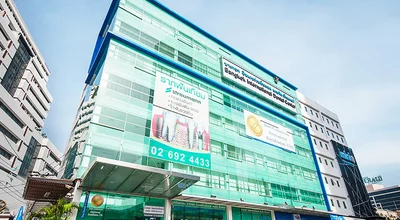
Bangkok International Dental Center
Thailand's first JCI-accredited dental center with more than 70 specialist dentists
View hospital profile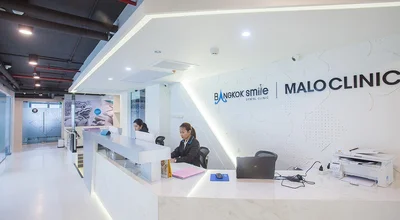
Bangkok Smile Dental Clinic
Multi-branch dental group founded in 2003 and the official Thai partner of the Malo All-on-4 network
View hospital profile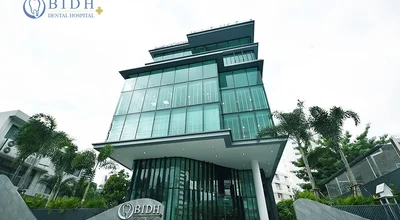
Bangkok International Dental Hospital
Purpose-built dental hospital opened in 2020 with an operating theatre and in-patient recovery rooms
View hospital profile
Get a Free Dental Quote in Minutes
Tell us what you need and we'll match you with the right specialist and return real clinic quotes.
- Itemised clinic quotes with no hidden fees
- Matched to a dentist experienced in your specific treatment
- Completely free, even if you decide not to go ahead


Rated 5 stars by our patients
The complete guide to Self-Ligating Braces in Thailand
Everything below is for readers who want the full detail: costs broken down, types and techniques, recovery, risks and safety, and planning your trip.
Orthodontists for Self-Ligating Braces in Thailand
Self-ligating systems are mainstream enough that most specialist orthodontists offer them. Here is what distinguishes our partners and what to check.
Leading Clinics in Bangkok
Our partner clinics stock the full range of self-ligating systems (Damon, Empower, In-Ovation) in both metal and ceramic. They have on-site imaging, digital treatment planning capabilities, and protocols specifically designed for international patient management.
Specialist Orthodontists
Our partners are qualified orthodontic specialists who use self-ligating systems as a core part of their practice, not as an upsell. They can advise objectively on whether self-ligating brackets offer a meaningful advantage for your specific case or whether conventional brackets would achieve the same result at lower cost.
What to Look for in a Provider
Confirm they are a specialist orthodontist. Ask about their experience with self-ligating systems and whether they use passive, active, or both. A good orthodontist will tell you honestly whether self-ligating brackets are worth the premium for your specific case; the benefits are not equally significant for every diagnosis.
Understanding Your Results
Self-ligating braces produce the same clinical outcomes as conventional braces. The differences are in comfort and appointment logistics during treatment.
Typical Self-Ligating Braces Results
Resolved crowding, corrected bite, closed gaps, aligned arches: the same range of results as conventional fixed braces. Some patients treated with passive self-ligating systems show broader arch development, though whether this is a systematic advantage or case selection is debated. The end result is a stable, well-aligned bite.
What Results Can You Expect?
Your orthodontist uses diagnostic records to plan the projected outcome, the same process as with any fixed braces. The bracket type does not change what is achievable; it may affect how quickly initial alignment occurs and how comfortable the process is. Complex cases still take complex amounts of time.
Self-Ligating Braces Cost in Thailand
Average Cost of Self-Ligating Braces
Self-ligating braces in Thailand typically cost between $2,000 and $4,000 depending on the system (Damon, Empower, In-Ovation), material (metal or ceramic), and case complexity. The premium over conventional metal braces is smaller in Thailand than in most Western countries.
Cost Breakdown
The total covers the orthodontist's consultation and treatment planning, diagnostic records, bracket bonding, initial archwires, and follow-up appointments during your stay. The self-ligating brackets themselves account for the cost premium over conventional brackets. Ongoing adjustments are quoted separately.
What Affects the Price?
System brand matters: Damon tends to cost more than In-Ovation or Empower. Metal self-ligating brackets are cheaper than their ceramic equivalents. Case complexity drives the total because more complex cases require longer treatment and more adjustment visits. The ceramic versions carry an additional premium for aesthetic discretion.
Thailand vs International Price Comparison
Self-ligating braces in Thailand cost 50–70% less than equivalent treatment in the US ($6,000–$12,000), Australia (A$5,600–A$11,000), and UK (£5,000–£10,000). The bracket systems are identical global products. The savings come from lower orthodontist fees and clinic operating costs.
Types of Self-Ligating Braces
Self-ligating brackets come in passive and active variants, each with different mechanical characteristics. They are also available in metal and ceramic. The right choice depends on your case and aesthetic preferences.
Passive Self-Ligating (e.g. Damon)
Passive brackets hold the wire loosely in the slot, allowing it to slide freely with minimal friction. Particularly effective during the early alignment phase when teeth are most crowded and need the greatest freedom to move.
- Very low friction means more of the wire's force reaches the tooth, with light-force NiTi wires aiding comfort
- Often reduces the need for extractions in borderline crowding cases
- Extended adjustment intervals of 8–10 weeks suit international patients
- Best for: initial alignment, crowding cases, and patients prioritising comfort
Active Self-Ligating (e.g. In-Ovation, Empower)
Active brackets press the archwire firmly into the slot, giving the orthodontist greater control during the finishing stages. Some systems combine passive and active modes, switching automatically as the wire size increases through treatment.
- Greater wire control for precise torque and rotation in finishing stages
- Interactive clips adapt to wire size for optimised force delivery
- Effective for cases needing detailed three-dimensional positioning
- Best for: finishing and detailing stages of treatment
Clear Self-Ligating Brackets
Self-ligating brackets in ceramic or translucent versions (Damon Clear, Empower Clear) combine the mechanical advantages of self-ligation with aesthetic discretion. No elastic ties means no ligature staining, which is one of the biggest aesthetic complaints with conventional ceramic braces.
- Combines low-friction mechanics with a tooth-coloured appearance
- No elastic ligatures eliminates the staining problem entirely
- Metal-free clip mechanisms for maximum visual discretion
- Best for: adult patients who want both efficiency and aesthetic appearance
Self-Ligating Braces Techniques
The technique your orthodontist selects depends on your case mechanics and where you are in the treatment timeline. Here is what is used and when.
Low-Force High-Technology Wires
Self-ligating systems are designed to work with highly flexible nickel-titanium archwires that deliver gentle, continuous force. The bracket itself does not reduce the force; it reduces friction, so more of the wire's light force reaches the tooth instead of being dissipated in the slot. This combination is what produces the comfort patients report over conventional braces.
- Superelastic NiTi wires maintain gentle force over large deflections
- Less pain per adjustment compared to conventional ligated brackets
- Teeth respond to consistent light force rather than intermittent heavy force
- Best for: the alignment phase where maximum tooth movement is needed
Arch Development Approach
Passive self-ligating systems like Damon are often associated with an arch development philosophy: widening the dental arch to create space rather than extracting teeth. This can reduce the need for premolar extractions in borderline crowding cases, though it is not appropriate for every patient.
- May avoid extractions by developing the arch transversely
- Creates broader smiles with more visible teeth in some cases
- Not appropriate for all cases; significant protrusion may still require extractions
- Best for: borderline crowding cases where arch expansion is a viable alternative to extraction
Progressive Wire Sequencing
Treatment progresses through a planned sequence of archwires, starting with thin, flexible wires for initial alignment and graduating to stiffer rectangular wires for torque control and finishing. Self-ligating clips make wire changes faster, reducing chair time at each appointment.
- Systematic wire progression from flexible alignment wires to rigid finishing wires
- Faster wire changes because there are no elastic ties to remove and replace
- Shorter appointment times compared to conventional braces
- Best for: all stages of treatment. This is the core treatment progression
Self-Ligating Braces Treatment Timeline
Days 1–3
Mild soreness and pressure as teeth begin responding to the archwire. Many patients report that self-ligating braces feel more comfortable from the start because the low-friction brackets are paired with light-force wires. Soft foods and standard pain relief handle the initial period.
Week 1
Most patients adapt quickly. A follow-up in Thailand confirms all brackets are bonded securely and the archwire is tracking correctly. Oral hygiene is easier than with conventional braces because there are no elastic ties trapping food.
Weeks 2–4
Initial discomfort resolves and treatment becomes routine. Before departing Thailand, a detailed treatment plan is prepared with an adjustment schedule reflecting the longer 8–10 week intervals that self-ligating systems allow.
Ongoing (Every 8–10 Weeks)
Self-ligating braces need adjustment every 8–10 weeks rather than the 4–6 weeks required by conventional braces. This longer interval reduces travel frequency for international patients significantly. Adjustments can be managed through return visits or coordinated locally. For the full 10–24 month course, keep avoiding hard and sticky foods (hard candy, ice, raw carrots, crusty bread, chewing gum, toffee) so brackets and wires are not broken between appointments.
How Do Adjustment Intervals Work for International Patients?
The 8–10 week adjustment interval is one of the strongest practical advantages of self-ligating braces for overseas patients. You can schedule return visits to Thailand every 2–3 months rather than monthly. This roughly halves the number of trips compared to conventional braces. Adjustments can also be coordinated with a local orthodontist using the records we provide.
When Can You Fly Home?
You can fly home within 7–10 days of your first appointment, once brackets are bonded and the first archwire is confirmed tracking. No flying restrictions apply. Schedule your first adjustment appointment, whether in Thailand or at home, before departure.
When Will You See Final Results?
Self-ligating braces may produce visible alignment faster than conventional brackets in the early stages due to lower friction. Overall treatment duration ranges from 10–24 months depending on complexity. The finishing phase (torque, rotation, and detailing) takes the same amount of time regardless of bracket type. Retainers are fitted at debonding.
Risks and Safety of Self-Ligating Braces
Self-ligating braces are well-established and safe. The risk profile is similar to conventional fixed braces with a few mechanism-specific considerations.
- Minor root resorption (rare, associated with all orthodontic movement)
- Clip mechanism breakage (uncommon, repairable)
- Nickel allergy reaction (NiTi archwires and most metal brackets and clips contain nickel; can cause gum or lip irritation in sensitive patients)
Self-ligating brackets are no riskier than conventional braces. The reduced-friction mechanics may actually lower the incidence of root resorption because lighter wire forces are typically used with these systems, though clinical evidence is still accumulating on this point.
Are Self-Ligating Braces Safe in Thailand?
Yes. The bracket systems used (Damon, Empower, In-Ovation) are manufactured by global orthodontic suppliers and used identically worldwide. Our partner orthodontists are specialists with extensive experience in self-ligating systems. The safety profile is the same as anywhere else.
How to Reduce Risks
Maintain disciplined oral hygiene. The absence of elastic ties makes cleaning easier but does not eliminate the need for it. Avoid hard and sticky foods for the whole course. Tell the clinic before bonding if you have a known nickel allergy, since standard NiTi wires and metal brackets and clips contain nickel; titanium, gold-coated, or other nickel-free components can usually be substituted. Attend adjustment appointments on schedule. If a clip mechanism breaks, get it repaired promptly; a broken clip turns the bracket into an uncontrolled passive tube.
Self-Ligating vs Conventional, What the Evidence Says
Systematic reviews suggest self-ligating braces may offer modest advantages in alignment speed and patient comfort during the early stages of treatment. The evidence for overall treatment time reduction is mixed; case complexity matters more than bracket type. The clearest advantage is the longer adjustment interval, which is well-established and particularly valuable for international patients.
Planning Your Trip to Thailand for Self-Ligating Braces
The practical advantage of self-ligating braces for international patients is the reduced appointment frequency. Here is how to plan your trip.
How Long to Stay in Thailand
Plan for 7–10 days. This covers consultation, diagnostic records, pre-treatment, bracket bonding, first adjustment, and a follow-up check. The process is the same as conventional braces but with the knowledge that your next adjustment is 8–10 weeks away rather than 4–6.
What Is Included in Your Treatment
Your care coordinator handles scheduling, clinic logistics, and records handover. The treatment quote covers the orthodontist fee, diagnostic records, self-ligating bracket bonding, first archwires, follow-up appointments during your stay, and an oral hygiene kit. Ongoing adjustments are quoted separately.
Reduced Travel Burden
The 8–10 week adjustment interval means roughly 50% fewer trips compared to conventional braces. Over a 24-month treatment, that could mean 10–12 adjustments instead of 18–24. Each visit to Thailand needs only 1–2 days for the adjustment appointment itself, making it feasible to combine with other travel.
Related Procedures
Other procedures that address similar goals or conditions, in case one of them is a closer fit for you.
Planning your treatment in Thailand
Independent guides to help you weigh the decision, before you commit to anything.
Common Questions About Self-Ligating Braces in Thailand
Everything you need to know before starting treatment

Medical References
Keep researching with AI
Open this guide in your AI assistant to dig deeper and ask the questions it didn't answer.
Opens in a new tab with this guide already loaded.
Medical disclaimer: This information is for educational purposes only and does not replace professional dental advice. Individual results, recovery times, and suitability vary. Always consult a qualified dentist before making decisions about treatment.
Ready to Get Started?
Speak with our care coordinators for a free, no-obligation consultation and personalised self-ligating braces quote.
Speak to Our Team