Metal Braces in Thailand Your guide to cost, top dentists & hospitals
The most reliable way to straighten teeth still has not been surpassed, and in Thailand it costs a fraction of what you would pay at home.
What Are Metal Braces?
Also known as: Traditional Braces · Fixed Orthodontic Appliance
Metal braces are a fixed orthodontic appliance that straightens teeth by applying steady, controlled pressure through stainless steel brackets bonded to each tooth and connected by a thin archwire. The wire is gradually tightened over time, guiding teeth into new positions and correcting bite problems like overbite, underbite, and crowding. Treatment usually runs 12 to 30 months depending on how much movement is needed1, and the changes are structural rather than temporary, so teeth stay put afterwards as long as you wear a retainer.
If braces feel like a big commitment, that is a fair reaction. They work slowly and on purpose, and you feel the teeth respond after each adjustment. Your orthodontist maps the whole plan around your own bite, so you know roughly how long it will take and what each stage is doing before you start.
Modern brackets are smaller and more comfortable than the ones many people remember. They remain the most dependable option for severe crowding or complex bite work that clear aligners cannot manage, and a consultation with diagnostic records is the only way to confirm what your case actually needs.
It can address a range of concerns, including:
Am I a Good Candidate for Metal Braces?
Metal braces accept almost any case at any age; what orthodontists screen for is gum health, bruxism, and follow-through.
Fixed metal braces remain the benchmark, particularly where other systems run out of road.
Any complexity level: From mild crowding to severe malocclusion, including the cases clear aligners cannot handle.
All ages: Children, teens, and adults; there is no upper age limit for orthodontic treatment2, and many international patients are adults catching up on deferred care.
Bite-level correction: Combined with expanders, elastics, or temporary anchorage devices, braces address jaw-level problems and impacted teeth that trays cannot reach.
Brackets and wires trap plaque, so the state of your gums sets the starting line.
Periodontal disease treated first: Tooth movement on weakened bone worsens gum problems, so active disease must be stabilised before bonding.
Hygiene discipline: Interdental brushes, a water flosser, and careful cleaning around brackets prevent demineralisation, the white spots that are the main avoidable risk.
A clean start: Any needed cleaning or other pre-treatment is completed in the first days of your trip before brackets go on.
A few bite-level factors are checked before fixed appliances are recommended.
Grinding addressed first: Heavy clenching or unmanaged bruxism can debond brackets repeatedly and disrupt treatment, so it needs managing before you start.
Surgical cases identified: A severe skeletal jaw discrepancy may need orthognathic surgery in parallel with braces, not braces alone, and that changes the whole plan.
Repairs need access: Broken brackets and wires want prompt repair wherever you are, which feeds into the logistics conversation below.
For international patients, the adjustment schedule is the real suitability question.
Adjustments every 4-6 weeks: For the full 12-30 months, managed through return trips, a local orthodontist working from your full handover records, or a mix of both.
A plan before you fly: Bracket prescriptions, archwire sequences, and clinical records are provided so any qualified orthodontist can continue your care.
Dietary care throughout: Hard and sticky foods break brackets, and the restrictions last the whole treatment.
Who is not suitable for metal braces?
- Confirmed nickel or metal allergy, unless nickel-free or ceramic brackets are used instead of standard stainless steel
- Untreated periodontal disease
- Heavy grinding or clenching until the bruxism is addressed
- A severe skeletal discrepancy needing orthognathic surgery rather than braces alone
- Unable to commit to adjustments every 4-6 weeks for the full 12-30 months
Pricing
How Much Will Metal Braces Cost in Thailand?
What metal braces costs at accredited hospitals in Thailand, and what your final quote depends on.
Get your exact price
Tell us what you're considering and we'll send a personalised quote from accredited clinics within 24 hours.
Get my free quoteTypical prices in Thailand
Typical ranges based on recent hospital quotes. Your exact price depends on the hospital and how complex your case is, and is confirmed at your teleconsultation.
Metal Braces
What you pay tracks how far your teeth and bite have to move, which your orthodontist works out from X-rays and models before quoting.
| Mild case Crowding or spacing only, straightforward alignment over twelve to eighteen months | $1,500 to $2,000 ฿51,000 to ฿68,000 |
| Moderate case Crowding alongside an overbite or crossbite that also needs correcting | $2,000 to $2,500 ฿68,000 to ฿85,000 |
| Complex case Extractions, TADs or jaw-level correction, typically eighteen to thirty months | $2,500 to $3,000 ฿85,000 to ฿102,000 |
Get your exact price
Tell us what you're considering and we'll send a personalised quote from accredited clinics within 24 hours.
Clinics Trusted for Metal Braces
From internationally accredited flagships to dedicated specialist clinics, these are the kinds of facilities where international patients have this procedure.
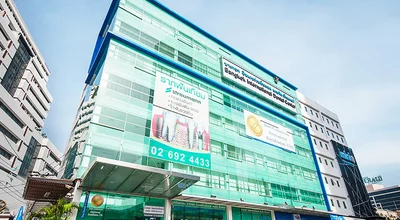
Bangkok International Dental Center
Thailand's first JCI-accredited dental center with more than 70 specialist dentists
View hospital profile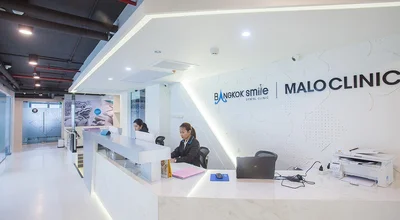
Bangkok Smile Dental Clinic
Multi-branch dental group founded in 2003 and the official Thai partner of the Malo All-on-4 network
View hospital profile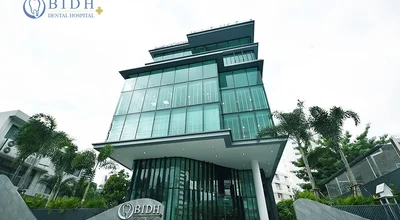
Bangkok International Dental Hospital
Purpose-built dental hospital opened in 2020 with an operating theatre and in-patient recovery rooms
View hospital profile
Get a Free Dental Quote in Minutes
Tell us what you need and we'll match you with the right specialist and return real clinic quotes.
- Itemised clinic quotes with no hidden fees
- Matched to a dentist experienced in your specific treatment
- Completely free, even if you decide not to go ahead


Rated 5 stars by our patients
The complete guide to Metal Braces in Thailand
Everything below is for readers who want the full detail: costs broken down, types and techniques, recovery, risks and safety, and planning your trip.
Orthodontists for Metal Braces in Thailand
The orthodontist's experience with your specific type of case matters more than the clinic's branding. Here is what our partners offer and what you should look for.
Leading Clinics in Bangkok
Our partner clinics operate within accredited dental centres with full orthodontic departments, not just a single chair. They have on-site imaging, in-house laboratories for appliance fabrication, and dedicated support staff who handle international patient coordination daily.
Specialist Orthodontists
Our partners hold postgraduate qualifications in orthodontics and maintain active caseloads across all complexity levels. Several have trained overseas and returned to Thailand where the case volume is higher. The combination of specialist training and high throughput is what makes Thai orthodontics competitive.
What to Look for in an Orthodontist
Confirm they are a specialist orthodontist, not a general dentist offering braces. Ask about their experience with cases similar to yours; mild crowding is very different from surgical bite correction. Review before-and-after photos. And ask how they handle international patients: do they provide full records for local handover, and what is their protocol for remote support?
Understanding Your Results
Metal braces deliver permanent structural changes when maintained with retainers. Here is what to expect.
Typical Metal Braces Results
Common outcomes include resolved crowding, closed gaps, corrected bite alignment, and straightened teeth across both arches. The results are structural and permanent. Teeth are physically moved into new positions and held there by retainers. Metal braces remain the benchmark against which all other orthodontic systems are measured.
What Results Can You Expect?
Your diagnostic records (X-rays, models, photographs) form the basis of a treatment plan that maps the projected outcome. Complex cases may involve cephalometric analysis to predict jaw growth and plan accordingly. Your orthodontist will show you the planned result and explain what is realistically achievable. Ask about expected treatment duration, any extractions required, and what retention protocol they recommend.
Metal Braces Cost in Thailand
Average Cost of Metal Braces
Metal braces in Thailand typically cost between $1,500 and $3,000, depending on the bracket system, case complexity, and whether auxiliary devices like TADs or expanders are needed. Simple crowding cases sit at the lower end, while complex bite correction cases cost more. Your quote should itemise what is included.
Cost Breakdown
The total covers the orthodontist's consultation and treatment planning, diagnostic records (X-rays, photographs, models), bracket bonding and archwires, follow-up appointments during your stay, and an oral hygiene kit. Ongoing adjustment visits are quoted separately, whether performed in Thailand or at home.
What Affects the Price?
Case complexity is the biggest driver. A simple crowding case needs fewer adjustments and finishes sooner than a case involving extractions, TADs, and jaw-level correction. The bracket brand matters too; premium self-ligating systems cost more than conventional brackets. And if your treatment involves auxiliary devices like palatal expanders, those add to the total.
Thailand vs International Price Comparison
Metal braces in Thailand cost 50–70% less than equivalent treatment in the US ($4,500–$9,000), Australia (A$4,200–A$8,300), and UK (£3,800–£7,500). The brackets and archwires are the same global products. The difference comes from lower orthodontist fees and clinic operating costs in Thailand.
Types of Metal Braces
Metal braces come in several configurations. The bracket type your orthodontist recommends depends on your diagnosis and how much control is needed over tooth movement.
Conventional Metal Braces
The standard system using stainless steel brackets with elastic ligatures that hold the archwire. Most widely used, most affordable, and capable of treating the full range of orthodontic cases from mild crowding to severe malocclusion.
- Handles every level of complexity with maximum versatility
- Elastic ties available in clear or coloured options
- Requires adjustment every 4–6 weeks
- Best for: any orthodontic case, particularly complex ones needing maximum control
Mini Metal Braces
A smaller-profile bracket approximately 30% smaller than the standard design. Less conspicuous and more comfortable while delivering the same treatment effectiveness. Popular with adult patients who want fixed braces but prefer a less bulky feel.
- Reduced bracket size improves comfort and appearance
- Same treatment capability as full-sized metal brackets
- Less food trapping and easier cleaning around brackets
- Best for: adult patients who want fixed braces with a lower profile
Metal Braces with Auxiliary Devices
For the most complex cases, brackets are combined with palatal expanders, temporary anchorage devices (TADs), or elastics to achieve jaw-level corrections. TADs eliminate the need for headgear by providing anchorage directly in bone.
- Enables correction of skeletal and jaw discrepancies alongside tooth movement
- TADs provide absolute anchorage for difficult movements without headgear
- Comprehensive approach for the most challenging orthodontic cases
- Best for: severe skeletal discrepancies, impacted teeth, or cases needing jaw-level correction
Metal Braces Techniques
The technique your orthodontist uses depends on the specific mechanics needed for your case. Here is what is commonly used and when each approach makes sense.
Straight Wire Technique
The most widely used system in modern orthodontics. Pre-programmed bracket prescriptions (MBT, Roth, or Andrews) are built into each bracket, reducing the amount of manual wire bending needed. Different prescriptions suit different case types and philosophies.
- Built-in bracket prescriptions reduce chair time during adjustments
- MBT and Roth are the two most common systems used in Thailand
- Suitable for the full range of orthodontic cases
- Best for: most standard to complex orthodontic treatments
Accelerated Orthodontics
Techniques that speed up tooth movement when combined with conventional braces. Options include micro-osteoperforations, corticotomy, and photobiomodulation devices. Not appropriate for every case, but can meaningfully reduce treatment time for suitable patients.
- Published trials report up to around 30% shorter treatment in selected cases
- Micro-osteoperforations are minimally invasive and done chairside
- Photobiomodulation devices can be used at home between appointments
- Best for: patients who want shorter treatment and are suitable candidates for acceleration
Extraction vs Non-Extraction Planning
Whether teeth need to be removed to create space for alignment is one of the most consequential decisions in orthodontics. Thailand's orthodontists are experienced with both approaches and will recommend extraction only when the case genuinely requires it.
- Non-extraction uses arch expansion, IPR, or proclination to create space
- Extraction creates maximum space for severe crowding or protrusion cases
- The decision depends on skeletal analysis, not just tooth position
- Best for: treatment planning. This decision shapes the entire outcome
Metal Braces Treatment Timeline
Days 1–3
Soreness and sensitivity after bracket bonding and the first archwire. Teeth feel tender when biting. Stick to soft foods and use orthodontic wax on any brackets irritating your lips or cheeks. Over-the-counter pain relief manages the discomfort.
Week 1
Most patients adapt to wearing braces within a few days. A follow-up in Thailand lets your orthodontist check bonding, assess tooth response, and make any early adjustments. You receive a full oral hygiene kit and cleaning instructions.
Weeks 2–4
Discomfort subsides and you establish a cleaning routine around brackets and wires. Before leaving Thailand, your orthodontist provides a detailed treatment plan, adjustment timeline, and full records for continuity of care.
Ongoing (Monthly Adjustments)
Braces need adjustment every 4–6 weeks. This can be managed through return visits to Thailand, coordination with a local orthodontist at home, or a combination. Full treatment records are provided so any qualified orthodontist can continue your care.
How Do You Manage Adjustments From Overseas?
Two main options. Many patients return to Thailand every 4–8 weeks, which works well if you live in the Asia-Pacific region. Alternatively, we coordinate with an orthodontist in your home country using the detailed treatment plan and records provided by your Thai specialist. Most patients use a hybrid approach: return visits when convenient, local adjustments when not.
When Can You Fly Home After Bonding?
You can fly home as soon as your orthodontist confirms the brackets are bonded and your first archwire is tracking well, typically within 7–10 days of your first appointment. There are no flying restrictions with braces. Make sure your first adjustment appointment, whether in Thailand or at home, is scheduled before you leave.
When Will You See Final Results?
Mild cases can show significant improvement within 6 months. Complex cases take 18–30 months for full correction. You will notice teeth moving within the first few weeks, but the bite correction and fine-tuning that happen in the later stages are what produce the final result. Retainers are fitted at debonding to keep everything in place permanently.
Risks and Safety of Metal Braces
Metal braces have decades of clinical evidence behind them. Risks are well-understood and manageable with proper care and professional supervision.
- Gingival recession and black triangles (small triangular gaps opening between teeth as they move), more likely in adults with thin gums or prior bone loss
- Root resorption, where root tips shorten slightly. Rare and linked to all orthodontic treatment; the orthodontist monitors root length on X-rays and, if shortening is detected mid-treatment, pauses or lightens the forces to halt it
- Relapse, where teeth drift back towards their old positions if retainers are not worn as instructed after treatment1,2
- Bracket debonding or wire breakage requiring a repair appointment
Most risks with metal braces come down to oral hygiene discipline. Patients who follow the cleaning protocol and attend regular adjustment appointments have excellent outcomes.
Are Metal Braces Safe in Thailand?
Yes. The brackets, archwires, and bonding materials used in Thailand are manufactured by the same global suppliers (3M, Ormco, American Orthodontics) used in clinics worldwide. Our partner orthodontists hold specialist qualifications and treat a high volume of cases. The safety profile is identical to what you would experience at home.
How to Reduce Risks
Invest in proper cleaning tools. Interdental brushes, a water flosser, and fluoride mouthwash make a significant difference. Avoid hard and sticky foods that can break brackets. Attend every scheduled adjustment appointment. If a bracket comes loose or a wire breaks, get it repaired promptly rather than waiting for your next appointment.
Managing Adjustments From Overseas
The main logistical challenge with braces abroad is ongoing adjustments. We provide full treatment records (bracket prescriptions, archwire sequences, treatment plan, and clinical photographs) so a local orthodontist can step in without disruption. Many patients use a combination of return visits and local adjustments depending on their travel schedule.
Planning Your Trip to Thailand for Metal Braces
Getting braces in Thailand requires a slightly longer initial stay than aligner treatment, but the process is straightforward. Here is how to plan it.
How Long to Stay in Thailand
Plan for 7–10 days. This covers consultation, diagnostic records, any pre-treatment such as extractions or cleaning, bracket bonding, your first adjustment, and a follow-up check. You leave with your braces in place and a detailed plan for ongoing adjustments.
What Is Included in Your Treatment
Your care coordinator handles scheduling, clinic transfers, and records handover. The initial treatment quote covers the orthodontist fee, diagnostic records, bracket bonding, first archwires, follow-up appointments during your stay, and an oral hygiene kit. Ongoing adjustment visits are quoted separately. Flights and accommodation are arranged independently, but your coordinator can recommend nearby options.
Ongoing Adjustments and Follow-Up
Before you leave Thailand, your orthodontist prepares a complete handover pack including bracket prescriptions, archwire sequences, treatment plan, and clinical photographs. This allows any qualified orthodontist to continue your care. Your coordinator helps identify a suitable orthodontist in your home country if needed, or schedules return visits to Thailand at the appropriate intervals.
Related Procedures
Other procedures that address similar goals or conditions, in case one of them is a closer fit for you.
Planning your treatment in Thailand
Independent guides to help you weigh the decision, before you commit to anything.
Common Questions About Metal Braces in Thailand
Everything you need to know before starting treatment

Medical References
Keep researching with AI
Open this guide in your AI assistant to dig deeper and ask the questions it didn't answer.
Opens in a new tab with this guide already loaded.
Medical disclaimer: This information is for educational purposes only and does not replace professional dental advice. Individual results, recovery times, and suitability vary. Always consult a qualified dentist before making decisions about treatment.
Ready to Get Started?
Speak with our care coordinators for a free, no-obligation consultation and personalised treatment quote.
Speak to Our Team