Digital Smile Design in Thailand Your guide to cost, top dentists & hospitals
See exactly what your new smile will look like before a single tooth is touched.
What Is Digital Smile Design?
Also known as: DSD Smile Design · Computer-Aided Smile Planning
Digital Smile Design is a non-invasive planning method, often called DSD, that maps out your new smile in advance by combining photographs, video and a 3D scan of your teeth. Software reads your facial proportions, your lip line, midline and the curve of your smile, then designs each tooth to suit your face rather than a standard template. The design session usually takes one to two hours, with no drilling, anaesthesia or recovery.
The point is that you see the plan before anyone touches a tooth. Once you approve the design on screen, a physical mock-up can be made and placed over your teeth, so you can look in the mirror, speak, and feel how the new shape sits. If something is not right, the mock-up is remade until it feels like yours.
A mock-up is a close approximation, not an exact copy of the final ceramics, since materials catch light differently. What DSD reliably gives you is a tested, approved plan, which is where most of its value lies if you are nervous about committing to irreversible work far from home1,2.
It can address a range of concerns, including:
Am I a Good Candidate for Digital Smile Design?
Digital Smile Design is a planning service, so suitability is less about your teeth and more about the decision you are making.
Dentists recommend DSD where seeing and testing the result first genuinely changes the quality of the decision.
Planning bigger cosmetic work: Anyone considering veneers, crowns, implants or a smile makeover who wants to preview and approve the design before irreversible treatment begins is a natural fit.
Complex or multi-tooth cases: The value grows with scale. Multiple teeth, combined procedures and significant proportional changes are where the design pays for itself.
Willing to iterate: The benefit comes from reviewing the mock-up and requesting changes until you are satisfied, not from a single pass.
Healthy mouth as the baseline: Untreated decay or active gum disease is resolved before cosmetic planning makes sense, and the preview is a close approximation rather than a one-to-one guarantee.
Who is not suitable for digital smile design?
- Single-tooth repairs where the planning overhead outweighs the design benefit
- Untreated decay or active gum disease until resolved
- Cases needing orthodontic correction first, such as significant crowding or a skeletal discrepancy, where later tooth movement would invalidate the design
- Teeth with too little remaining structure to hold a trial mock-up, where restorative build-up is needed before a design can be tested
- Expecting the digital preview to be an exact match rather than a close approximation
Pricing
How Much Will Digital Smile Design Cost in Thailand?
What digital smile design costs at accredited hospitals in Thailand, and what your final quote depends on.
Get your exact price
Tell us what you're considering and we'll send a personalised quote from accredited clinics within 24 hours.
Get my free quoteTypical prices in Thailand
Typical ranges based on recent hospital quotes. Your exact price depends on the hospital and how complex your case is, and is confirmed at your teleconsultation.
Digital Smile Design
Which level of design you need depends on how many teeth you are changing and whether you want to wear the new smile before committing to it.
| Design and treatment plan only A digital mockup of your new smile, no clinical work | $500 to $650 ฿17,000 to ฿22,100 |
| Design with trial smile Temporary veneers you wear to preview the result first | $650 to $800 ฿22,100 to ฿27,200 |
| Full-case planning, 6 to 10 or more teeth Planning fee for a larger makeover, veneers quoted separately | $800 to $1,000 ฿27,200 to ฿34,000 |
Get your exact price
Tell us what you're considering and we'll send a personalised quote from accredited clinics within 24 hours.
Clinics Trusted for Digital Smile Design
From internationally accredited flagships to dedicated specialist clinics, these are the kinds of facilities where international patients have this procedure.
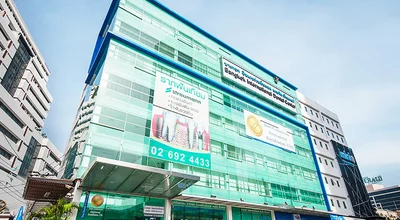
Bangkok International Dental Center
Thailand's first JCI-accredited dental center with more than 70 specialist dentists
View hospital profile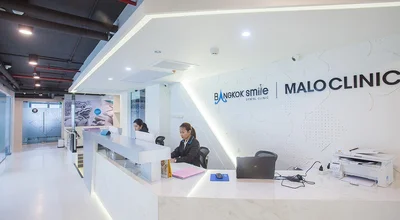
Bangkok Smile Dental Clinic
Multi-branch dental group founded in 2003 and the official Thai partner of the Malo All-on-4 network
View hospital profile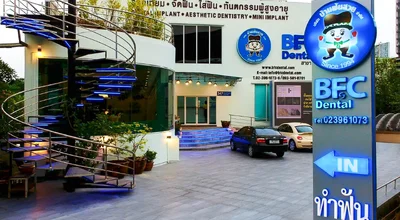
BFC Dental
Implant-focused Bangkok dental clinic founded in 1994, placing more than 4,600 implants a year
View hospital profile
Get a Free Dental Quote in Minutes
Tell us what you need and we'll match you with the right specialist and return real clinic quotes.
- Itemised clinic quotes with no hidden fees
- Matched to a dentist experienced in your specific treatment
- Completely free, even if you decide not to go ahead


Rated 5 stars by our patients
The complete guide to Digital Smile Design in Thailand
Everything below is for readers who want the full detail: costs broken down, types and techniques, recovery, risks and safety, and planning your trip.
DSD Dentists & Clinics in Thailand
Not every dental clinic has DSD capability. The technology requires specific equipment, software and training. Here is what to look for.
Leading DSD Clinics in Bangkok
Our partner clinics are equipped with intraoral scanners, facial photography rigs, DSD software licences and in-house or closely partnered laboratories capable of producing mock-ups and fabricating from digital design files. These are clinics where DSD is part of the standard workflow for cosmetic cases, not an occasional novelty.
Experienced DSD Dentists
Our partner dentists are trained in Digital Smile Design protocols and have completed certification in the methodology. They understand that DSD is a communication tool as much as a design tool; it structures the conversation between you, the dentist and the lab so everyone is working toward the same result.
What to Check Before Booking
Confirm the clinic has in-house scanning and DSD software, as not all clinics that offer veneers can do DSD. Ask whether a physical mock-up is included or only a screen-based preview (the mock-up is the valuable part). Check that the dentist's DSD experience extends to cases similar to yours in scope and complexity.
Understanding Your Results
DSD produces a preview that closely matches the final treatment result. Here is what that means in practice.
How Close Is the Preview to the Final Result?
When executed properly, the final veneers or crowns closely match the approved mock-up in shape and proportion. Shade may vary slightly because ceramic and mock-up resin interact with light differently, but a skilled ceramist compensates for this. The closer the dentist follows the DSD file during preparation, and the closer the lab follows it during fabrication, the more accurate the result.
What Value Does DSD Add?
The primary value is eliminating surprises. Without DSD, you are trusting the dentist's vision of your new smile. With DSD, you have approved a specific design, tested it in your mouth, and the lab has a precise digital file to fabricate from. Miscommunication, the leading cause of dissatisfaction in cosmetic dentistry, is drastically reduced.
Digital Smile Design Cost in Thailand
Average Cost of Digital Smile Design
A full DSD session in Thailand (including facial photography, 3D scanning, software design and physical mock-up fabrication) typically costs $500–$1,000. Some clinics include DSD in the overall treatment package for larger cases (8+ veneers). As a standalone design service, it is a fraction of the cost of DSD consultations in Western countries.
Cost Breakdown
The fee covers the dentist's time for the design session, photography and video capture, intraoral scanning, DSD software analysis and design, and fabrication of the physical mock-up. If design revisions require additional mock-ups, there may be a small additional charge. The cost of subsequent treatments (veneers, crowns, etc.) is quoted separately.
What Affects the Price?
The complexity of the case is the main variable. A simple 4-veneer design costs less than a 20-unit full-arch design because less time is spent in the software and fewer teeth need individual attention. Whether the mock-up is milled, 3D-printed or hand-fabricated also affects cost. Some clinics bundle DSD into veneer packages, effectively making it free for larger cases.
Cost Compared to Treatment Value
DSD typically adds 5–10% to the total cost of a veneer or makeover plan. DSD lets you see and approve the design before committing to irreversible work. For most patients, eliminating uncertainty about the outcome is worth far more than the DSD fee.
Thailand vs International Price Comparison
A DSD session in Thailand costs $500–$1,000 compared to $1,500–$3,000 in the US, $1,400–$2,750 in Australia and £1,250–£2,500 in the UK. The software, scanning technology and mock-up fabrication methods are identical. The price difference reflects Thai dental operating costs, not a difference in the technology used.
Types of Digital Smile Design
DSD encompasses several technologies that can be used individually or combined. The depth of the planning depends on the complexity of your case and how much predictability you want before committing.
2D Photographic Design
High-resolution facial photographs and videos are imported into DSD software. The dentist draws tooth shapes, proportions and gum line positions directly over your photos, creating a visual blueprint. This is the entry-level DSD approach: fast, affordable and effective for straightforward cases.
- Analyses facial proportions, smile line and lip dynamics
- Visual before-and-after comparison on your own photographs
- Quick to produce, often completed during the first consultation
- Best for: simple veneer cases or patients wanting a basic visual preview
3D Digital Scanning and Design
An intraoral scanner captures a precise 3D model of your teeth and gums. This digital model is combined with facial scan data and imported into design software where each tooth can be individually shaped, positioned and colour-mapped in a virtual environment.
- Highly accurate 3D digital model with no messy putty impressions
- Precise measurement of tooth dimensions, spacing and gum margins
- Viewable from every angle for thorough evaluation before fabrication
- Best for: multi-unit veneer or crown cases where dimensional accuracy matters
Physical Mock-Up (Trial Smile)
The digital design is used to fabricate a set of temporary tooth shapes from composite or bis-acryl resin. This mock-up is placed directly over your existing teeth so you can see, feel and speak with your proposed new smile in place. Adjustments are made until you approve.
- Try your new smile in your own mouth before any permanent treatment
- Evaluate appearance, comfort and speech, not just a screen image
- Request changes and approve the final design with full confidence
- Best for: any patient who wants hands-on confirmation before irreversible work begins
Digital Smile Design Techniques
The DSD workflow involves several technical steps that connect the design to the final fabrication. Here is how the process works in Thai clinics.
Facial Analysis and Proportion Mapping
Photographs and video capture your face in motion: smiling, speaking, at rest. Software maps your midline, smile arc, lip curvature and tooth-show. This analysis determines the ideal tooth proportions for your specific face, not a generic template applied to everyone.
- Maps facial landmarks for proportional tooth design
- Accounts for dynamic smile, including how your lips move during speech and smiling
- Identifies asymmetries and compensates for them in the design
- Best for: the foundation of every DSD case, as this step drives all subsequent design decisions
CAD Software Design
Using the facial analysis and 3D scan data, the dentist designs each tooth in CAD software, adjusting width, length, shape, angulation and gum margin position individually. The design can be viewed from every angle and modified in real time during the consultation.
- Individual tooth design with precise dimensional control
- Multiple design options can be compared side by side
- Design modifications made in real time during the appointment
- Best for: complex cases with multiple teeth or significant proportional changes
Mock-Up Fabrication and Try-In
The approved digital design is converted into a physical mock-up using 3D printing or milling. The mock-up is placed over your teeth for evaluation. You test appearance, speech and comfort. If anything needs changing, the design is modified and a new mock-up is produced until you are completely satisfied.
- Bridges the gap between screen design and physical reality
- Reveals issues that only become apparent when the teeth are in your mouth
- Multiple iterations possible until the design is approved
- Best for: final confirmation before lab fabrication of permanent veneers or crowns
Digital Smile Design Recovery Timeline
Design Session
The DSD session involves no clinical treatment, just photographs, scanning and collaborative design. There is nothing to recover from. You leave with a clear visual plan and, if a mock-up is fabricated, a physical preview of your new smile.
Mock-Up Try-In
The trial smile is placed temporarily over your teeth for evaluation. It is non-invasive, fully removable and painless. You wear it briefly to assess the look, feel and speech. No recovery is needed afterwards.
Treatment Phase
Recovery depends entirely on the specific treatments carried out after the design is approved, whether veneers, crowns, gum contouring or implants. Detailed recovery guidance is provided for each individual procedure.
Final Result
Once all treatments are complete, compare the finished outcome with the original digital design. The precision of the DSD workflow means the final result closely matches the preview, with minimal deviation from what was approved.
Is There Any Recovery from DSD Itself?
No. The DSD session involves no clinical intervention, just photographs, a 3D scan and collaborative design on screen. The mock-up try-in is non-invasive and fully removable. There is nothing to recover from. Any recovery relates to the treatments carried out afterwards, each of which has its own timeline.
How Long Does the Design Session Take?
The initial DSD session takes one to two hours. This includes facial photography, video recording, intraoral scanning, software design and discussion of the proposed result. Mock-up fabrication takes an additional day. The mock-up try-in and any design revisions may add another appointment. The entire DSD phase typically fits within the first two days of your trip.
How Does DSD Affect the Overall Treatment Timeline?
DSD adds approximately one day to the front end of your treatment plan, the time needed for the design session and mock-up fabrication. In practice, this time is well spent because it eliminates miscommunication between you, the dentist and the lab. The result is fewer adjustments after treatment and higher satisfaction with the final outcome.
Risks and Safety of Digital Smile Design
Digital Smile Design itself carries no clinical risks; it is a non-invasive planning and communication tool. Any risks are associated with the subsequent treatments carried out based on the approved design.
- Slight variation between mock-up and final result due to material differences
- Mock-up is an approximation; feel and phonetics differ slightly from final restorations
- Shade chosen under clinic lighting can read differently in natural light, so the approved mock-up may look slightly off once you are home
- Quality of the design depends on the dentist's experience with DSD workflows
- Design revisions may add time to the overall treatment schedule
The main value of DSD is reducing risk downstream. By identifying and resolving design issues before treatment begins, it prevents the much costlier problem of being unhappy with a result after veneers are already bonded. The investment in planning pays for itself in predictability.
Is Digital Smile Design Accurate?
When the DSD workflow is followed properly, the finished outcome closely matches the digital preview and mock-up. Small variations can occur due to the physical properties of dental materials (ceramic reflects light differently than mock-up resin) and biological factors (gum tissue response to veneers). These variations are typically subtle and within the range of what patients find acceptable.
Does DSD Guarantee a Perfect Result?
No technology guarantees perfection, but DSD significantly reduces the gap between expectation and outcome. It does this by making the plan visible and testable before treatment begins. Issues that would otherwise only become apparent after bonding (shape too wide, shade too bright, midline off-centre) are caught and corrected at the mock-up stage instead.
What If I Do Not Like the Design?
That is exactly why DSD exists. Tooth shape, length, width, shade and gum line can all be modified in the software and a revised mock-up produced. You are not committed to anything until you approve the final design. If you and the dentist cannot agree on a design you are happy with, you have not had any treatment and nothing irreversible has happened.
Planning Your Trip to Thailand for Digital Smile Design
DSD fits into the first day or two of any cosmetic dental trip. Here is how it integrates with the broader treatment timeline.
How Long to Stay in Thailand
The DSD session itself takes one to two hours, with mock-up fabrication the following day. The total trip length depends on the treatments that follow: 7–10 days for veneers, 10–14 days for a full smile makeover. DSD adds at most one day to the front end of your treatment plan.
What Is Included in a DSD Package
The DSD fee covers facial and dental photography, intraoral 3D scanning, software design and analysis, mock-up fabrication and try-in, and design revision consultations. The cost of subsequent treatments (veneers, crowns, implants) is quoted separately based on the approved design and treatment plan.
Sharing the Design with Your Dentist at Home
DSD files can be exported and shared digitally. Some patients send the design to their dentist at home for a second opinion before approving treatment in Thailand. Others share it for reference so their home dentist understands the design intent if adjustments are needed down the line. This transparency is built into the DSD workflow.
Related Procedures
Other procedures that address similar goals or conditions, in case one of them is a closer fit for you.
Planning your treatment in Thailand
Independent guides to help you weigh the decision, before you commit to anything.
Common Questions About Digital Smile Design
Everything you need to know before your treatment

Medical References
Keep researching with AI
Open this guide in your AI assistant to dig deeper and ask the questions it didn't answer.
Opens in a new tab with this guide already loaded.
Medical disclaimer: This information is for educational purposes only and does not replace professional dental advice. Individual results, recovery times, and suitability vary. Always consult a qualified dentist before making decisions about treatment.
Ready to Get Started?
Speak with our care coordinators for a free, no-obligation consultation and personalised quote.
Speak to Our Team